
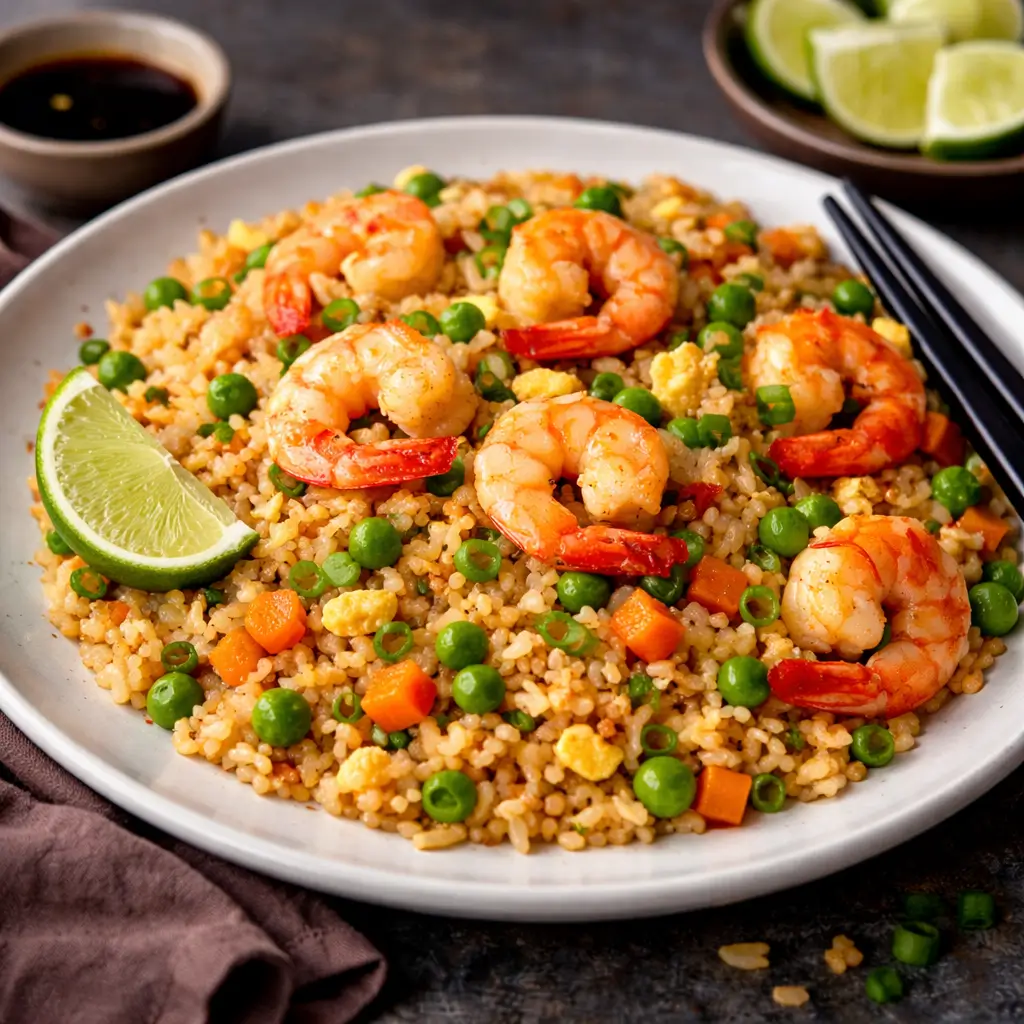
Shrimp Fried Rice is one of those dishes that looks simple but delivers deep, layered flavor in every bite. At first glance, the golden grains of rice glistening in the wok, the tender pink shrimp, the bright pops of peas and carrots, and the delicate ribbons of scrambled egg tell a story of balance, technique, and comfort. However, behind this seemingly humble plate lies a dish rooted in centuries of culinary tradition, clever cooking methods, and practical ingenuity.
This article will guide you step by step through everything you need to know about Shrimp Fried Rice. We will explore its origins, break down each ingredient, explain the cooking science, and give you a foolproof method to recreate restaurant-quality results at home. Then, we will share expert tips, variations, storage advice, and troubleshooting solutions to help you master this iconic dish.
The Story Behind Shrimp Fried Rice
Shrimp Fried Rice did not originate as a fancy restaurant dish. Instead, it emerged from necessity and creativity in Asian home kitchens. Traditionally, fried rice was a way to repurpose leftover rice from the previous day. Freshly cooked rice tends to be soft, sticky, and difficult to fry properly. Therefore, cooks discovered that slightly dried, cold rice worked much better.
Over time, fried rice evolved beyond leftovers. Different regions added their own twists. In China, egg fried rice became a staple. In Thailand, jasmine rice and fish sauce shaped a distinct style. In Japan, garlic shrimp fried rice became popular in casual eateries. Meanwhile, Shrimp Fried Rice grew in popularity because shrimp cooks quickly, tastes delicate, and pairs beautifully with soy sauce, garlic, and sesame oil.
Today, Shrimp Fried Rice appears everywhere. You can find it in street stalls, family restaurants, upscale Asian fusion menus, and home kitchens around the world. Its universal appeal lies in its simplicity, speed, and ability to adapt to different tastes.
Why Shrimp Fried Rice Works So Well
Shrimp Fried Rice works because it perfectly balances five key elements:
- Texture: Each grain of rice should be separate, not clumpy.
- Flavor: The soy sauce, garlic, and sesame oil create savory depth.
- Protein: Shrimp adds tenderness and natural sweetness.
- Color: Carrots, peas, and egg make the dish visually appealing.
- Heat Control: Proper wok temperature ensures smoky aroma without burning.
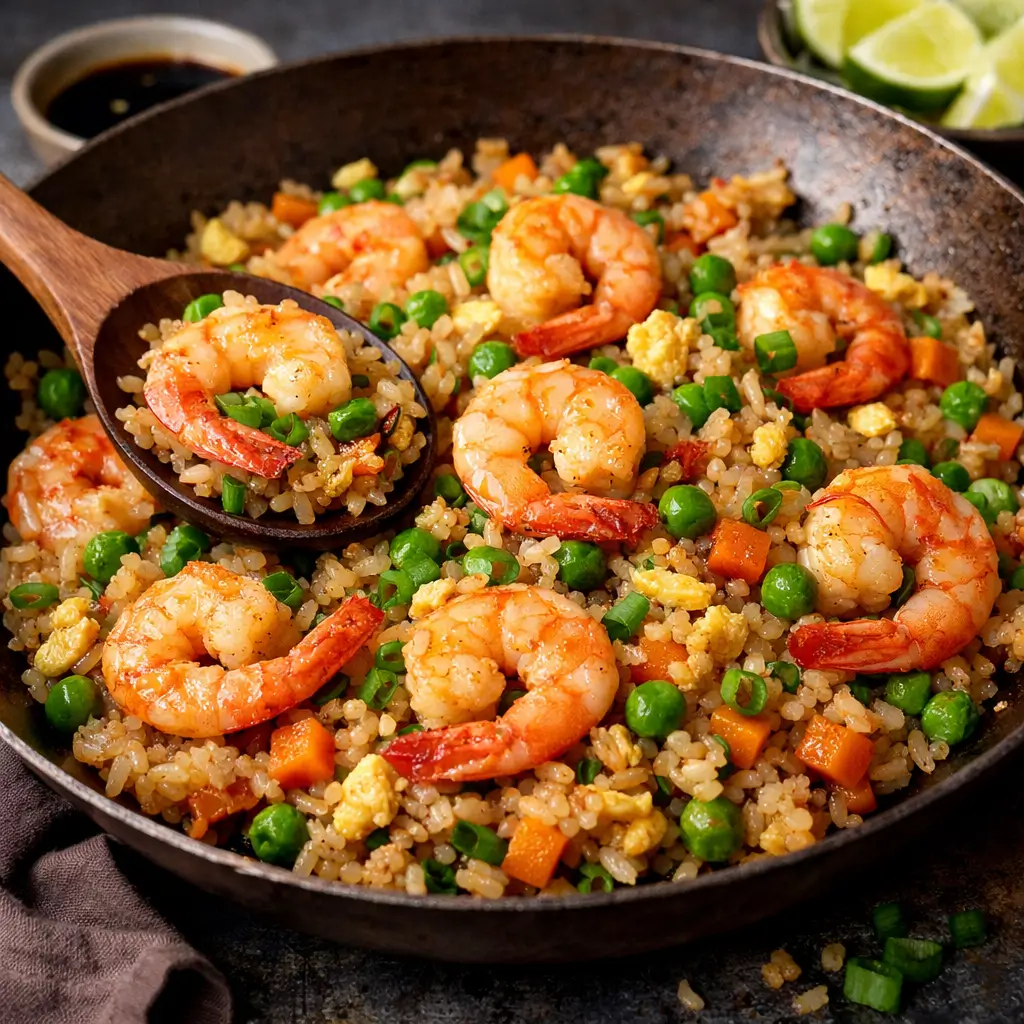
When these elements come together, the result is irresistible. The image you shared clearly reflects this harmony. The shrimp appear lightly seared, the vegetables are vibrant, and the rice looks glossy but not greasy.
Choosing the Right Rice for Shrimp Fried Rice
Rice is the foundation of Shrimp Fried Rice. Choosing the wrong type can ruin the dish.
Best Rice Type
Long-grain rice works best. Jasmine rice is the most popular choice because it is fragrant and light. Basmati rice can also work, but it has a slightly different aroma. Medium-grain rice is acceptable, but short-grain rice should be avoided because it tends to stick together.
Fresh vs. Day-Old Rice
Day-old rice is ideal. After refrigeration, rice grains dry slightly and firm up. This prevents mushiness when stir-fried. If you must use fresh rice, spread it on a baking sheet and let it cool completely before cooking.
The Role of Shrimp in the Dish
Shrimp plays a starring role in Shrimp Fried Rice. In the image, the shrimp appear medium-sized, peeled, deveined, and lightly pink from cooking. This is exactly how shrimp should look.
Best Shrimp Type
Large or medium shrimp are best. Very small shrimp can get lost in the rice. Jumbo shrimp may overpower the dish.
Fresh vs. Frozen Shrimp
Fresh shrimp is great, but high-quality frozen shrimp works just as well. Always thaw shrimp completely and pat them dry before cooking. Excess moisture can prevent proper searing.
Essential Vegetables in Shrimp Fried Rice
The classic vegetable trio in Shrimp Fried Rice includes:
- Carrots: Provide sweetness and crunch.
- Green Peas: Add color and mild flavor.
- Scallions: Bring freshness and brightness.
In your image, these ingredients are clearly visible. The carrots are diced small, the peas are evenly distributed, and the scallions are sprinkled on top. This is textbook presentation.
Egg: The Silent Hero
Scrambled egg is a key component of Shrimp Fried Rice. It adds richness, softness, and protein. The egg should be lightly cooked and mixed gently into the rice, not overcooked or rubbery.
In the image, you can see small pieces of egg throughout the dish. This is exactly how it should look.
The Flavor Foundation: Sauce and Seasoning
Shrimp Fried Rice relies on a simple but powerful seasoning blend:
- Soy Sauce: Provides saltiness and color.
- Garlic: Adds aromatic depth.
- Sesame Oil: Contributes nutty fragrance.
- White Pepper: Gives subtle warmth.
Some recipes also include oyster sauce or fish sauce, but the image suggests a lighter, classic soy-based version.
Step-by-Step Method for Perfect Shrimp Fried Rice
Now, let us walk through the cooking process clearly and logically.
Step 1: Prepare All Ingredients
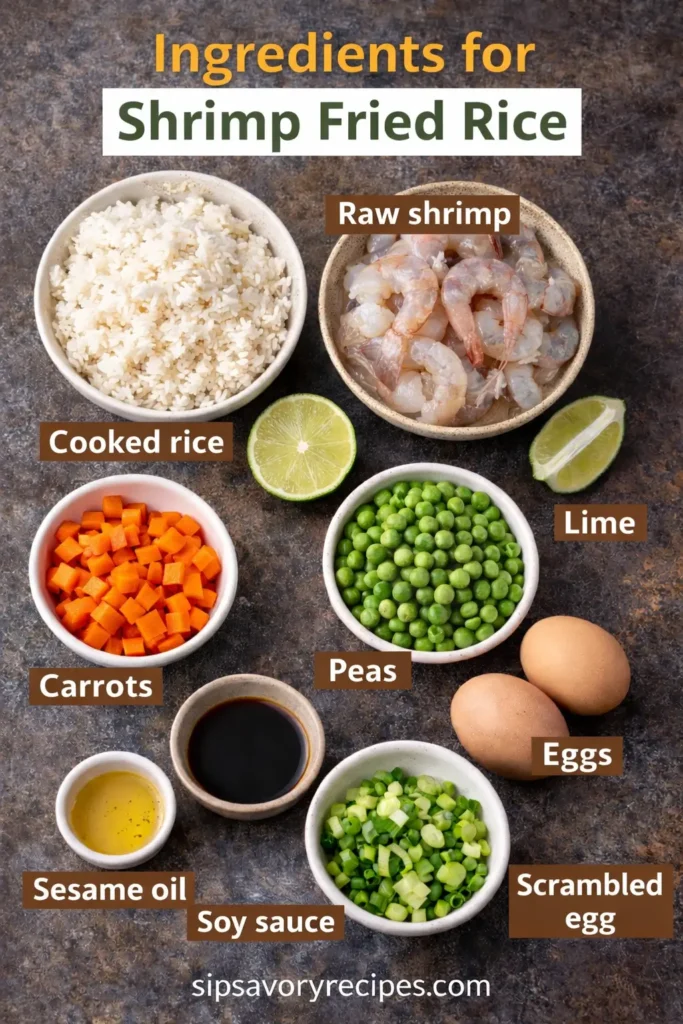
Before turning on the stove, gather everything:
- Cooked, chilled rice
- Raw shrimp, peeled and deveined
- Diced carrots
- Frozen or fresh peas
- Eggs
- Minced garlic
- Soy sauce
- Sesame oil
- Cooking oil
- Chopped scallions
This step is crucial. Stir-frying moves fast, so preparation matters.
Step 2: Cook the Shrimp
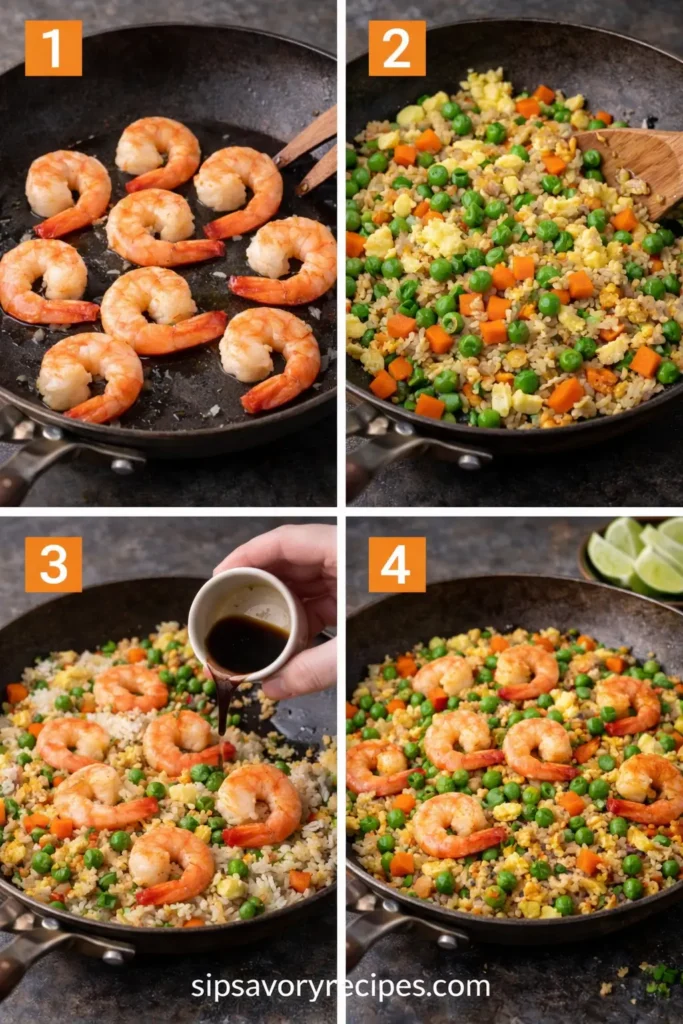
Heat a wok or large pan over high heat. Add oil. Place shrimp in a single layer. Cook for about 1–2 minutes per side until pink. Remove and set aside.
In the image, the shrimp look lightly browned, not overcooked. This is the goal.
Step 3: Scramble the Eggs
In the same pan, add a little more oil if needed. Pour in beaten eggs. Let them set slightly, then gently scramble. Remove and set aside.
Step 4: Stir-Fry the Vegetables
Add garlic to the hot pan. Stir quickly to release aroma. Add carrots and peas. Cook until just tender but still bright.
Step 5: Add the Rice
Break up any clumps of cold rice. Add it to the wok. Stir constantly so it heats evenly and lightly toasts.
Step 6: Season the Rice
Drizzle soy sauce around the edges of the pan. Toss to coat the rice evenly. Add sesame oil for fragrance. Sprinkle white pepper if desired.
Step 7: Combine Everything
Return shrimp and eggs to the pan. Mix gently so everything is evenly distributed. Finally, add chopped scallions and give one last toss.
At this point, your Shrimp Fried Rice should look very similar to the image you provided: colorful, glossy, and appetizing.
Common Mistakes and How to Avoid Them
Even experienced cooks sometimes struggle with fried rice. Here are the most common pitfalls.
1. Using Fresh Hot Rice
This makes the dish mushy. Always use cold rice if possible.
2. Overcrowding the Pan
Too much food lowers the temperature. Cook in batches if necessary.
3. Too Much Sauce
Excess soy sauce makes the rice wet and soggy. Add gradually.
4. Overcooking the Shrimp
Shrimp become rubbery if cooked too long. Remove them early.
Restaurant vs. Homemade Shrimp Fried Rice
Many people assume restaurant fried rice tastes better because of secret ingredients. In reality, the difference mainly comes from high heat and wok technique.
Restaurants use powerful burners that home stoves cannot match. This creates “wok hei,” a smoky aroma that is difficult to replicate at home. However, with a hot pan and proper technique, you can come very close.
Healthy Aspects of Shrimp Fried Rice
Shrimp Fried Rice can be nutritious when made thoughtfully.
- Shrimp is high in protein and low in fat.
- Carrots and peas provide fiber and vitamins.
- Eggs add healthy fats and nutrients.
To make it healthier, you can reduce oil, use less soy sauce, or substitute brown rice.
Delicious Variations
Shrimp Fried Rice is highly adaptable. Here are some popular variations.
Spicy Shrimp Fried Rice
Add chili paste or red pepper flakes for heat.
Garlic Butter Shrimp Fried Rice
Finish with a small knob of butter and extra garlic.
Pineapple Shrimp Fried Rice
Add sweet pineapple chunks for a tropical twist.
Vegetable-Heavy Shrimp Fried Rice
Increase the amount of carrots, peas, and add bell peppers.
Serving Suggestions
Shrimp Fried Rice can be a complete meal on its own. However, it also pairs beautifully with:
- Spring rolls
- Chicken stir-fry
- Sweet and sour dishes
- Hot and sour soup
In the image, the dish appears served simply in a bowl, which is perfect. No complicated plating is necessary.
Storage and Reheating
If you have leftovers, store Shrimp Fried Rice in an airtight container in the refrigerator for up to 2 days. Reheat in a pan with a splash of water or oil to refresh the texture. Avoid microwaving too long, as it can dry out the rice.
Can You Freeze Shrimp Fried Rice?
Yes, you can freeze it. However, the texture may change slightly. Freeze in portions, then reheat in a pan for best results.
Why the Image Is an Excellent Representation
The image shows all the hallmarks of great Shrimp Fried Rice:
- Perfectly cooked shrimp
- Evenly distributed vegetables
- Separate, glossy rice grains
- Light egg ribbons
- Fresh scallion garnish
It clearly represents a classic, restaurant-quality version of the dish.
Final Thoughts
Shrimp Fried Rice is more than just a quick meal. It is a dish that combines tradition, technique, and flavor in a beautifully simple way. When prepared correctly, it is comforting, satisfying, and endlessly customizable.
Whether you cook it for a busy weeknight, a family gathering, or a special dinner, Shrimp Fried Rice never disappoints. With the method and tips in this article, you can confidently recreate the exact style shown in your image.
Enjoy every bite.
