
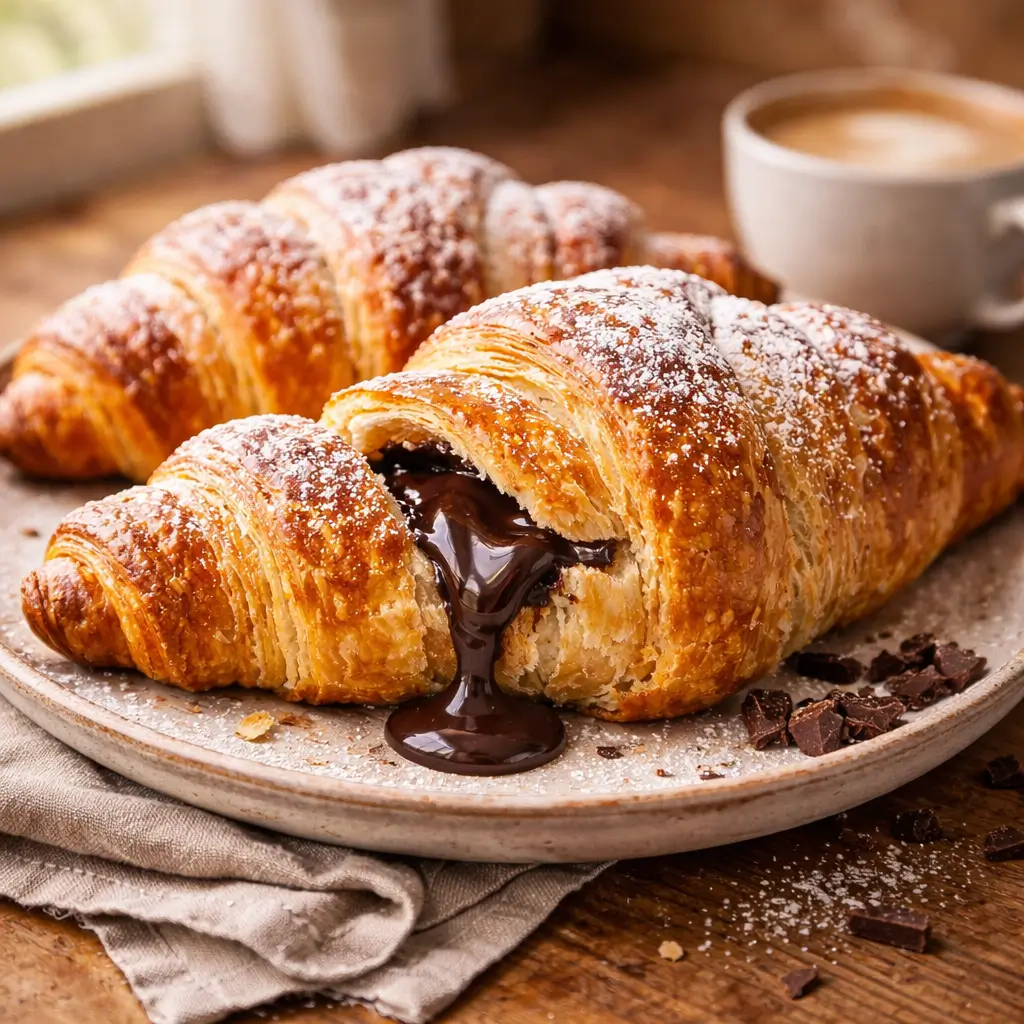
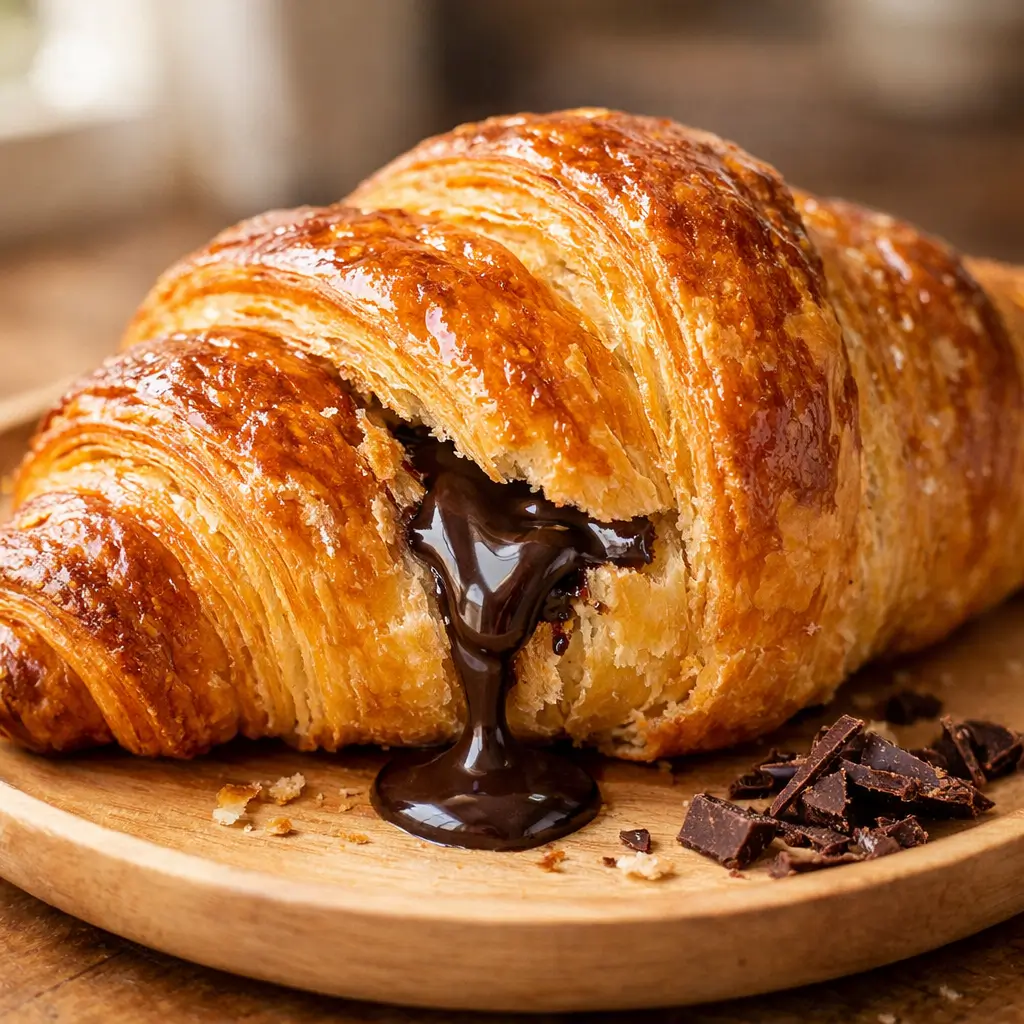
Few baked goods are as satisfying as homemade chocolate croissants. They combine crisp, golden layers, rich butter flavor, and a warm, melty chocolate center. Although many people assume that croissants are difficult to make, the process becomes manageable with patience, proper technique, and clear steps. This guide will walk you through every stage, from ingredients to shaping, baking, and storage, ensuring bakery-quality results at home.
Why Homemade Chocolate Croissants Are Worth the Effort
Store-bought croissants taste good, but homemade chocolate croissants taste exceptional. First, you control ingredient quality, including butter and chocolate. Second, you experience the artistry of lamination, which gives croissants their signature flaky texture. Third, the aroma of freshly baked pastries filling your kitchen creates an unmatched breakfast experience.
Homemade chocolate croissants also allow customization. You can use dark, milk, or semi-sweet chocolate. You can adjust sweetness levels. You can experiment with fillings like almond paste or hazelnut spread. Most importantly, you gain confidence in working with laminated dough.
Understanding the Science Behind Croissant Dough
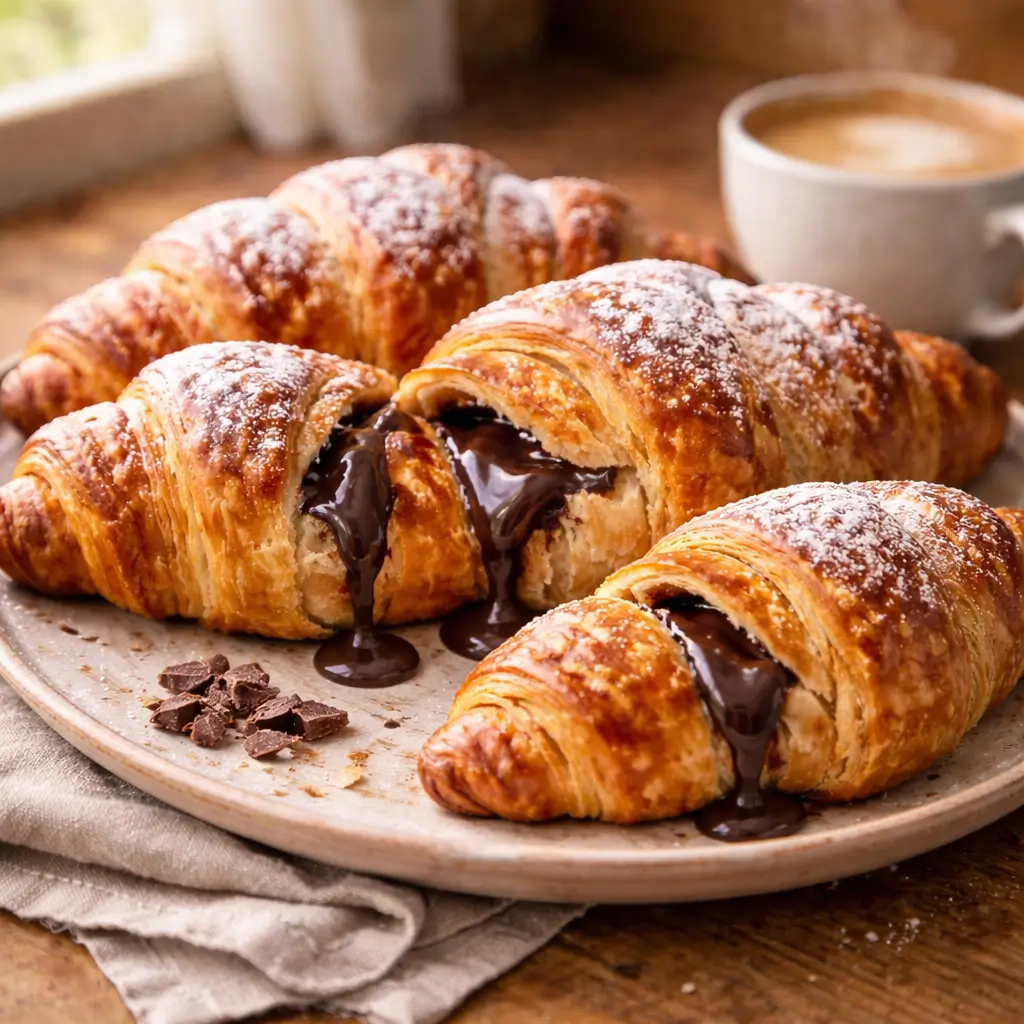
Croissant dough relies on lamination, a technique that layers butter within dough. During baking, water in the butter turns to steam. That steam lifts the dough, creating distinct flaky layers. Meanwhile, yeast fermentation provides rise and structure.
Temperature control matters throughout the process. Butter must remain cold but pliable. Dough must stay chilled between folds. If butter melts, layers merge and flakiness disappears. If dough is too cold, it cracks and resists rolling.
Mastering this balance separates good croissants from exceptional ones. With practice, your hands will learn the right texture and timing.
Essential Ingredients for Perfect Chocolate Croissants
Every ingredient plays a crucial role in texture, flavor, and structure. Selecting high-quality components significantly improves results.
All-Purpose Flour
All-purpose flour provides structure without making the dough too tough. Bread flour creates excessive chewiness. Pastry flour lacks strength. All-purpose flour strikes the right balance.
Unsalted Butter
Butter determines flavor and lamination quality. European-style butter works best because it contains less water and more fat. This consistency produces cleaner layers and superior flakiness.
Granulated Sugar
Sugar adds slight sweetness and helps yeast activity. Too much sugar weakens gluten structure, so keep it moderate.
Salt
Salt enhances flavor and strengthens gluten development. It also slows yeast activity, allowing controlled fermentation.
Active Dry Yeast
Yeast creates lift and lightness. Always activate yeast in lukewarm milk to ensure proper fermentation.
Milk
Milk adds tenderness and enriches the dough. Lukewarm milk activates yeast without killing it.
Egg
Egg provides shine and color when brushed onto croissants before baking. It also adds slight richness.
Dark Chocolate
High-quality dark chocolate gives deep flavor. Use batons or chopped pieces for even melting. Avoid chocolate chips, as they contain stabilizers that resist smooth melting.
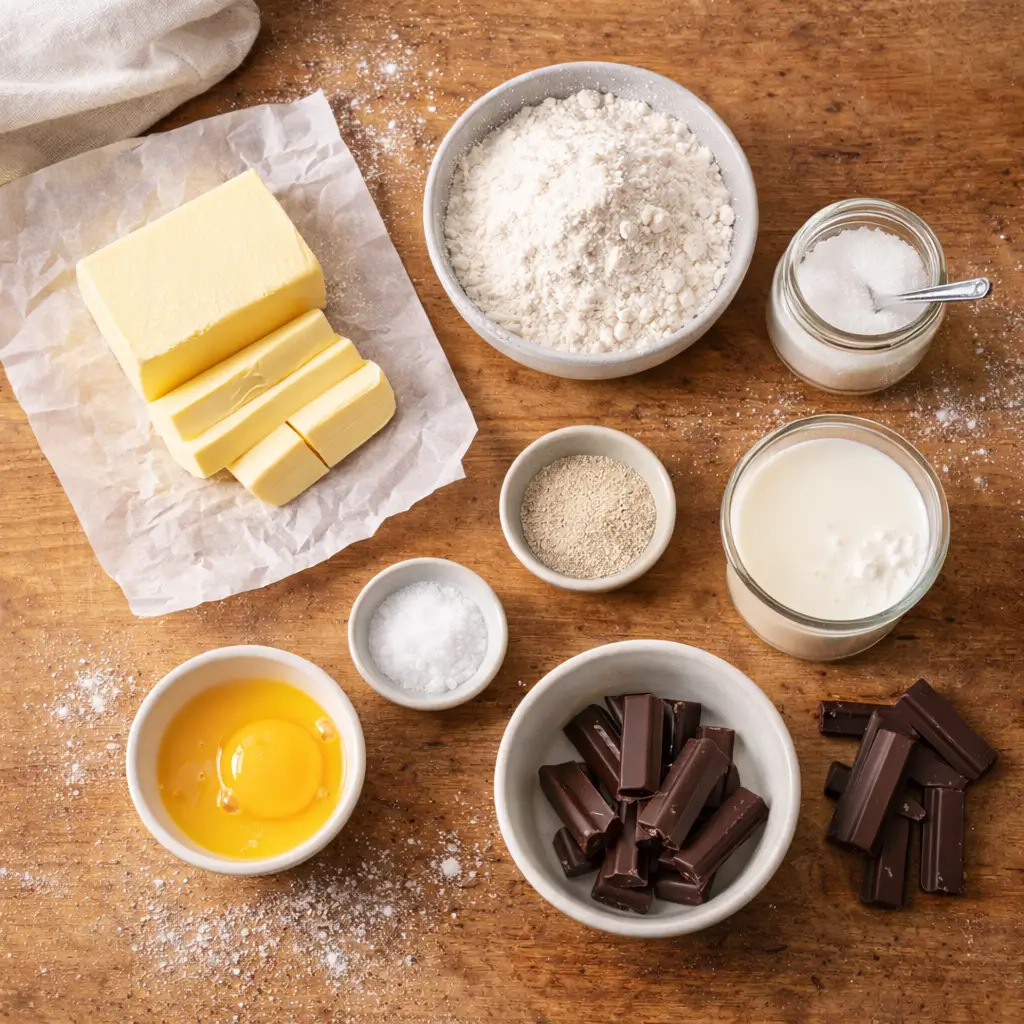
Ingredients (for 8–10 chocolate croissants)
For the dough
- 3 ½ cups (450 g) all-purpose flour
- ¼ cup (50 g) granulated sugar
- 2 teaspoons (10 g) fine salt
- 2 teaspoons (7 g) active dry yeast
- 1 ¼ cups (300 ml) lukewarm whole milk
For lamination
- 1 ¼ cups (280 g) cold unsalted butter, European-style if possible
For filling
- 8–10 pieces dark chocolate batons
(or about 150–180 g high-quality dark chocolate, cut into thick sticks)
For egg wash
- 1 large egg
- 1 tablespoon (15 ml) milk
Step-by-Step Dough Preparation
Making croissant dough requires patience, but each stage builds toward a perfect result.
Mixing the Dough
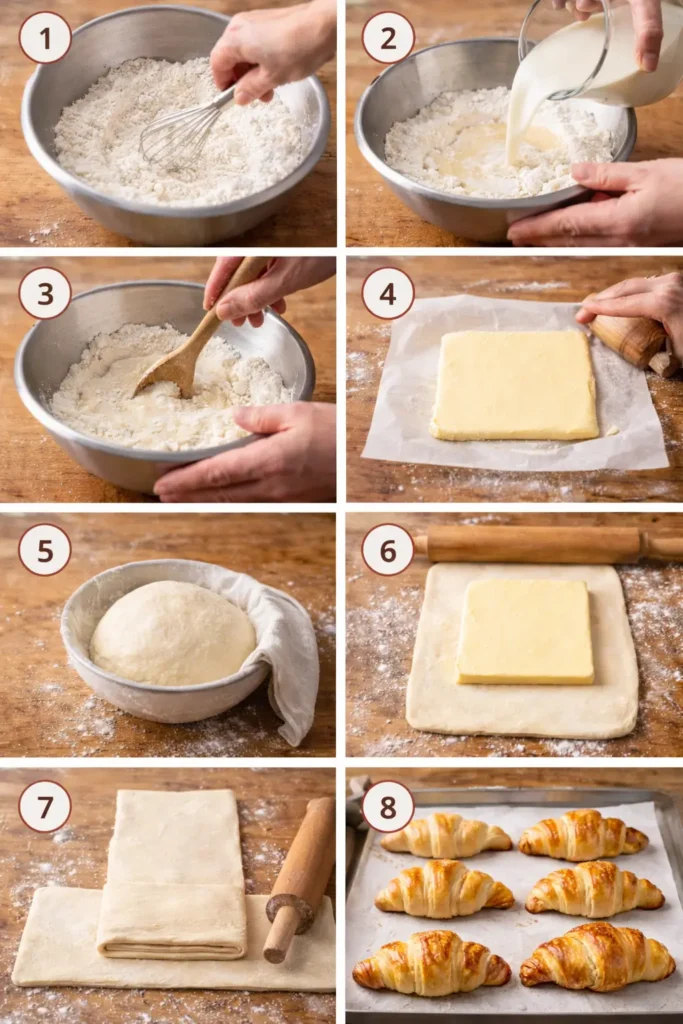
Combine flour, sugar, salt, and yeast in a bowl. Gradually pour in lukewarm milk while stirring. Mix until a soft, slightly sticky dough forms. Knead gently for a few minutes until smooth.
Cover the dough with a cloth and let it rest. This relaxation helps gluten develop without overworking.
Preparing the Butter Block
Place cold butter between parchment paper sheets. Roll it into a thin, even square. This butter slab should be firm yet flexible. Refrigerate it until needed.
Enclosing the Butter
Roll the dough into a large rectangle. Place the butter block in the center. Fold the dough over it like an envelope, sealing the edges completely.
First Fold
Roll the dough into a long rectangle. Fold it into thirds, like a letter. Wrap tightly and chill for at least 30 minutes.
Second and Third Folds
Repeat the rolling and folding process two more times, chilling between each fold. These folds create dozens of delicate layers.
Final Chill
After the last fold, refrigerate the dough for several hours or overnight. This rest improves texture and makes shaping easier.
Shaping Chocolate Croissants
Proper shaping ensures even baking and beautiful presentation.
Rolling the Dough
Roll the chilled dough into a large, thin rectangle. Keep edges straight and thickness uniform.
Cutting Triangles
Use a sharp knife or pastry cutter to slice neat triangles. Each triangle should be wide at the base and pointed at the tip.
Adding Chocolate
Place a piece of dark chocolate at the base of each triangle. Gently roll the dough from base to tip, enclosing the chocolate.
Forming the Croissant Shape
Curve the ends slightly inward to create a crescent shape. Place each croissant on a lined baking sheet with space between them.
Proofing for Light and Fluffy Texture
Cover the shaped croissants loosely and let them rise in a warm place for about one to two hours. They should look visibly puffed and slightly jiggly when touched.
Proper proofing prevents dense texture. Under-proofed croissants bake flat and tight. Over-proofed ones collapse in the oven.
Baking to Golden Perfection
Preheat the oven to 375°F (190°C). Brush each croissant lightly with beaten egg for a glossy finish.
Bake for 18 to 22 minutes until deeply golden brown. Rotate the tray halfway through for even browning.
The kitchen should smell buttery and inviting. Resist cutting immediately. Let them cool slightly so chocolate sets just enough.
Serving Suggestions
Homemade chocolate croissants shine best when served warm. Pair them with:
- A cup of freshly brewed coffee or cappuccino.
- A glass of cold milk.
- Fresh berries for balance.
- A light dusting of powdered sugar.
They make an elegant breakfast, brunch centerpiece, or afternoon treat.
Storage and Reheating Tips
Fresh croissants taste best the same day. However, proper storage extends enjoyment.
Room Temperature Storage
Store in an airtight container for up to two days. Avoid plastic wrap directly on pastries, as it softens the crust.
Freezing Unbaked Croissants
After shaping but before proofing, freeze them on a tray. Once solid, transfer to a freezer bag. Bake directly from frozen after proofing.
Reheating
Reheat in a 350°F (175°C) oven for 5 to 8 minutes. Avoid microwaving, which makes them chewy.
Common Mistakes and How to Avoid Them
Butter Melting Too Soon
Keep everything cold. Work quickly. Chill dough whenever butter feels soft.
Uneven Rolling
Apply steady pressure with the rolling pin. Rotate the dough regularly.
Skipping Rest Periods
Resting prevents gluten tightening. Always follow chilling steps.
Overproofing
Watch carefully. Slight puffiness is enough.
Variations to Try
Once comfortable with the basic recipe, experiment with these options.
Almond Chocolate Croissants
Spread a thin layer of almond cream before adding chocolate.
White Chocolate Croissants
Replace dark chocolate with white chocolate for a sweeter profile.
Hazelnut Chocolate Croissants
Add a spoonful of hazelnut spread inside each roll.
Why This Recipe Works
This method balances structure and tenderness. Cold butter ensures flakiness. Multiple folds create delicate layers. Proper proofing guarantees airy texture. High-quality chocolate delivers rich flavor.
By following each step carefully, you can achieve bakery-style croissants at home.
Final Thoughts
Homemade chocolate croissants require time, but the reward is unforgettable. Each bite offers crisp layers, buttery richness, and warm chocolate indulgence. Whether for a weekend breakfast or a special occasion, these pastries impress every guest.
With practice, your technique will improve, and your confidence will grow. Soon, making croissants will feel natural and deeply satisfying.
