
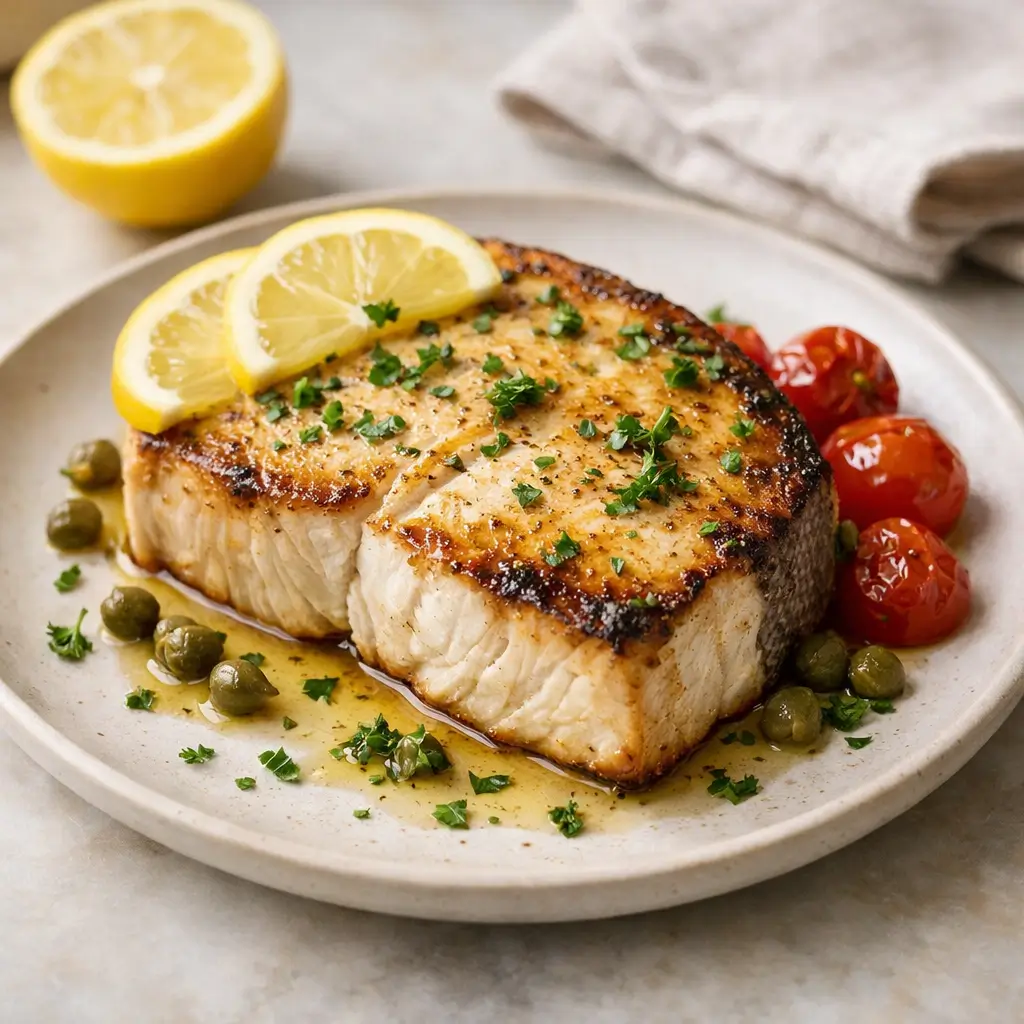
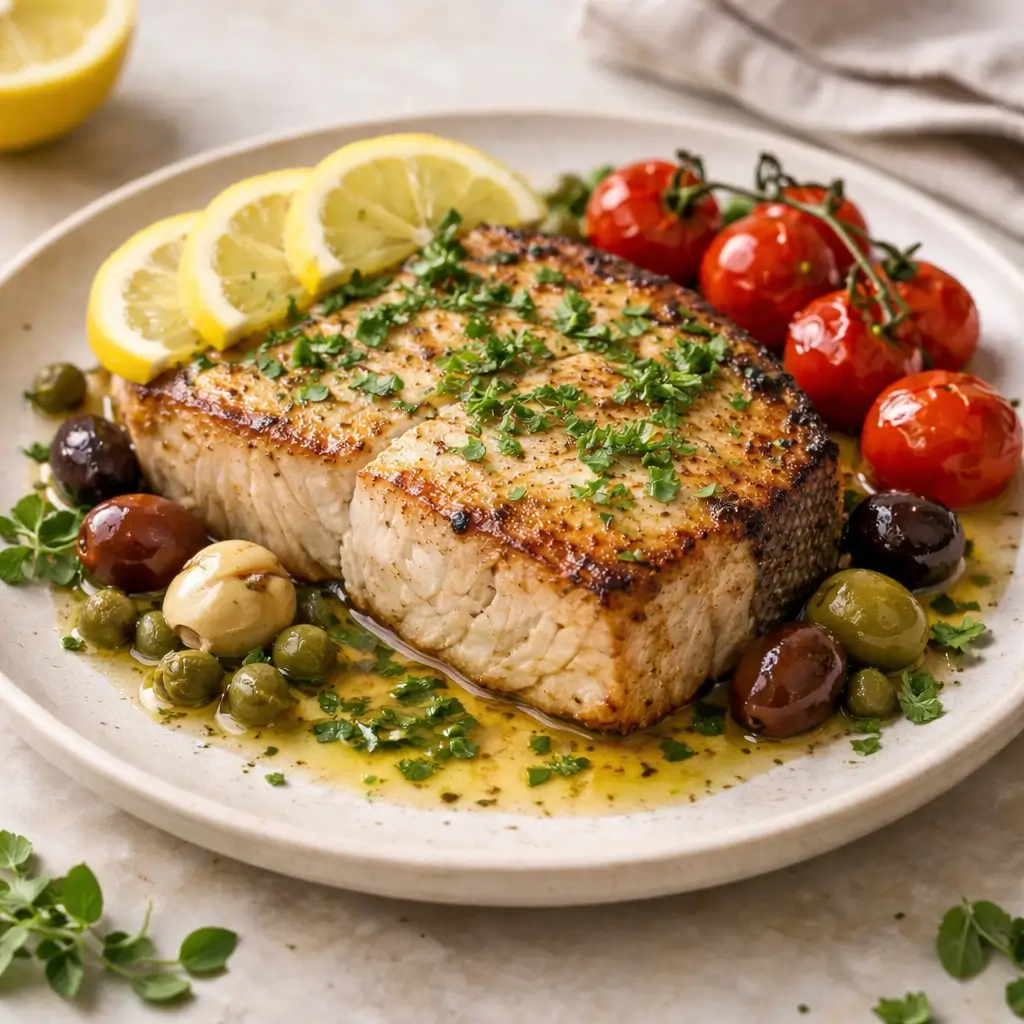
Mediterranean garlic-lemon herb oven-baked swordfish is a refined yet approachable seafood dish that highlights clean flavors, simple techniques, and high-quality ingredients. This recipe combines thick swordfish steaks with olive oil, fresh garlic, citrus, and aromatic herbs, then bakes everything gently in the oven for a tender, flaky result.
Unlike delicate white fish, swordfish has a firm, meaty texture. Therefore, it responds exceptionally well to oven baking. Moreover, Mediterranean ingredients enhance the fish without masking its natural flavor. As a result, this dish works equally well for weeknight dinners and elegant entertaining.
This guide walks you through everything you need to know. You will learn how to choose swordfish, prepare it correctly, season it with balance, bake it without drying, and serve it confidently. Additionally, you will find a precise ingredient scaling table for multiple serving sizes.
Why Oven-Baked Swordfish Works So Well
Swordfish is one of the best fish for oven baking. Its dense structure holds moisture effectively. Consequently, it remains juicy even at moderate oven temperatures.
Furthermore, swordfish absorbs flavors slowly and evenly. Garlic, lemon zest, olive oil, and herbs penetrate the surface without overpowering the fish. This balance is essential in Mediterranean cooking.
Oven baking also offers consistency. Unlike pan-searing, the oven cooks the fish evenly from edge to center. Therefore, you avoid raw centers or overcooked exteriors.
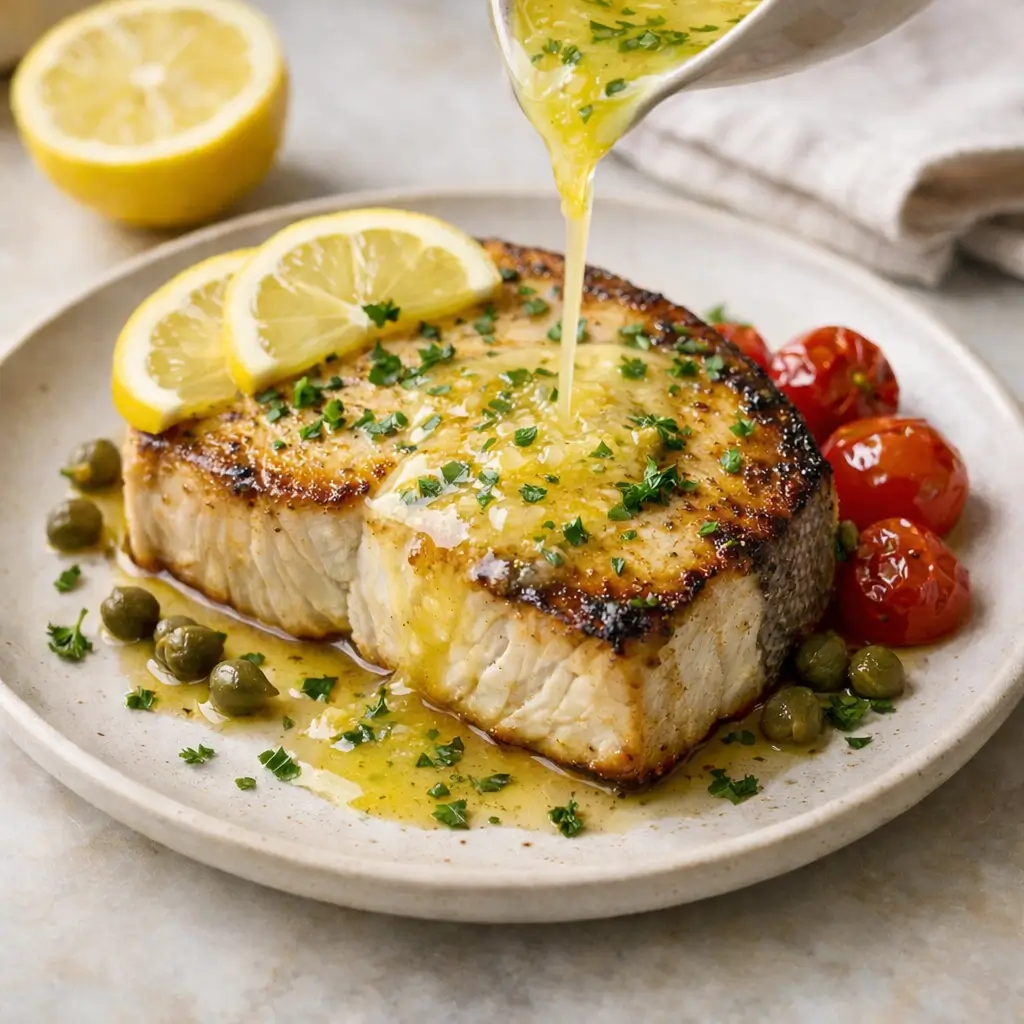
What Makes This Recipe Mediterranean
Mediterranean cuisine emphasizes simplicity. It relies on fresh produce, healthy fats, and restrained seasoning. This recipe follows those principles closely.
Key Mediterranean elements include:
- Extra-virgin olive oil
- Fresh garlic
- Lemon zest and juice
- Parsley and oregano
- Tomatoes, olives, or capers as accents
Each ingredient has a purpose. None dominate. Together, they create harmony rather than complexity.
Choosing the Best Swordfish
Fresh vs Frozen
Fresh swordfish is ideal when available. Look for steaks with a pale pink or ivory color. Avoid fish that appears gray or dull.
Frozen swordfish can work well. However, it must be properly thawed. Thaw overnight in the refrigerator. Never thaw at room temperature.
Thickness Matters
Choose steaks at least 1 to 1½ inches thick. Thin steaks overcook easily. Thick cuts allow gentle baking and better moisture retention.
Sustainability Considerations
Whenever possible, purchase responsibly sourced swordfish. Ask your fishmonger about origin and harvesting practices.
Essential Mediterranean Flavor Components
Olive Oil
Use extra-virgin olive oil. Its fruitiness complements the fish. Avoid neutral oils, which lack aroma.
Garlic
Fresh garlic is mandatory. Mince or lightly crush it. Do not use garlic powder.
Lemon
Both zest and juice matter. Zest provides aroma. Juice adds brightness. Balance is critical.
Fresh Herbs
Parsley offers freshness. Oregano provides earthiness. Thyme also works well.
Equipment You Will Need
- Baking dish or shallow roasting pan
- Parchment paper (optional)
- Microplane or fine grater
- Sharp knife
- Measuring spoons
- Oven preheated to 400°F (200°C)
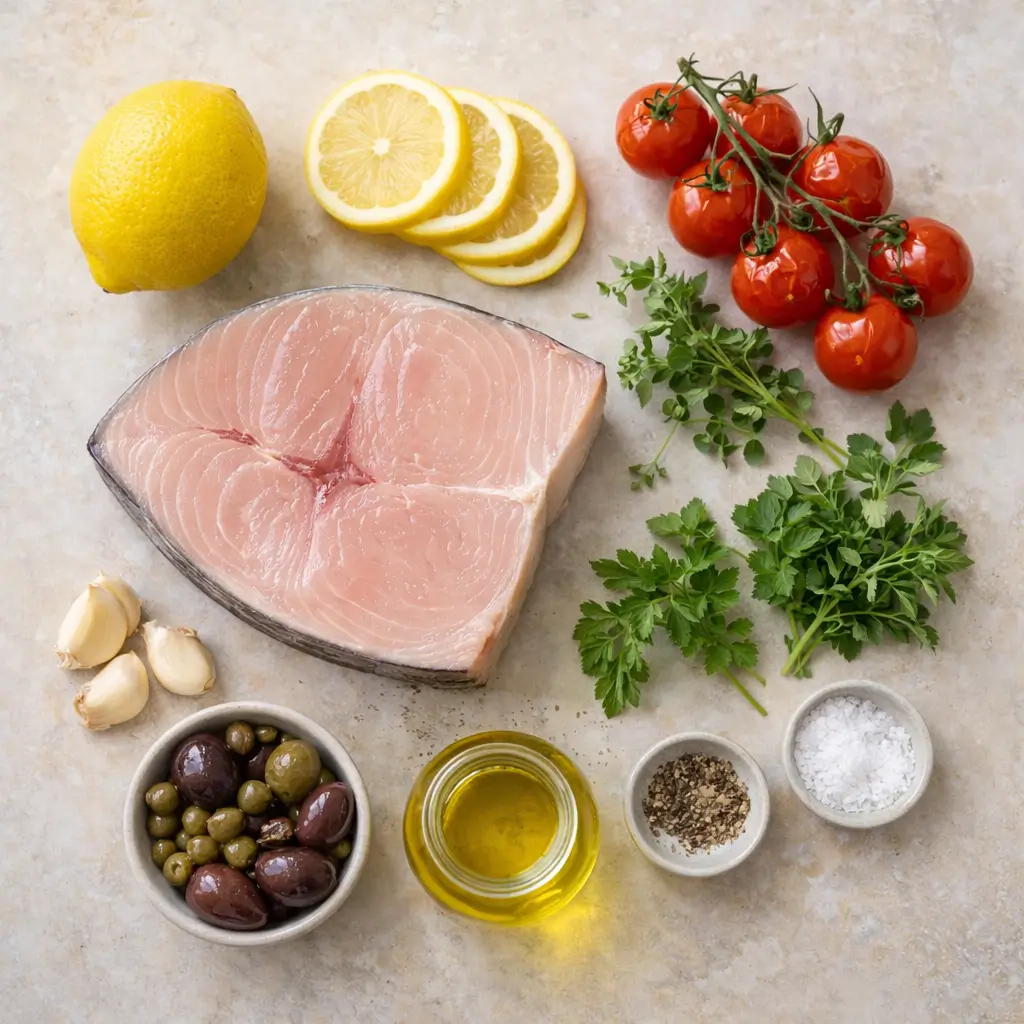
Ingredients for Mediterranean Garlic-Lemon Herb Oven-Baked Swordfish
Base Ingredients
- Swordfish steaks
- Extra-virgin olive oil
- Garlic cloves
- Lemon (zest and juice)
- Fresh parsley
- Fresh oregano or thyme
- Sea salt
- Freshly cracked black pepper
Optional Mediterranean Add-Ins
- Cherry tomatoes
- Kalamata olives
- Capers
Ingredient Scaling Table (2, 4, and 6 Servings)
This table allows precise scaling without guesswork.
Mediterranean Garlic-Lemon Herb Oven-Baked Swordfish
| Ingredient | 2 Servings | 4 Servings | 6 Servings |
|---|---|---|---|
| Swordfish steaks | 2 (6 oz / 170 g each) | 4 (6 oz / 170 g each) | 6 (6 oz / 170 g each) |
| Olive oil | 2 tbsp | 4 tbsp | 6 tbsp |
| Garlic cloves | 2 | 4 | 6 |
| Lemon zest | Zest of 1 lemon | Zest of 2 lemons | Zest of 3 lemons |
| Lemon juice | 2 tbsp | 4 tbsp | 6 tbsp |
| Fresh parsley | 2 tbsp, chopped | ¼ cup, chopped | ⅓ cup, chopped |
| Fresh oregano or thyme | 1 tsp | 2 tsp | 1 tbsp |
| Sea salt | ½ tsp | 1 tsp | 1½ tsp |
| Black pepper | ¼ tsp | ½ tsp | ¾ tsp |
| Cherry tomatoes (optional) | ½ cup | 1 cup | 1½ cups |
| Olives or capers (optional) | 2 tbsp | ¼ cup | ⅓ cup |
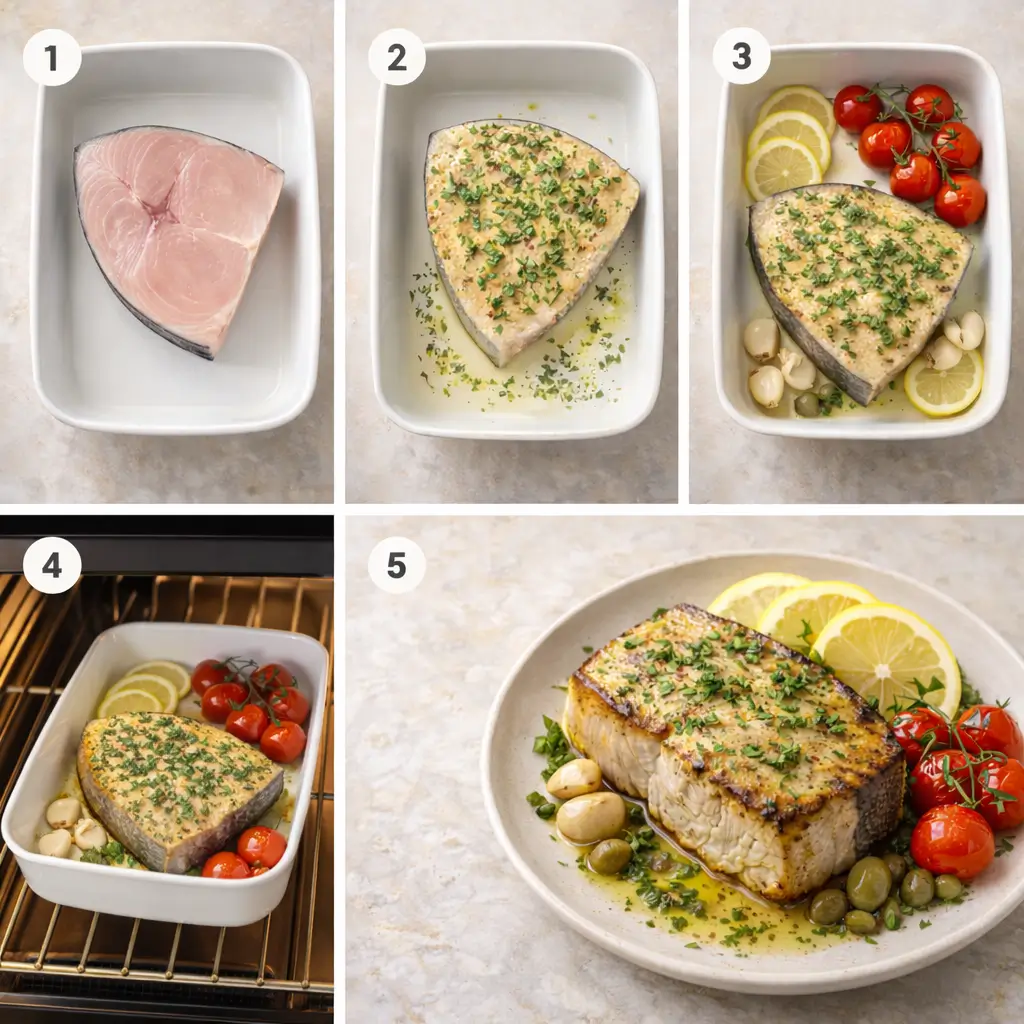
Step-by-Step Preparation Overview
This section explains the logic behind each step. The visual steps are already covered in your image prompt.
Step 1: Prepare the Fish
Pat the swordfish dry thoroughly. Moisture on the surface prevents proper seasoning adhesion.
Step 2: Season Thoughtfully
Brush the fish with olive oil. Add garlic, lemon zest, herbs, salt, and pepper. Press gently to adhere.
Step 3: Assemble the Baking Dish
Arrange lemon slices and optional tomatoes around the fish. Do not place them on top yet.
Step 4: Bake in the Oven
Bake at 400°F (200°C). Swordfish cooks quickly. Timing matters.
Step 5: Rest Briefly
Allow the fish to rest for 2–3 minutes after baking. This stabilizes moisture.
Step 6: Serve Simply
Plate cleanly. Finish with fresh herbs and lemon juice.
Exact Baking Time and Doneness
Swordfish should reach an internal temperature of 130–135°F (54–57°C).
General guideline:
- 1-inch thick steak: 10–12 minutes
- 1½-inch thick steak: 12–15 minutes
The fish should flake gently but remain moist.
Common Mistakes to Avoid
Overbaking
This is the most common error. Swordfish dries quickly if overcooked.
Excess Lemon Juice Before Baking
Too much acid early can toughen the fish. Use zest before baking. Finish with juice after.
Crowding the Pan
Crowding causes steaming. Space the steaks properly.
Flavor Variations Within the Mediterranean Theme
Greek-Style
Add sliced red onion and feta after baking.
Sicilian-Style
Use tomatoes, capers, and oregano generously.
Provençal-Style
Add thyme and a splash of white wine.
Best Side Dishes for Oven-Baked Swordfish
Swordfish pairs best with light, fresh sides.
Vegetable Sides
- Roasted zucchini
- Grilled asparagus
- Mediterranean green beans
Starches
- Lemon rice
- Roasted potatoes
- Orzo with olive oil
Salads
- Greek salad
- Arugula with lemon vinaigrette
Nutritional Benefits of Swordfish
Swordfish is rich in protein. It contains selenium, vitamin D, and omega-3 fatty acids.
However, moderation matters. Due to mercury content, swordfish should be eaten occasionally rather than daily.
Storage and Reheating
Storage
Store leftovers in an airtight container. Refrigerate for up to 2 days.
Reheating
Reheat gently in a low oven. Avoid microwaving, which dries the fish.
Can You Make This Recipe Ahead?
You can season the fish up to 4 hours in advance. Keep it refrigerated. Bake just before serving.
Frequently Asked Questions
Can I use frozen swordfish?
Yes. Thaw completely and pat dry.
Can I grill instead?
Yes, but oven baking offers better moisture control.
Can I replace swordfish?
Yes. Try halibut, mahi-mahi, or tuna steaks.
Frequently Asked Questions (FAQ)
What temperature should swordfish be baked at?
Swordfish should be baked at 400°F (200°C). This temperature cooks the fish evenly while preserving moisture.
How do I know when oven-baked swordfish is done?
Swordfish is done when it reaches an internal temperature of 130–135°F (54–57°C) and flakes easily but remains moist.
Can I bake swordfish without drying it out?
Yes. Use thick swordfish steaks, avoid overbaking, and brush the fish with olive oil before baking.
Should swordfish be covered while baking?
No. Swordfish should be baked uncovered to allow light browning and prevent steaming.
Can I prepare oven-baked swordfish ahead of time?
You can season the swordfish up to 4 hours in advance and refrigerate it. Bake just before serving.
Is frozen swordfish suitable for this recipe?
Yes. Frozen swordfish works well if it is fully thawed in the refrigerator and patted dry before seasoning.
Can I substitute another fish for swordfish?
Yes. Halibut, mahi-mahi, or tuna steaks are good substitutes with similar texture and baking behavior.
When should lemon juice be added to swordfish?
Add lemon zest before baking and finish with lemon juice after baking to avoid toughening the fish.
How long does oven-baked swordfish last in the refrigerator?
Leftover swordfish keeps for up to 2 days when stored in an airtight container.
What are the best side dishes for Mediterranean swordfish?
Mediterranean swordfish pairs well with roasted vegetables, lemon rice, or a Greek-style salad.
Final Thoughts
Mediterranean garlic-lemon herb oven-baked swordfish is a recipe built on balance. It respects the fish. It celebrates fresh ingredients. It avoids unnecessary complexity.
With proper technique and attention to timing, this dish delivers restaurant-quality results at home. Moreover, the scalable ingredient table ensures consistency whether you cook for two or six.
This recipe deserves a permanent place in your seafood rotation.
