
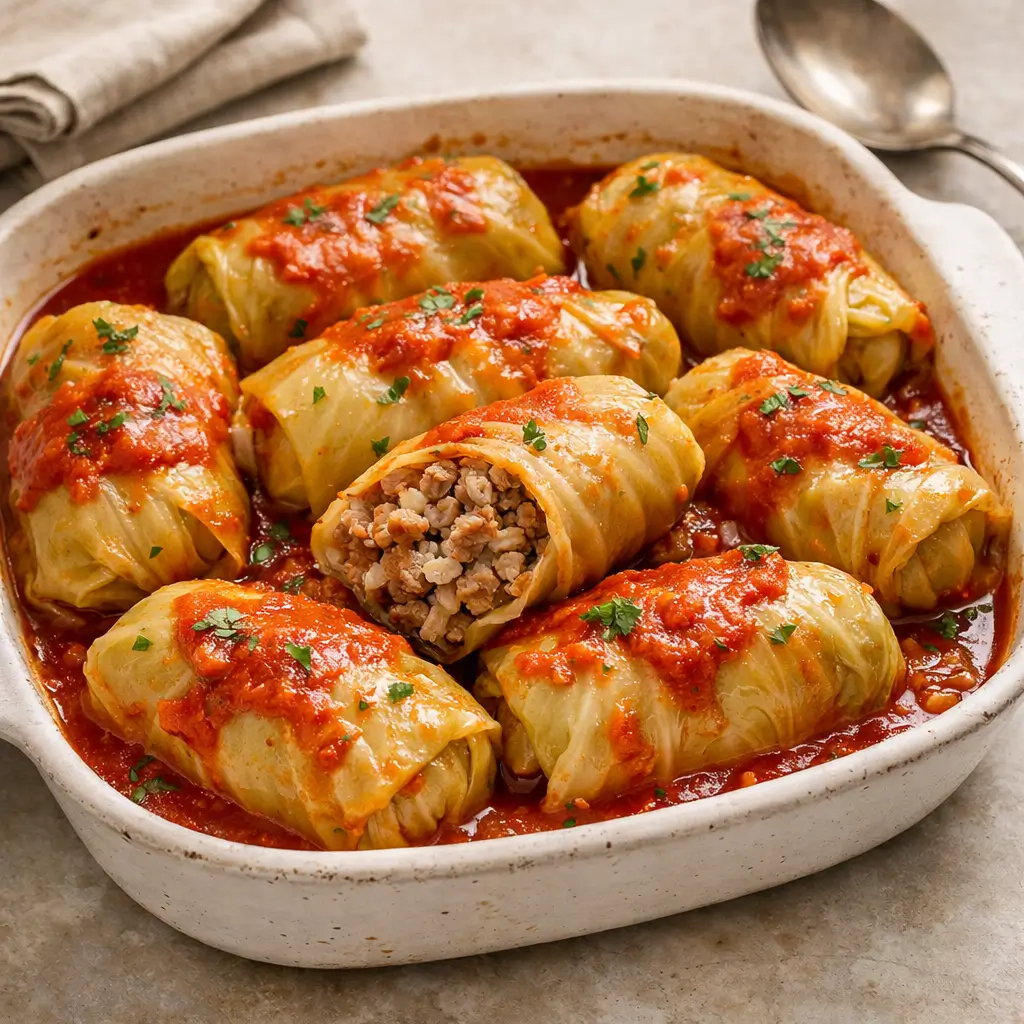
Stuffed Cabbage Rolls are a timeless comfort food built on simple ingredients, careful technique, and slow, gentle cooking. This dish brings together tender cabbage leaves, a savory meat-and-rice filling, and a rich tomato sauce that simmers into every fold. The result is hearty, balanced, and deeply satisfying.
Across many cuisines, stuffed cabbage rolls appear in slightly different forms. However, the core idea remains the same. Softened cabbage leaves wrap a flavorful filling. The rolls cook slowly in sauce until tender. Each bite delivers warmth, texture, and depth.
This version focuses on classic preparation, reliable structure, and clean flavors. It avoids unnecessary shortcuts while remaining approachable for home cooks. The method produces rolls that hold together well, stay moist, and reheat beautifully.
Why This Stuffed Cabbage Roll Recipe Works
This recipe succeeds because it respects the structure of the dish.
First, the cabbage leaves are softened properly. This step prevents tearing and allows tight rolling.
Second, the filling balances meat, rice, aromatics, and seasoning. It cooks evenly without drying out.
Third, the rolls bake gently in sauce. This prevents toughness and builds flavor gradually.
Each step reinforces the next. Nothing is rushed. Nothing is wasted.
Ingredients Overview
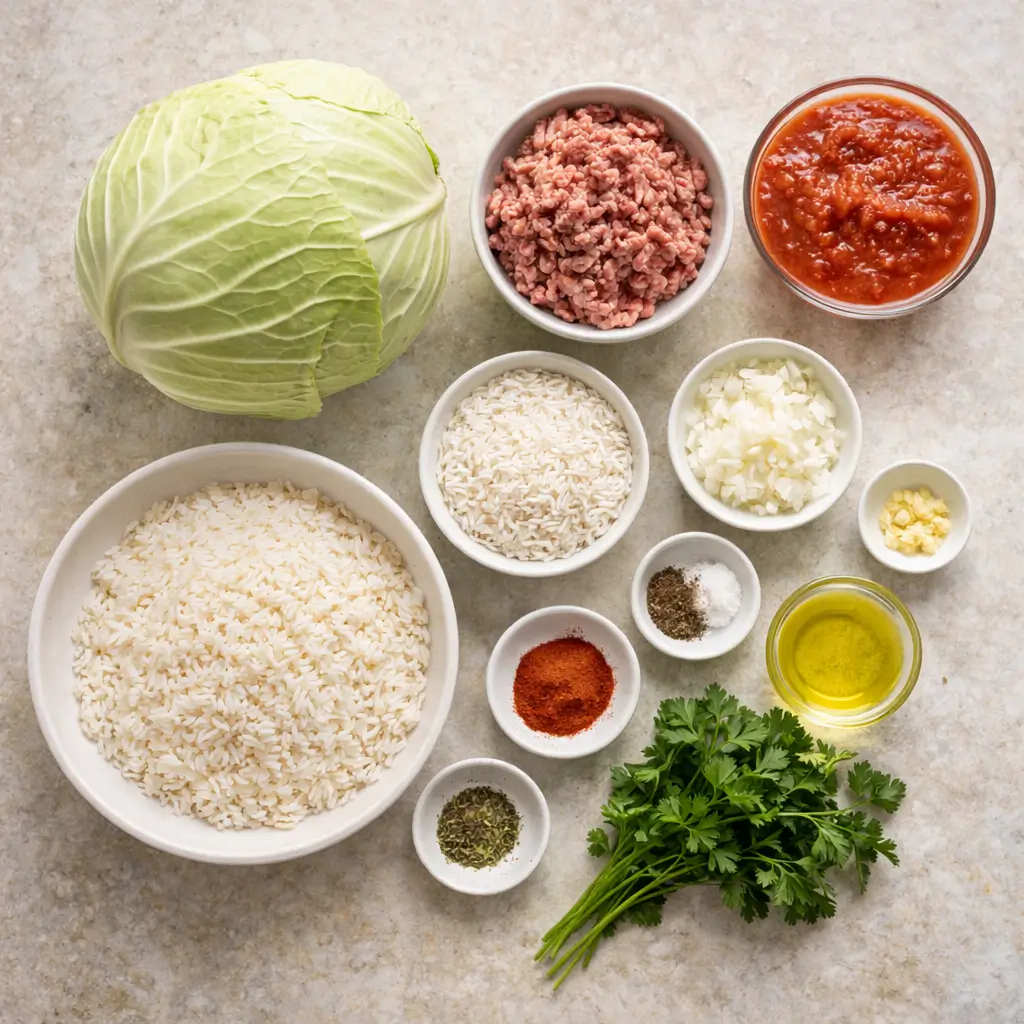
Stuffed cabbage rolls rely on everyday ingredients. However, proportions matter. The right balance ensures tender cabbage, juicy filling, and a sauce that coats rather than floods.
Below, you will find a precise scaling table for 2, 4, and 6 servings. The recipe scales cleanly without changing technique.
Scaling Table — Exact Ingredient Quantities
Stuffed Cabbage Rolls Ingredients
| Ingredient | 2 Servings | 4 Servings | 6 Servings |
|---|---|---|---|
| Green cabbage | ½ medium (≈700 g) | 1 medium (≈1.4 kg) | 1½ medium (≈2.1 kg) |
| Ground meat (beef or beef–pork blend) | 225 g (½ lb) | 450 g (1 lb) | 680 g (1½ lb) |
| Uncooked white rice | 40 g (¼ cup) | 80 g (½ cup) | 120 g (¾ cup) |
| Onion, finely chopped | 1 small (70 g) | 1 medium (140 g) | 1½ medium (210 g) |
| Garlic, minced | 1 clove | 2 cloves | 3 cloves |
| Fresh parsley or dill, chopped | 1 Tbsp | 2 Tbsp | 3 Tbsp |
| Salt | ¾ tsp | 1½ tsp | 2¼ tsp |
| Black pepper | ¼ tsp | ½ tsp | ¾ tsp |
| Paprika (optional) | ¼ tsp | ½ tsp | ¾ tsp |
| Crushed tomatoes or tomato sauce | 360 ml (1½ cups) | 720 ml (3 cups) | 1.08 L (4½ cups) |
| Olive oil | 1 Tbsp | 2 Tbsp | 3 Tbsp |
| Water or broth (for sauce thinning) | 120 ml (½ cup) | 240 ml (1 cup) | 360 ml (1½ cups) |
Choosing the Right Cabbage
Green cabbage works best for stuffed cabbage rolls. It offers flexible leaves and mild flavor.
Choose a cabbage that feels heavy for its size. The leaves should be tightly packed but not dry. Avoid cracked or brittle outer leaves.
Savoy cabbage also works well. Its leaves are more pliable and slightly sweeter. However, it is smaller, so adjust quantities accordingly.
Preparing the Cabbage Leaves
This step determines how easy the rolls will be to shape.
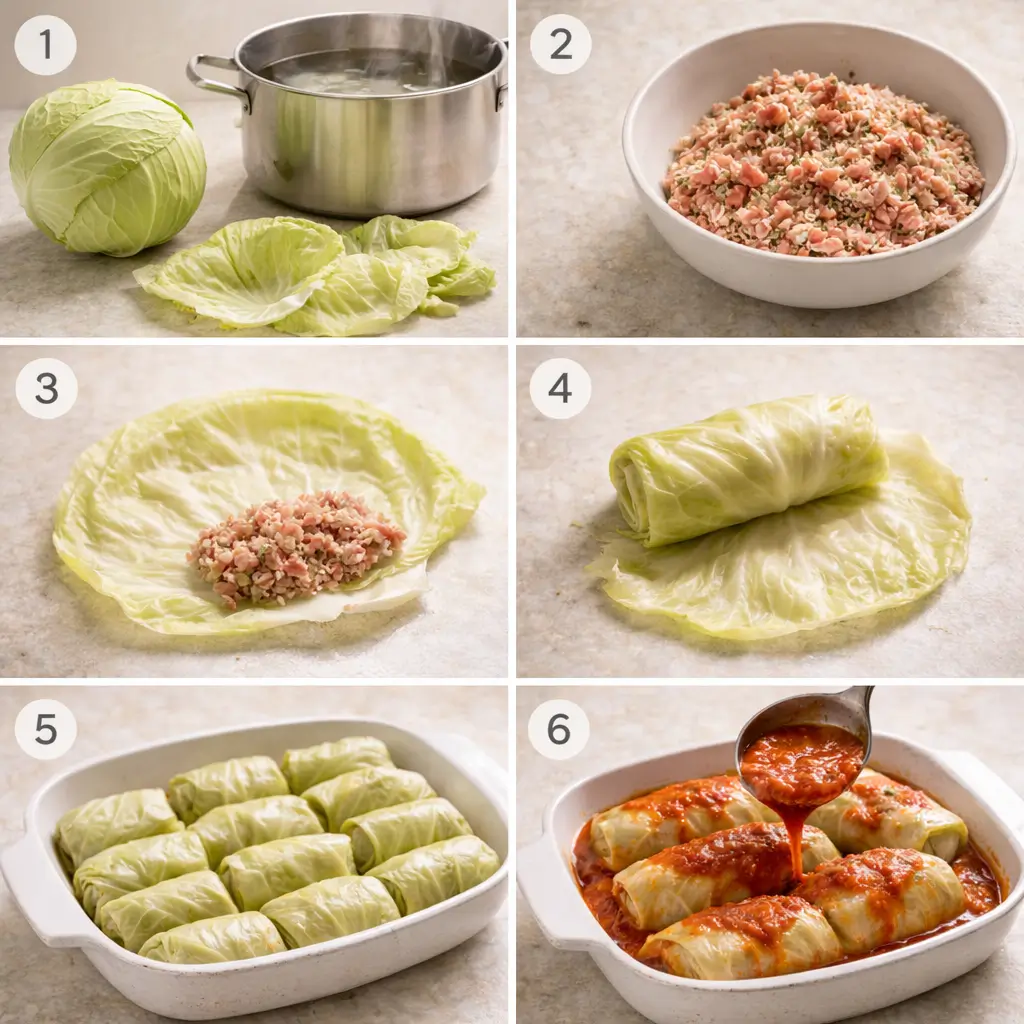
Step-by-Step Leaf Preparation
- Remove the tough outer leaves and discard them.
- Trim the core carefully using a small knife.
- Bring a large pot of water to a gentle boil.
- Lower the whole cabbage into the water.
- As leaves loosen, peel them away carefully.
- Drain the leaves and let them cool slightly.
If the center vein is thick, shave it down gently. This allows smoother rolling without tearing.
Do not overcook the leaves. They should be flexible, not mushy.
Building a Well-Balanced Filling
The filling must cook evenly inside the cabbage. Therefore, texture and moisture are critical.
Filling Principles
- Uncooked rice absorbs moisture during baking.
- Onion and garlic release juices while cooking.
- Meat fat keeps the filling tender.
Mix gently. Overworking compacts the filling and causes toughness.
How to Mix
- Place meat in a large bowl.
- Add rice, onion, garlic, herbs, salt, pepper, and paprika.
- Mix just until combined.
- Do not compress or knead.
The mixture should look loose, not dense.
Rolling the Cabbage Rolls Properly
Rolling technique affects both appearance and cooking.
Rolling Method
- Lay one cabbage leaf flat.
- Place filling near the base.
- Fold the bottom edge over the filling.
- Fold in the sides.
- Roll upward into a tight cylinder.
Do not overfill. The rice needs room to expand.
Repeat until all filling is used.
Assembling the Baking Dish
Use a snug baking dish. This prevents rolls from unraveling.
- Lightly oil the dish.
- Arrange rolls seam-side down.
- Fit them tightly but without crushing.
This structure keeps the rolls intact during cooking.
Preparing the Tomato Sauce
The sauce should be smooth, balanced, and lightly thinned.
Sauce Composition
- Crushed tomatoes provide body.
- Water or broth prevents burning.
- Olive oil adds roundness.
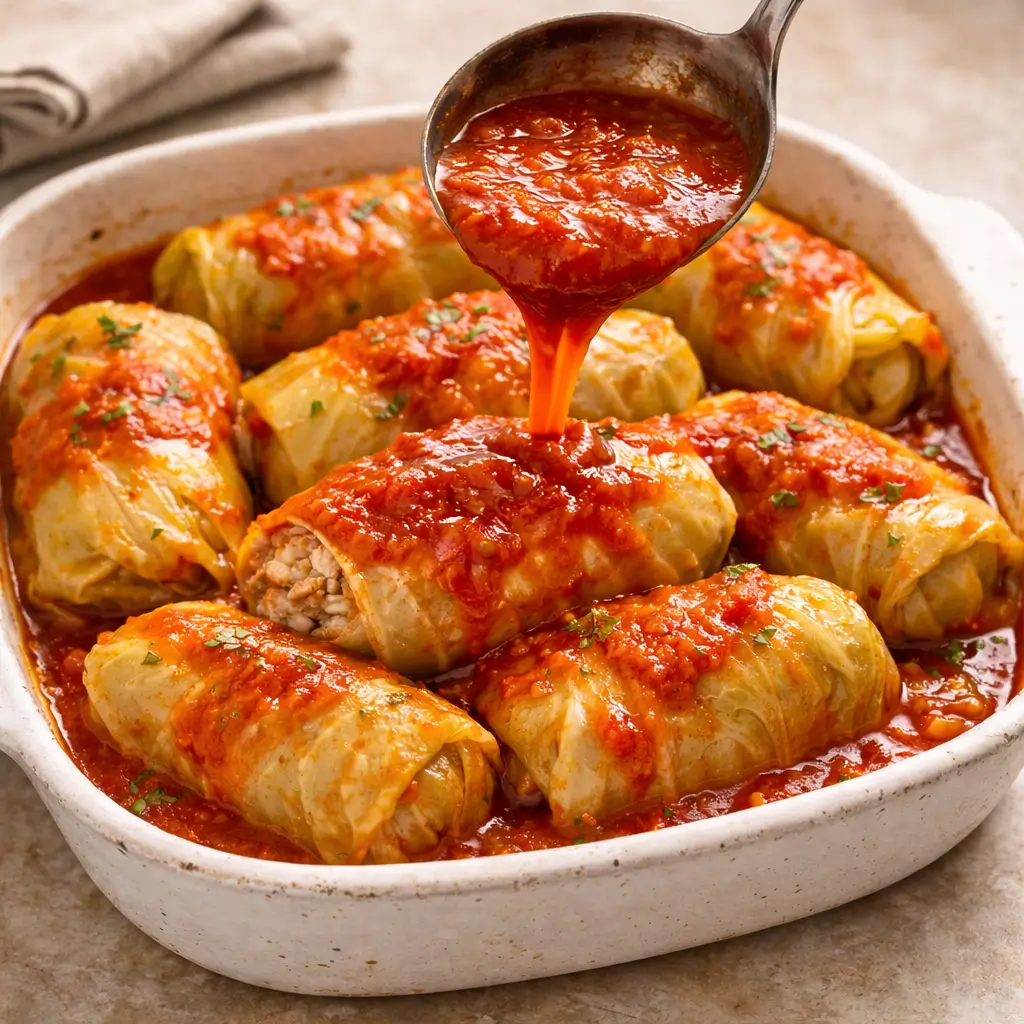
Mix the sauce before pouring. Taste and adjust salt lightly.
Pour evenly over the rolls. The tops should be coated, not submerged.
Baking the Stuffed Cabbage Rolls
Slow baking produces tenderness.
Baking Instructions
- Preheat oven to 175°C / 350°F.
- Cover tightly with foil.
- Bake for 75–90 minutes, depending on size.
- Remove foil for the final 10–15 minutes.
The rolls are done when cabbage is tender and the filling reaches safe temperature.
Resting Before Serving
Let the dish rest for 10 minutes.
This allows juices to settle and the rolls to firm slightly. Cutting too early causes splitting.
Serving Suggestions
Stuffed cabbage rolls pair well with simple sides.
- Mashed potatoes
- Crusty bread
- Steamed green beans
- Cucumber salad
Serve with extra sauce spooned over the top.
Texture and Flavor Profile
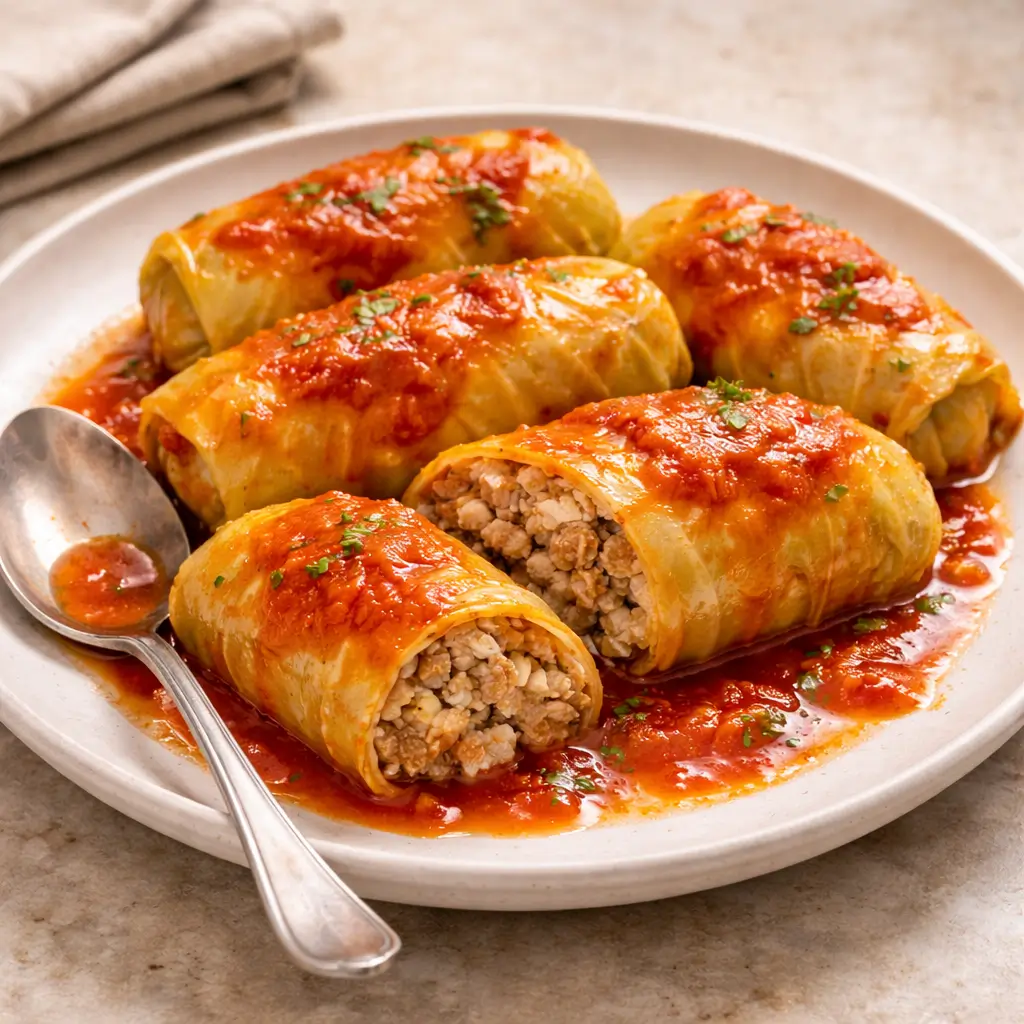
Properly made stuffed cabbage rolls should be:
- Tender but structured
- Moist, not watery
- Savory with mild acidity
- Balanced between cabbage, filling, and sauce
Each element should remain distinct.
Common Mistakes to Avoid
Overcooking the Cabbage Leaves
This leads to tearing and mushy texture.
Overpacking the Filling
Rice expands. Leave space.
Dry Filling
Use meat with some fat content.
Too Much Sauce
The rolls should braise, not boil.
Variations (SEO-Safe and Non-Duplicative)
Meat Options
- Beef only
- Beef and pork blend
- Turkey (add extra oil)
Rice Alternatives
- Brown rice (par-cook first)
- Short-grain rice for softer texture
Sauce Adjustments
- Add a pinch of sugar if tomatoes are acidic
- Add paprika for warmth
Make-Ahead Instructions
Stuffed cabbage rolls are ideal for preparation ahead.
Refrigerator
Assemble fully. Cover tightly. Refrigerate up to 24 hours before baking.
Freezer (Unbaked)
Freeze assembled rolls without sauce. Add sauce before baking.
Freezer (Baked)
Cool completely. Freeze in portions.
Reheating Instructions
- Oven: Cover and reheat at 160°C / 325°F
- Microwave: Use medium power with sauce
Always reheat gently.
Storage Guidelines
- Refrigerate leftovers up to 4 days
- Keep submerged in sauce to prevent drying
Nutritional Notes (Approximate)
Per serving (4-serving version):
- Protein: moderate
- Carbohydrates: moderate
- Fat: balanced
- Fiber: good from cabbage
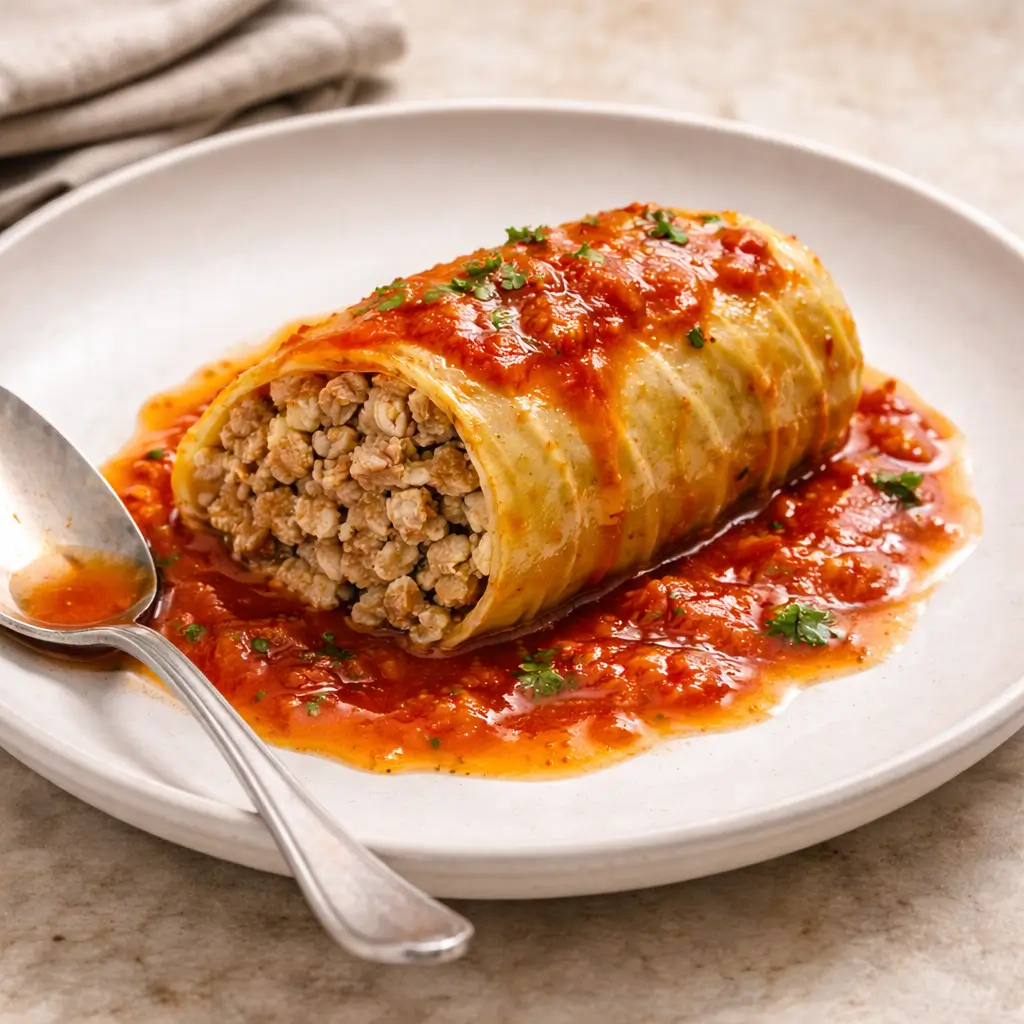
This dish is filling without being heavy.
Frequently Asked Questions (FAQ)
Can I make stuffed cabbage rolls ahead of time?
Yes. You can assemble the rolls completely, cover them tightly, and refrigerate them for up to 24 hours before baking. This often improves flavor.
Do I need to cook the rice before adding it to the filling?
No. The rice should be uncooked. It absorbs moisture from the meat and sauce while baking, which keeps the filling tender.
How do I keep cabbage leaves from tearing?
Soften the leaves gently in hot water and trim the thick center vein slightly. Avoid overcooking, which weakens the leaves.
What type of meat works best for stuffed cabbage rolls?
Ground beef or a beef–pork blend works best. A small amount of fat keeps the filling moist during long baking.
Can I freeze stuffed cabbage rolls?
Yes. You can freeze them either unbaked or fully baked. Always cool completely and store tightly sealed to prevent freezer burn.
How long do stuffed cabbage rolls last in the refrigerator?
Properly stored in sauce, they keep well for up to four days in the refrigerator.
Why are my cabbage rolls watery?
Too much sauce or excess moisture in the cabbage can cause this. Use just enough sauce to coat and braise the rolls, not submerge them.
Can I use savoy cabbage instead of green cabbage?
Yes. Savoy cabbage is softer and easier to roll, but the heads are smaller, so you may need more leaves.
How do I know when stuffed cabbage rolls are fully cooked?
The cabbage should be tender, and the filling should be fully cooked through. Baking covered for at least 75 minutes ensures this.
Are stuffed cabbage rolls better the next day?
Yes. Like many braised dishes, the flavors deepen after resting overnight, making leftovers especially good.
Final Thoughts
Stuffed Cabbage Rolls reward patience and care. Each step builds toward a dish that feels both nostalgic and dependable.
When prepared thoughtfully, the rolls stay intact, flavorful, and deeply comforting. They improve with time, reheat beautifully, and scale well for family meals.
This recipe offers a reliable foundation you can return to again and again.
