
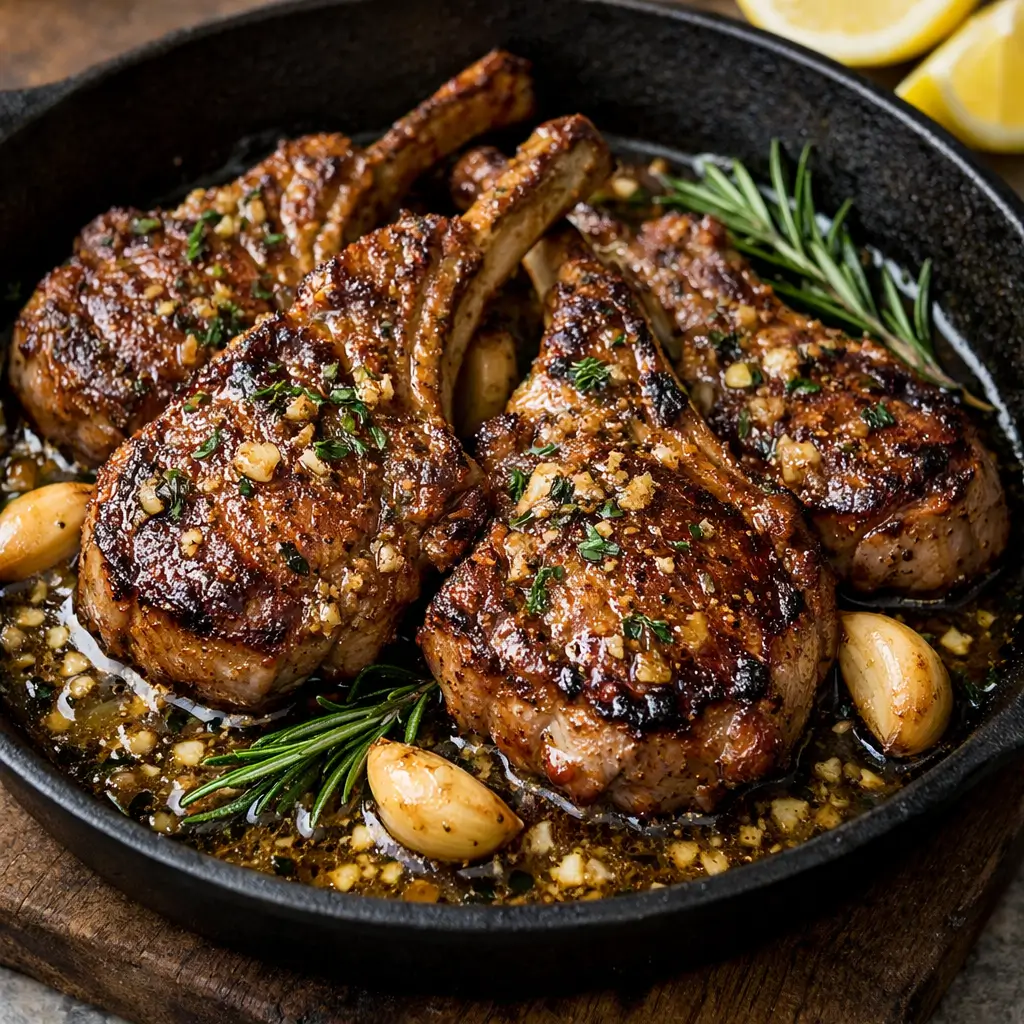
Juicy Garlic Butter Lamb Chops are a timeless dish that brings together rich flavor, elegant presentation, and straightforward cooking technique. This recipe focuses on achieving a deep, well-developed sear on the outside while keeping the inside tender and moist. The finishing garlic butter enhances the lamb without masking its natural taste, creating a balanced and refined result suitable for both everyday dinners and special occasions.
Lamb chops cook quickly and require attention rather than complexity. When treated properly, they reward the cook with a texture that is both succulent and delicate. This recipe is designed to guide you through each stage of the process with clarity, ensuring consistent results regardless of experience level.
Why This Garlic Butter Lamb Chops Recipe Works
This recipe works because it respects the structure and behavior of lamb meat during cooking. Lamb chops are naturally tender, but they can lose moisture if exposed to excessive heat or cooked for too long. By searing first and finishing with controlled butter basting, the meat develops flavor while retaining its juices.
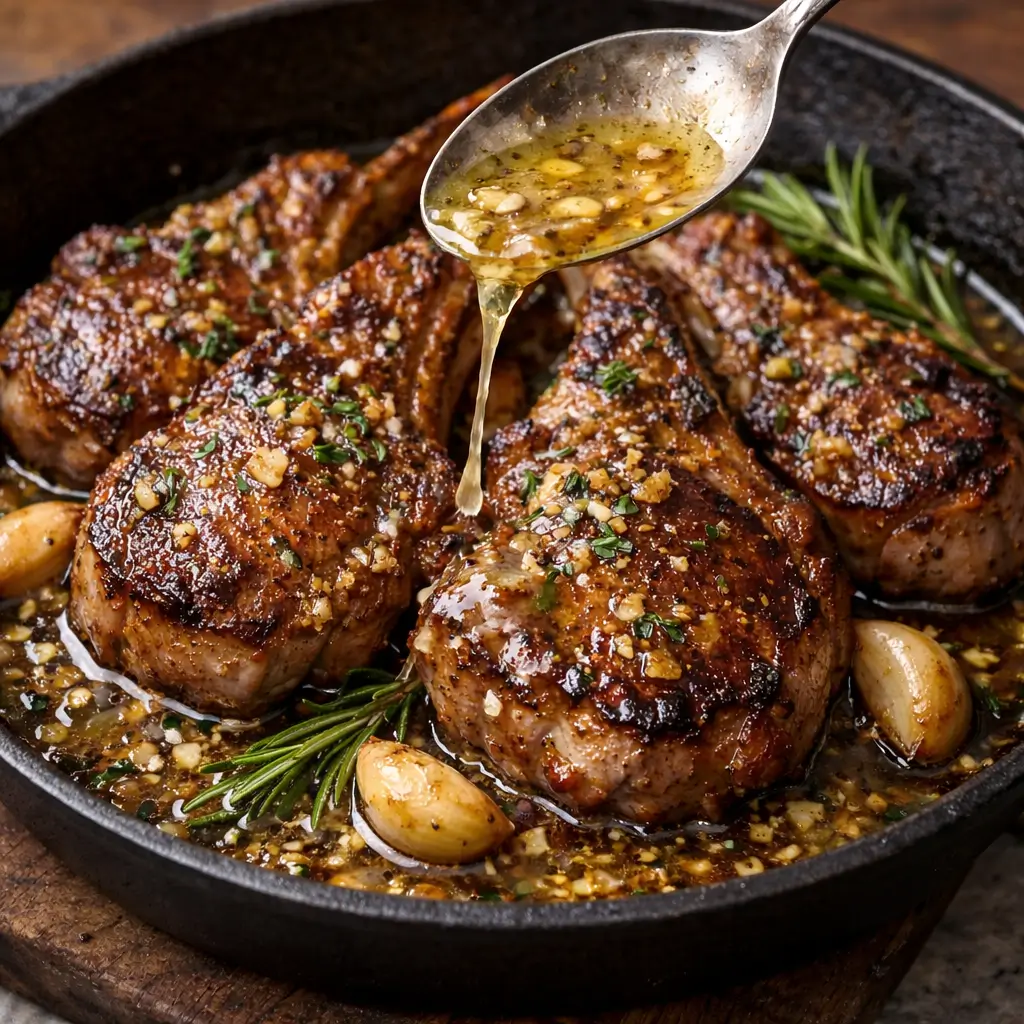
The garlic and herbs are introduced at the right moment, after the sear, so they perfume the butter gently rather than burning. Butter acts as both a flavor carrier and a protective layer, coating the lamb evenly and enriching its surface. Each step builds on the previous one, resulting in a cohesive and reliable method.
What Makes Lamb Chops Juicy and Tender
Juiciness in lamb chops depends on cut selection, temperature control, and resting time. Lamb contains intramuscular fat that melts during cooking, contributing both moisture and flavor. When cooked to the correct internal temperature, this fat protects the muscle fibers and prevents dryness.
Overcooking causes the fibers to contract and push moisture out of the meat. Resting after cooking allows those juices to redistribute evenly throughout the chop. Skipping the resting phase almost always results in a drier texture, even if the lamb was cooked correctly.
Choosing the Best Lamb Chops
The best lamb chops for this recipe are bone-in rib or loin chops. These cuts cook evenly and offer excellent flavor due to their fat distribution. Bone-in chops also retain heat better and are more forgiving during cooking.
Thickness plays an important role. Lamb chops that are too thin cook too quickly and are difficult to control, while overly thick chops require careful timing to avoid burning the exterior before the interior is done. A thickness of about one to one and a quarter inches provides the ideal balance.
Ingredient Overview
This recipe relies on a short list of ingredients, each selected for a specific purpose. Lamb provides richness, butter adds depth and moisture, garlic contributes aroma, and herbs bring freshness. Olive oil helps initiate the sear, while salt and black pepper enhance the natural flavor of the meat. Lemon is optional, but it adds brightness and contrast to the richness of the dish.
Exact Ingredient Quantities (Scaling Table)
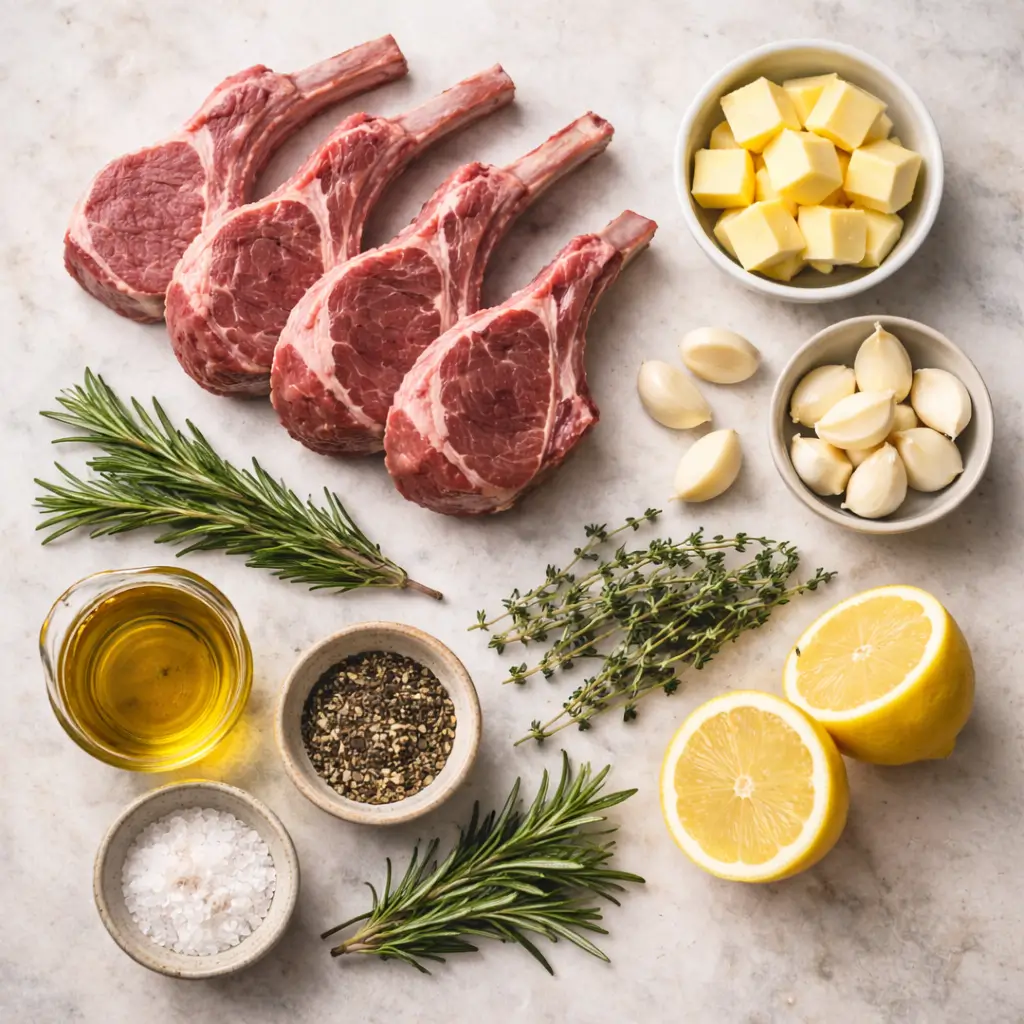
The following scaling table allows you to adjust the recipe accurately for different serving sizes. The quantities are precise and tested to maintain flavor balance across portions.
| Ingredient | 2 Servings | 4 Servings | 6 Servings |
|---|---|---|---|
| Lamb chops (bone-in) | 4 chops (≈500 g / 1.1 lb) | 8 chops (≈1 kg / 2.2 lb) | 12 chops (≈1.5 kg / 3.3 lb) |
| Unsalted butter | 40 g (3 tbsp) | 80 g (6 tbsp) | 120 g (9 tbsp) |
| Garlic cloves | 3 cloves | 6 cloves | 9 cloves |
| Fresh rosemary | 1 sprig | 2 sprigs | 3 sprigs |
| Fresh thyme | 2 sprigs | 4 sprigs | 6 sprigs |
| Olive oil | 1 tbsp | 2 tbsp | 3 tbsp |
| Salt | ¾ tsp | 1½ tsp | 2¼ tsp |
| Black pepper | ½ tsp | 1 tsp | 1½ tsp |
| Lemon (optional) | ½ lemon | 1 lemon | 1½ lemons |
Ingredient Notes and Substitutions
Fresh herbs are strongly recommended for this recipe because they release essential oils gently when warmed in butter. Dried herbs behave differently and can overpower the dish if used in the same quantity. If dried herbs must be used, their quantity should be reduced significantly.
Unsalted butter is preferred because it allows precise control over seasoning. Salted butter varies in salt content and may result in an overly salty dish, especially when combined with properly seasoned lamb.
Tools You Need
This recipe does not require specialized equipment, but a cast-iron skillet is ideal because it retains heat evenly and promotes a strong sear. Tongs allow safe handling of the lamb, while a spoon is necessary for butter basting. An instant-read thermometer ensures accurate doneness, and a plate is needed for resting the meat before serving.
Step-by-Step Cooking Instructions
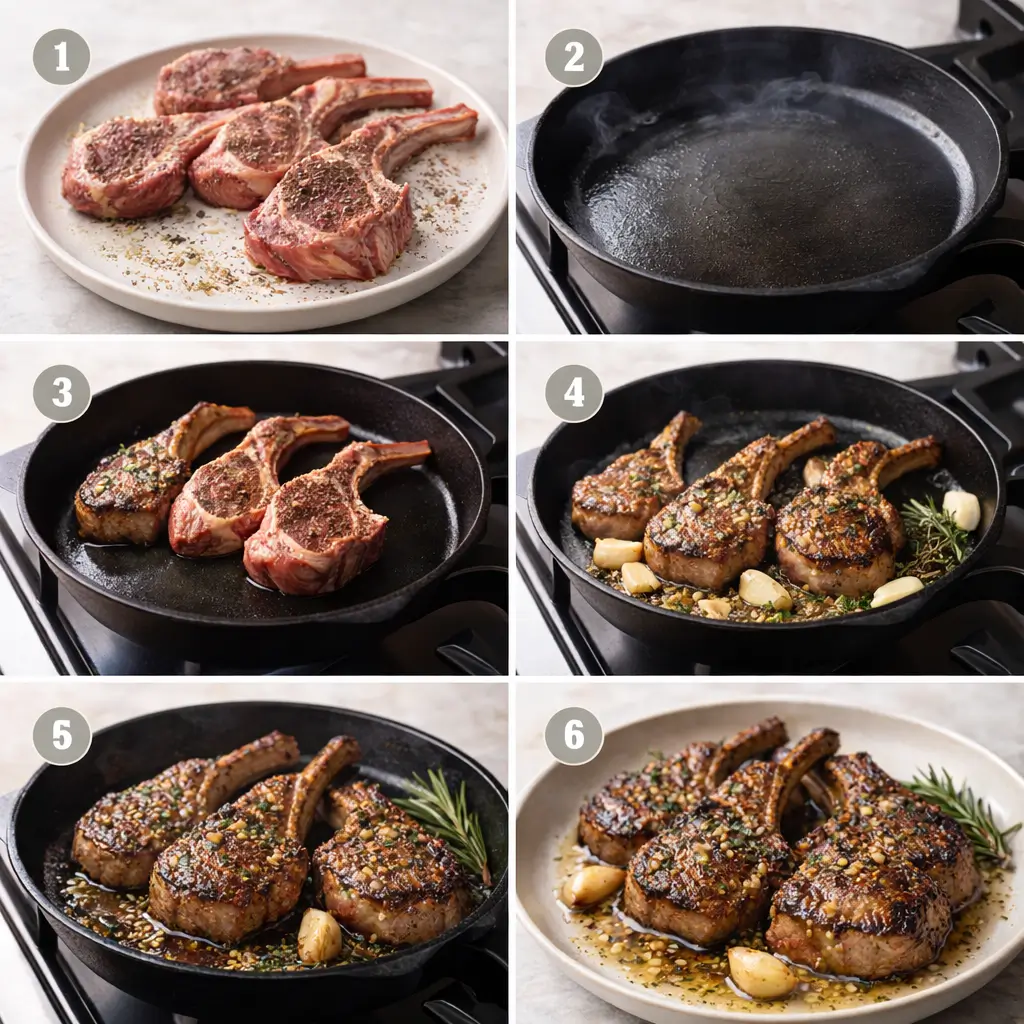
Step 1: Season the Lamb Chops
Begin by patting the lamb chops dry with paper towels to remove any surface moisture. This step is essential for achieving a proper sear. Lightly brush the lamb with olive oil, then season generously on both sides with salt and freshly cracked black pepper. Allow the seasoned lamb chops to rest at room temperature for about fifteen minutes so they cook evenly once they hit the pan.
Step 2: Preheat the Pan
Place a cast-iron skillet over medium-high heat and allow it to heat thoroughly. The pan should be hot before the lamb is added, as proper heat ensures the formation of a deep, flavorful crust. Avoid adding oil at this stage, as the lamb already carries a light coating.
Step 3: Sear the Lamb Chops
Carefully place the lamb chops into the hot skillet, making sure they are not overcrowded. Sear the chops for approximately two and a half to three minutes on the first side without moving them. Turn the chops and sear the second side for the same amount of time until a rich golden-brown crust forms.
Step 4: Add Butter and Aromatics
Reduce the heat to medium and add the unsalted butter to the skillet. Once the butter begins to melt and foam gently, add the garlic cloves along with the rosemary and thyme. The aromatics should release fragrance without browning, infusing the butter with flavor.
Step 5: Baste with Garlic Butter
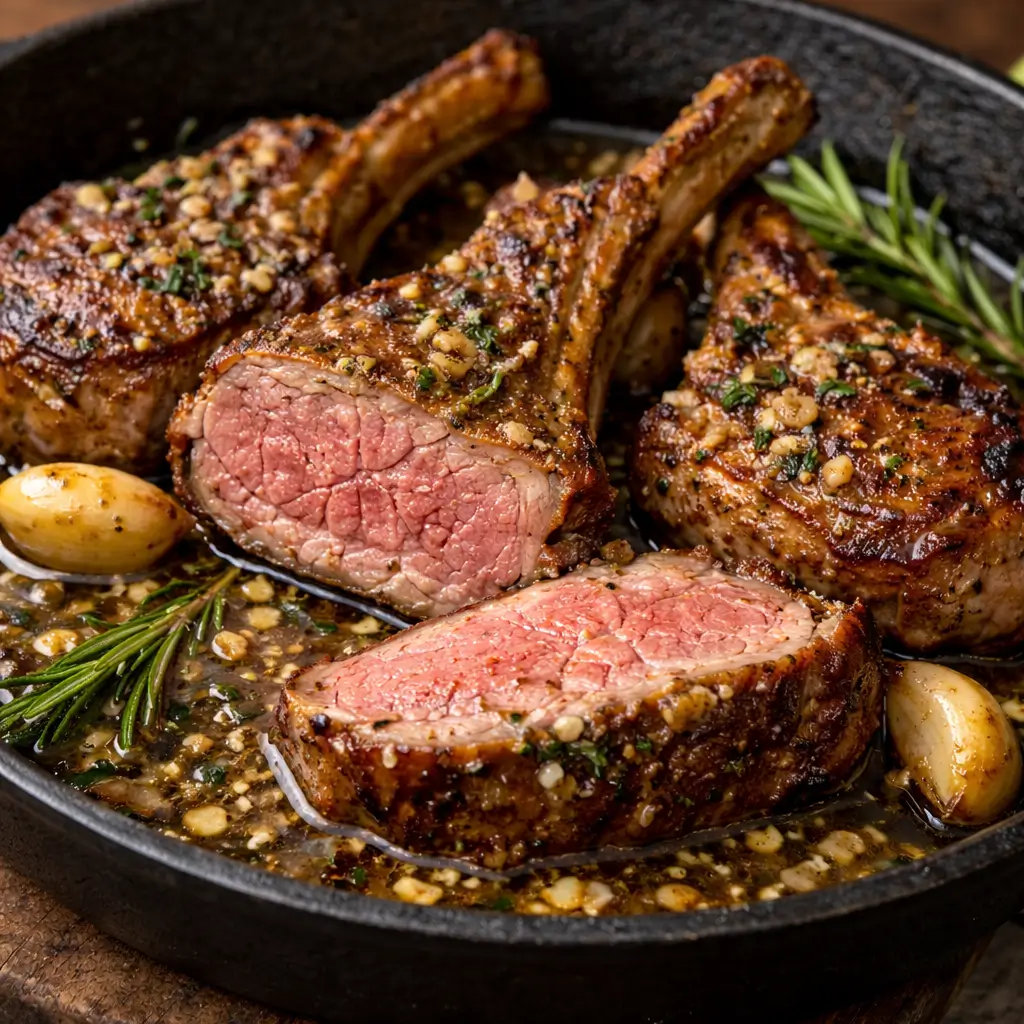
Using a spoon, continuously baste the lamb chops with the melted garlic butter. Spoon the butter over the surface of the meat for one to two minutes, allowing it to coat the chops evenly. Monitor the internal temperature closely, aiming for 52 to 54°C (125 to 130°F) for medium-rare doneness.
Step 6: Rest and Serve
Transfer the lamb chops to a warm serving plate and spoon the remaining garlic butter over the top. Allow the lamb to rest for about five minutes so the juices redistribute throughout the meat. Finish with a light squeeze of fresh lemon juice if desired, then serve immediately.
Monitor the internal temperature closely. For medium-rare lamb, aim for 52 to 54°C (125 to 130°F). Remove the lamb from the pan once it reaches the desired temperature and transfer it to a warm plate. Spoon the remaining garlic butter over the chops and allow them to rest for five minutes before serving. Finish with a squeeze of lemon juice if desired.
Internal Temperature Guide
Internal temperature is the most reliable indicator of doneness. Rare lamb registers around 48 to 50°C (118 to 122°F), medium-rare at 52 to 54°C (125 to 130°F), medium at 57 to 60°C (135 to 140°F), and well-done at 65°C (150°F) or higher.
Why Resting the Lamb Matters
Resting allows the muscle fibers to relax and reabsorb juices that were pushed toward the center during cooking. Cutting into the lamb too early causes those juices to spill onto the plate rather than remain in the meat. A rest of five minutes is sufficient for lamb chops and greatly improves texture.
Garlic Butter Technique Explained
Garlic butter should enhance the lamb rather than dominate it. Garlic burns quickly at high temperatures, so it is added only after the heat is reduced. Keeping the garlic cloves whole or lightly crushed allows them to release aroma gradually without becoming bitter. The herbs infuse the butter gently, creating a balanced and aromatic finish.
Common Mistakes to Avoid
Overcrowding the pan prevents proper searing and causes steaming. Using lamb straight from the refrigerator leads to uneven cooking. Adding butter too early risks burning, while skipping the resting phase results in dryness. Each of these mistakes is avoidable with careful timing and attention.
Serving Suggestions
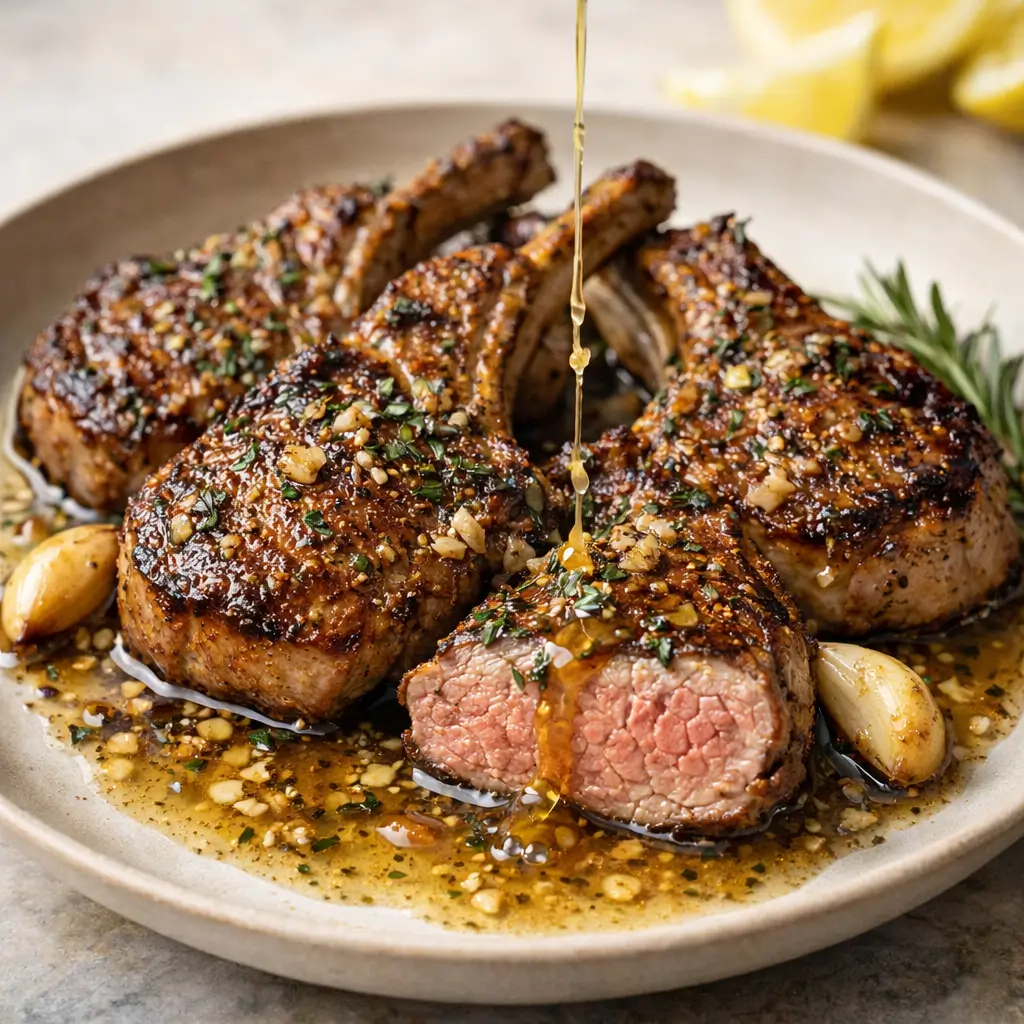
Juicy Garlic Butter Lamb Chops pair well with simple sides that balance their richness. Roasted or mashed potatoes provide comfort, while green vegetables such as asparagus or green beans add freshness. A lightly dressed salad offers contrast and keeps the meal from feeling heavy.
Wine Pairing Suggestions
Lamb pairs best with structured red wines that can stand up to its richness. Cabernet Sauvignon, Syrah, Malbec, and Rioja are excellent choices, offering depth without overwhelming the dish.
Storage and Reheating
Leftover lamb chops can be stored in an airtight container in the refrigerator for up to three days. Reheat gently in a pan over low heat with a small amount of butter. Microwaving is not recommended, as it tends to dry out the meat.
Can You Make This Recipe Ahead?
While full cooking should be done just before serving, some preparation can be completed in advance. The lamb can be seasoned and the garlic and herbs prepared ahead of time. Cooking at the last moment ensures optimal texture and flavor.
Frequently Asked Questions
Can I use boneless lamb chops for this recipe?
Yes, boneless lamb chops can be used, but they cook faster than bone-in chops and require closer attention. Because they lack the insulating effect of the bone, they can overcook more easily. Monitoring the internal temperature closely is essential to prevent dryness.
What is the best doneness for lamb chops?
Medium-rare is widely considered the best doneness for lamb chops because it preserves tenderness and juiciness while allowing the natural flavor of the meat to shine. An internal temperature of 52 to 54°C (125 to 130°F) delivers optimal results. Cooking beyond medium can cause the meat to become firm and dry.
Can I make garlic butter lamb chops on the grill?
Yes, lamb chops can be grilled successfully. Sear them over direct heat until cooked to the desired temperature, then finish with garlic butter off the heat. This approach prevents the butter and garlic from burning while still delivering the same rich flavor.
Is it safe to eat lamb cooked medium-rare?
When sourced from a reputable supplier and handled properly, lamb cooked to medium-rare is safe to eat. Using a meat thermometer ensures accuracy and helps avoid undercooking or overcooking.
Why did my lamb chops turn out dry?
Dry lamb chops are usually the result of overcooking, insufficient resting time, or excessive heat. Cooking the lamb gently after searing and allowing it to rest before serving helps retain moisture and improve texture.
Can I prepare this recipe in advance?
While the lamb chops should be cooked just before serving for the best texture, some preparation can be done ahead of time. The lamb can be seasoned and the garlic and herbs prepared in advance, which helps streamline the cooking process.
How long can leftovers be stored?
Leftover lamb chops can be stored in an airtight container in the refrigerator for up to three days. For best results, reheat them gently in a pan over low heat with a small amount of butter to restore moisture.
Can I freeze cooked lamb chops?
Freezing cooked lamb chops is not recommended, as freezing and thawing can negatively affect texture and juiciness. Lamb is best enjoyed fresh or refrigerated for short-term storage.
Final Thoughts
Juicy Garlic Butter Lamb Chops demonstrate how technique and timing can elevate simple ingredients. This recipe emphasizes control rather than complexity, allowing the natural qualities of the lamb to shine. When prepared carefully, the result is tender, flavorful, and consistently impressive, making it a reliable choice for both casual meals and special occasions.
