
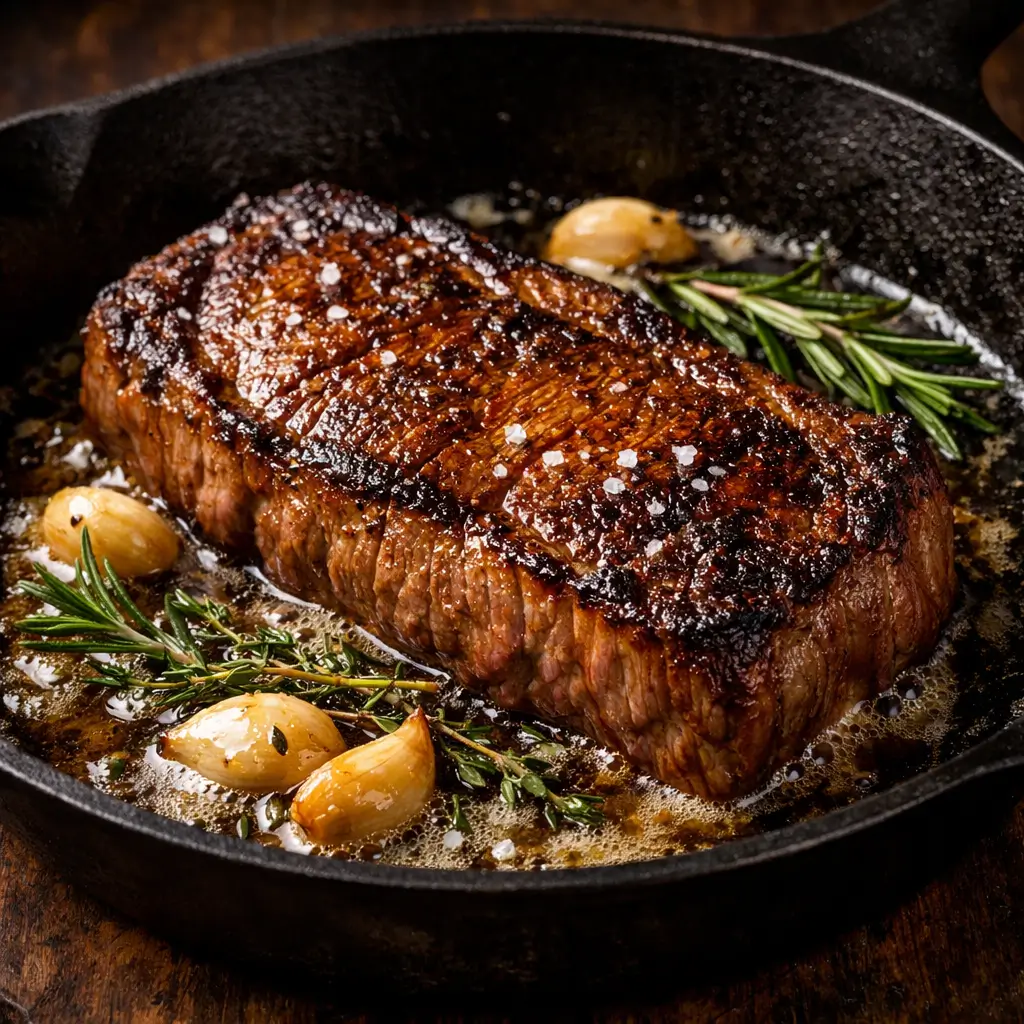
Brown Butter–Basted Steak is the ultimate way to achieve steakhouse-quality results in your own kitchen. This classic technique creates a deeply caramelized crust, an incredibly juicy interior, and a rich, nutty butter flavor that elevates even a simple cut of beef. With just a few ingredients and proper timing, you can master a steak that tastes luxurious, indulgent, and perfectly cooked every time.
This recipe focuses on clarity, precision, and repeatable success, whether you are cooking for a special occasion or a weeknight dinner that deserves something extra.
Why Brown Butter–Basted Steak Is Worth Mastering
Cooking a great steak is not about complexity. Instead, it is about control of heat, quality ingredients, and proper technique. Brown butter basting combines all three.
Unlike grilling, stovetop steak cooking allows you to stay in control from start to finish. Basting with butter infused with garlic and herbs enhances flavor while helping the steak cook evenly. As the butter browns, it develops a nutty aroma that complements the natural richness of beef.
This method works beautifully for ribeye, New York strip, or sirloin. Once you learn it, you will never feel the need to order steak at a restaurant again.
What Makes Brown Butter Special
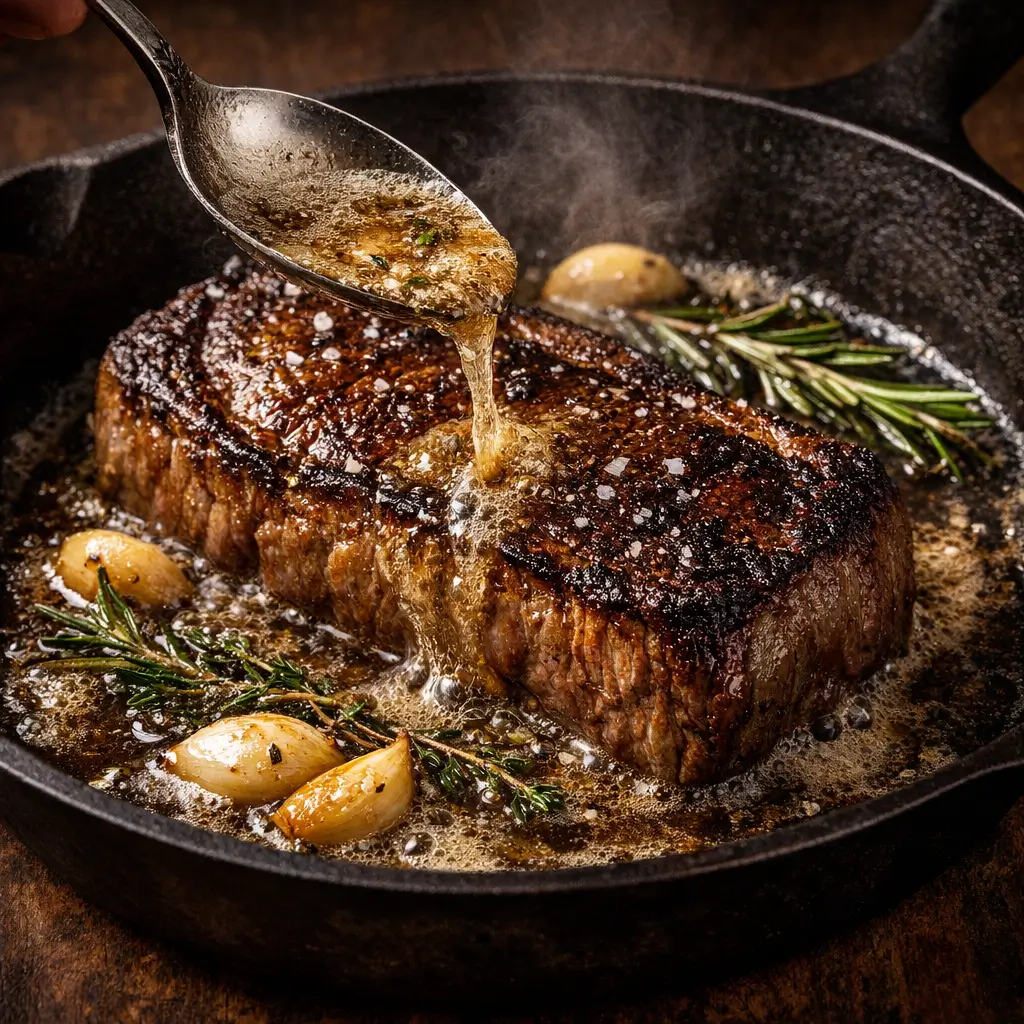
Butter is mostly fat, water, and milk solids. When heated gently, the water evaporates and the milk solids toast, turning golden brown. This transformation creates brown butter, also known as beurre noisette.
Brown butter adds:
- Nutty depth
- Rich aroma
- Complex savory flavor
When spooned repeatedly over a hot steak, brown butter coats the surface and seeps into the crust, amplifying flavor without overpowering the meat.
Best Cuts of Steak for This Recipe
Not all steaks behave the same way in a skillet. For best results, choose a cut that is thick, well-marbled, and suitable for high heat.
Recommended Cuts
Ribeye
- High fat content
- Extremely flavorful
- Ideal for basting
New York Strip
- Balanced fat and tenderness
- Excellent crust formation
- Great for precise doneness
Top Sirloin
- Leaner but still tender
- Requires careful basting
- Budget-friendly option
Thickness Matters
Aim for steaks that are at least 1¼ to 1½ inches thick. Thin steaks cook too quickly and do not allow time for proper basting.
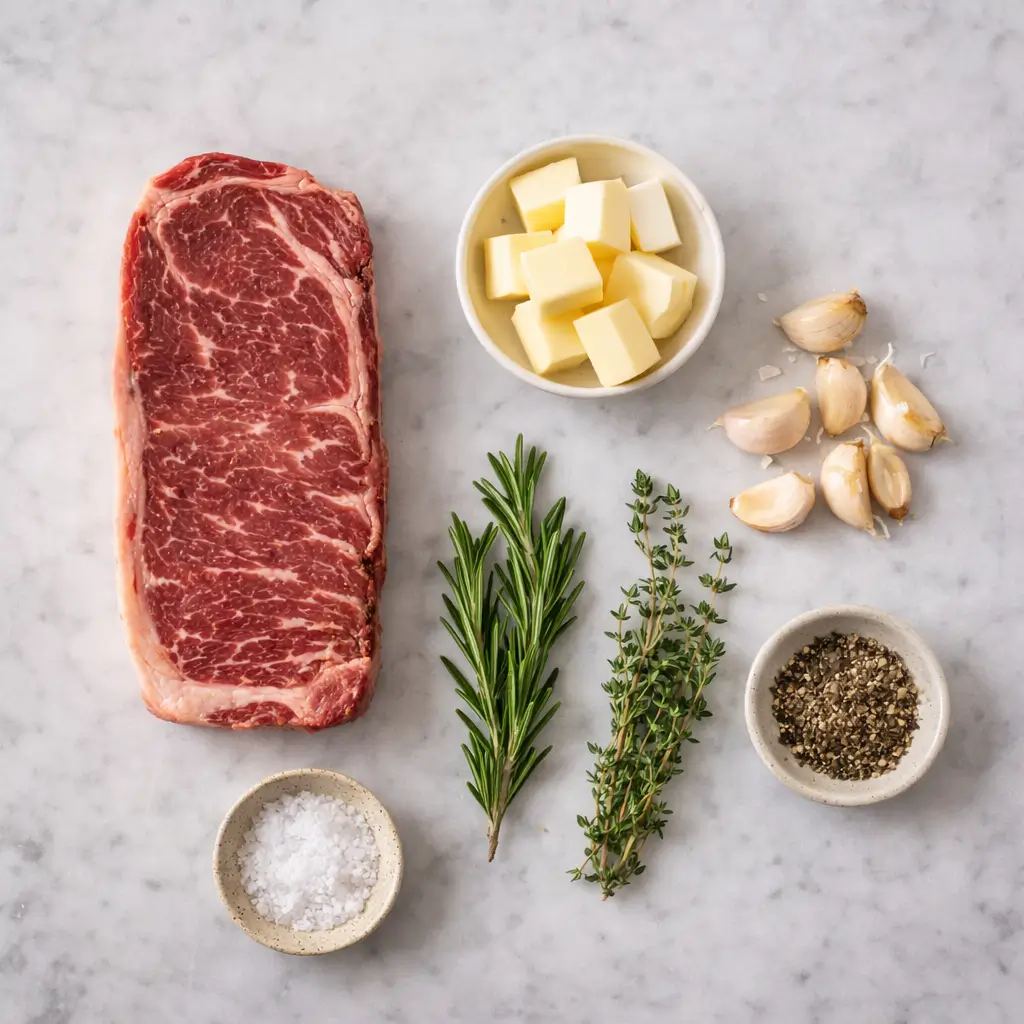
Ingredients You Will Need
This recipe relies on simplicity. Each ingredient serves a purpose.
Core Ingredients
- Thick ribeye or New York strip steak
- Unsalted butter
- Garlic cloves
- Fresh rosemary
- Fresh thyme
- Coarse sea salt
- Freshly cracked black pepper
- Neutral high-smoke-point oil
Why Unsalted Butter Is Important
Unsalted butter allows you to control seasoning precisely. Salted butter can easily oversalt the steak during basting.
Essential Equipment
You do not need special tools, but the right pan matters.
- Heavy cast-iron skillet
- Metal spoon for basting
- Tongs
- Instant-read thermometer (optional but recommended)
Cast iron retains heat evenly and creates a superior crust compared to nonstick pans.
Exact Ingredient Quantities — Brown Butter–Basted Steak
Base Recipe (Serves 2)
- 2 ribeye or New York strip steaks, each 1½ inches (3.8 cm) thick, 10–12 oz (280–340 g) each
- 3 tablespoons (42 g) unsalted butter
- 3 whole garlic cloves, lightly crushed
- 2 fresh rosemary sprigs
- 2 fresh thyme sprigs
- 1 tablespoon (15 ml) neutral oil (avocado, grapeseed, or canola)
- 1 teaspoon coarse sea salt, plus more to taste
- ½ teaspoon freshly cracked black pepper, plus more to taste
Serves 4
- Steaks: 4 ribeye or New York strip steaks
- Unsalted butter: 6 tbsp (84 g)
- Garlic: 6 whole cloves
- Rosemary: 4 fresh sprigs
- Thyme: 4 fresh sprigs
- Neutral oil: 2 tbsp (30 ml)
- Coarse sea salt: 2 tsp
- Black pepper: 1 tsp
Serves 6
- Steaks: 6 ribeye or New York strip steaks
- Unsalted butter: 9 tbsp (126 g)
- Garlic: 9 whole cloves
- Rosemary: 6 fresh sprigs
- Thyme: 6 fresh sprigs
- Neutral oil: 3 tbsp (45 ml)
- Coarse sea salt: 3 tsp
- Black pepper: 1½ tsp
Preparing the Steak Properly
Preparation is critical. A well-prepared steak cooks evenly and develops better flavor.
Step 1: Bring the Steak to Room Temperature
Remove the steak from the refrigerator 30–45 minutes before cooking. Cold steak cooks unevenly.
Step 2: Dry the Surface Thoroughly
Pat the steak dry using paper towels. Moisture prevents proper browning.
Step 3: Season Generously
Season both sides with coarse sea salt and cracked black pepper. Do not be shy. Proper seasoning forms the foundation of flavor.
Understanding Heat Control
High heat is essential for searing, but uncontrolled heat ruins butter.
- Start with high heat for searing
- Reduce to medium heat before adding butter
- Adjust constantly to avoid burning
Butter burns quickly. Timing is everything.
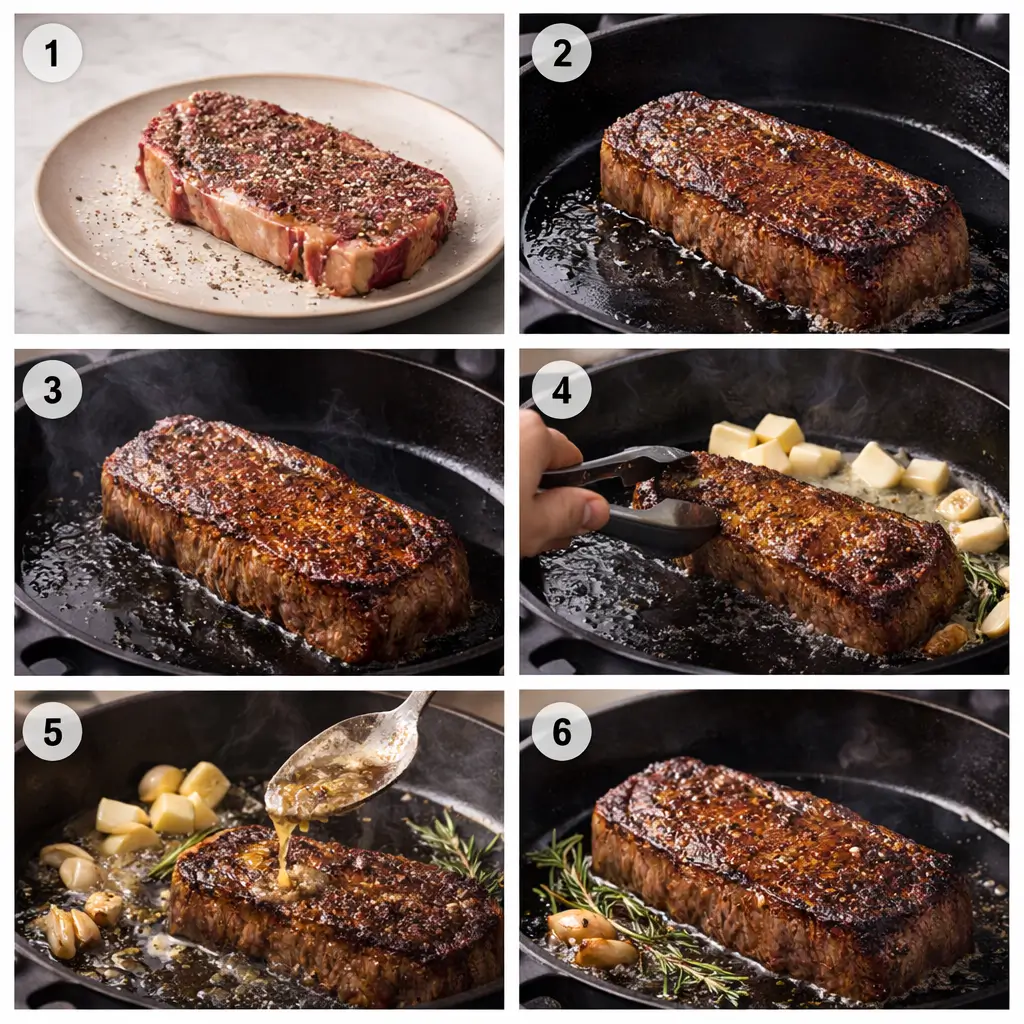
Step-by-Step: How to Make Brown Butter–Basted Steak
Step 1: Preheat the Skillet
Place your cast-iron skillet over high heat. Let it heat until just beginning to smoke.
Add a small amount of neutral oil and swirl to coat.
Step 2: Sear the First Side
Lay the steak into the pan away from you. Do not move it.
Let it sear for 2–3 minutes, depending on thickness. A deep golden crust should form.
Step 3: Flip the Steak
Flip using tongs. The first side should be richly browned.
Sear the second side for 1–2 minutes.
Step 4: Add Butter and Aromatics
Reduce heat to medium.
Add butter, garlic cloves, rosemary, and thyme to the skillet. The butter will melt and begin foaming.
Tilt the pan slightly to pool the butter.
Step 5: Begin Basting
Using a spoon, repeatedly scoop the butter and pour it over the steak.
Continue basting for 1–3 minutes, depending on desired doneness.
The butter should turn lightly brown and aromatic, not black.
Step 6: Check Doneness
Use a thermometer or finger test.
- Rare: 120–125°F (49–52°C)
- Medium-rare: 130–135°F (54–57°C)
- Medium: 140–145°F (60–63°C)
Remove the steak just before it reaches target temperature.
Step 7: Rest the Steak
Transfer the steak to a plate. Spoon a little brown butter over the top.
Rest for 5–10 minutes before serving.
Why Resting Is Non-Negotiable
Resting allows juices to redistribute throughout the meat. Cutting too early causes moisture loss.
A rested steak is juicier, more tender, and more flavorful.
Serving Suggestions
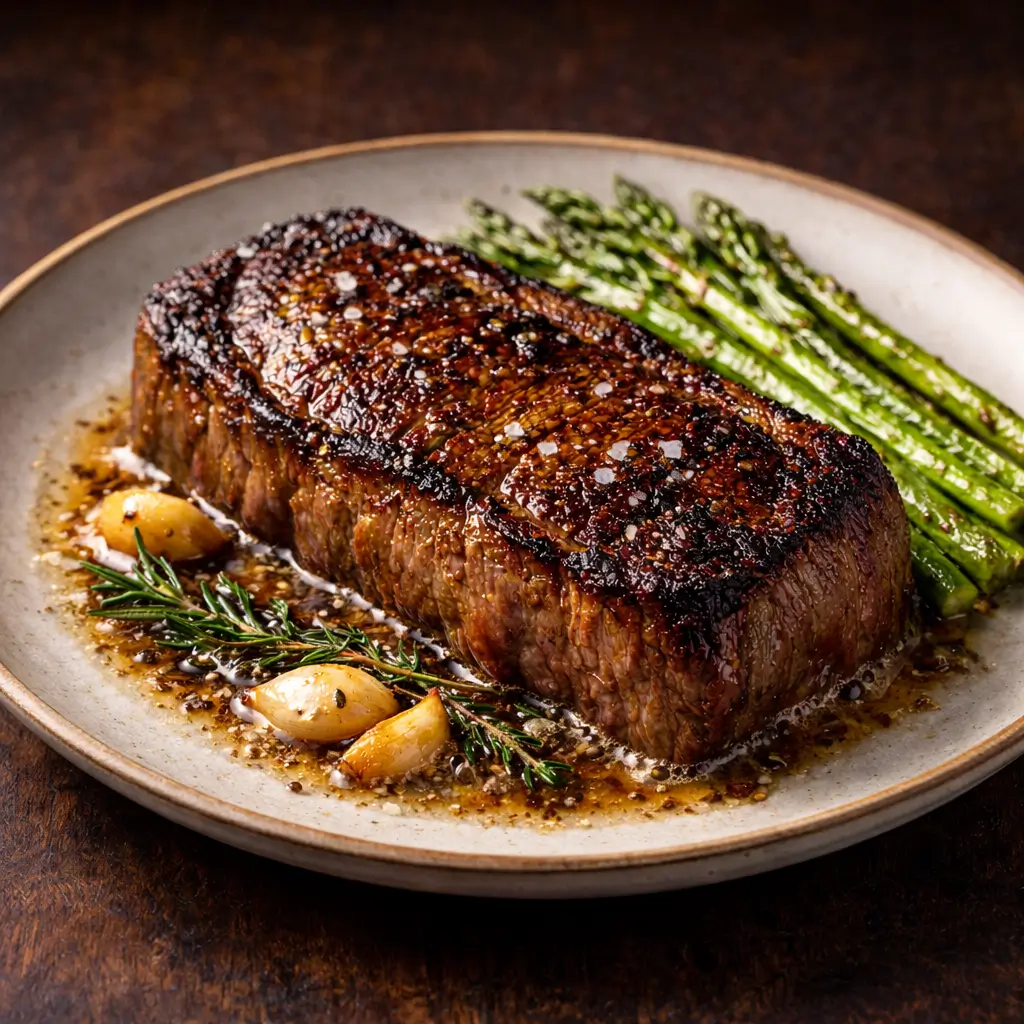
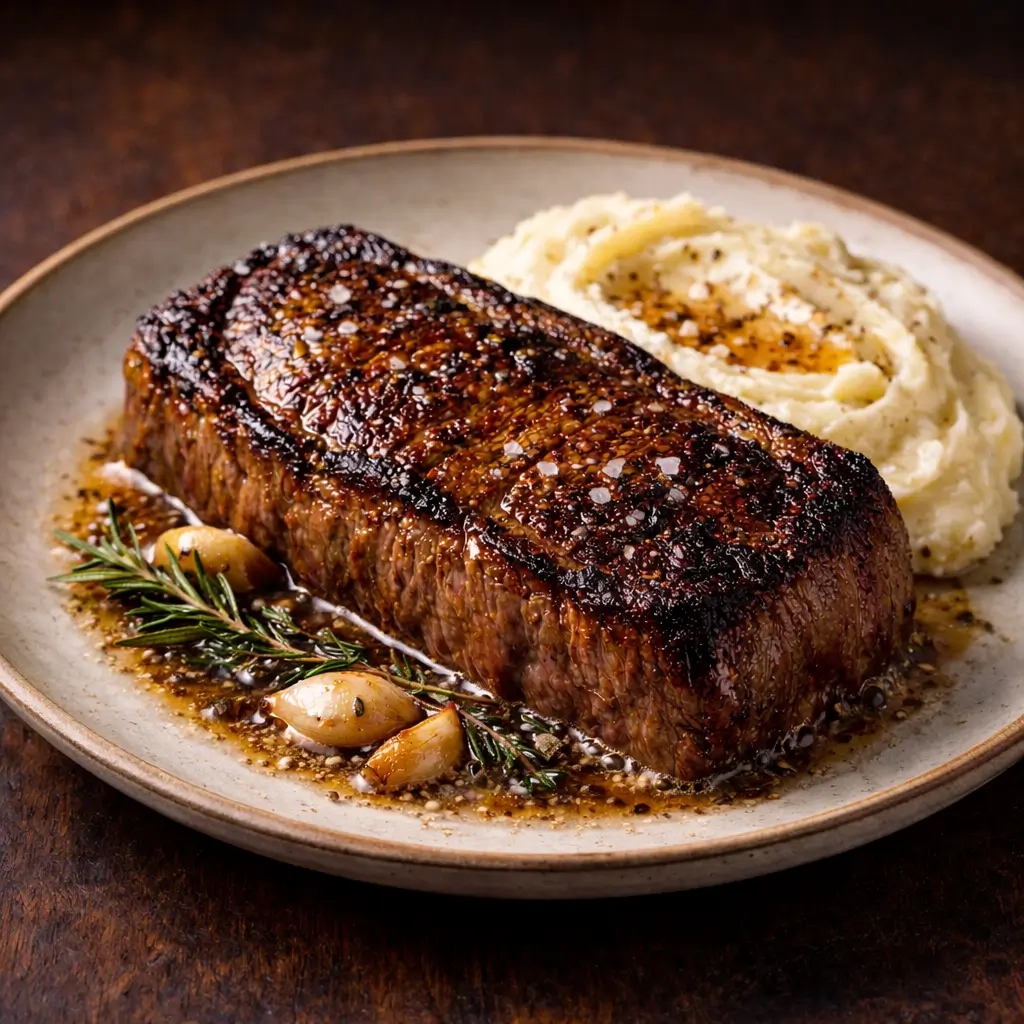
Brown Butter–Basted Steak pairs best with light sides that do not overpower it.
Ideal Side Dishes
- Roasted asparagus
- Creamy mashed potatoes
- Roasted baby potatoes
- Simple green salad
- Sautéed mushrooms
Keep sauces minimal. The butter already provides richness.
How to Slice Steak Correctly
If you choose to slice the steak:
- Slice against the grain
- Use a sharp knife
- Cut just before serving
This maximizes tenderness.
Common Mistakes to Avoid
Using Cold Steak
Causes uneven cooking.
Overcrowding the Pan
Steams the steak instead of searing.
Burning the Butter
Results in bitterness. Lower heat immediately if butter darkens too quickly.
Skipping the Rest
Leads to dry steak.
Flavor Variations
Once you master the base technique, try these variations.
Garlic-Heavy Version
Add extra smashed garlic cloves during basting.
Herb-Forward Version
Increase rosemary and thyme quantities.
Spiced Butter
Add cracked peppercorns or chili flakes to the butter.
How This Method Compares to Other Techniques
Pan-Seared vs Grilled
Pan-seared offers better butter control and crust consistency.
Reverse Sear
Better for very thick steaks but more time-intensive.
Sous Vide Finish
Precise but less accessible.
Brown butter basting balances simplicity and flavor.
Nutritional Notes
Steak is rich in:
- Protein
- Iron
- Zinc
- Vitamin B12
Butter adds fat and calories, but moderation keeps this dish balanced.
Pair with vegetables for a complete meal.
Storage and Reheating
Storing Leftovers
Wrap tightly and refrigerate for up to 3 days.
Reheating
Reheat gently in a skillet over low heat with a little butter.
Avoid microwaving if possible.
Frequently Asked Questions
Can I use olive oil instead of butter?
Olive oil lacks the flavor complexity of brown butter. Use butter for best results.
Can I make this with frozen steak?
No. Thaw completely before cooking.
What if I do not have cast iron?
Use the heaviest pan you own, preferably stainless steel.
Is basting necessary?
Yes. It improves flavor, texture, and doneness.
Final Thoughts
Brown Butter–Basted Steak is a foundational technique every home cook should master. It requires minimal ingredients but delivers maximum impact. With proper heat control, quality butter, and patience, you can create a steak that rivals high-end steakhouses.
Once you master this method, you will gain confidence in cooking beef and understanding flavor development. This recipe is not just about steak. It is about learning how technique transforms simple ingredients into something extraordinary.
