
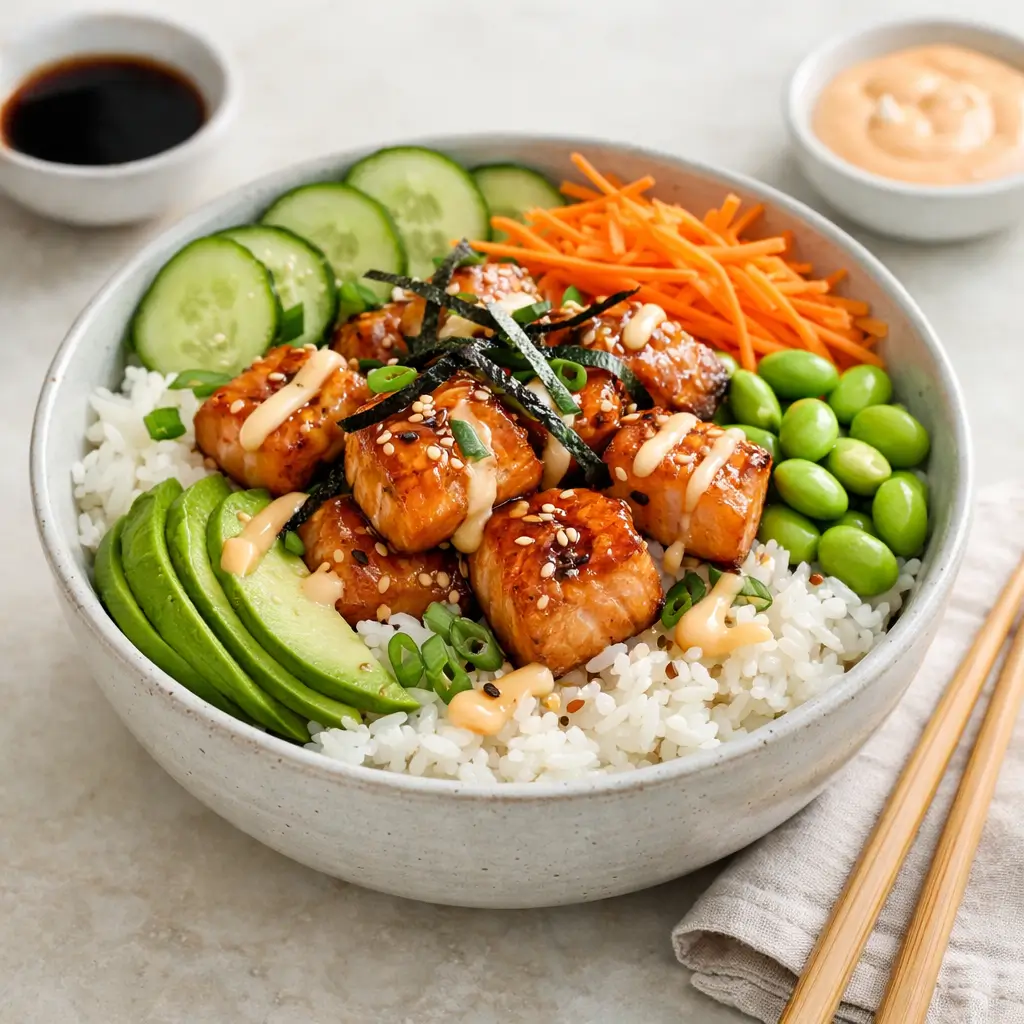
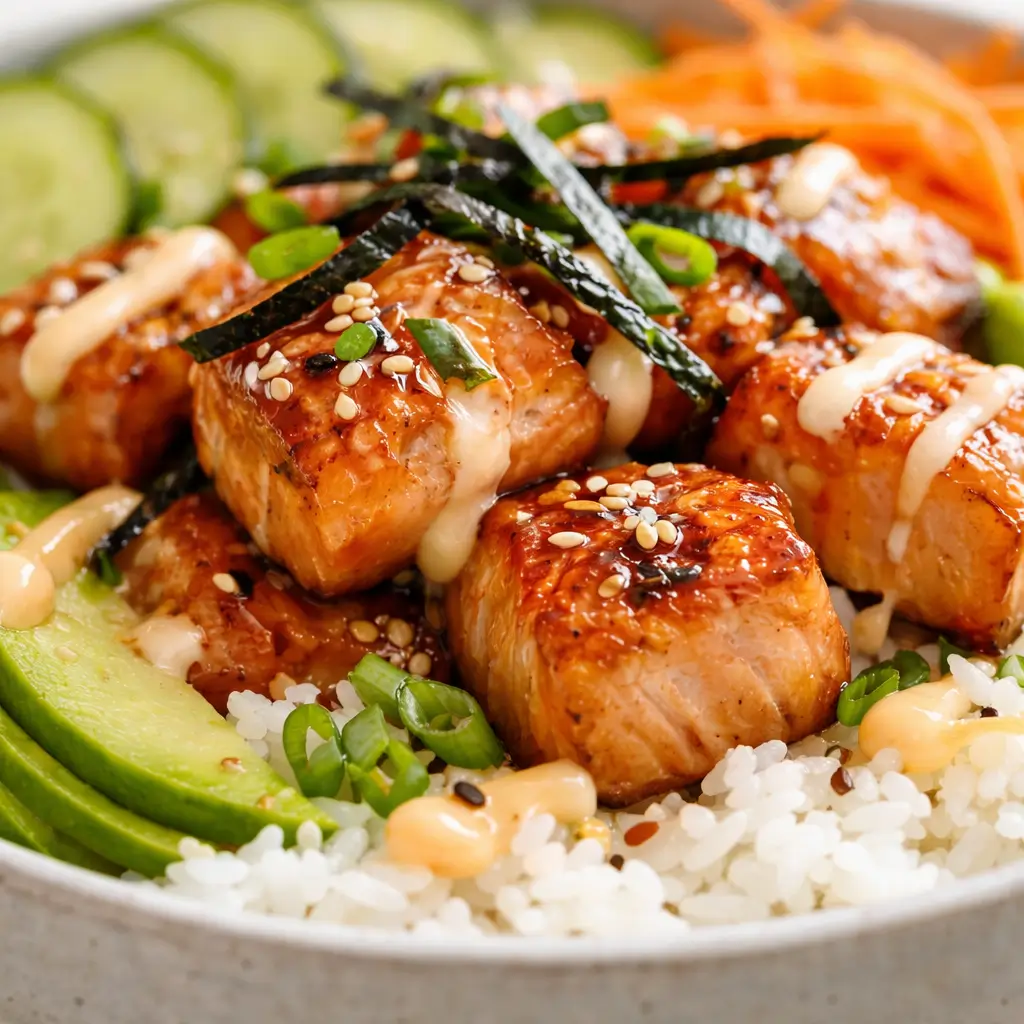
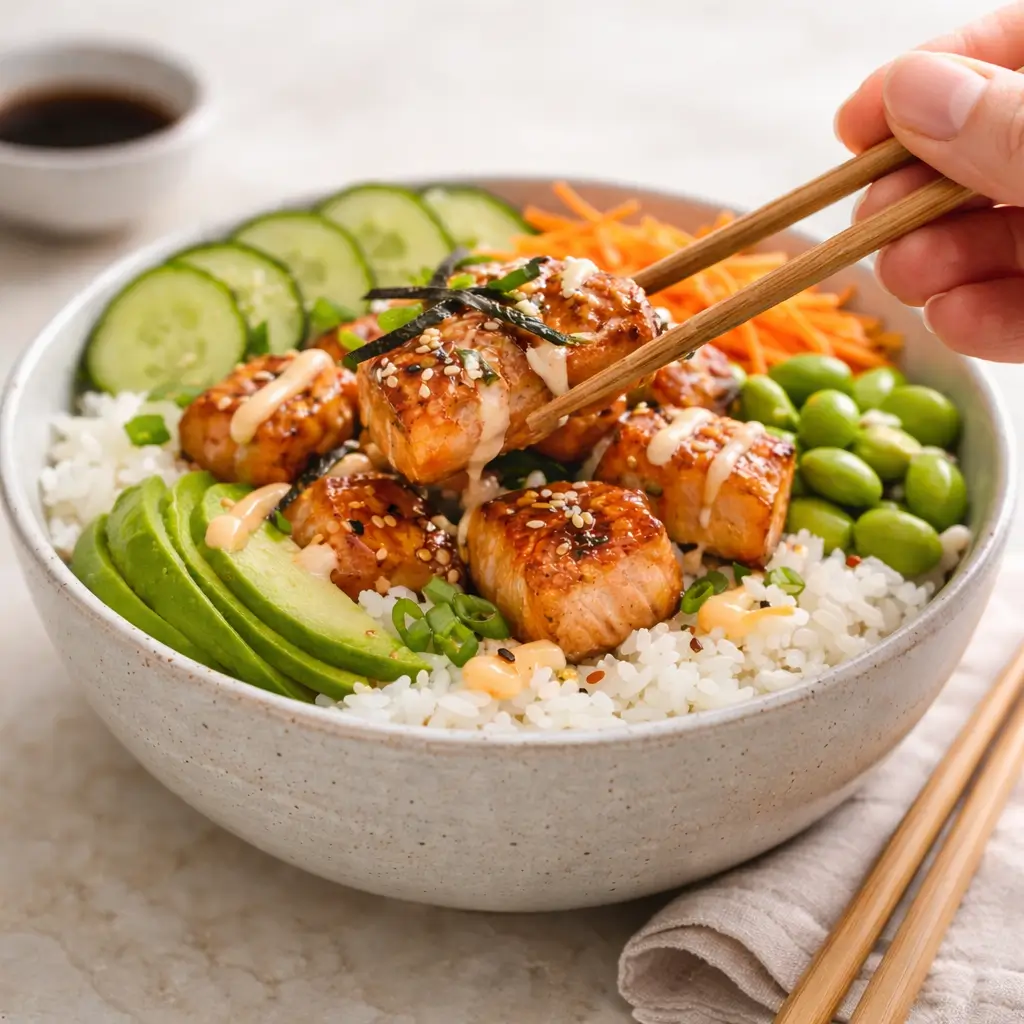
The Salmon Rice Bowl is a balanced, nourishing meal that combines tender glazed salmon, warm rice, crisp vegetables, and bold umami flavors in one satisfying dish. It is inspired by Japanese and Hawaiian comfort bowls, yet it is simple enough for a weeknight dinner. This recipe delivers protein, healthy fats, fiber, and vibrant textures in every bite.
Unlike complicated seafood recipes, this bowl focuses on clean preparation, high-quality ingredients, and smart layering. The result feels restaurant-quality while remaining approachable at home.
Why This Salmon Rice Bowl Works
This recipe succeeds because it balances five essential elements:
- Rich Protein – Salmon provides omega-3 fatty acids and deep flavor.
- Comforting Base – Warm rice absorbs sauces and anchors the bowl.
- Fresh Contrast – Vegetables add crunch and brightness.
- Umami Sauce – Soy, sesame, and light sweetness create harmony.
- Textural Variety – Creamy avocado meets flaky fish and tender grains.
Each component complements the others, preventing heaviness while remaining satisfying.
Ingredients
For the Salmon
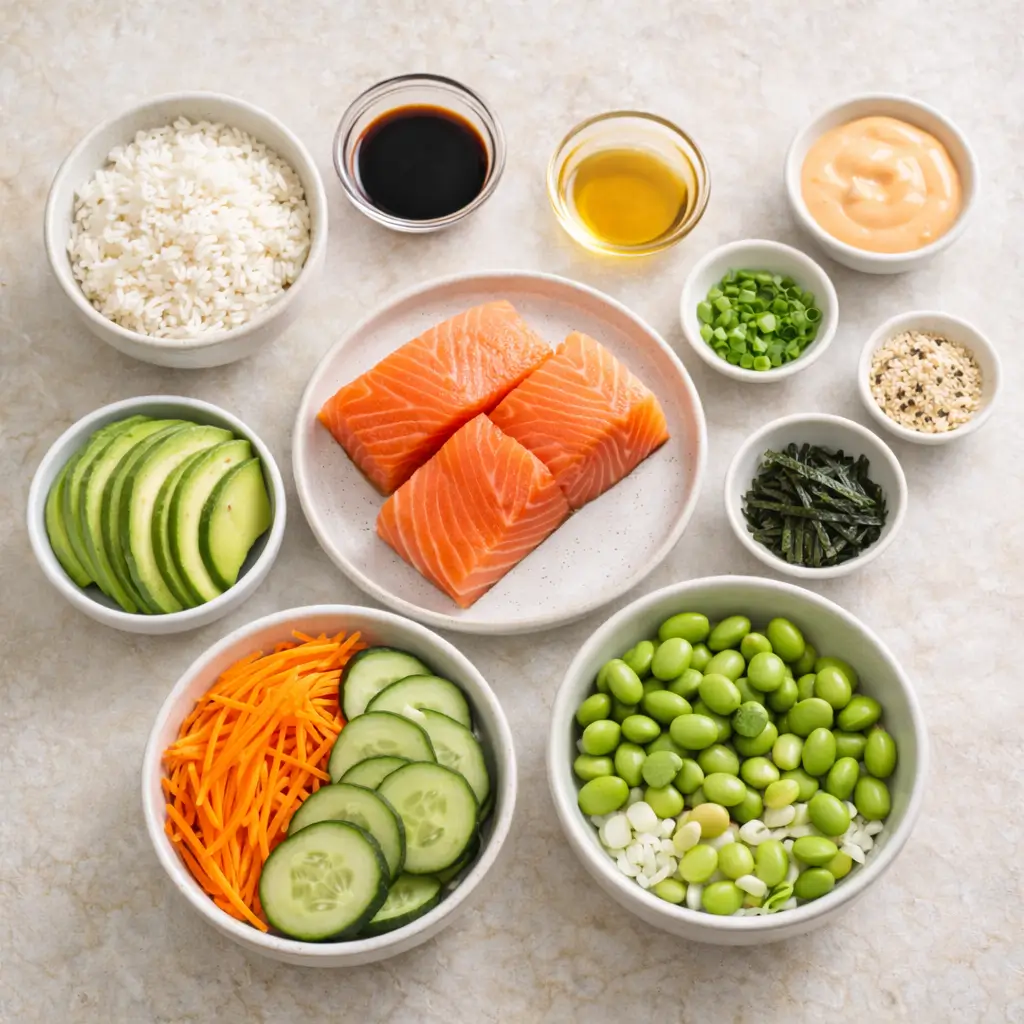
- 4 salmon fillets (about 6 oz / 170 g each)
- 2 tbsp soy sauce (low sodium preferred)
- 1 tbsp honey or maple syrup
- 1 tbsp sesame oil
- 2 cloves garlic, minced
- 1 tsp grated fresh ginger
- 1 tsp rice vinegar
- 1 tsp sesame seeds
For the Rice
- 1½ cups jasmine rice (uncooked)
- 2¼ cups water
- Pinch of salt
Fresh Toppings
- 1 avocado, sliced
- 1 cup cucumber, thinly sliced
- 1 cup shredded carrots
- 1 cup shelled edamame (cooked)
- 2 green onions, sliced
- 1 sheet nori, cut into strips (optional)
For the Sauce Drizzle
- 3 tbsp Greek yogurt or mayonnaise
- 1 tbsp sriracha (adjust to taste)
- 1 tsp lime juice
- 1 tsp honey
Ingredient Notes and Substitutions
- Salmon Type: Atlantic salmon is buttery, while sockeye is leaner and more intense. Both work beautifully.
- Rice Choice: Jasmine rice gives aroma. Sushi rice offers stickiness. Brown rice adds fiber.
- Vegetables: Use seasonal produce such as radish, mango, or steamed broccoli.
- Sauce Variation: Substitute tamari for gluten-free preparation.
- Creamy Drizzle: Greek yogurt lightens the sauce while maintaining richness.
Ingredient Scaling Table (Exact ingredients)
| Ingredient | 2 Servings | 4 Servings | 6 Servings |
|---|---|---|---|
| Salmon Fillets | 2 fillets | 4 fillets | 6 fillets |
| Jasmine Rice (uncooked) | ¾ cup | 1½ cups | 2¼ cups |
| Water | 1⅛ cups | 2¼ cups | 3⅓ cups |
| Avocado | 1 small | 1 large | 2 large |
| Cucumber | ½ cup | 1 cup | 1½ cups |
| Shredded Carrots | ½ cup | 1 cup | 1½ cups |
| Edamame | ½ cup | 1 cup | 1½ cups |
| Green Onions | 1 | 2 | 3 |
| Soy Sauce | 1 tbsp | 2 tbsp | 3 tbsp |
| Sesame Oil | ½ tbsp | 1 tbsp | 1½ tbsp |
| Honey / Maple Syrup | ½ tbsp | 1 tbsp | 1½ tbsp |
| Garlic | 1 clove | 2 cloves | 3 cloves |
| Fresh Ginger | ½ tsp | 1 tsp | 1½ tsp |
| Rice Vinegar | ½ tsp | 1 tsp | 1½ tsp |
| Spicy Mayo / Yogurt Sauce | 2 tbsp | 4 tbsp | 6 tbsp |
| Sesame Seeds | ½ tsp | 1 tsp | 1½ tsp |
| Nori (optional) | Small strips | 1 sheet | 1–2 sheets |
Equipment Needed
- Medium saucepan with lid
- Nonstick or stainless skillet
- Sharp knife and cutting board
- Mixing bowls
- Rice paddle or fork
Step-by-Step Instructions
Step 1: Cook the Rice
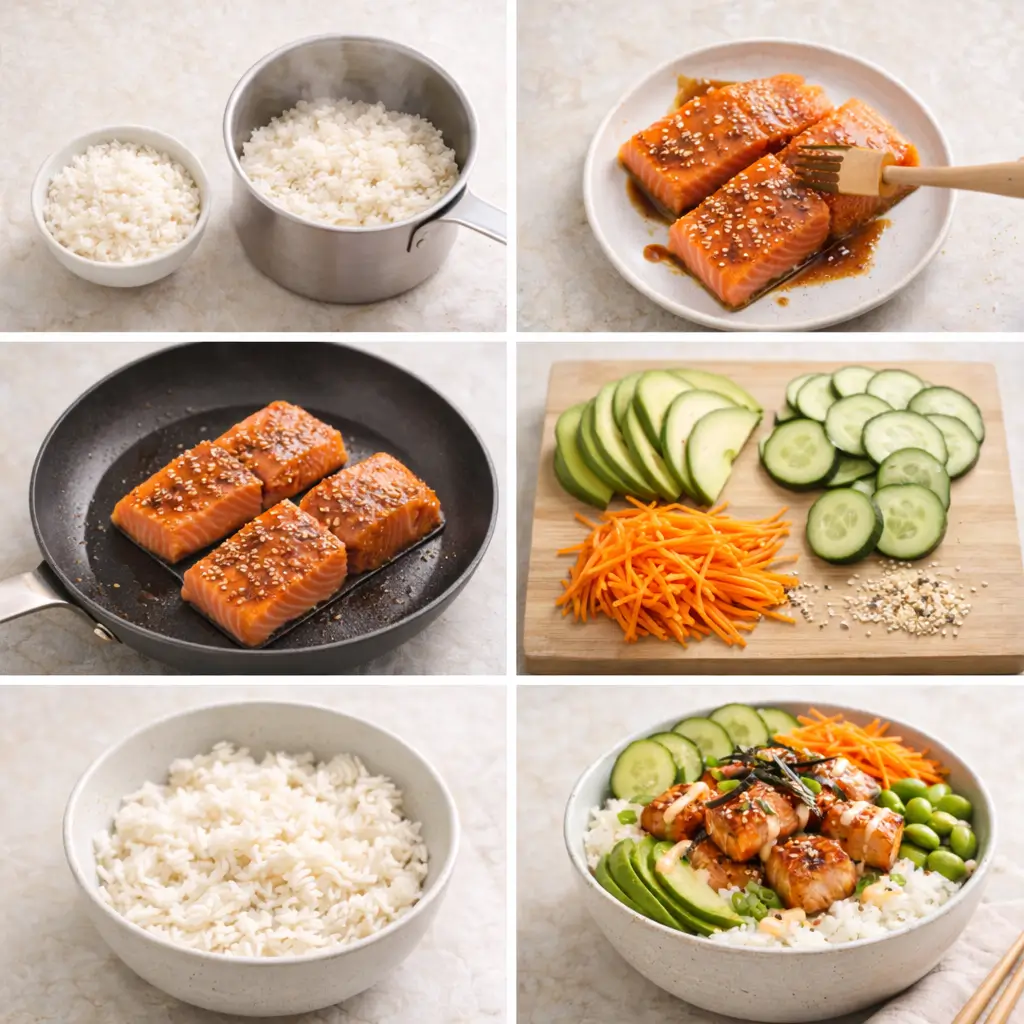
Rinse rice under cold water until it runs clear. This removes excess starch.
Combine rice, water, and salt in a saucepan. Bring to a gentle boil.
Reduce heat to low. Cover and simmer for 15 minutes.
Turn off heat and let rest, covered, for 10 minutes.
Fluff gently with a fork before serving.
Tip: Resting allows steam redistribution, ensuring soft grains.
Step 2: Prepare the Marinade
In a bowl, whisk soy sauce, honey, sesame oil, garlic, ginger, and rice vinegar.
This mixture creates a glossy glaze during cooking.
Step 3: Marinate the Salmon
Pat salmon dry with paper towels.
Coat fillets evenly with marinade.
Let sit for 10–15 minutes.
Short marination enhances flavor without overpowering the fish.
Step 4: Cook the Salmon
Heat a skillet over medium heat.
Add a small amount of oil.
Place salmon skin-side down if applicable.
Cook for 4–5 minutes without moving.
Flip gently and cook another 3–4 minutes.
Brush remaining marinade over the top.
The salmon should be flaky yet moist.
Internal temperature: 125–130°F (52–54°C) for tender texture.
Step 5: Prepare Fresh Components
While salmon cooks, slice avocado and cucumber.
Shred carrots if not pre-cut.
Warm edamame briefly if desired.
Keeping vegetables fresh ensures contrast against warm rice.
Step 6: Mix the Creamy Drizzle
Combine yogurt (or mayo), sriracha, lime juice, and honey.
Whisk until smooth.
Adjust spice level depending on preference.
Step 7: Assemble the Bowls
Divide rice among serving bowls.
Top with salmon pieces.
Arrange vegetables in sections for visual appeal.
Drizzle sauce lightly.
Sprinkle sesame seeds and green onions.
Add nori strips if using.
Serve immediately.
Flavor Balance Explained
This bowl relies on layered taste science:
- Salt: Soy sauce deepens savoriness.
- Sweet: Honey balances acidity.
- Acid: Lime and vinegar brighten richness.
- Fat: Salmon and avocado create silkiness.
- Heat: Sriracha adds gentle excitement.
This combination activates multiple taste receptors simultaneously, increasing satisfaction.
Nutrition Benefits
Salmon rice bowls are nutrient-dense without being heavy.
Salmon provides:
- Omega-3 fatty acids
- High-quality protein
- Vitamin D
- Selenium
Vegetables contribute:
- Fiber
- Antioxidants
- Hydration
- Micronutrients
Rice offers:
- Sustained energy
- Easily digestible carbohydrates
Variations to Try
1. Spicy Salmon Rice Bowl
Add chili crisp or extra sriracha.
2. Teriyaki Style
Replace marinade with teriyaki glaze.
3. Low-Carb Version
Use cauliflower rice instead of jasmine rice.
4. Poke-Inspired Bowl
Use raw sushi-grade salmon and skip cooking.
5. Mediterranean Twist
Add olives, tomatoes, and lemon-tahini sauce.
Common Mistakes to Avoid
Overcooking salmon
This causes dryness. Remove from heat slightly early.
Skipping rice rinsing
Unwashed rice becomes gummy.
Using too much sauce
The bowl should feel fresh, not heavy.
Crowding the pan
Proper searing requires space.
Meal Prep Instructions
This recipe is excellent for weekly planning.
Storage
- Refrigerate components separately up to 3 days.
- Store sauce in airtight container.
Reheating
Warm rice gently with a splash of water.
Reheat salmon briefly to prevent drying.
Assembly for Lunches
Pack rice on bottom.
Add salmon and vegetables.
Keep sauce separate until eating.
How to Choose High-Quality Salmon
Look for:
- Firm texture
- Bright color
- Mild ocean scent
- No browning edges
Fresh salmon ensures the bowl tastes clean and rich.
Sustainability Tip
Whenever possible, select responsibly sourced salmon certified by recognized seafood sustainability programs. This protects marine ecosystems while supporting ethical fisheries.
Serving Suggestions
Pair your salmon rice bowl with:
- Miso soup
- Seaweed salad
- Pickled ginger
- Green tea
- Sparkling citrus water
These additions enhance the Japanese-inspired profile.
Texture Is the Secret to Satisfaction
A great bowl is not just flavorful. It must be texturally engaging.
You should experience:
- Flaky salmon
- Creamy avocado
- Tender rice
- Crisp vegetables
- Silky sauce
Contrast keeps each bite interesting.
Making It Family-Friendly
Let each person build their own bowl.
Offer toppings buffet-style.
Children enjoy customizing textures and flavors.
Time Breakdown
| Task | Time |
|---|---|
| Prep ingredients | 10 minutes |
| Cook rice | 20 minutes |
| Cook salmon | 10 minutes |
| Assemble bowls | 5 minutes |
| Total Time | 35 minutes |
This efficiency makes it ideal for busy schedules.
Cost Efficiency
Compared to restaurant poke bowls, homemade salmon rice bowls cost significantly less while allowing higher ingredient quality.
You also control:
- Sodium levels
- Portion size
- Freshness
- Nutrition balance
Frequently Asked Questions
Can I bake the salmon instead?
Yes. Bake at 400°F (200°C) for 10–12 minutes.
Can I freeze it?
Rice freezes well. Vegetables should remain fresh.
Is this recipe healthy?
It offers balanced macronutrients and anti-inflammatory fats.
Can I make it dairy-free?
Use mayonnaise instead of yogurt.
Final Thoughts
The Salmon Rice Bowl is more than a trendy dish. It is a practical formula for building deeply satisfying meals from simple ingredients. By combining thoughtful preparation with fresh components, you create a bowl that is comforting, nutritious, and endlessly customizable.
This recipe adapts to busy lifestyles, supports meal prep, and delivers vibrant flavor without complexity. Once mastered, it becomes a foundational meal you can reinvent again and again.
