
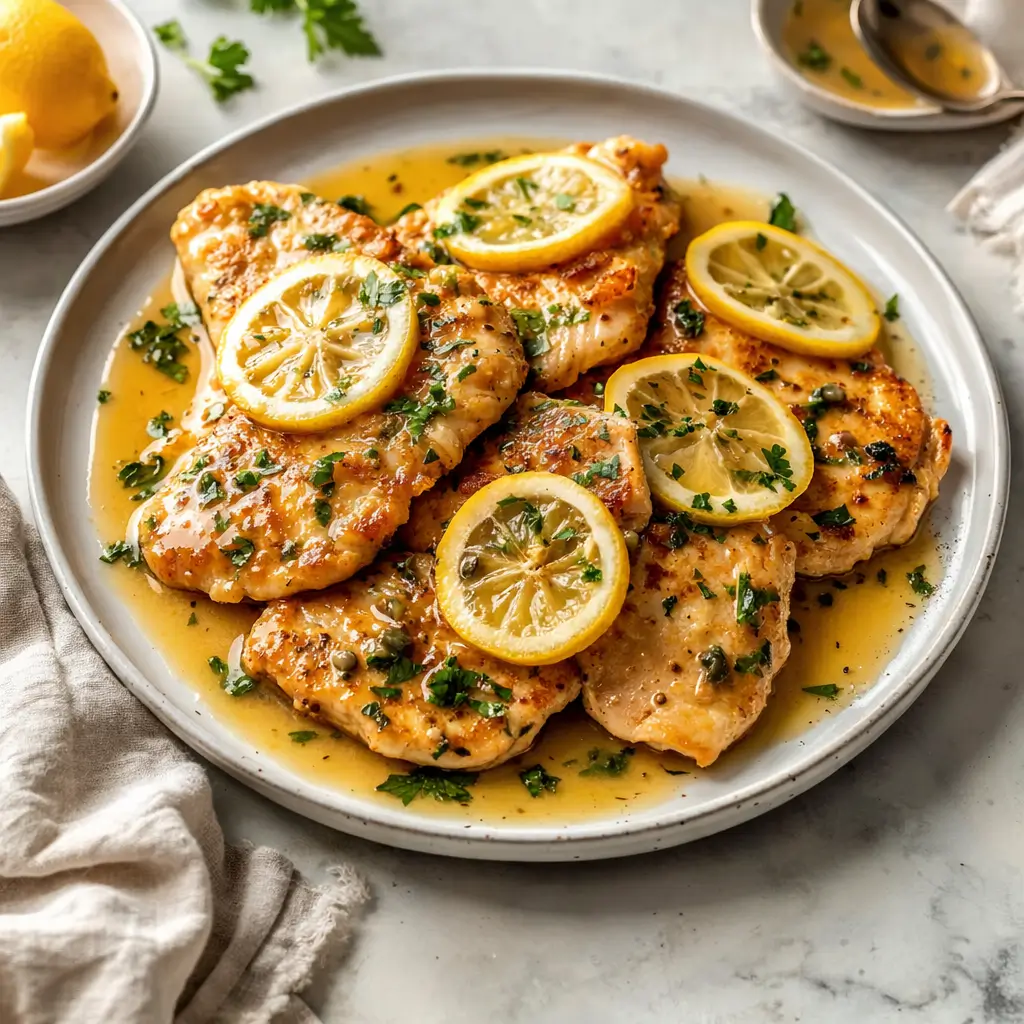
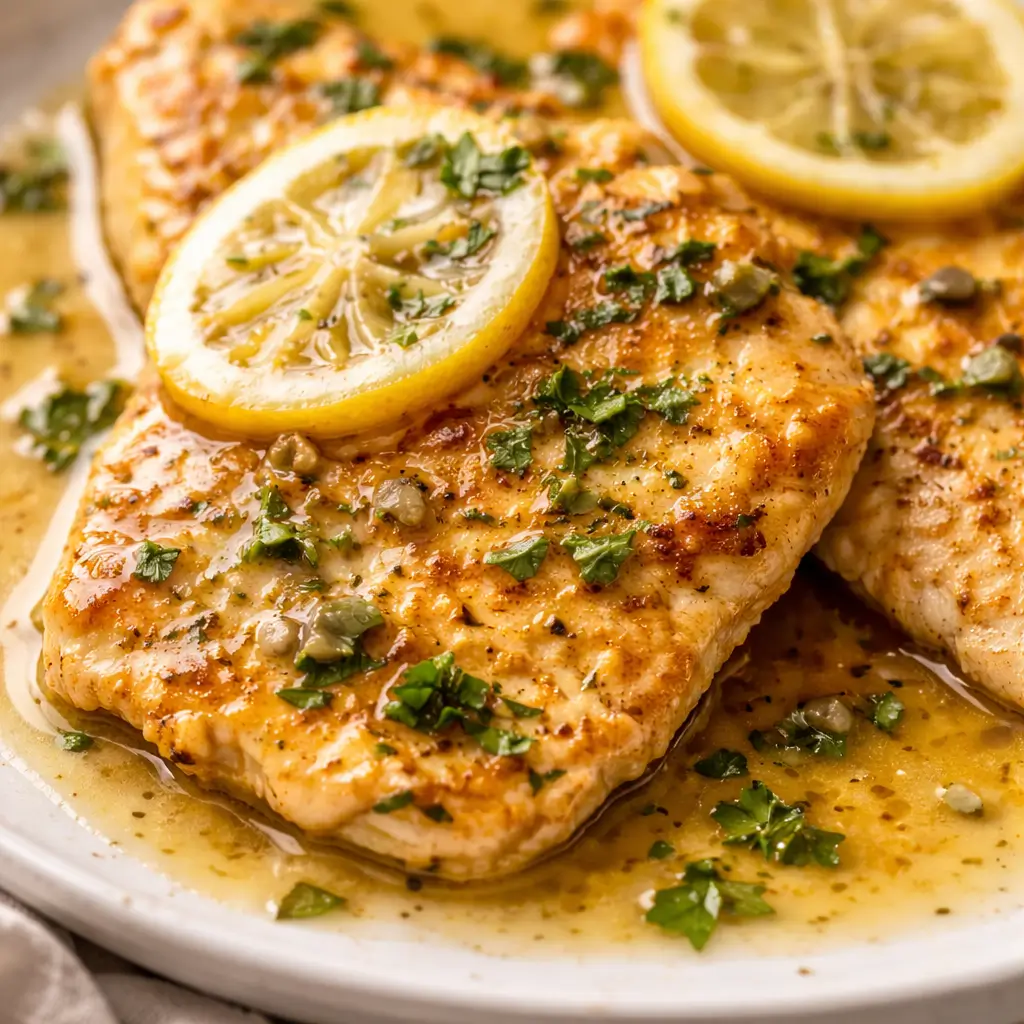
Lemon Chicken Francese is one of those timeless dishes that feels both comforting and refined. It combines lightly battered chicken, a silky lemon-butter sauce, and delicate pan-frying to create a meal that tastes restaurant-quality yet remains simple enough for a weeknight dinner.
This Italian-American favorite is known for its balance. The chicken is tender. The coating is light, never heavy. The sauce is vibrant with lemon, enriched with butter, and gently rounded by broth and wine. Every bite delivers freshness, richness, and warmth at once.
In this detailed guide, you will learn not only how to cook Lemon Chicken Francese but also how to master the technique behind it. Understanding the method makes the dish repeatable, reliable, and adaptable.
What Is Chicken Francese?
Chicken Francese, sometimes called Chicken Française, is a classic Italian-American preparation. Unlike traditional breaded cutlets, Francese chicken is dipped in flour first, then egg, before being sautéed.
This creates a delicate, golden coating that absorbs sauce beautifully. The result is lighter than breadcrumb coatings and far more elegant.
The defining feature is the lemon-butter pan sauce. It is built directly in the same pan used to cook the chicken. Therefore, it captures all the flavorful browned bits created during sautéing.
This technique produces depth without requiring long cooking.
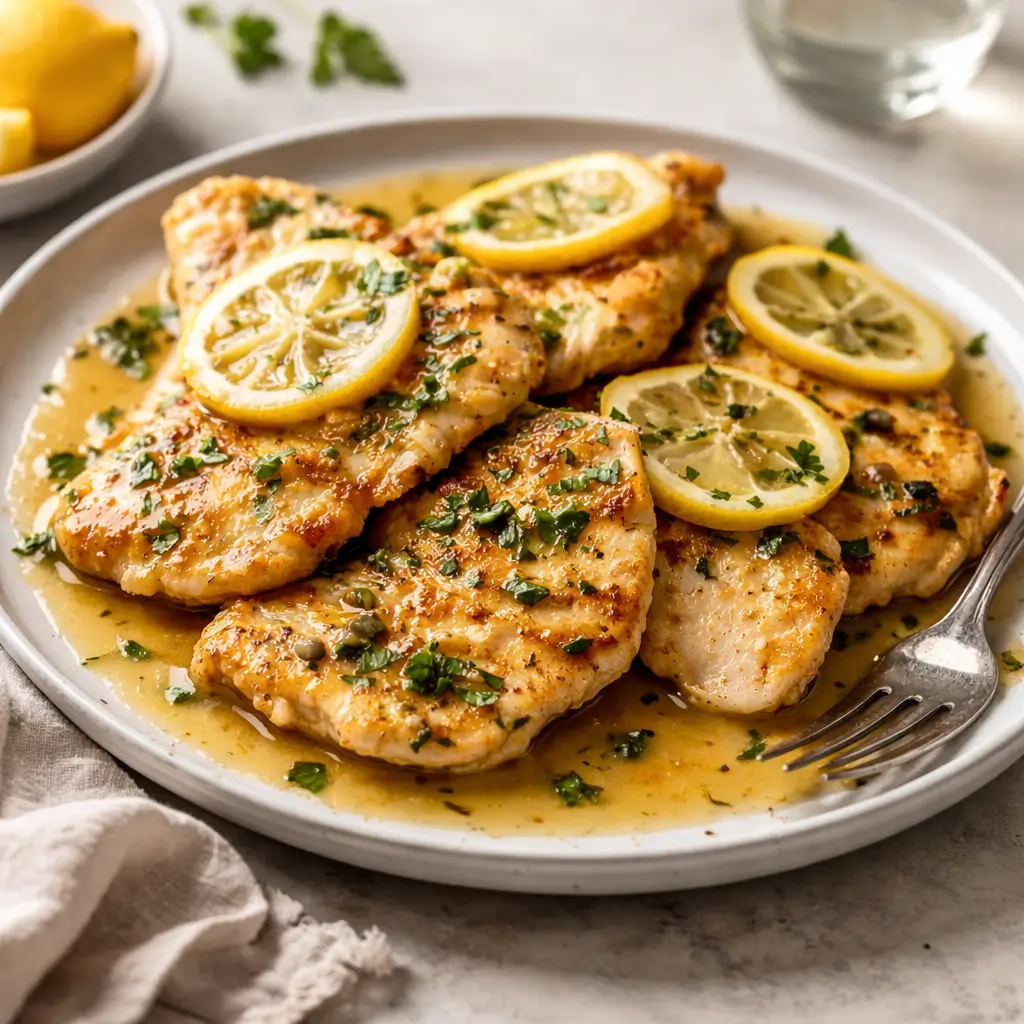
Why This Dish Works So Well
Lemon Chicken Francese succeeds because it relies on contrast and balance.
- The egg coating creates softness rather than crunch.
- The lemon brightens the richness of butter.
- The quick sauté preserves tenderness.
- The sauce lightly coats instead of overwhelming.
Unlike heavier comfort foods, this dish feels satisfying without being dense. That makes it ideal for both casual dinners and special occasions.
Ingredients You Will Need
The ingredient list is short, but each element plays an important role.
For the Chicken
- Boneless, skinless chicken breasts
- All-purpose flour
- Large eggs
- Salt
- Freshly ground black pepper
- Olive oil
- Unsalted butter
For the Lemon Sauce
- Fresh lemon juice
- Chicken broth
- Dry white wine (optional but recommended)
- Additional butter
- Lemon slices
- Fresh parsley
Because the recipe is simple, quality matters. Always use fresh lemons rather than bottled juice. The brightness is noticeably different.
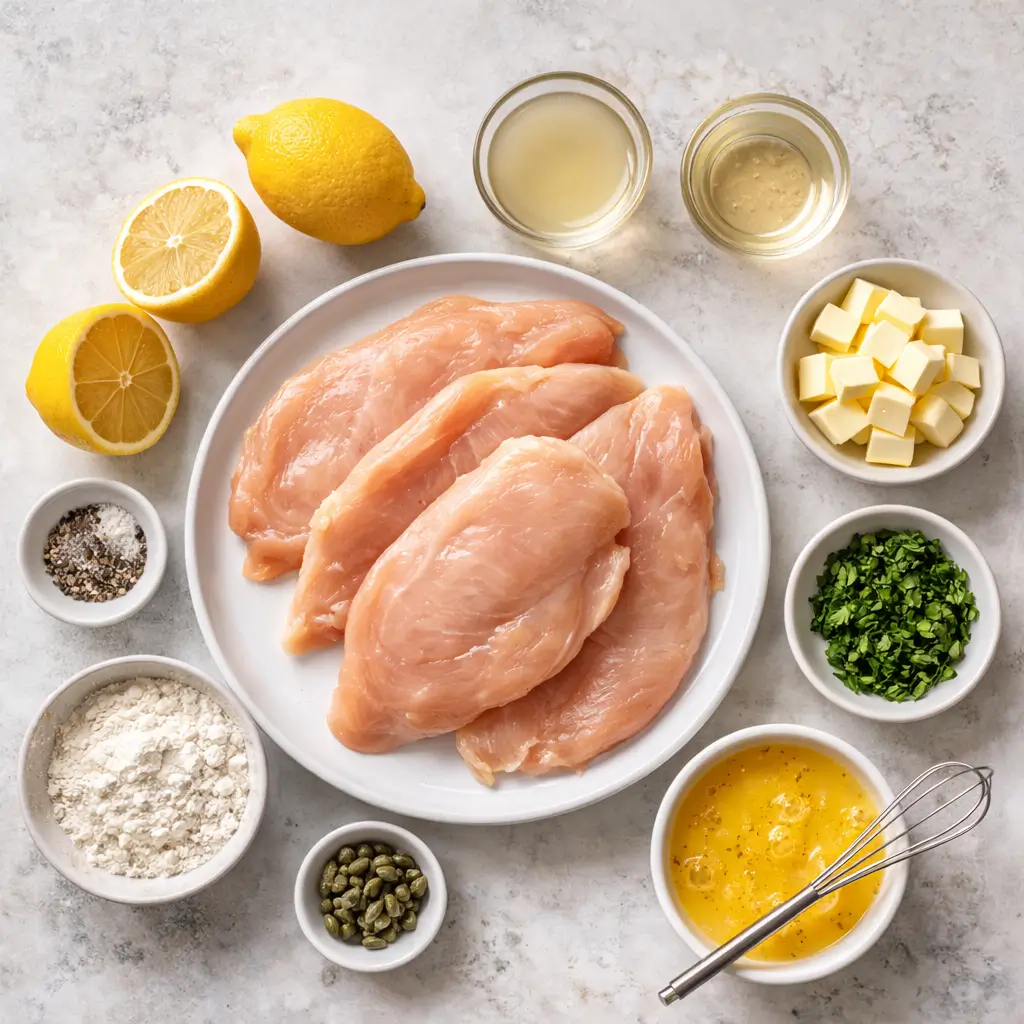
Exact Ingredient Quantities for Lemon Chicken Francese (Serves 4)
Chicken
- 2 large boneless, skinless chicken breasts (about 680 g / 1.5 lb total), sliced horizontally into 4 cutlets
- ½ teaspoon salt
- ¼ teaspoon freshly ground black pepper
Dredging Station
- ½ cup (60 g) all-purpose flour
- 3 large eggs
- 1 tablespoon water (to loosen the eggs slightly)
For Sautéing
- 3 tablespoons olive oil
- 3 tablespoons unsalted butter, divided
Lemon Francese Sauce
- ¾ cup (180 ml) chicken broth (low sodium preferred)
- ¼ cup (60 ml) dry white wine (such as Pinot Grigio; optional but recommended)
- ¼ cup (60 ml) freshly squeezed lemon juice (from 1½–2 lemons)
- 2 tablespoons unsalted butter (for finishing the sauce)
Garnish
- 1 lemon, thinly sliced
- 2 tablespoons fresh parsley, finely chopped
Notes for Best Results
- Each cutlet should be about 6 mm (¼ inch) thick after pounding.
- Always use fresh lemon juice, never bottled.
- Choose a dry wine, not sweet, to maintain balance.
Quick Scaling Guide
- For 2 servings: Use half of every quantity.
- For 6 servings: Multiply ingredients by 1.5, but sauté in batches to avoid crowding.
Preparing the Chicken Properly
Proper preparation ensures even cooking and tenderness.
Step 1: Slice and Pound the Chicken
Start by slicing each breast horizontally. This creates thinner cutlets that cook quickly and evenly.
Then gently pound the chicken between sheets of parchment. Aim for uniform thickness, about ¼ inch.
Uniformity prevents dryness.
Step 2: Season Before Coating
Season both sides with salt and pepper before dredging. This ensures flavor penetrates rather than sitting only in the sauce.
The Signature Francese Coating
This is where Francese differs from other chicken dishes.
Instead of breading, you create a light egg-battered exterior.
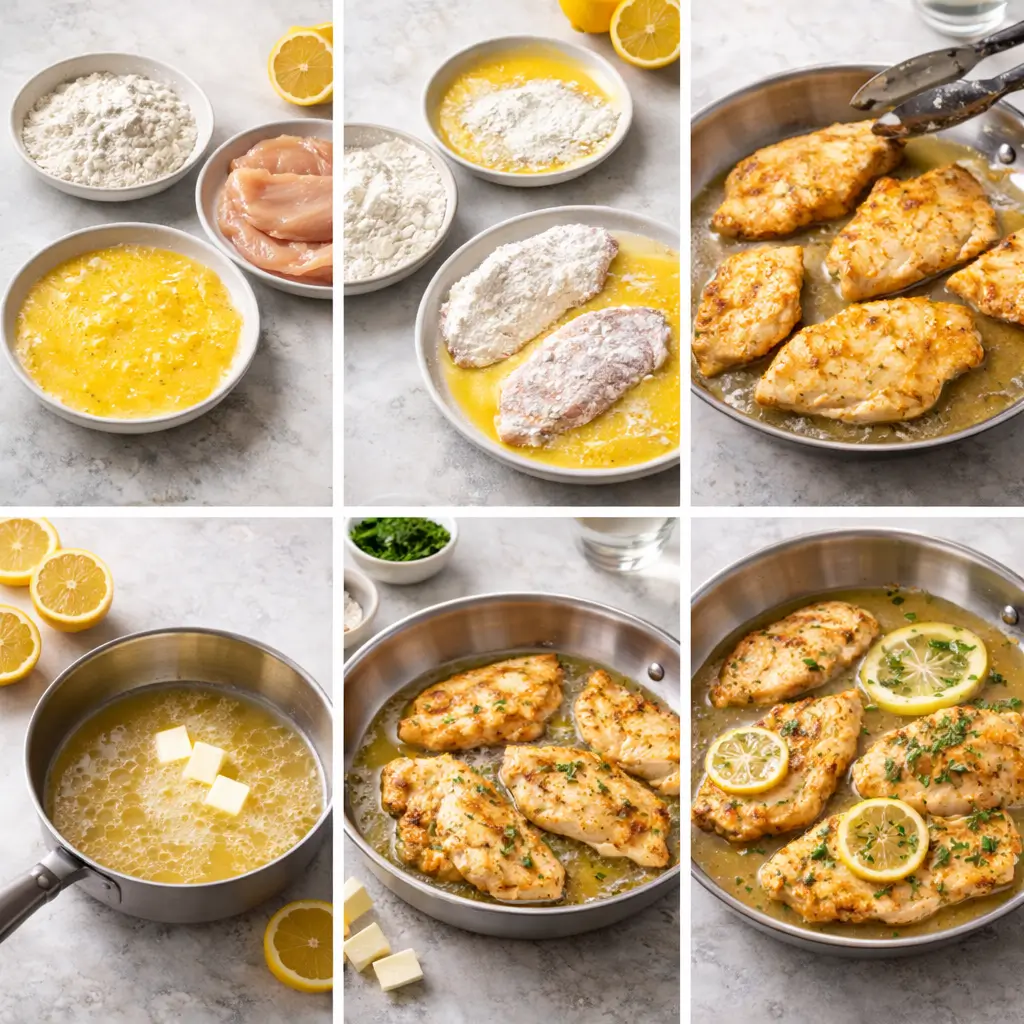
Step 1: Light Flour Dredge
Coat each cutlet lightly in flour. Shake off excess.
The flour helps the egg adhere evenly.
Step 2: Egg Dip
Dip the floured chicken into beaten eggs.
This creates a thin, delicate layer that will turn golden during sautéing.
Avoid letting the coating become thick. Francese should remain refined, not heavy.
How to Sauté Without Overcooking
The sauté step requires attention but is not difficult.
Use Medium Heat
Too hot, and the egg coating burns.
Too low, and the chicken becomes soggy.
A steady medium heat allows gentle browning.
Combine Olive Oil and Butter
Olive oil raises the smoke point.
Butter adds flavor and color.
This combination prevents burning while enhancing taste.
Cook Briefly
Each cutlet needs only 3 to 4 minutes per side.
The chicken should be lightly golden, not deeply browned.
Remove the chicken and set aside. It will finish cooking later in the sauce.
Building the Lemon Francese Sauce
The sauce is made in the same pan. This step captures flavor created during cooking.
Step 1: Deglaze the Pan
Add white wine to loosen the browned bits.
Let it simmer briefly.
These caramelized fragments add depth.
Step 2: Add Broth and Lemon Juice
Pour in chicken broth and freshly squeezed lemon juice.
The mixture should smell bright and savory.
Step 3: Simmer Gently
Allow the liquid to reduce slightly. This concentrates flavor without becoming thick.
Francese sauce is meant to remain light.
Step 4: Finish With Butter
Whisk in butter at the end. This emulsifies the sauce and creates its signature silky texture.
Never boil after adding butter. Gentle heat preserves smoothness.
Returning the Chicken to the Pan
Place the chicken back into the sauce. Let it simmer briefly so it absorbs flavor.
Add thin lemon slices for aroma and presentation.
The chicken finishes cooking here, remaining moist.
Garnishing the Dish
Finish with chopped parsley for freshness and color contrast.
This final touch balances the richness and enhances visual appeal.
The Flavor Profile Explained
Understanding why this dish tastes so satisfying helps refine your cooking.
- Lemon provides acidity that awakens the palate.
- Butter softens sharpness and adds body.
- Egg coating creates a delicate texture.
- Pan reduction intensifies savory notes.
The result feels luxurious yet clean.
Common Mistakes to Avoid
Even simple recipes can fail without attention to detail.
Using Thick Chicken Pieces
Thick cuts cook unevenly and become dry.
Overcrowding the Pan
Crowding prevents browning and creates steam.
Using Bottled Lemon Juice
Fresh juice is essential for brightness.
Over-Reducing the Sauce
Francese sauce should coat lightly, not become heavy.
Best Side Dishes to Serve With Lemon Chicken Francese
Because the sauce is vibrant, sides should complement rather than compete.
Pasta
Angel hair or linguine absorbs the sauce beautifully.
Roasted Vegetables
Asparagus or green beans provide contrast.
Mashed Potatoes
A comforting option that balances acidity.
Simple Salad
A light arugula salad reinforces freshness.
Making the Dish for Entertaining
Lemon Chicken Francese is ideal for guests because it cooks quickly and feels elegant.
You can prepare the chicken earlier in the day. Then finish the sauce just before serving.
This minimizes stress while maintaining freshness.
How to Scale the Recipe
Scaling requires attention to pan size.
When cooking for a crowd:
- Work in batches to avoid overcrowding.
- Keep cooked chicken warm in a low oven.
- Finish everything together in the sauce.
This ensures consistency.
Variations You Can Try
Once you master the base recipe, you can adapt it easily.
Add Capers
They introduce a briny contrast similar to piccata.
Use Chicken Thighs
They produce richer flavor but require slightly longer cooking.
Make It Extra Lemony
Add zest for a stronger citrus aroma.
Try a Creamy Version
A small splash of cream creates a richer interpretation.
Is Chicken Francese the Same as Chicken Piccata?
They are related but distinct.
Francese uses an egg coating.
Piccata does not.
Francese feels softer and more delicate.
Piccata tastes sharper and more assertive.
Both rely on lemon, but their textures differ significantly.
Storage and Reheating Tips
This dish stores well when handled carefully.
Refrigeration
Store in an airtight container for up to three days.
Reheating
Warm gently in a skillet with a splash of broth. Avoid microwaving if possible.
High heat separates the sauce.
Can You Freeze Lemon Chicken Francese?
Freezing is possible but not ideal. The egg coating can soften after thawing.
If freezing:
- Freeze chicken and sauce separately.
- Reheat slowly to preserve texture.
Nutritional Highlights
This dish offers a satisfying balance of protein and fats while remaining lighter than breaded fried chicken.
Because the coating is minimal, it avoids excess carbohydrates.
Using fresh ingredients also reduces reliance on processed elements.
The Cultural Story Behind the Dish
Chicken Francese represents the creativity of Italian immigrants adapting traditional methods to American kitchens.
It blends French sauté techniques with Italian flavors. The result is uniquely Italian-American.
This fusion explains both the elegance and accessibility of the dish.
Why Home Cooks Love This Recipe
Home cooks appreciate Lemon Chicken Francese because it delivers maximum reward for moderate effort.
It feels special but uses familiar ingredients.
It cooks quickly but tastes layered.
It impresses guests without requiring advanced skill.
Few recipes achieve that balance.
Final Cooking Tips for Perfect Results Every Time
To guarantee success, remember these guiding principles:
- Keep the chicken thin and even.
- Use fresh lemon juice only.
- Maintain moderate heat throughout cooking.
- Build the sauce in the same pan.
- Finish with butter off the heat.
These steps define the Francese method.
Conclusion
Lemon Chicken Francese is more than just another chicken recipe. It is a lesson in balance, restraint, and technique. The dish shows how a few ingredients, treated carefully, can produce something deeply satisfying and elegant.
Once you understand the process, you can prepare it confidently for family dinners, gatherings, or quiet evenings when you want something comforting yet refined.
Mastering Lemon Chicken Francese means adding a timeless classic to your cooking repertoire—one that never feels heavy, never goes out of style, and always delivers bright, beautiful flavor.
