
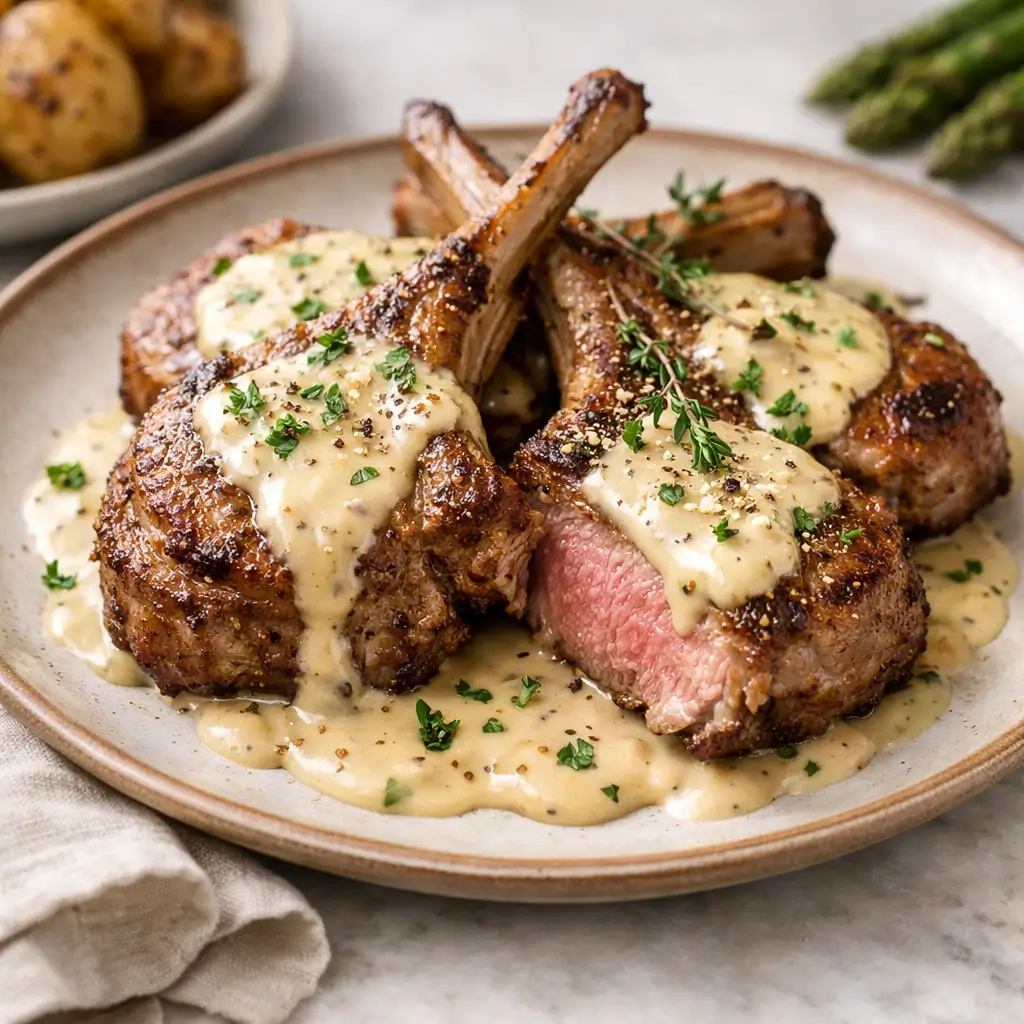
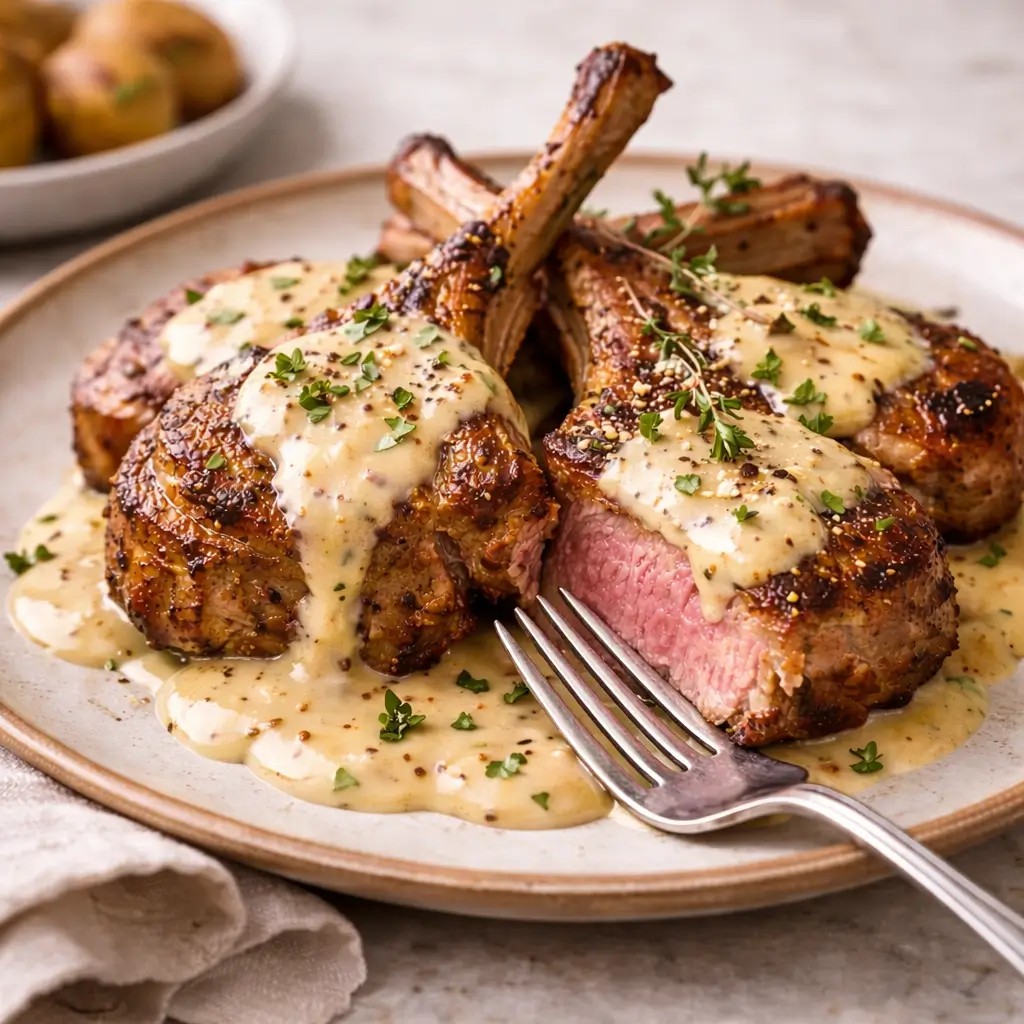
Lamb chops with creamy Dijon mustard sauce is an elegant yet surprisingly simple dish that delivers restaurant-quality flavor at home. This recipe combines perfectly seared lamb with a velvety, tangy mustard cream sauce that enhances the natural richness of the meat without overpowering it. The result is a balanced, deeply satisfying meal ideal for both special occasions and refined weeknight dinners.
This guide explains every step carefully, from selecting the best lamb to mastering the sauce texture. You will also find professional tips, variations, and serving suggestions to ensure consistent success.
Why This Recipe Works
This dish succeeds because it builds flavor in layers.
First, lamb naturally contains rich, slightly sweet notes.
Then, a proper sear creates caramelization through the Maillard reaction.
Finally, Dijon mustard and cream form a sauce that cuts richness while adding complexity.
The contrast between savory meat and tangy cream produces a balanced, memorable dish.
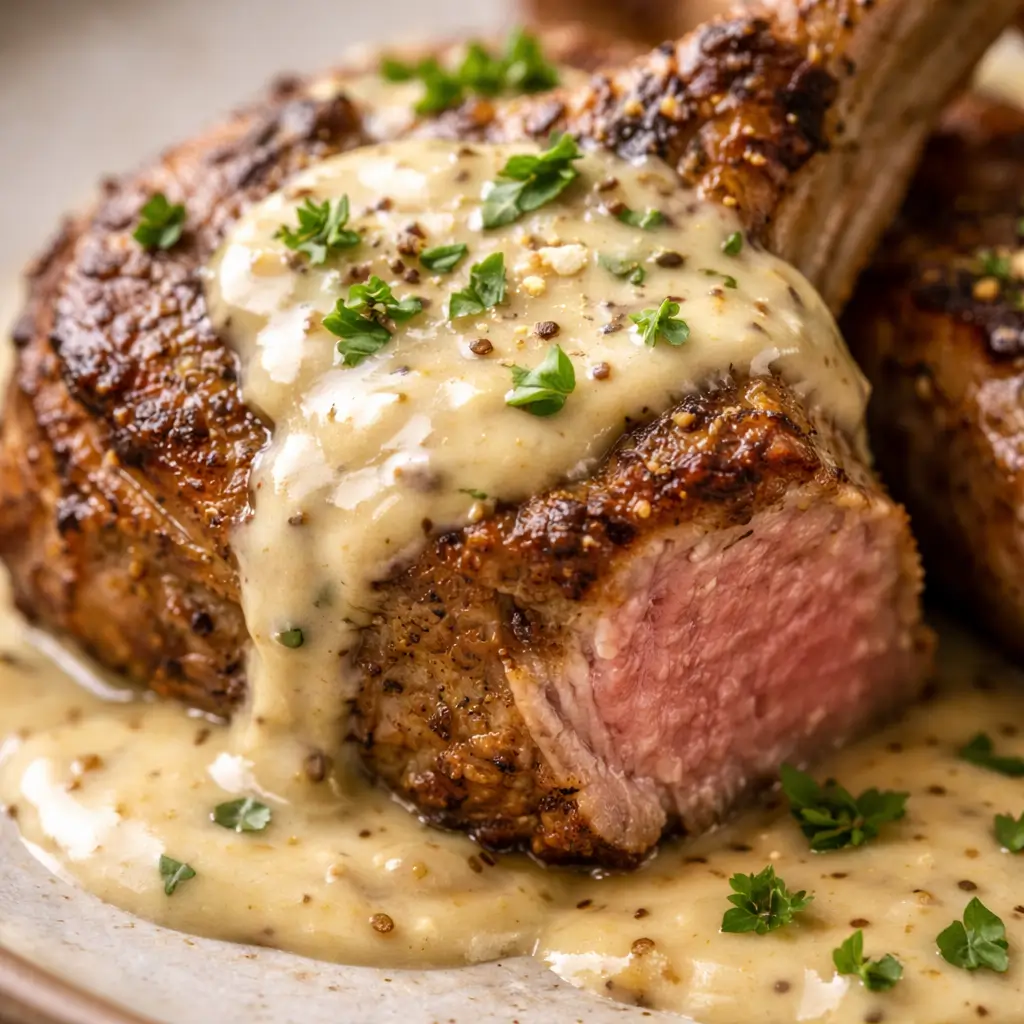
Choosing the Best Lamb Chops
Selecting quality lamb determines the final outcome.
Look for:
- Rib chops or loin chops for tenderness.
- Pinkish-red meat with fine marbling.
- Firm, white fat.
- Chops about 1 to 1.5 inches thick.
Avoid overly lean chops. Fat carries flavor and prevents dryness during cooking.
Ingredients
For the Lamb Chops
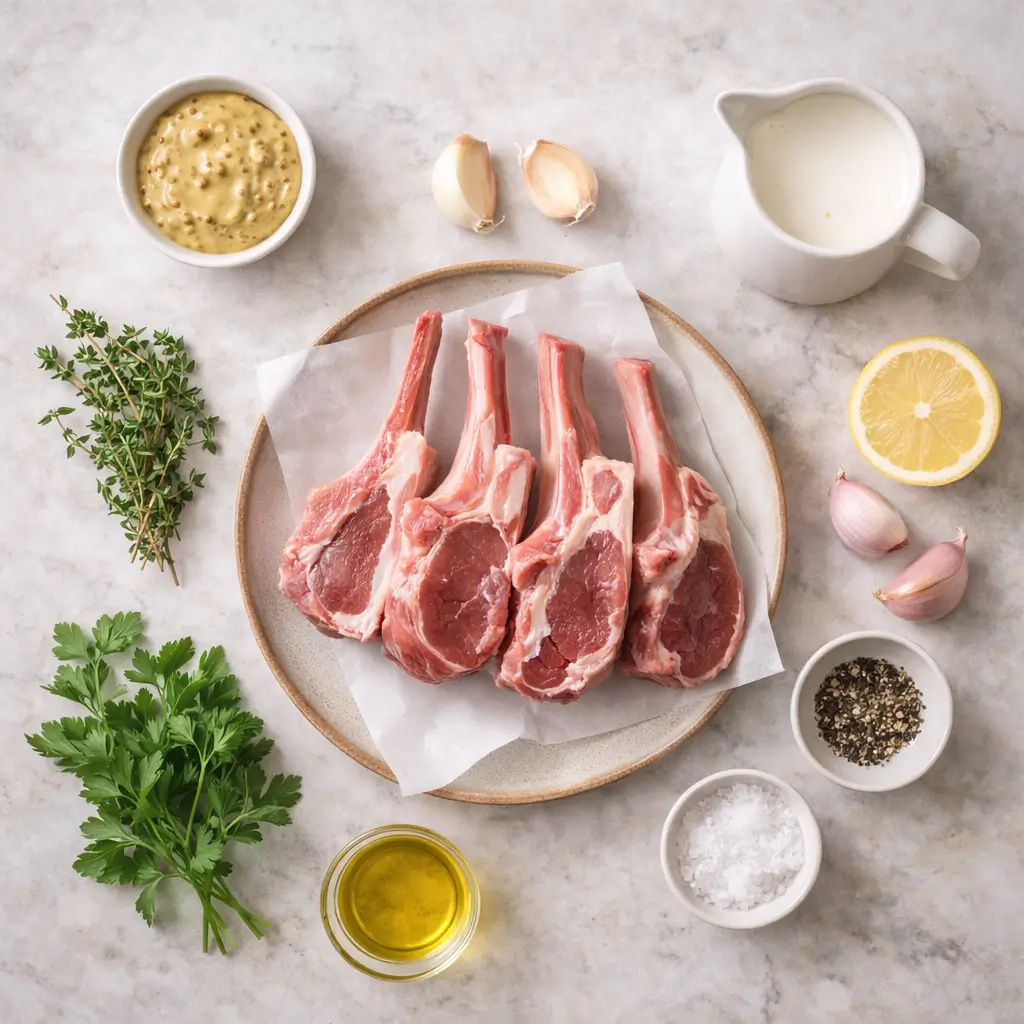
- 8 lamb rib or loin chops
- 2 tablespoons olive oil
- Salt, to taste
- Freshly ground black pepper
- 2 garlic cloves, lightly crushed
- 2 sprigs fresh thyme
For the Creamy Dijon Mustard Sauce
- 1 tablespoon unsalted butter
- 1 small shallot, finely minced
- 1/2 cup heavy cream
- 2 tablespoons Dijon mustard
- 1/4 cup chicken stock
- 1 teaspoon fresh thyme leaves
- Salt and pepper to taste
Optional Garnish
- Fresh parsley, finely chopped
Equipment Needed
- Heavy skillet (cast iron preferred)
- Tongs
- Small saucepan or same skillet for sauce
- Instant-read thermometer (recommended)
A heavy pan ensures even heat and better caramelization.
Preparing the Lamb Chops
Remove the lamb from the refrigerator 20 minutes before cooking.
This step allows even cooking.
Pat the chops completely dry using paper towels.
Moisture prevents proper searing.
Season generously with salt and pepper on both sides.
Lamb requires confident seasoning.
Step 1: Searing the Lamb Chops
Heat a skillet over medium-high heat until very hot.
Add olive oil and allow it to shimmer.
Place lamb chops in the pan without overcrowding.
Crowding lowers temperature and causes steaming.
Add crushed garlic and thyme to the pan.
These aromatics infuse flavor into the fat.
Sear for about 3–4 minutes per side.
Avoid moving the chops too soon.
You want a deep golden crust.
Checking Doneness
Use a thermometer for accuracy.
- Rare: 125°F (52°C)
- Medium-rare: 130–135°F (54–57°C)
- Medium: 140°F (60°C)
Medium-rare is ideal for tenderness and flavor.
Remove chops and let them rest 5–7 minutes.
Resting redistributes juices.
Step 2: Building the Sauce Base
Reduce heat to medium.
Discard excess fat but keep browned bits in the pan.
Add butter and minced shallot.
Cook gently until translucent.
Do not brown the shallots.
You want sweetness, not sharpness.
Step 3: Deglazing the Pan
Pour in chicken stock.
Scrape the bottom using a wooden spoon.
This releases fond, the concentrated flavor layer.
Deglazing is essential for depth.
Let the liquid reduce slightly.
Step 4: Creating the Creamy Dijon Sauce
Lower heat to medium-low.
Add heavy cream and stir.
Then whisk in Dijon mustard slowly.
This prevents separation.
Add thyme leaves and simmer gently.
The sauce should thicken naturally.
Never boil the sauce.
High heat can cause curdling.
Season with salt and pepper.
Achieving the Perfect Sauce Texture
The ideal consistency coats the back of a spoon.
If too thin:
Simmer longer to reduce.
If too thick:
Add a small splash of stock.
Balance is key. The sauce must complement, not dominate.
Step 5: Returning Lamb to the Pan
Return lamb chops briefly to the skillet.
Spoon sauce over them.
Let them warm for 1 minute only.
Do not overcook.
This step integrates flavors without losing tenderness.
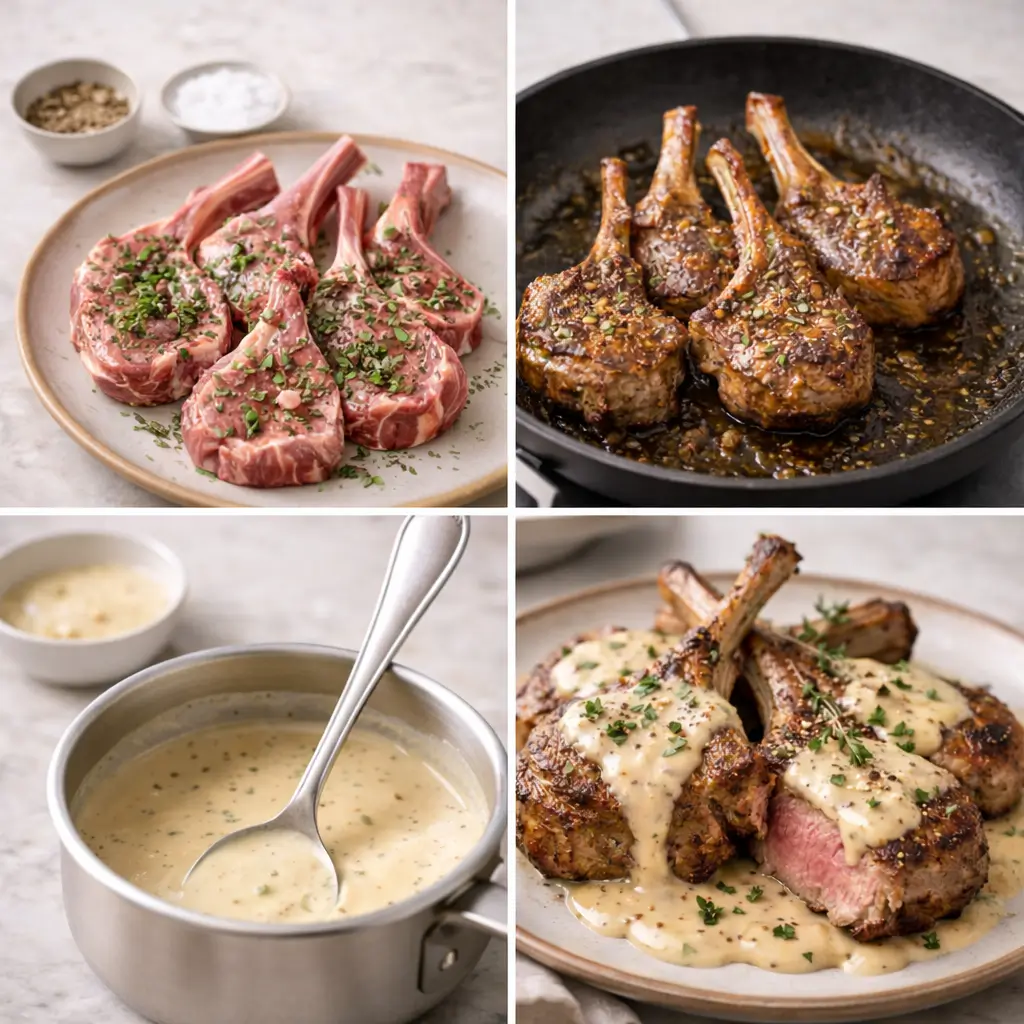
Plating the Dish
Arrange lamb chops slightly overlapping.
Drizzle sauce generously.
Finish with chopped parsley for freshness.
A simple presentation enhances elegance.
Flavor Profile Explained
This recipe balances three essential elements:
Richness from lamb fat and cream.
Acidity from Dijon mustard.
Aromatic complexity from thyme and shallots.
This balance prevents heaviness while maintaining indulgence.
Common Mistakes to Avoid
Overcooking the Lamb
Lamb becomes tough quickly.
Always monitor temperature carefully.
Skipping Rest Time
Cutting immediately releases juices.
Resting ensures moist meat.
Boiling the Sauce
High heat breaks emulsions.
Gentle simmering is essential.
Under-seasoning
Lamb needs confident seasoning.
Taste and adjust.
Serving Suggestions
This dish pairs beautifully with simple sides.
Best accompaniments include:
- Roasted baby potatoes
- Garlic mashed potatoes
- Steamed asparagus
- Green beans with lemon
- Buttery polenta
Choose sides that absorb the sauce.
Wine Pairing Recommendations
A structured red wine enhances lamb.
Excellent choices:
- Bordeaux blend
- Syrah
- Cabernet Sauvignon
- Rioja Reserva
These wines complement richness and mustard notes.
Make-Ahead Tips
You may prepare the sauce base earlier.
Reheat gently and whisk before serving.
Cook lamb fresh for best texture.
Avoid reheating fully cooked lamb.
It can dry out.
Storing Leftovers
Store in an airtight container for up to 3 days.
Reheat gently in a covered skillet with a splash of stock.
Microwaving can toughen the meat.
Variations You Can Try
Herb-Crusted Version
Add rosemary and parsley crust before searing.
White Wine Dijon Sauce
Replace stock with dry white wine.
Garlic-Forward Version
Increase garlic for deeper savory notes.
Lighter Version
Use half-and-half instead of heavy cream.
Each variation preserves the dish’s identity while offering nuance.
Nutritional Highlights
Lamb provides:
- High-quality protein
- Iron and zinc
- Vitamin B12
The sauce adds richness, so moderation keeps the dish balanced.
Why This Dish Feels Restaurant-Quality
Professional kitchens rely on three techniques used here:
- Proper searing for flavor development.
- Deglazing to capture caramelized essence.
- Controlled emulsification for smooth sauce.
Master these, and many classic dishes become achievable at home.
Frequently Asked Questions
Can I grill the lamb instead?
Yes. Grill over high heat, then prepare the sauce separately.
Can I substitute another mustard?
Dijon is essential for balance. Whole-grain mustard changes texture.
How do I know when lamb is tender?
Proper temperature and resting guarantee tenderness.
Final Thoughts
Lamb chops with creamy Dijon mustard sauce demonstrate how a few carefully handled ingredients can produce exceptional results. The method is straightforward, yet the flavor feels refined and complex.
Once you master this recipe, it becomes a reliable centerpiece dish suitable for entertaining, celebrations, or simply elevating a quiet dinner. Cooking it repeatedly builds confidence with heat control, sauce-making, and meat preparation—skills that translate to countless other recipes.
