
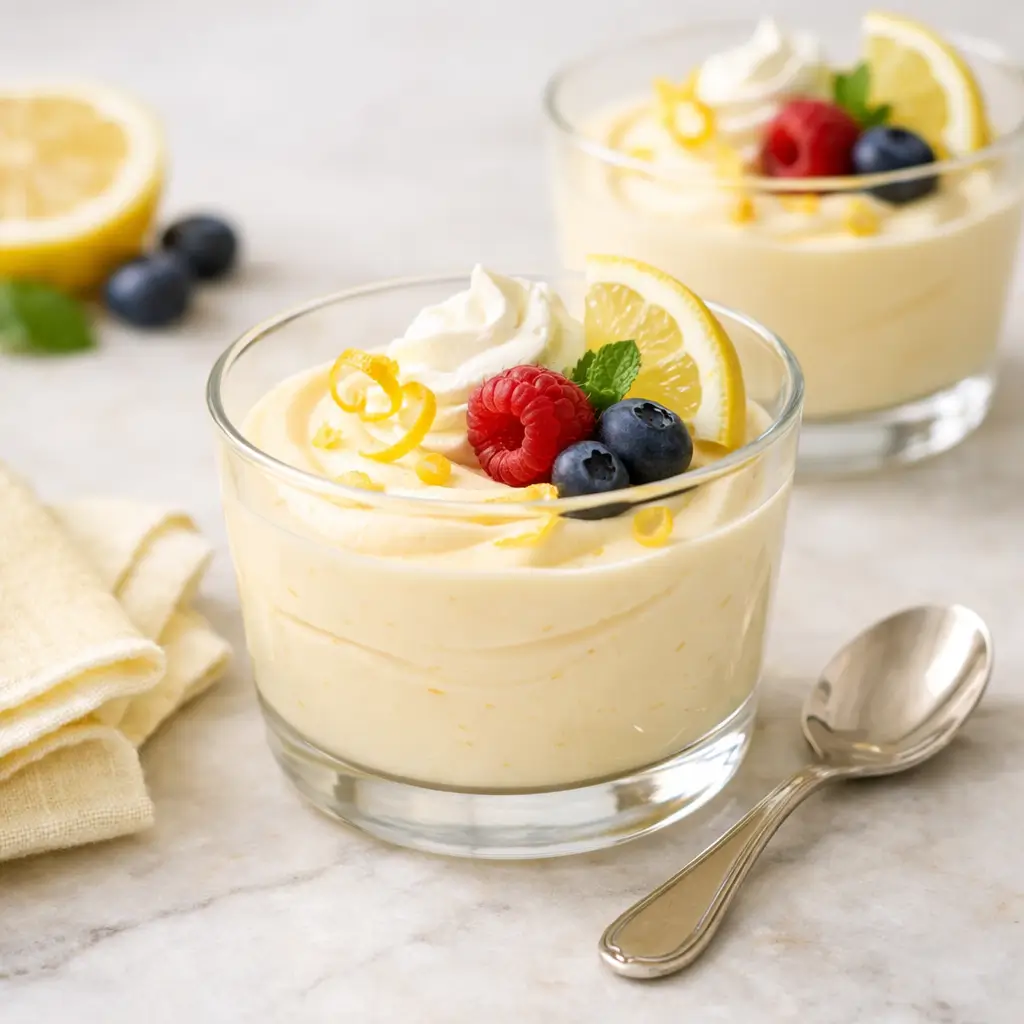
Lemon Mascarpone Mousse is a refined yet simple dessert that combines the richness of Italian mascarpone with the bright freshness of lemon. It is light, creamy, and delicately sweet. Moreover, it requires no baking, which makes it ideal for both everyday treats and elegant occasions. The balance between citrus and cream creates a dessert that feels luxurious without being heavy.
This mousse is rooted in the philosophy of classic European pastry. It emphasizes texture, freshness, and harmony of flavors rather than complexity. As a result, even a short ingredient list can produce an impressive dessert when handled carefully.
Why This Dessert Works So Well
The success of Lemon Mascarpone Mousse comes from contrast. Mascarpone provides density and smoothness. Lemon introduces acidity and brightness. Whipped cream adds air and structure. When combined correctly, these three elements form a mousse that feels simultaneously rich and weightless.
Unlike gelatin-based mousses, this version relies entirely on proper mixing and folding techniques. Therefore, the texture remains natural and creamy rather than stiff. Each spoonful melts quickly on the palate while leaving a refreshing citrus finish.
Another advantage lies in its versatility. It can be served casually in glasses or plated formally for dinner parties. Additionally, it pairs beautifully with fruits, biscuits, or light cakes.

Ingredients and Their Role
Understanding the purpose of each ingredient helps ensure consistent results.
Mascarpone Cheese
Mascarpone is an Italian cream cheese with high fat content and low acidity. It creates the mousse’s signature silkiness. Unlike regular cream cheese, mascarpone blends smoothly without becoming dense or tangy.
Fresh Lemons
Fresh lemon juice provides acidity. Lemon zest contributes aromatic oils that intensify flavor without adding extra liquid. Both are essential. Bottled juice cannot replace the brightness of fresh citrus.
Heavy Cream
The cream is whipped separately to incorporate air. This aeration gives the mousse its light structure. Proper whipping is critical because under-whipped cream leads to a loose mousse, while over-whipped cream causes graininess.
Sugar
Sugar balances lemon acidity and stabilizes the cream. It also enhances the natural sweetness of mascarpone without overpowering the citrus profile.
Vanilla Extract
Vanilla softens the sharpness of lemon. Although subtle, it rounds the flavor and adds depth.
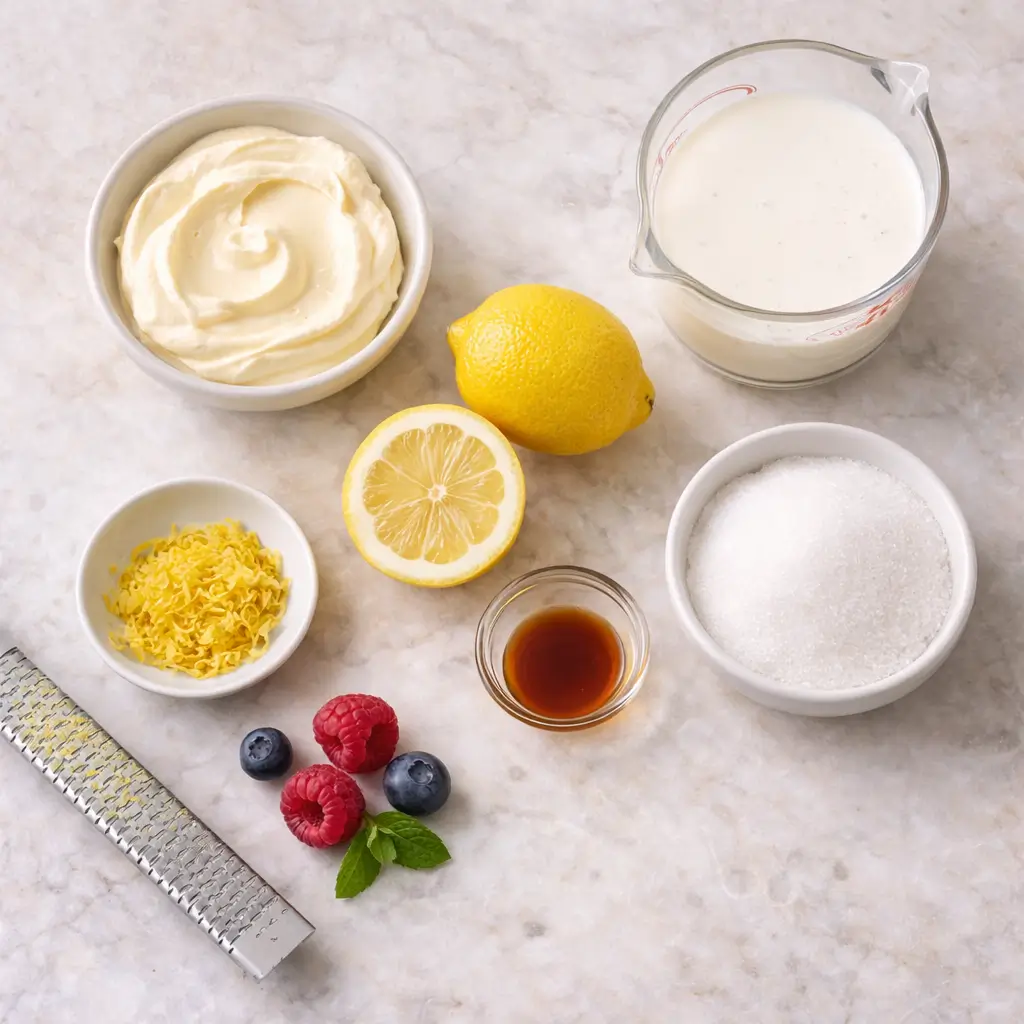
Exact Ingredient Quantities
(For 4 Servings — about 4 small dessert glasses)
- Mascarpone cheese: 250 g (1 cup)
- Heavy whipping cream (cold): 240 ml (1 cup)
- Granulated sugar: 60 g (¼ cup)
- Fresh lemon juice: 45 ml (3 tablespoons, from about 1½ lemons)
- Fresh lemon zest: 2 teaspoons (from 1 large lemon)
- Vanilla extract: 1 teaspoon
Optional Garnishes (Recommended for Serving)
- Extra lemon zest
- Thin lemon slices or twists
- Fresh raspberries or blueberries
- Small mint leaves
- Lightly sweetened whipped cream (if decorating)
Notes on Measurements
- Use full-fat mascarpone for proper texture. Low-fat versions produce a thinner mousse.
- Always use fresh lemon juice, not bottled, to achieve the clean citrus flavor.
- The cream must be well chilled before whipping to obtain stable peaks.
- Do not increase the lemon juice beyond this quantity, or the mousse may not set correctly.
Equipment You Will Need
This recipe requires only basic tools, yet technique matters.
A large mixing bowl allows proper folding without deflating the mixture.
A whisk or electric mixer ensures smooth blending.
A microplane zester extracts fine citrus oils.
A spatula is necessary for gentle incorporation of whipped cream.
Serving glasses or ramekins showcase the mousse attractively.
Because no baking is involved, precision in mixing replaces precision in temperature control.
Step-by-Step Preparation
Step 1: Preparing the Lemon Base
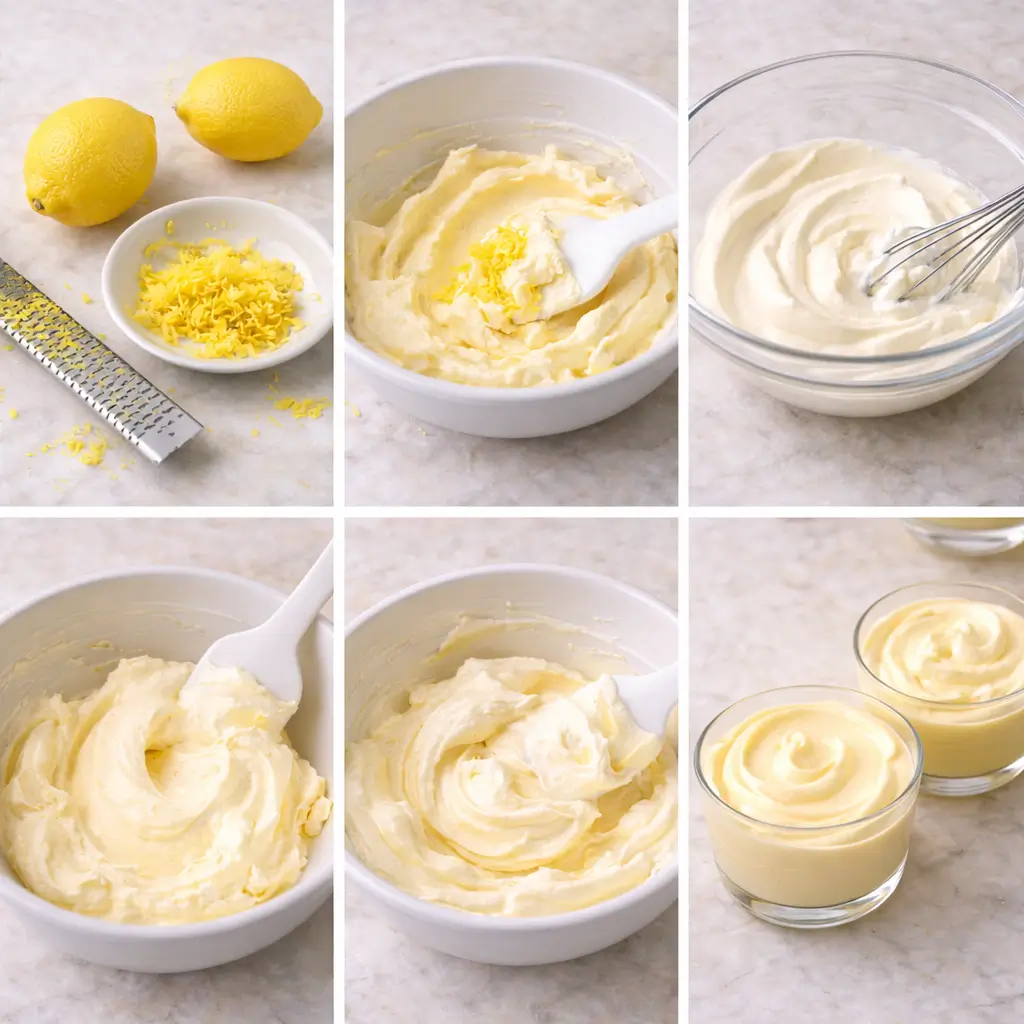
Begin by zesting the lemons directly over a bowl. This captures aromatic oils before they evaporate. Then squeeze the juice and strain out pulp and seeds. The goal is a smooth liquid that blends seamlessly into the mascarpone.
Combining zest and juice at this stage ensures even distribution of flavor.
Step 2: Softening the Mascarpone
Mascarpone must be gently stirred before adding other ingredients. Cold mascarpone can appear firm. However, overmixing will break its structure. Stir slowly until smooth and creamy.
Add sugar, vanilla, and lemon juice gradually. Mix only until homogeneous. At this point, the mixture should feel thick yet silky.
Step 3: Whipping the Cream
In a separate chilled bowl, whip the heavy cream until soft peaks form. The cream should hold its shape but remain glossy. This stage is essential because stiff peaks make folding difficult.
The whipped cream is responsible for the mousse’s lightness. Therefore, patience during whipping directly affects texture.
Step 4: Folding, Not Mixing
Add one third of the whipped cream to the mascarpone mixture. Stir gently to lighten the base. Then fold in the remaining cream using a spatula.
Folding means lifting the mixture from the bottom and turning it over itself. This preserves air bubbles. Stirring aggressively would collapse them.
Continue folding until no white streaks remain.
Step 5: Filling and Chilling
Spoon the mousse into serving glasses. Smooth the tops lightly. Refrigerate for at least two hours.
Chilling allows the fats to firm slightly. As a result, the mousse becomes stable while retaining its creamy mouthfeel.
Texture: What to Expect
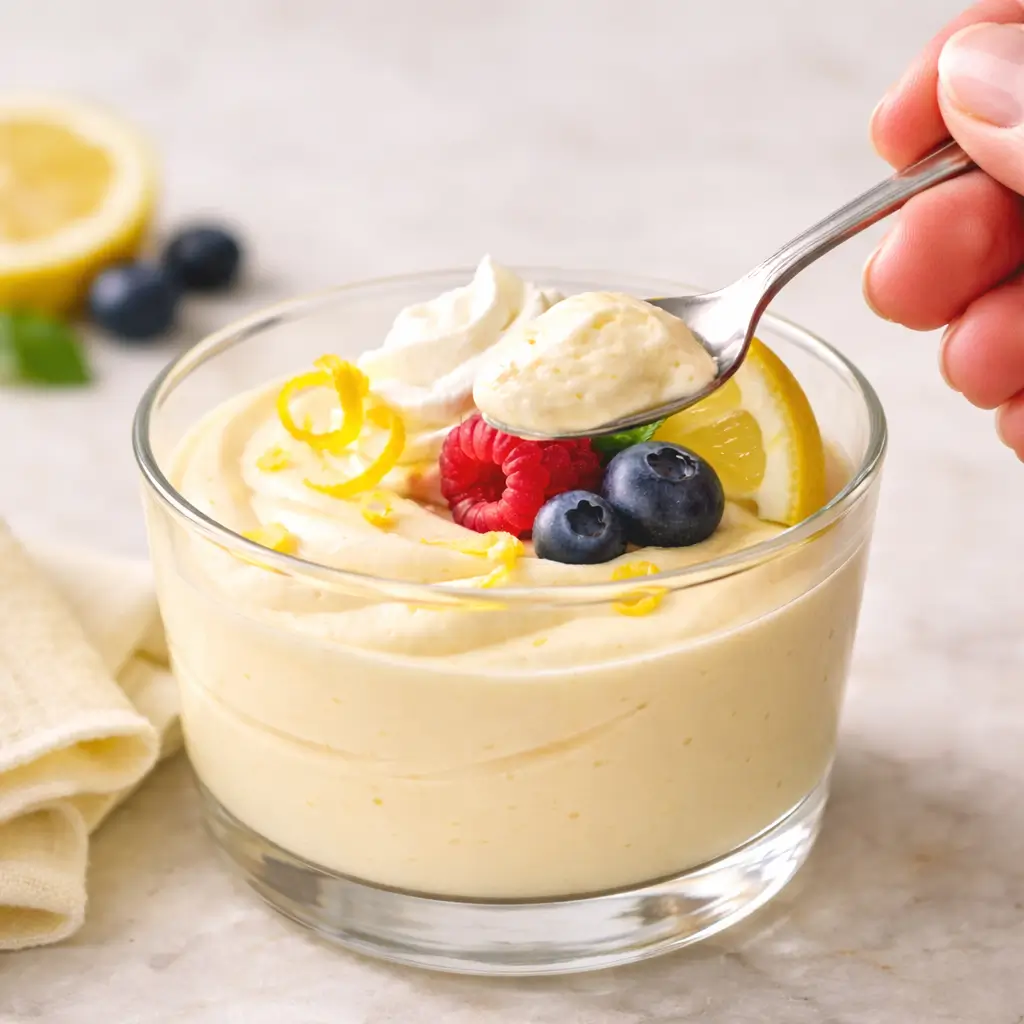
A properly made Lemon Mascarpone Mousse should never feel dense. It should appear smooth and cloud-like. When scooped, it should hold shape briefly before relaxing.
The sensation in the mouth should be cool, airy, and velvety. The lemon should taste fresh rather than sharp. If the mousse feels heavy, it was likely overmixed. If it feels runny, the cream was under-whipped.
Flavor Balance and Culinary Science
This dessert demonstrates an important principle in pastry science: fat moderates acidity. Mascarpone’s richness buffers lemon’s sharpness. Meanwhile, sugar reduces perceived sourness by influencing taste receptors.
Air incorporation through whipped cream changes texture perception. Even though the ingredients are rich, the mousse tastes lighter because of the added volume.
This explains why mousse feels less heavy than cheesecake despite similar ingredients.
Presentation Ideas
Presentation enhances enjoyment, especially with such a visually soft dessert.
Serve the mousse in clear glasses to reveal its creamy texture. Garnish lightly with lemon zest, berries, or mint. Avoid heavy toppings, which would disrupt the dessert’s delicate nature.
For formal service, pipe the mousse using a pastry bag. This creates elegant swirls and height.
For casual occasions, simply spoon and smooth the surface.
Make-Ahead Advantages
This dessert benefits from advance preparation. In fact, flavor improves after chilling. The citrus integrates more fully, and the texture stabilizes.
It can be prepared one day ahead without loss of quality. However, garnishes should be added just before serving to maintain freshness.
This reliability makes it excellent for entertaining.
Variations to Explore
Once the basic method is mastered, variations are easy.
Lemon Berry Mousse
Add a layer of fresh raspberries or blueberries at the bottom of each glass. The fruit adds contrast and color.
Lemon Vanilla Mousse
Increase vanilla slightly for a softer citrus profile.
Lemon Biscuit Parfait
Alternate mousse with crushed ladyfingers or shortbread for texture.
Lighter Version
Reduce mascarpone slightly and increase whipped cream for an even airier result.
Each variation respects the same structural principles while introducing new dimensions.
Common Mistakes and How to Avoid Them
Many issues arise from overhandling the ingredients.
Overmixing mascarpone causes separation. Always mix gently.
Using warm cream prevents proper whipping. Keep everything cold.
Adding too much lemon juice weakens the structure. Measure carefully.
Skipping chilling time leads to a loose mousse.
Attention to detail ensures consistent success.
Storage Guidelines
Store the mousse covered in the refrigerator. It remains fresh for up to three days. Because it contains dairy, it should not sit at room temperature for extended periods.
Freezing is not recommended. Ice crystals damage the smooth texture.
Pairing Suggestions
Lemon Mascarpone Mousse pairs beautifully with light accompaniments.
Serve alongside almond biscotti for crunch.
Pair with fresh strawberries for natural sweetness.
Add a thin sponge cake base for a plated dessert.
Enjoy with tea, espresso, or sparkling water.
Avoid overly rich pairings, which would overwhelm its freshness.
If you enjoy bright citrus desserts, you may also love these soft and tangy Lemon Brownies Recipe, which offer a denser, fudgy texture while keeping that same refreshing lemon flavor.
Nutritional Perspective
Although indulgent, this dessert is naturally portion-controlled. Its richness encourages small servings. Lemon provides brightness without added complexity, allowing fewer ingredients to deliver full satisfaction.
Because it contains no flour, it is also suitable for gluten-free menus when served without biscuits.
Why This Recipe Appeals to Modern Cooking
Modern home cooks appreciate recipes that combine elegance and simplicity. Lemon Mascarpone Mousse embodies that balance. It feels sophisticated but requires no advanced equipment.
Its no-bake nature suits contemporary lifestyles. Furthermore, its make-ahead flexibility aligns with entertaining needs.
This explains why similar citrus-cream desserts remain staples in European cuisine.
A Short Historical Note
Mascarpone originates from Northern Italy, particularly Lombardy. Traditionally used in desserts like tiramisu, it became valued for its luxurious texture and mild flavor.
Citrus-based creams have long appeared in Mediterranean cooking. Combining mascarpone with lemon reflects regional ingredients and culinary philosophy: few elements, handled well.
Scaling the Recipe
This mousse scales easily for gatherings. The ratio remains stable as long as folding technique is preserved.
For large batches, mix mascarpone in stages to avoid overworking it. Then incorporate whipped cream gradually.
Professional kitchens often prepare it in trays before portioning into glasses.
Frequently Asked Questions (FAQs)
1. Can I make Lemon Mascarpone Mousse in advance?
Yes. This dessert is ideal for preparing ahead. In fact, chilling for several hours improves both texture and flavor. You can make it up to 24 hours in advance and store it covered in the refrigerator.
2. How long does it need to chill before serving?
The mousse should chill for at least 2 hours. This allows the fats to firm slightly and helps the structure stabilize. For best results, chill for 3–4 hours.
3. Can I freeze Lemon Mascarpone Mousse?
Freezing is not recommended. Ice crystals will damage the smooth texture and cause separation when thawed. This dessert is best enjoyed fresh from the refrigerator.
4. What can I use instead of mascarpone?
Mascarpone is strongly recommended because of its creamy texture and mild taste. However, in an emergency, you can use full-fat cream cheese softened with a little cream. The flavor will be slightly tangier and less delicate.
5. Why did my mousse turn out too runny?
This usually happens for one of three reasons:
- The cream was under-whipped.
- The mixture was overmixed during folding.
- Too much lemon juice was added.
Proper soft peaks and gentle folding are essential.
6. Can I reduce the sugar?
Yes, you may reduce the sugar slightly if you prefer a more tart flavor. However, do not remove too much, because sugar helps stabilize the whipped cream and balance acidity.
7. Is this dessert baked?
No. Lemon Mascarpone Mousse is a no-bake dessert. It relies on whipping and chilling to achieve its structure.
8. How should I serve it for a dinner party?
Serve it in clear glasses or small ramekins. Add a light garnish such as lemon zest, berries, or a mint leaf just before serving. Keep the presentation simple to highlight the mousse’s elegance.
9. Can I add fruit to the mousse?
Yes. Fresh berries pair beautifully with lemon. You can layer them at the bottom of the glass or add them as a topping for color and freshness.
10. How long will leftovers keep?
Stored in an airtight container in the refrigerator, the mousse will remain fresh for up to 3 days. Stirring is not necessary; simply serve chilled.
Final Thoughts
Lemon Mascarpone Mousse is an example of how restraint creates elegance. The recipe avoids unnecessary complexity. Instead, it focuses on quality ingredients, careful mixing, and proper balance.
Its texture is soft yet structured. Its flavor is bright yet creamy. Its preparation is simple yet refined.
Whether served at a dinner party or enjoyed quietly at home, this dessert delivers a sense of light indulgence that few others achieve.
Once mastered, it becomes a reliable and adaptable addition to any dessert repertoire.
