
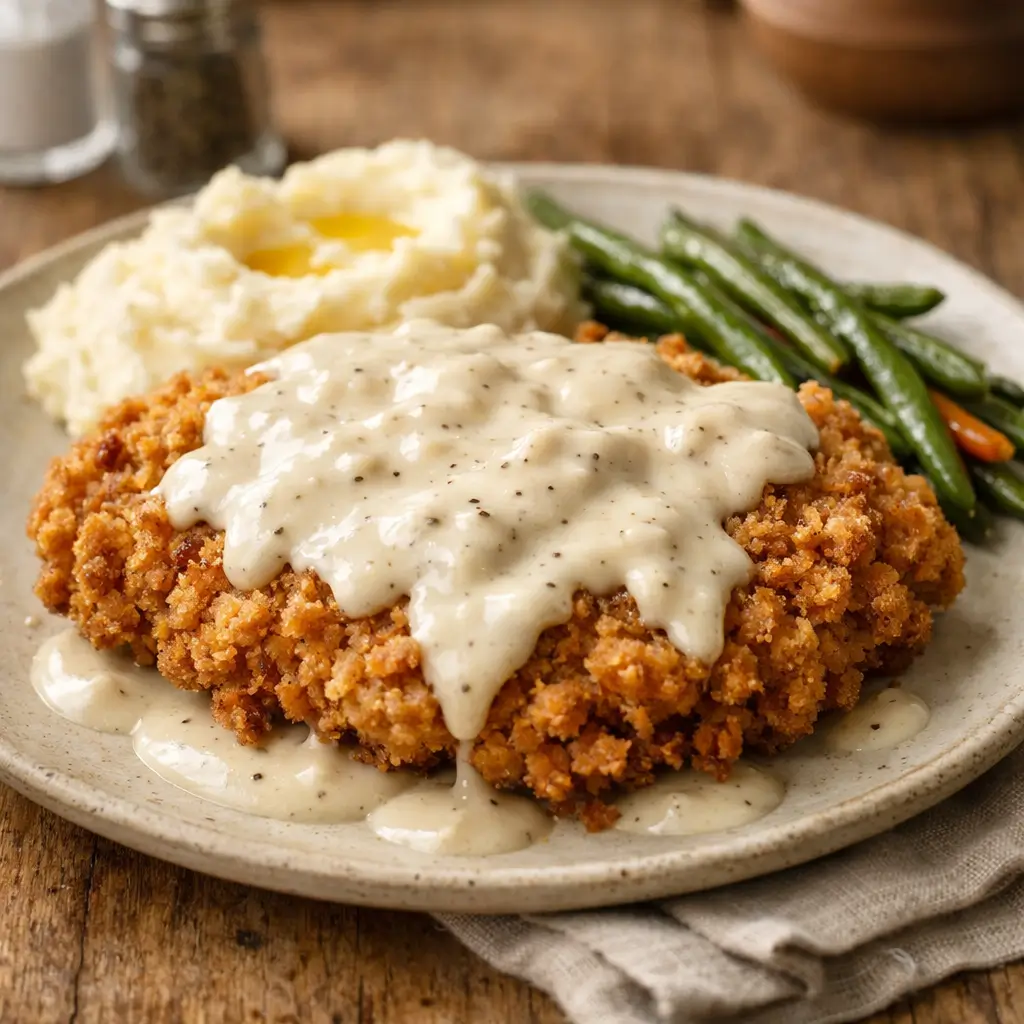
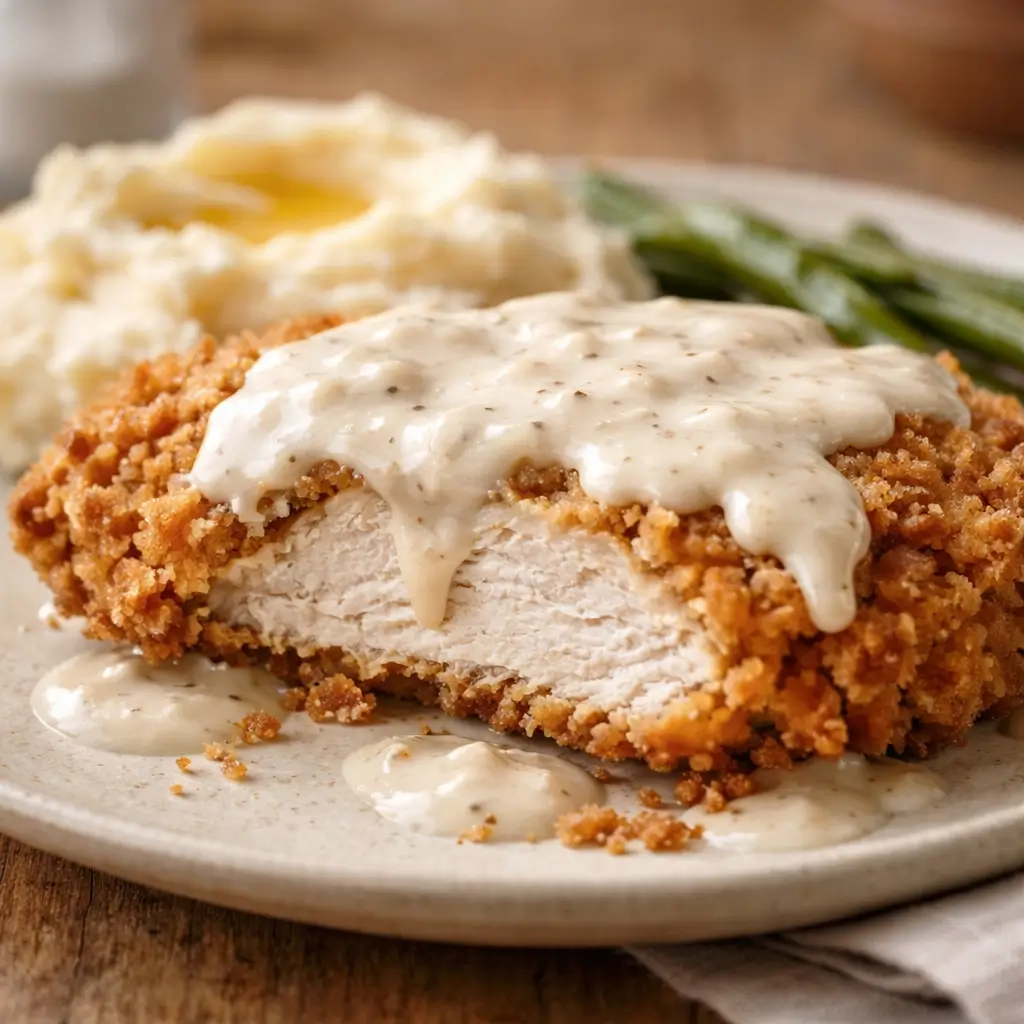
Chicken Fried Chicken is the ultimate Southern comfort meal. It combines a golden, ultra-crispy crust with tender, juicy chicken. Then it is finished with rich, creamy country gravy. The contrast of textures makes this dish unforgettable.
Unlike traditional fried chicken, this recipe uses boneless chicken breasts. Therefore, it cooks evenly and becomes easy to serve. At the same time, the breading remains thick and crunchy. The creamy gravy softens each bite while adding deep flavor.
This dish is not complicated. However, technique matters. Careful dredging, proper oil temperature, and resting time create the signature crust. When done correctly, the coating stays crisp even under gravy.
Why You’ll Love This Recipe
Chicken Fried Chicken is more than fried poultry. It is a balance of texture, flavor, and warmth.
- The crust is crunchy and deeply seasoned.
- The chicken stays moist and tender inside.
- The gravy adds richness without heaviness.
- The recipe uses pantry ingredients.
- It is perfect for family dinners or weekend cooking.
Most importantly, it delivers restaurant-quality comfort at home.
Ingredients Overview
Each ingredient plays a structural role. Therefore, substitutions should be thoughtful.
For the Chicken
- Boneless chicken breasts
- Buttermilk
- Eggs
- All-purpose flour
- Baking powder
- Salt
- Black pepper
- Paprika
- Garlic powder
- Onion powder
For Frying
- Neutral oil (peanut or vegetable oil)
For the Country Gravy
- Butter
- Flour
- Whole milk
- Black pepper
- Salt
The baking powder is essential. It creates micro-bubbles in the crust. As a result, the coating becomes lighter and crispier.
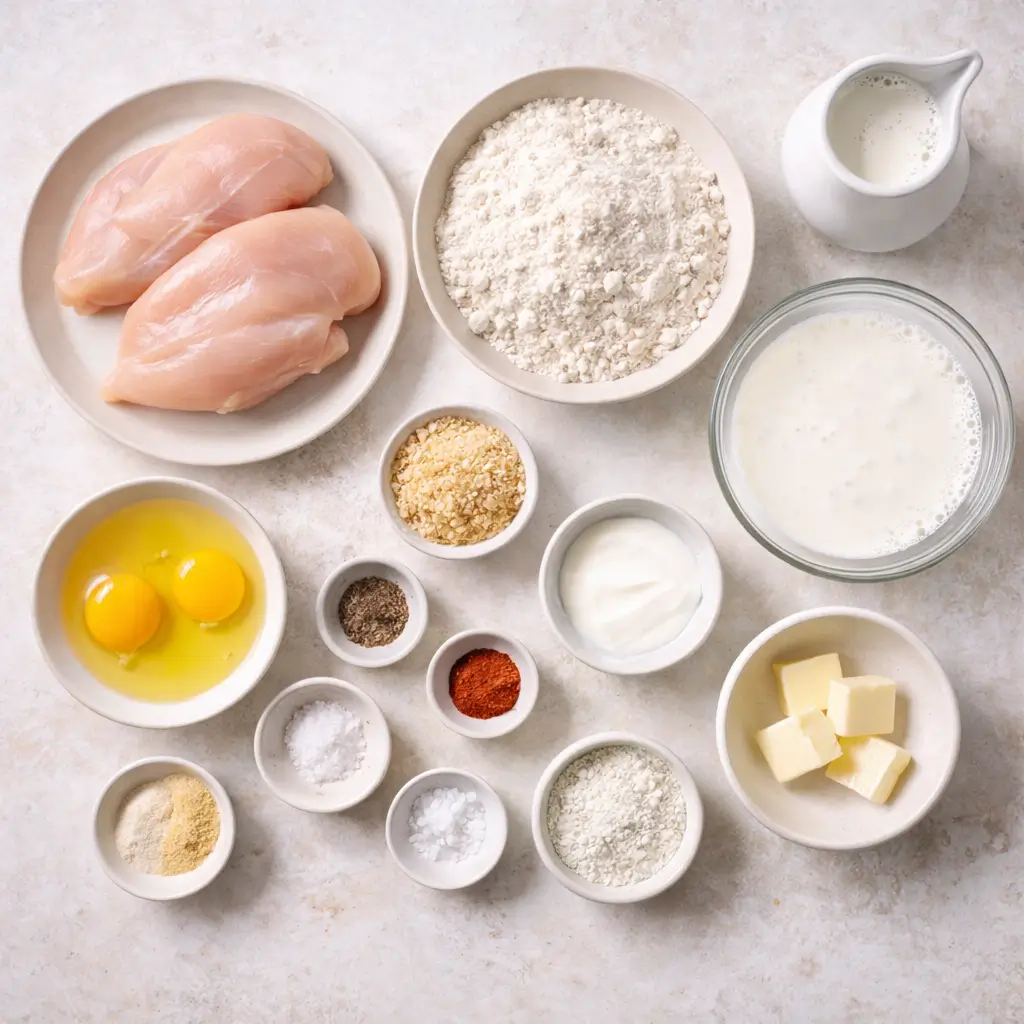
Exact Ingredient Quantities — Chicken Fried Chicken
For the Chicken
- 4 boneless, skinless chicken breasts (about 680–800 g / 1½–1¾ lb total)
- 2 cups (250 g) all-purpose flour
- 1 tablespoon baking powder
- 1½ teaspoons salt
- 1½ teaspoons black pepper
- 1 teaspoon paprika
- 1 teaspoon garlic powder
- 1 teaspoon onion powder
- 2 large eggs
- 1 cup (240 ml) buttermilk
For Frying
- 1½–2 cups (360–480 ml) neutral oil (vegetable, canola, or peanut oil)
(Use enough to create about 1 cm / ½ inch depth in the skillet.)
For the Country Gravy
- 3 tablespoons reserved frying oil (or butter if preferred)
- 3 tablespoons unsalted butter
- ⅓ cup (40 g) all-purpose flour
- 2½ cups (600 ml) whole milk, warmed
- ¾ teaspoon salt (adjust to taste)
- 1½ teaspoons freshly ground black pepper
Optional for Serving
- Chopped fresh parsley (for garnish)
- Mashed potatoes or vegetables as sides
Preparing the Chicken Properly
The first step determines tenderness. Therefore, never skip this stage.
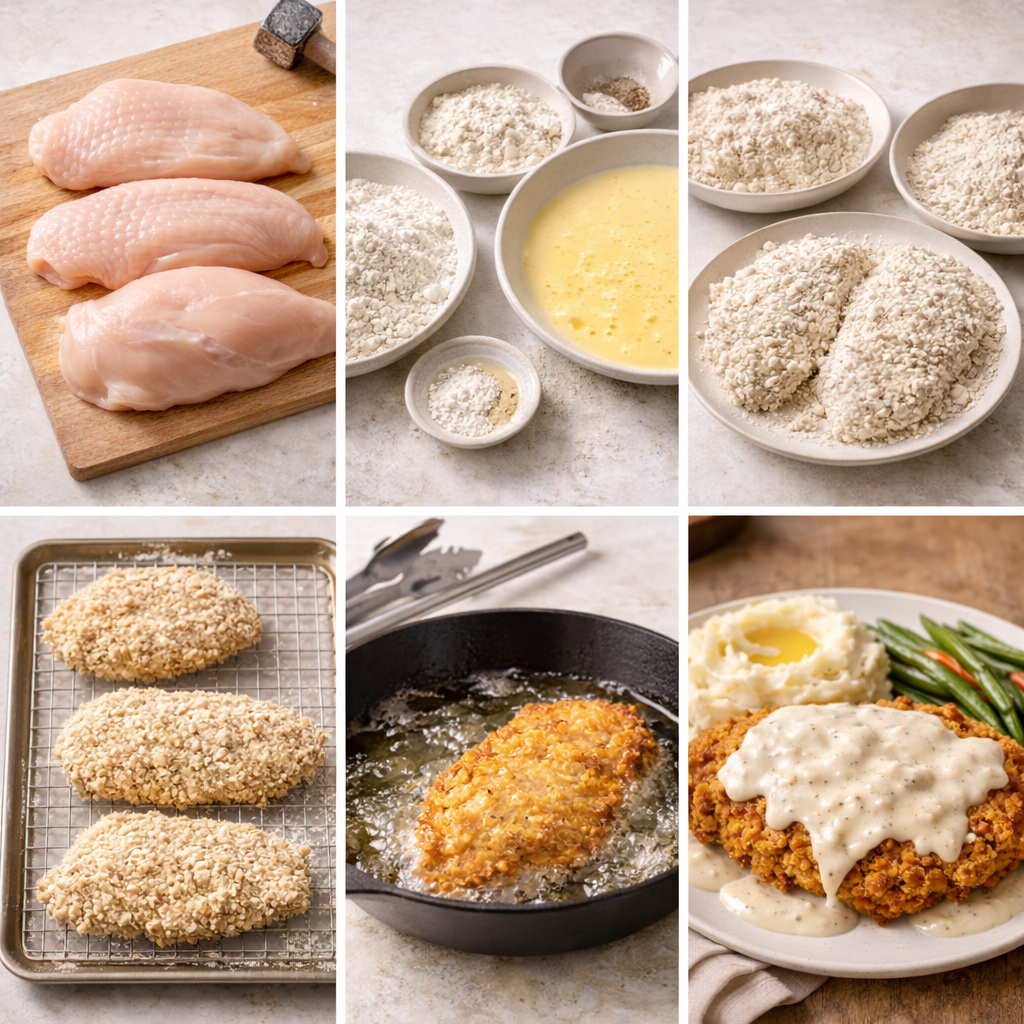
Place the chicken breasts between parchment sheets. Then gently pound them to even thickness. This ensures uniform cooking. At the same time, it prevents dry edges.
Season both sides with salt and pepper. Let the chicken rest for ten minutes. This allows seasoning to penetrate.
Meanwhile, prepare the dredging station.
The Dredging Technique (The Secret to a Craggy Crust)
Professional kitchens rely on a double-dredge method. This creates the iconic rugged coating.
- Combine flour, spices, and baking powder.
- In another bowl, whisk buttermilk and eggs.
- Coat chicken in seasoned flour.
- Dip into buttermilk mixture.
- Return to flour and press firmly.
Pressing is important. It forms textured flakes. These flakes fry into crunchy ridges.
After dredging, let the chicken rest for 10–15 minutes. This hydration step binds the coating. Consequently, it will not fall off during frying.
Frying to Golden Perfection
Use a heavy skillet, preferably cast iron. It holds heat consistently. Heat oil to about 175°C (350°F).
Carefully lay the chicken into the oil. Do not overcrowd the pan. Overcrowding lowers temperature and softens the crust.
Fry for about 4–5 minutes per side. Turn only once. Constant turning damages the coating.
The chicken is ready when:
- The crust is deep golden brown.
- Internal temperature reaches 74°C (165°F).
Transfer to a wire rack, not paper towels. Air circulation keeps the crust crisp.
Making the Creamy Country Gravy
Chicken Fried Chicken is incomplete without gravy. Fortunately, it comes together quickly.
Pour off most frying oil, leaving about two tablespoons and browned bits. These bits add flavor.
Add butter and melt gently. Then whisk in flour to create a roux. Cook until lightly golden. This removes the raw flour taste.
Slowly whisk in warm milk. Stir constantly to prevent lumps. The gravy will thicken gradually.
Season with salt and generous black pepper. The pepper defines classic country gravy.
The final texture should coat a spoon smoothly.
Assembling the Dish
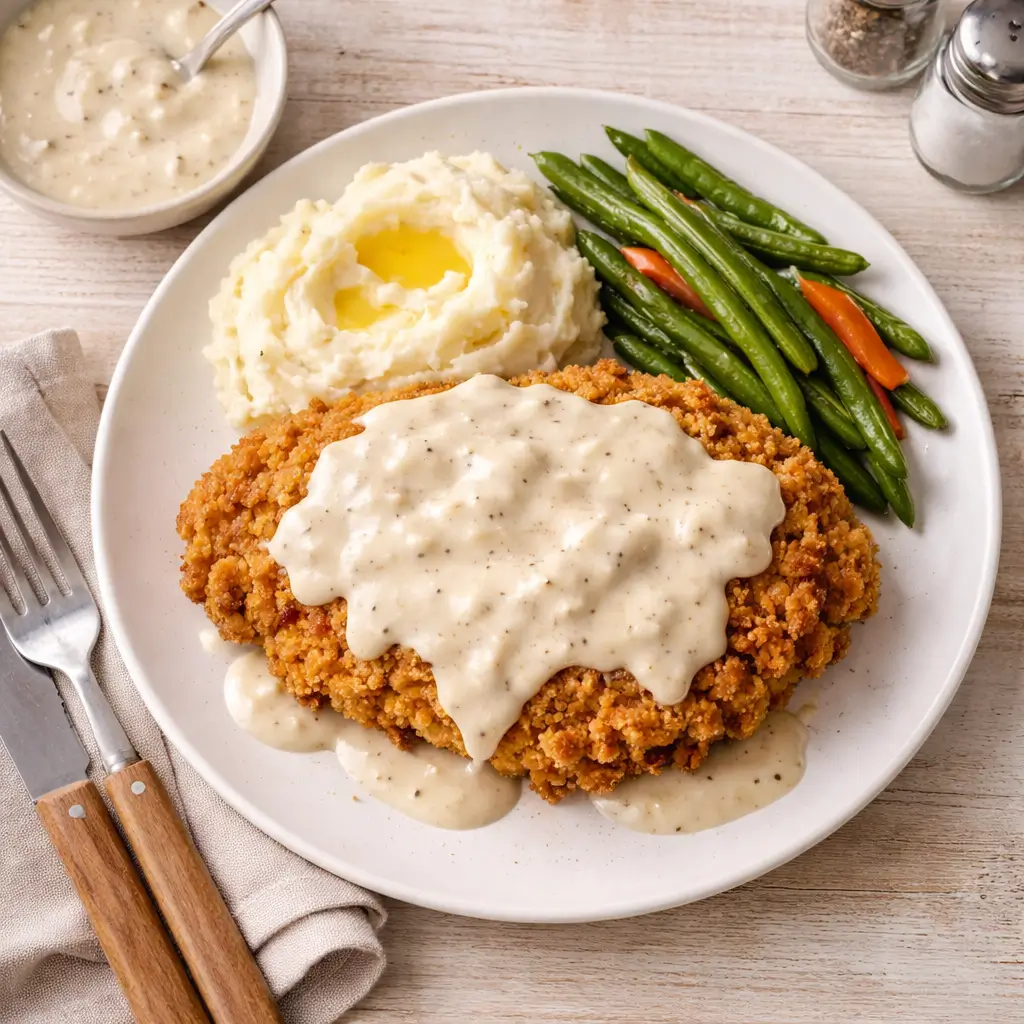
Place the crispy chicken on a warm plate. Spoon gravy over the top. Do not drown it. Let the crust remain visible.
Serve immediately. Timing matters because contrast between crunch and creaminess defines the experience.
Best Side Dishes to Serve
Traditional Southern pairings complement richness without overwhelming it.
Classic Pairings
- Buttery mashed potatoes
- Green beans with garlic
- Corn on the cob
- Biscuits
- Coleslaw
Lighter Options
- Roasted vegetables
- Fresh cucumber salad
- Steamed broccoli
The goal is balance. The chicken is rich, so sides should refresh the palate.
Tips for the Crispiest Results
Texture depends on small decisions. Therefore, attention to detail matters.
Use Buttermilk
Buttermilk tenderizes protein. Additionally, it helps flour adhere better.
Rest After Dredging
Hydration activates starches. This prevents coating separation.
Maintain Oil Temperature
Too hot burns crust. Too cool makes it greasy.
Use a Wire Rack
Steam ruins crispness. Airflow preserves it.
Season Every Layer
Flavor must exist in flour, chicken, and gravy.
Common Mistakes to Avoid
Even simple recipes can fail without care.
Skipping the pounding step
Uneven chicken cooks inconsistently.
Not letting dredged chicken rest
Coating slides off in oil.
Crowding the pan
Temperature drops instantly.
Using thin pans
Heat fluctuates too quickly.
Pouring gravy too early
Crust softens before serving.
Avoiding these errors ensures success every time.
Make-Ahead and Storage Tips
Chicken Fried Chicken is best fresh. However, it can be prepared ahead with care.
To Prepare in Advance
Dredge the chicken and refrigerate for up to 4 hours. Fry just before serving.
To Store Leftovers
Refrigerate in an airtight container for 3 days.
To Reheat Properly
Use an oven at 190°C (375°F). Avoid microwaving. The oven restores crispness.
Reheat gravy separately and spoon just before serving.
Understanding Why This Recipe Works
This recipe succeeds because of food science.
- Flour provides structure.
- Buttermilk adds acidity and tenderness.
- Baking powder aerates coating.
- High heat triggers Maillard browning.
- Resting redistributes juices.
These interactions transform simple ingredients into complex texture.
Variations You Can Try
Once mastered, the base recipe allows customization.
Spicy Version
Add cayenne and hot sauce to the buttermilk mixture.
Herb-Forward Version
Mix thyme and sage into flour for aromatic depth.
Extra-Crunchy Version
Add a tablespoon of cornstarch to flour blend.
Lighter Pan-Fried Version
Use slightly less oil and baste while cooking.
Each variation keeps the same method while changing flavor direction.
Frequently Asked Questions
Is Chicken Fried Chicken the same as Chicken Fried Steak?
The technique is identical. Only the protein changes.
Can I use chicken thighs instead of breasts?
Yes. Thighs are juicier but require slightly longer cooking.
Why is my crust falling off?
The chicken likely did not rest after dredging.
Can I bake instead of fry?
Baking works, but it will not produce the same crisp texture.
Final Thoughts
Chicken Fried Chicken represents the heart of Southern cooking. It transforms humble ingredients into a dish that feels generous and comforting.
The crunchy coating delivers satisfaction. The creamy gravy adds warmth. Together they create balance, not heaviness.
Once you master the dredging and frying technique, the recipe becomes reliable. Moreover, it adapts easily to personal taste.
Serve it for gatherings, Sunday dinners, or whenever comfort food is needed. Few meals offer the same combination of crispness, richness, and nostalgia.
