
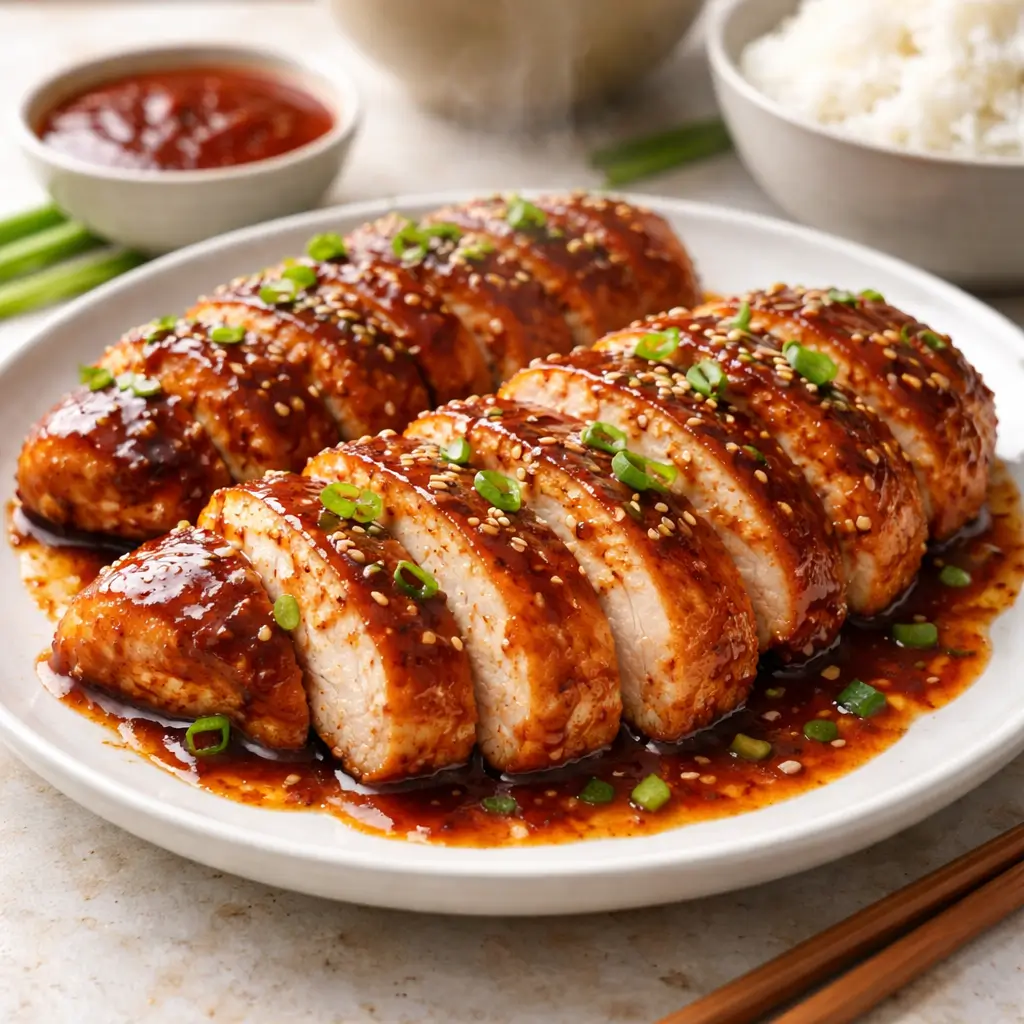
Korean Chicken Breasts are one of the most flavorful and satisfying dishes you can prepare at home. This recipe combines tender chicken with a glossy, sweet, and slightly spicy Korean-style sauce that coats every bite. The result is a juicy chicken dish that feels restaurant-quality but remains simple enough for a weeknight dinner.
Many people associate Korean chicken with deep-fried wings. However, chicken breasts offer a leaner and healthier alternative while still delivering incredible flavor. When cooked properly and paired with the right sauce, chicken breasts stay moist, tender, and rich in taste.
This recipe uses classic Korean-inspired ingredients such as gochujang, garlic, soy sauce, and sesame oil. Together, they create a sauce that balances sweetness, heat, and umami. The sauce caramelizes beautifully during cooking, forming a glossy coating on the chicken.
Whether you are preparing a quick dinner, meal prepping for the week, or serving guests, Korean Chicken Breasts make an excellent choice. They pair wonderfully with rice, noodles, or fresh vegetables.
In this guide, you will learn exactly how to make Korean Chicken Breasts from scratch, including preparation tips, ingredient substitutions, cooking techniques, and serving suggestions.
Why You’ll Love This Korean Chicken Breasts Recipe
There are many reasons why this dish quickly becomes a favorite in home kitchens.
First, the recipe delivers incredible flavor with minimal effort. The sauce requires only a handful of ingredients, yet the result tastes complex and balanced.
Second, chicken breasts cook quickly. That makes this dish ideal for busy evenings when you want something delicious without spending hours in the kitchen.
Third, the recipe is extremely versatile. You can adjust the spice level, add vegetables, or serve it in different ways such as rice bowls, wraps, or noodle dishes.
Finally, the dish stores well and reheats beautifully. That makes it perfect for meal prep or leftovers.
Key Benefits
- Quick weeknight dinner
- Bold Korean-inspired flavors
- Lean protein option
- Easy ingredients
- Perfect for meal prep
What Makes Korean Chicken Flavor Unique?
Korean cuisine is known for its balance of flavors. Most dishes combine sweet, salty, spicy, and umami elements in a harmonious way.
The key ingredient in many Korean sauces is gochujang, a fermented red chili paste. This ingredient provides heat, sweetness, and depth. Unlike many hot sauces, gochujang has a rich, slightly sweet profile.
Another essential ingredient is soy sauce, which provides saltiness and umami. When combined with honey or brown sugar, soy sauce creates a balanced glaze that caramelizes during cooking.
Garlic and ginger add aromatic complexity. Sesame oil introduces a nutty aroma that enhances the overall flavor.
When these ingredients combine, they form a sauce that is bold, savory, and addictive.
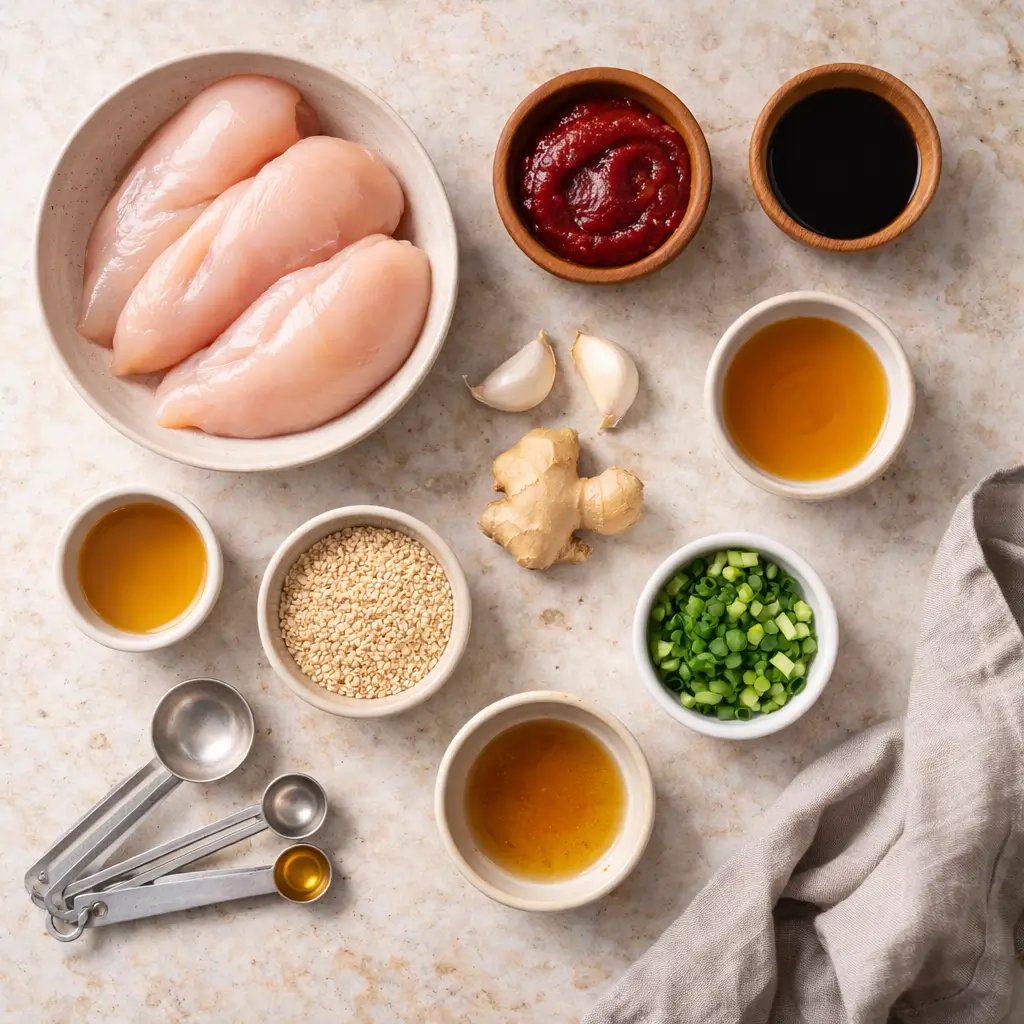
Ingredients for Korean Chicken Breasts
Below is everything you need to prepare this recipe.
Chicken
- 2 large boneless skinless chicken breasts
- 1 tablespoon olive oil
- ½ teaspoon salt
- ½ teaspoon black pepper
Korean Sauce
- 2 tablespoons gochujang (Korean chili paste)
- 2 tablespoons soy sauce
- 1 tablespoon honey
- 1 tablespoon brown sugar
- 2 cloves garlic, minced
- 1 teaspoon fresh ginger, grated
- 1 teaspoon sesame oil
- 1 tablespoon rice vinegar
- 2 tablespoons water
Garnish
- 1 tablespoon sesame seeds
- 2 green onions, chopped
Ingredient Tips
Choosing Chicken Breasts
Select chicken breasts that are similar in size for even cooking. If they are very thick, slice them horizontally to create thinner cutlets.
This helps the chicken cook faster and remain tender.
Gochujang Substitute
If gochujang is unavailable, you can substitute:
- 1 tablespoon chili garlic sauce
- 1 teaspoon miso paste
- 1 teaspoon honey
This combination mimics the flavor balance of gochujang.
Sweetener Options
Honey works beautifully in this recipe. However, you can also use:
- Maple syrup
- Brown sugar
- Coconut sugar
Each option slightly changes the flavor profile.
Kitchen Equipment Needed
You do not need complicated tools to prepare this dish.
Essential equipment includes:
- Large skillet or frying pan
- Mixing bowl
- Whisk or spoon
- Cutting board
- Sharp knife
Optional but helpful tools include a meat thermometer and silicone spatula.
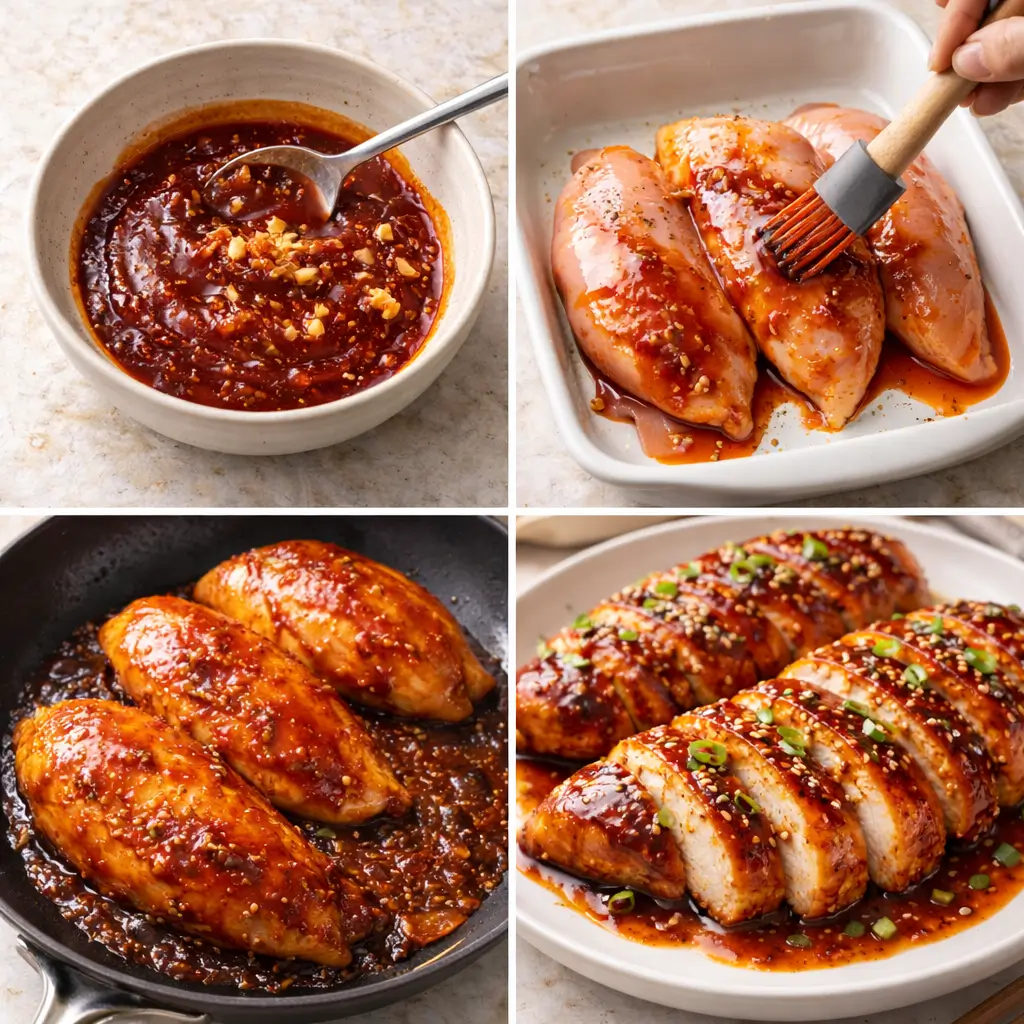
Step-by-Step Instructions
Follow these steps carefully to achieve perfectly cooked Korean Chicken Breasts.
Step 1: Prepare the Chicken
Start by patting the chicken breasts dry with paper towels.
Dry chicken sears better in the pan. Moisture prevents browning.
Season both sides of the chicken with salt and black pepper.
If the breasts are thick, slice them horizontally to create thinner cutlets.
Step 2: Make the Korean Sauce
In a small bowl, combine the following ingredients:
- gochujang
- soy sauce
- honey
- brown sugar
- minced garlic
- grated ginger
- sesame oil
- rice vinegar
- water
Whisk everything until the mixture becomes smooth.
The sauce should appear glossy and slightly thick.
Step 3: Heat the Pan
Place a large skillet over medium heat.
Add the olive oil and allow it to heat for about one minute.
The oil should shimmer but not smoke.
Step 4: Cook the Chicken
Place the chicken breasts into the hot pan.
Cook for about 4–5 minutes per side.
During this stage, the chicken develops a golden crust.
Avoid moving the chicken too often. Allow it to sear properly.
Step 5: Add the Sauce
Once the chicken is nearly cooked through, pour the Korean sauce into the skillet.
Reduce the heat slightly.
Allow the sauce to simmer for 2–3 minutes.
The sauce thickens and coats the chicken as it cooks.
Use a spoon to glaze the chicken repeatedly.
Step 6: Check Doneness
The internal temperature should reach 165°F (74°C).
If using a thermometer, insert it into the thickest part of the chicken.
The chicken should appear juicy with no pink inside.
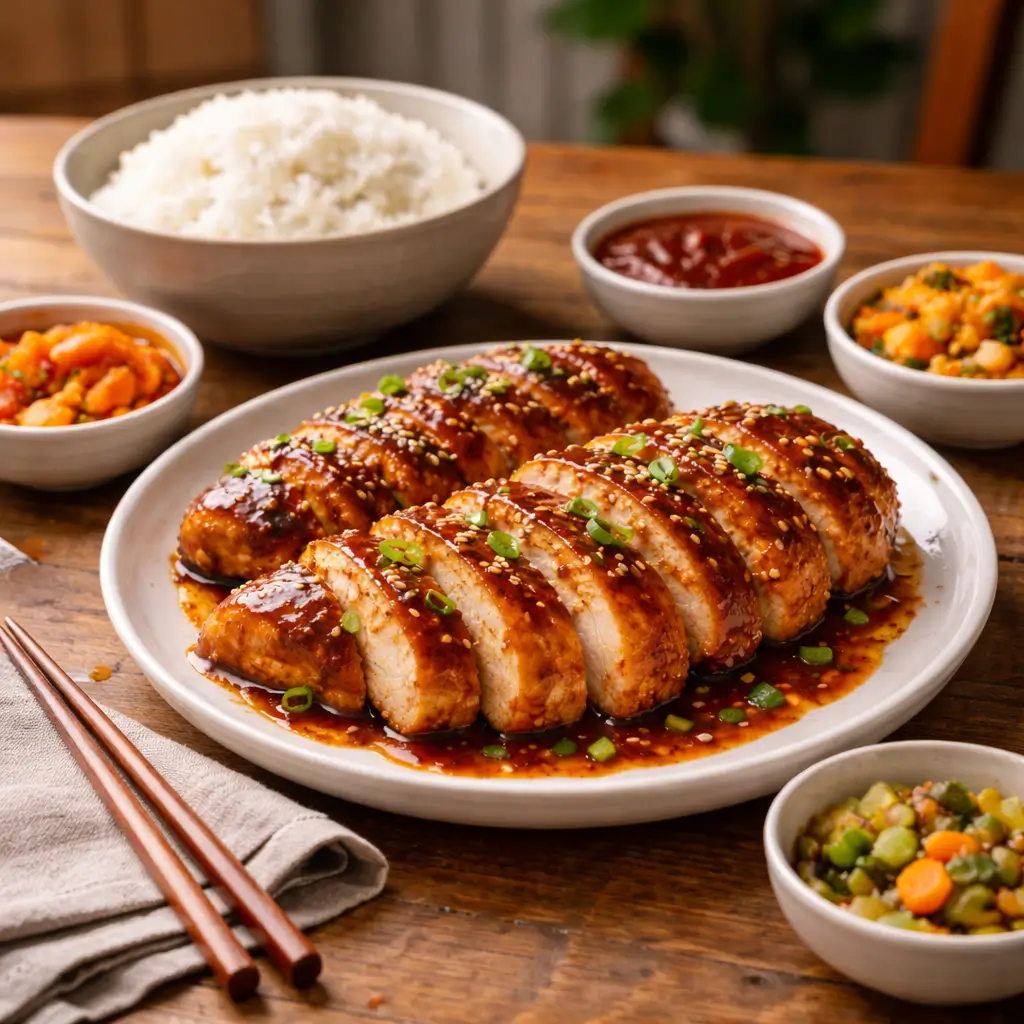
Step 7: Slice and Garnish
Remove the chicken from the skillet and allow it to rest for 3 minutes.
Slice the chicken into strips.
Drizzle the remaining sauce over the slices.
Finish with sesame seeds and chopped green onions.
How to Keep Chicken Breasts Juicy
Chicken breasts often become dry when overcooked. Fortunately, several simple techniques prevent this.
Use Medium Heat
High heat can burn the sauce before the chicken cooks properly.
Medium heat allows gradual cooking and better caramelization.
Avoid Overcooking
Chicken breasts cook quickly. Monitor the cooking time closely.
Using a meat thermometer helps achieve perfect doneness.
Rest the Chicken
Allowing the chicken to rest after cooking redistributes the juices.
This step greatly improves texture.
Best Side Dishes for Korean Chicken Breasts
This dish pairs well with many side options.
Steamed Rice
Plain jasmine rice balances the spicy sauce.
The rice absorbs the flavorful glaze.
Garlic Fried Rice
Garlic fried rice adds extra flavor and texture.
Stir-Fried Vegetables
Vegetables add freshness and color.
Popular choices include:
- broccoli
- snap peas
- carrots
- bell peppers
Korean Cucumber Salad
A refreshing cucumber salad provides contrast to the rich sauce.
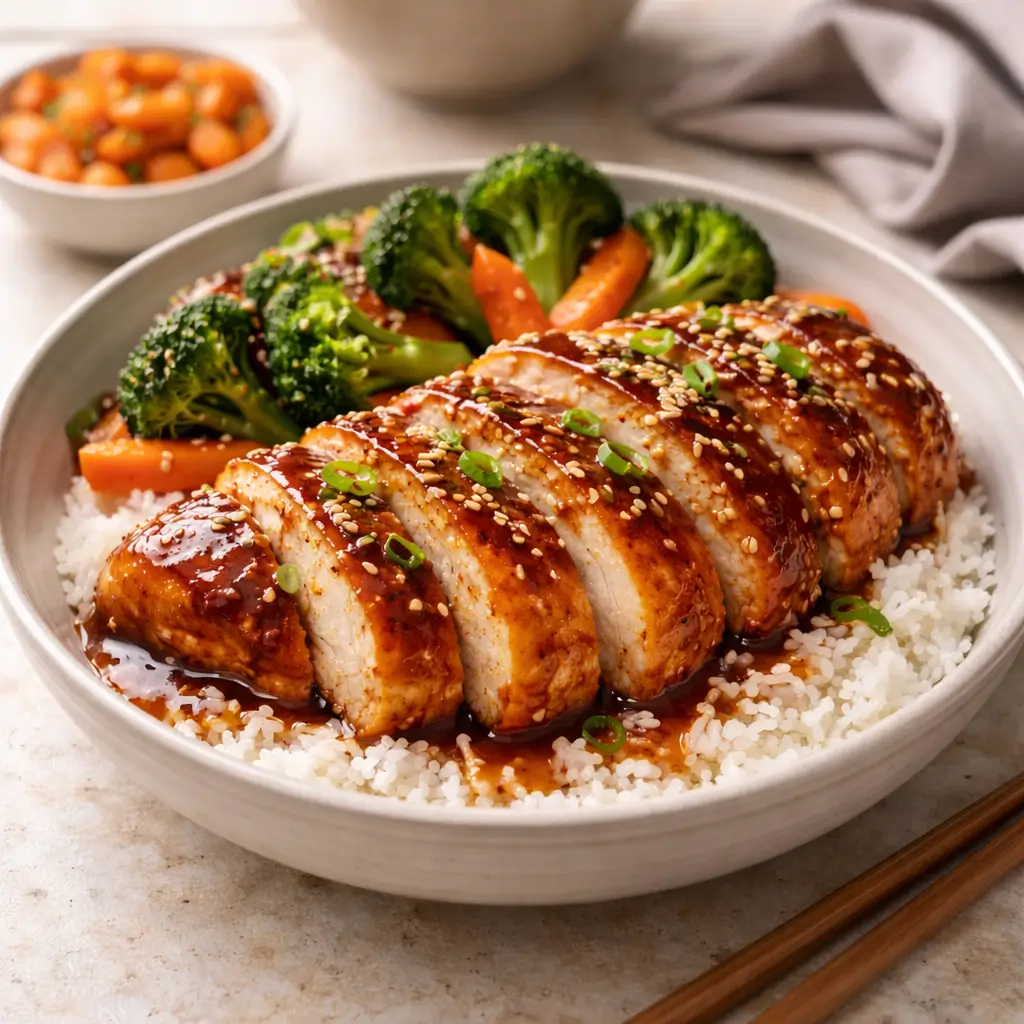
Korean Chicken Rice Bowl
One of the best ways to serve this recipe is in a rice bowl.
Bowl Components
- steamed rice
- sliced Korean chicken
- sautéed vegetables
- kimchi
- fried egg
Drizzle additional sauce over the bowl for extra flavor.
This meal becomes filling, balanced, and visually appealing.
Healthy Variations
You can easily modify this recipe for different dietary needs.
Low-Carb Version
Serve the chicken with:
- cauliflower rice
- zucchini noodles
- steamed cabbage
Gluten-Free Version
Use gluten-free soy sauce or tamari.
Extra Spicy Version
Add:
- ½ teaspoon chili flakes
- extra gochujang
Mild Version
Reduce gochujang to one tablespoon.
Increase honey slightly for sweetness.
Meal Prep Instructions
Korean Chicken Breasts are excellent for meal preparation.
Storage
Place cooked chicken in airtight containers.
Refrigerate for up to 4 days.
Freezing
You can freeze cooked chicken for up to 2 months.
Wrap portions tightly to prevent freezer burn.
Reheating
Reheat gently in a skillet or microwave.
Add a splash of water or broth to keep the chicken moist.
Common Mistakes to Avoid
Cooking Chicken Straight From the Refrigerator
Allow chicken to sit at room temperature for 10 minutes before cooking.
Cold chicken cooks unevenly.
Using Too Much Heat
High heat can burn the sauce before it thickens.
Moderate heat works best.
Adding Sauce Too Early
Adding sauce too early prevents proper browning.
Always sear the chicken first.
How Restaurants Get Korean Chicken So Glossy
Professional kitchens often finish Korean chicken with a thick glaze.
You can replicate that effect at home.
Allow the sauce to simmer until slightly thick.
Then repeatedly spoon the sauce over the chicken.
The result is a glossy coating that looks beautiful and tastes amazing.
Flavor Variations
If you enjoy experimenting in the kitchen, try these creative twists.
Honey Garlic Korean Chicken
Add extra honey and garlic.
Reduce the gochujang slightly.
Lemon Korean Chicken
Add fresh lemon juice to the sauce.
This creates a brighter flavor.
Korean BBQ Style
Add a tablespoon of Korean BBQ sauce.
The flavor becomes smoky and sweet.
Serving Ideas for Guests
Korean Chicken Breasts make a fantastic dinner party dish.
Serve the chicken sliced on a large platter.
Arrange side dishes around it such as:
- rice bowls
- pickled vegetables
- lettuce wraps
Guests can assemble their own plates.
This interactive style makes meals more enjoyable.
Frequently Asked Questions
Can I grill Korean Chicken Breasts?
Yes. Grilling adds wonderful smoky flavor.
Brush the chicken with sauce during the final minutes of grilling.
Can I use chicken thighs instead?
Absolutely. Chicken thighs remain naturally juicy and flavorful.
Cooking time may increase slightly.
Is gochujang very spicy?
Gochujang is moderately spicy but also sweet.
The honey in this recipe balances the heat.
Can I bake the chicken instead of pan cooking?
Yes.
Bake at 400°F (200°C) for about 18–22 minutes.
Brush with sauce during the final minutes.
Final Thoughts
Korean Chicken Breasts combine simplicity with bold flavor. The recipe requires basic ingredients yet produces a dish that tastes restaurant-quality.
The sweet, spicy, and savory glaze transforms ordinary chicken into an unforgettable meal. Whether served over rice, noodles, or vegetables, the dish remains satisfying and versatile.
Because the recipe cooks quickly and stores well, it works perfectly for busy families and meal prep alike.
Once you try this recipe, it will likely become a regular addition to your dinner rotation.
The combination of juicy chicken, glossy Korean sauce, and aromatic garnishes makes every bite irresistible.
Enjoy your homemade Korean Chicken Breasts and the incredible flavors they bring to your table.
