Rhubarb-Tarte-Tatin-featured-image

Rhubarb Tarte Tatin

⬇ Jump to Recipe

There is a particular kind of kitchen magic that happens when you flip a tarte tatin onto a plate. One moment it’s a skillet of caramelized fruit hidden under a dome of pastry. The next — in a single confident inversion — it becomes one of the most beautiful desserts you have ever put on a table.

This rhubarb tarte tatin is the spring version of the French classic that usually calls for apples. And it is, if anything, more spectacular. The rhubarb — tart, vivid, deeply pink — caramelizes in amber butter and sugar into something jammy and jewel-toned and completely unlike anything it was before it hit the heat. The puff pastry bakes into a golden, shatteringly flaky crown that becomes the base once the tart is flipped.

It looks like something from a Parisian patisserie window. It takes one pan and 45 minutes. And it is the kind of dessert that makes people put their forks down for a moment just to look at it before they eat it.

This is rhubarb at its finest. Welcome to your new signature spring dessert.

Why You’ll Love This Recipe

🌸Rhubarb transformed — caramelized rhubarb is a completely different ingredient from raw rhubarb. Jammy, deeply sweet-tart, and visually stunning.
🥧One pan from start to finish — the caramel, the fruit, and the pastry all cook in the same ovenproof skillet. Minimal cleanup, maximum impact.
The flip is the moment — inverting the tarte onto the plate is genuinely thrilling. The reveal never gets old.
⏱️45 minutes of active work — most of the time is hands-off baking. This is an impressive dessert that doesn’t require impressive effort.
🇫🇷French patisserie at home — a classic Tarte Tatin technique applied to rhubarb gives you something that feels genuinely elevated without being difficult.
🍨Spectacular with crème fraîche — the cool, slightly tangy crème fraîche against the warm sticky caramel and tart rhubarb is a combination that makes people close their eyes when they eat it.

If you love cooking with rhubarb this spring, our Strawberry Rhubarb Pie is another recipe that transforms this extraordinary ingredient into something completely stunning — and just as worthy of a place on your spring baking list.

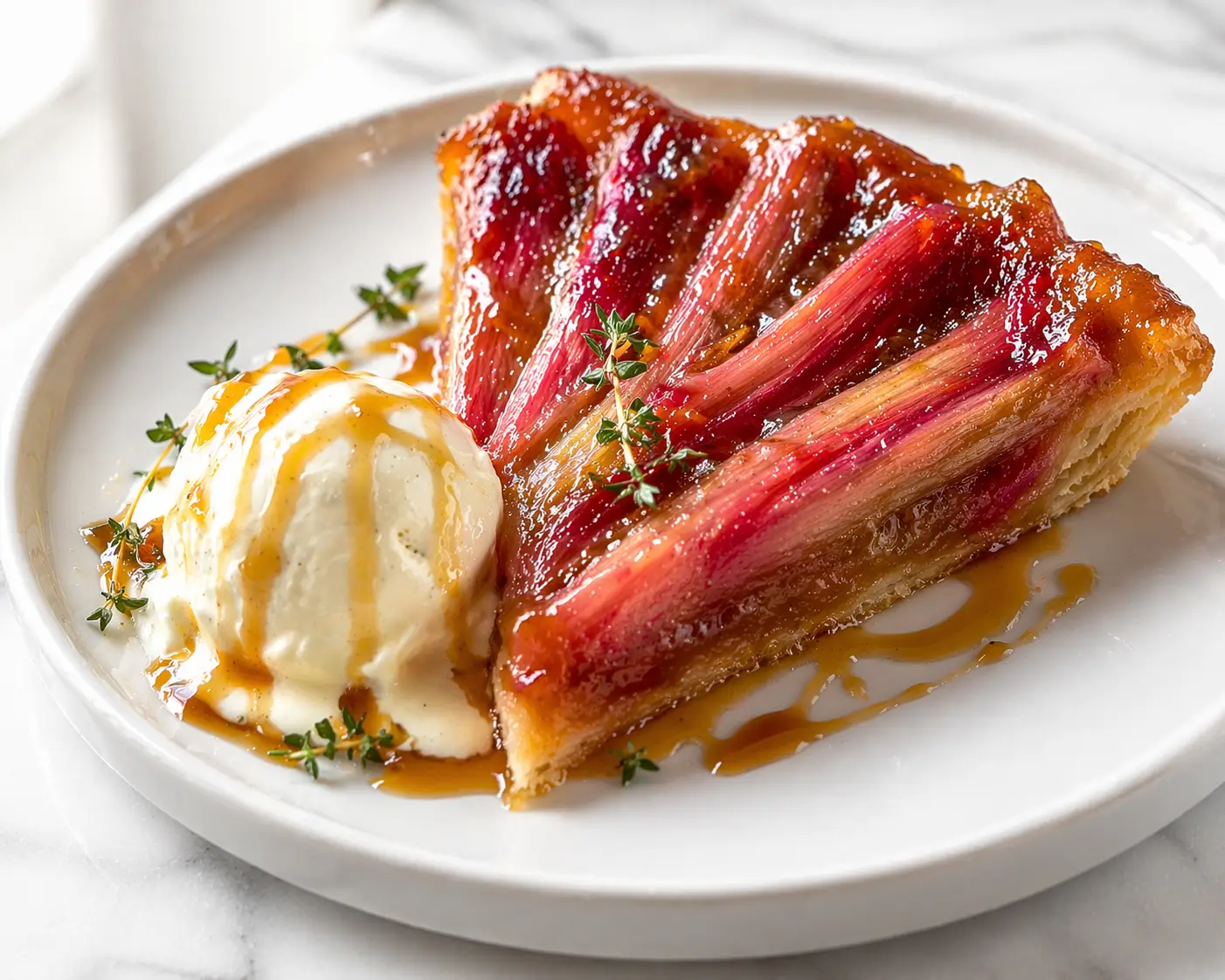
A slice of rhubarb tarte tatin on a white ceramic plate with glistening amber caramelized rhubarb and golden flaky pastry and a quenelle of crème fraîche melting beside it

Ingredients You’ll Need

This is a short ingredient list with a very long list of rewards. Every single element matters.

For the Caramel and Rhubarb

  • 600g (about 1.3 lb) fresh rhubarb stalks — choose firm, brightly colored stalks. Deep pink to red rhubarb will give you the most visually stunning result — that jewel-toned caramelized surface that makes this tarte so breathtaking. Cut the stalks into even lengths that fit neatly across the base of your skillet — typically 10–12cm (4–5 inches).
  • 100g (7 tbsp) unsalted butter — the foundation of the caramel. Use good quality butter — it is the dominant flavor in the base and it shows.
  • 150g (¾ cup) granulated sugar — for the dry caramel method. Granulated sugar caramelizes more evenly and predictably than other sugars.
  • 2 tbsp brown sugar — added to the granulated sugar for a deeper, slightly molasses-tinged caramel flavor that pairs beautifully with rhubarb’s tartness.
  • 1 vanilla pod, seeds scraped — or 1 teaspoon of pure vanilla extract. Vanilla softens the caramel and adds a warmth that makes the whole dessert feel more rounded and complex.
  • 3 sprigs of fresh thyme — the single most unexpected and impactful ingredient in this recipe. A whisper of fresh thyme in a fruit tarte tatin is a classic French technique. It adds a subtle herbal, almost floral note that makes people taste it and say “what is that?” in the best possible way. Don’t skip it.
  • Zest of 1 orange — stirred into the caramel just before the rhubarb goes in. Orange and rhubarb is a pairing that deserves far more recognition — the citrus amplifies the rhubarb flavor and adds a bright aromatic note to the caramel.
  • Pinch of salt — always in caramel. Salt enhances sweetness and prevents the caramel from tasting flat or one-dimensional.

For the Pastry

  • 1 sheet (about 320g) store-bought all-butter puff pastry, thawed — all-butter puff pastry is essential here. The butter content gives you a flakier, more golden, more flavorful result than pastry made with vegetable fat. Keep it cold until the moment you use it — cold pastry puffs better in a hot oven.

To Serve

  • Crème fraîche — the classic accompaniment. Its slight tanginess and cool creaminess against warm sticky caramel is the perfect balance. Serve it in a small bowl on the side rather than spooned directly onto the tarte.
  • Powdered sugar for dusting — the lightest possible dusting just before serving adds a delicate visual finish and a hint of extra sweetness at the surface.
  • Extra fresh thyme sprigs — for garnish. They signal the flavor story of the tarte before the first bite is taken.
💡 Substitution Notes

No fresh thyme? Leave it out rather than substituting dried thyme — dried herbs in a delicate dessert can taste dusty and harsh. If you want an herbal note, a few fresh rosemary leaves work beautifully as an alternative.

Homemade puff pastry: If you make your own, use it absolutely — the result will be even more spectacular. But good quality store-bought all-butter puff pastry is genuinely excellent here and significantly reduces the effort.

No crème fraîche? Full-fat Greek yogurt is a very good substitute — slightly less rich but equally tangy and cool. Vanilla ice cream is the more indulgent option and equally appropriate.

Strawberry rhubarb version: Replace 200g of the rhubarb with halved fresh strawberries. Add them to the skillet after the rhubarb has been arranged and before the pastry goes on. The strawberries soften more quickly so they benefit from less direct caramelization time.

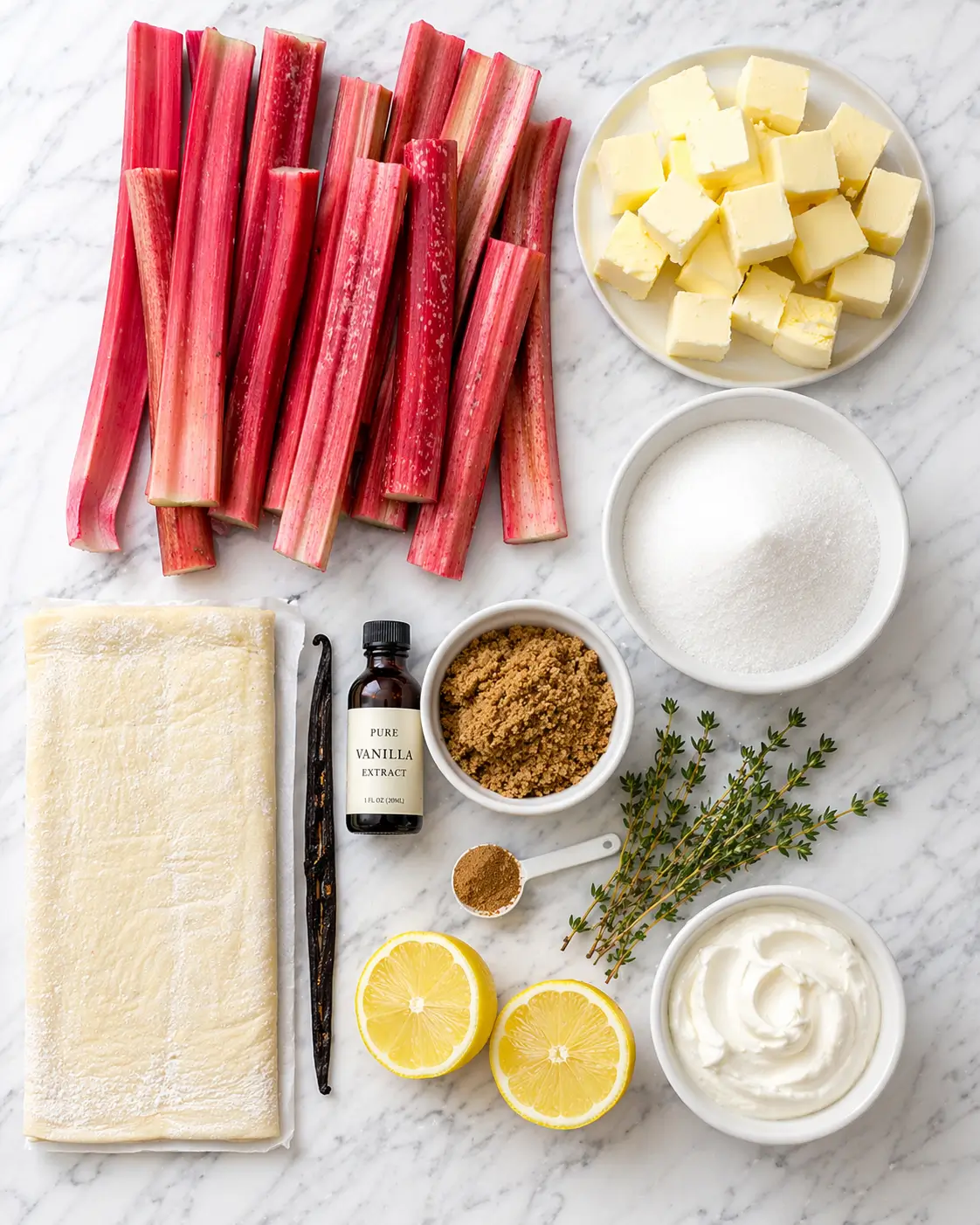
All rhubarb tarte tatin ingredients laid out on a white marble surface including fresh pink rhubarb stalks butter sugar vanilla pod puff pastry fresh thyme orange and crème fraîche

How to Choose the Best Rhubarb for Tarte Tatin

The rhubarb is the visual hero of this dessert. Choosing it well makes an enormous difference.

  • Deep pink to red stalks are what you’re looking for. The color comes from anthocyanins — the same pigment in strawberries and red cabbage. More color means more visual impact once caramelized, giving you that stunning jewel-toned surface that defines a beautiful tarte tatin. Pale green rhubarb will taste equally good but the caramelized surface will be less dramatically colored.
  • Firm and crisp is essential. Rhubarb for a tarte tatin needs structural integrity — it has to hold its shape through the caramelization process and the baking so it looks beautiful when flipped. Limp, bendy stalks will collapse into a soft, unstructured layer. Always snap-test a stalk before buying.
  • Even thickness matters here more than in other recipes. Because the rhubarb is arranged in a deliberate pattern and bakes in direct contact with the caramel, uneven stalks will cook at different rates. Choose stalks of similar thickness — or trim the thicker ends with a peeler — for the most even, beautiful result.
  • Cut to fit your skillet precisely. Measure the interior diameter of your skillet and cut the rhubarb to length accordingly. Pieces that fit snugly side by side in a tight pattern are what create that stunning mosaic surface when the tarte is flipped.
  • Remove the leaves completely — they are toxic. Only the stalks are edible.

How to Make Rhubarb Tarte Tatin

Step 1 — Prepare the Rhubarb

Wash the rhubarb stalks, pat them completely dry, and cut them into even lengths to fit your skillet — about 10–12cm (4–5 inches). Lay them on a clean surface and set aside. Dry rhubarb is important here — excess moisture in the caramel will cause it to seize or splatter. Preheat your oven to 200°C (400°F).

Step 2 — Make the Caramel

Place the granulated sugar and brown sugar in a heavy-based, oven-safe skillet — a 24–26cm (9–10 inch) cast iron skillet or ovenproof sauté pan works best. Cook over medium heat without stirring — just swirl the pan gently when the edges start to melt. Watch it carefully — caramel can go from golden to burnt in under a minute. Once the sugar is fully melted and a deep amber color — the color of old honey — remove from heat immediately. Add the butter in cubes and swirl the pan to incorporate it. The caramel will bubble aggressively. This is normal — keep calm and keep swirling. Add the salt, vanilla seeds, orange zest, and thyme sprigs. The caramel will smell extraordinary.

Step 3 — Arrange the Rhubarb

Working quickly while the caramel is still fluid, arrange the rhubarb pieces in a tight, deliberate pattern directly in the caramel. For a classic look — lay them in rows across the skillet, alternating the direction of each piece so the colors and cut ends create a pattern. For a more dramatic presentation — fan them outward from the center in concentric circles like the spokes of a wheel. Press each piece firmly into the caramel. The rhubarb will look tightly packed and almost architectural — exactly right. Whatever caramel bubbles up between the pieces will become the glossy coating on the surface of the finished tarte.

Step 4 — Add the Pastry

Roll the puff pastry out slightly on a lightly floured surface if needed. Cut a circle slightly larger than the diameter of your skillet — about 2–3cm (1 inch) larger all around. Lay the pastry circle over the rhubarb and tuck the edges down around the inside edge of the skillet — between the rhubarb and the pan wall. This tucking creates a seal that holds the filling in place during baking and forms the slightly raised pastry rim that becomes the border of the finished tarte. Prick the pastry lightly a few times with a fork to allow steam to escape.

Step 5 — Bake Until Golden

Place the skillet in the preheated oven. Bake for 25–30 minutes until the pastry is deeply golden, puffed, and cooked through. The edges of the caramel should be visibly bubbling up around the pastry sides. The pastry should sound hollow when you tap it lightly — like a well-baked loaf. Remove from the oven and let the tarte rest in the skillet for exactly 10 minutes. This resting time is important — it allows the caramel to begin setting slightly so it doesn’t run everywhere when the tarte is inverted. Too long and the caramel stiffens and the tarte sticks. Ten minutes is the sweet spot.

Step 6 — The Flip

This is the moment. Place a large serving plate — slightly larger than the skillet — firmly face-down on top of the skillet. Hold the plate and the skillet handle together with both hands — use a folded kitchen towel on each side to protect your hands from the heat. In one confident, decisive movement, invert the skillet and plate together. Hold them in the inverted position for 3–4 seconds to allow the tarte to release cleanly. Then lift the skillet away. Any rhubarb pieces that have shifted can be gently nudged back into place with a spoon — the caramel will still be fluid enough to allow this for about 60 seconds after the flip.

Step 7 — Finish and Serve

Remove the thyme sprigs. The tarte will be glistening, amber, and deeply beautiful. Let it cool for at least 10 minutes before cutting — the caramel needs a moment to settle and the flavors intensify as it cools slightly. Dust very lightly with powdered sugar immediately before serving. Place fresh thyme sprigs on top for garnish. Serve with crème fraîche in a small bowl alongside. Cut at the table so everyone can watch the caramel pull away from each slice. The drama is part of the experience.

🌸 Olivia’s Tarte Tatin Tips

The flip is the moment everyone is nervous about — but it is far easier than it looks. The key is confidence and decisiveness. A slow, hesitant flip is more likely to go wrong than a quick, committed one. Trust the process and go for it.

If any rhubarb pieces stick to the skillet after flipping, simply pick them up and press them back into their place on the tarte. The caramel is still warm and forgiving for about 60 seconds. Nobody will ever know.

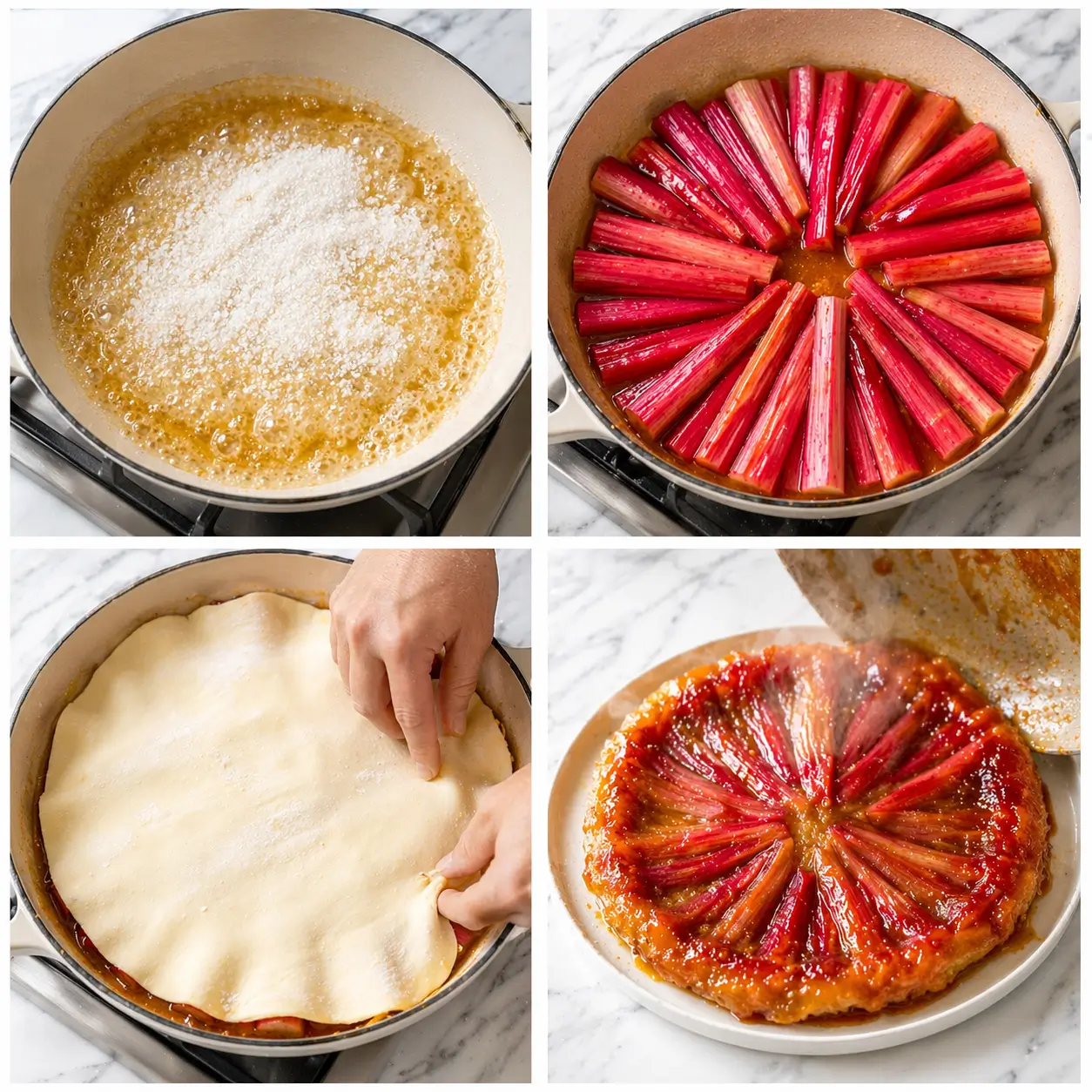
Four step collage showing sugar melting to golden caramel in a skillet rhubarb pieces arranged in caramel in the pan puff pastry being tucked over the rhubarb and the finished tarte being flipped onto a white ceramic plate with caramel dripping

Why This Recipe Works

The tarte tatin technique is one of the most elegant in French patisserie — and it works for precise scientific reasons.

  • Cooking the caramel dry rather than wet. A dry caramel — sugar melted without added water — caramelizes more evenly and develops deeper, more complex flavor than a wet caramel. It also has a more stable texture that sets properly around the rhubarb during baking.
  • Butter added off the heat. Adding cold butter to hot caramel off the heat creates an emulsified sauce rather than a split one. The butter coats the caramel with fat that keeps it glossy and smooth rather than grainy.
  • Thyme in the caramel. The aromatic oils in fresh thyme infuse directly into the hot butter caramel during the few minutes before the rhubarb goes in. By the time the tarte is baked, the thyme flavor is woven throughout the caramel rather than sitting on top of it.
  • Tucking the pastry creates the border. The tucked-down edges of the puff pastry bake against the inside wall of the skillet, creating a raised, defined border that becomes the elegant pastry rim once the tarte is flipped. It also keeps the filling contained during baking.
  • The 10-minute rest before flipping. Immediately out of the oven, the caramel is liquid and the tarte would collapse and run on flipping. After 10 minutes it has thickened enough to hold its structure but is still fluid enough to release cleanly from the pan. This window is the key to a perfect flip.
  • Orange zest amplifies everything. Citrus zest in a caramel works the same way that lemon zest works in a muffin — the volatile aromatic oils interact with and amplify every surrounding flavor, making the rhubarb taste more rhubarby and the caramel taste more complex.

Best Ways to Serve Rhubarb Tarte Tatin
This is a dessert that deserves to be served with intention. A few choices make all the difference.

Crème fraîcheThe definitive accompaniment. Cool, slightly tangy, and silky against the warm sticky caramel. Serve it in a white ceramic bowl with a small spoon and let people help themselves generously.
Vanilla ice creamThe more indulgent option — equally wonderful. The ice cream melts into the warm caramel and creates a sauce of its own. Use a high-quality vanilla with visible bean specks.
Lightly whipped creamUnsweetened, barely whipped — almost pourable. It drapes over the tarte and mingles with the caramel in the most beautiful way.
Warm with a cup of Earl GreyFor an afternoon tea presentation — the bergamot in Earl Grey tea has a floral citrus note that is a natural companion to caramelized rhubarb.
As part of a spring dessert tableAlongside our Strawberry Crunch Cheesecake — the two together make a spring dessert spread that is genuinely breathtaking in its color and contrast.
The next morning with coffeeA slice of tarte tatin at room temperature the morning after it was made is one of the quiet pleasures of having baked it the day before. The caramel has deepened overnight and the pastry has softened slightly into something almost pudding-like in the best possible way.

Variations to Try

  • Dairy-Free: Replace the butter in the caramel with a good quality vegan butter — Miyoko’s works beautifully. Use a dairy-free all-butter style puff pastry. Serve with coconut crème fraîche or a good dairy-free vanilla ice cream. The tarte is still deeply impressive and delicious.
  • Strawberry Rhubarb Tarte Tatin: The classic pairing — replace 200g of the rhubarb with halved fresh strawberries. Arrange the rhubarb first in the caramel, then tuck the strawberry halves cut-side up in the gaps. The strawberries add sweetness and a gorgeous color contrast to the finished tarte.
  • Rhubarb and Ginger Tarte Tatin: Add 1 teaspoon of freshly grated ginger to the caramel along with the vanilla. The warm heat of fresh ginger against the tart rhubarb and sticky caramel is a combination that feels genuinely sophisticated — and completely addictive.
  • Individual Mini Tartes Tatin: Use a muffin tin or individual small ovenproof ramekins. Make small caramel portions in each cup on the stovetop, arrange rhubarb pieces in each, top with rounds of puff pastry, and bake at 200°C for 18–20 minutes. The individual presentation is stunning for a dinner party where every guest gets their own perfect tarte to flip at the table.
  • Rhubarb and Rose Water Tarte Tatin: Add 1 teaspoon of rose water to the caramel just before the rhubarb goes in. Rose water and rhubarb share a delicate floral quality that makes this variation feel particularly elegant and spring-like. Use sparingly — rose water is powerful and a little too much tips from fragrant into soapy.
  • Classic Apple Tarte Tatin: The original version. Replace the rhubarb with 6–7 tart apples (Granny Smith or Braeburn) peeled, cored, and quartered. Cook the apple wedges in the caramel for 10–15 minutes on the stovetop before covering with pastry and baking. An entirely different dessert — warmer, more autumnal, equally magnificent.

Storage, Meal Prep & Reheating

Storing

A rhubarb tarte tatin is best eaten on the day it is made — ideally within a few hours of the flip while the pastry is still flaky and the caramel is at its most vivid. That said, it keeps well covered loosely at room temperature for up to 2 days. The pastry will soften as it sits but the flavor actually deepens beautifully.

Refrigerating

Refrigerate covered for up to 3 days. The caramel will harden in the fridge — always bring the tarte back to room temperature or warm it gently before serving. Cold caramel loses its gloss and its seductive sticky texture.

Reheating

Place individual slices or the whole tarte on a baking sheet and warm at 160°C (325°F) for 8–10 minutes. The caramel will reliquify, the pastry will re-crisp slightly, and the whole tarte will come back to something very close to its just-baked glory. The microwave works in a pinch — 30–40 seconds for a single slice — but the pastry will be soft rather than flaky.

Make-Ahead Tips

You can make the tarte up to a day ahead and store it unflipped in the skillet at room temperature, covered with the plate ready on top. When ready to serve, warm it gently on the stovetop over low heat for 3–4 minutes to re-melt the caramel, then flip and serve. This method gives you a tarte that is almost as fresh as the day it was made and means the dramatic flip can happen at the table in front of your guests.

Common Mistakes to Avoid

  • Stirring the caramel. Once the sugar starts melting, do not stir — swirl the pan only. Stirring causes crystallization and you’ll end up with a grainy, seized mess rather than a smooth amber caramel.
  • Taking your eyes off the caramel. Caramel goes from perfect to burnt in under 60 seconds at the end of the process. Stay present, watch the color constantly, and pull it off the heat the moment it reaches a deep amber. Burnt caramel is bitter and the flavor permeates the entire tarte.
  • Using wet rhubarb. Water in the caramel causes violent splattering and can seize the caramel completely. Pat every piece of rhubarb completely dry before it goes near the pan.
  • Flipping too soon or waiting too long. The 10-minute rest window is precise for a reason. Flip too soon and the caramel runs everywhere and the tarte collapses. Wait too long and the caramel hardens and the tarte sticks to the pan. Set a timer.
  • A hesitant flip. The most common reason a flip goes wrong is lack of confidence. A slow, wobbling inversion gives the caramel time to shift and the tarte to slide. One fast, committed movement is always better. Trust yourself.
  • Using a plate smaller than the skillet. The plate must be larger than the skillet — by at least 2–3cm all around — to catch all the caramel that flows off the edges during the flip. A plate that is too small results in caramel running onto your hands and countertop rather than onto the serving plate where it belongs.

Nutritional Information

Per serving (based on 8 slices, tarte only, no accompaniments):

310Calories
3gProtein
38gCarbs
17gTotal Fat
10gSaturated Fat
2gFiber
22gSugar
180mgSodium
📊 Note Nutritional values are estimates based on 8 servings using standard ingredient amounts. Actual values will vary depending on the specific puff pastry brand used, exact portion size, and whether crème fraîche or ice cream is served alongside.

Serving & Presentation Tips

A rhubarb tarte tatin is already one of the most naturally beautiful desserts in existence. These small details make it even more memorable.

  • Flip it at the table. If you can, bring the skillet with the plate on top to the table and perform the flip in front of your guests. The moment of reveal — the caramelized rhubarb appearing in its full jewel-toned glory — is genuinely theatrical and creates a memory around the dessert that serves it for minutes before anyone has taken a bite.
  • The powdered sugar dusting is a last-second detail. Dust it on immediately before serving — powdered sugar dissolves into the caramel surface within minutes and loses its visual effect. A light hand is better than a heavy one here — you want a delicate shimmer, not a white coating.
  • Serve the crème fraîche with a small beautiful spoon in a white ceramic bowl. The contrast of the stark white crème fraîche against the amber tarte is part of the visual story of the dessert.
  • Cut with a sharp, thin-bladed knife. The caramel resists a serrated blade. A long, sharp chef’s knife pressed straight down through the tarte gives you clean, beautiful slices without dragging the rhubarb out of its arrangement.
  • Serve warm, not hot. The flavors of caramelized rhubarb are most vivid and complex at around 50–60°C — warm to the touch but not steaming. Served directly from the oven, the caramel is almost too fluid and the flavors too sharp. Twenty minutes of rest is the difference between a good tarte and a great one.
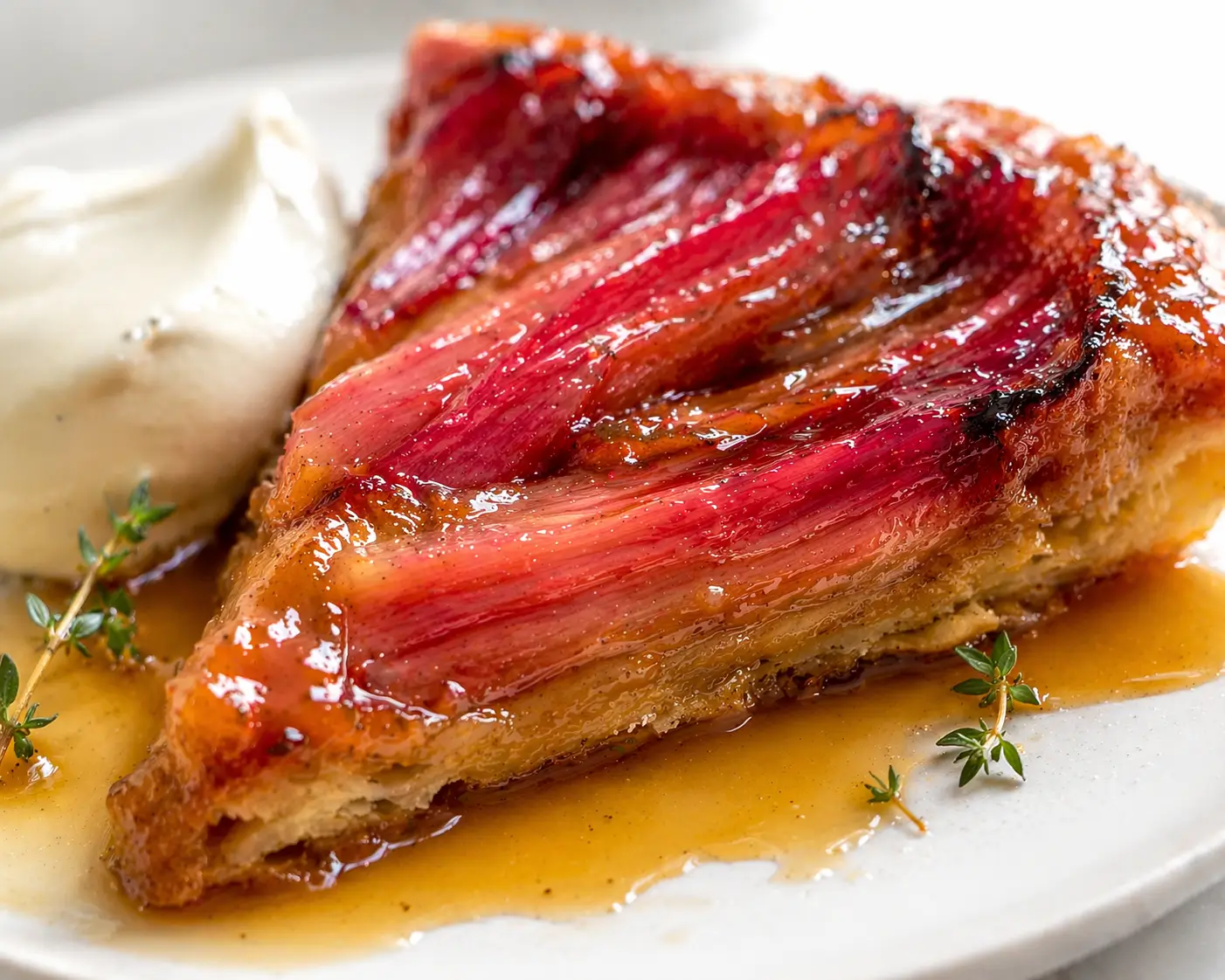
Close-up of a rhubarb tarte tatin slice on a white ceramic plate showing glossy amber caramelized rhubarb pieces the golden flaky pastry layers and a pool of caramel sauce with a quenelle of crème fraîche beside it

Frequently Asked Questions

What pan is best for a tarte tatin?

A heavy-based, oven-safe skillet is ideal — cast iron is the classic choice because it distributes heat perfectly for making caramel on the stovetop and transitions seamlessly into the oven. A heavy stainless steel or carbon steel ovenproof sauté pan also works well. Avoid non-stick pans for the caramel — the coating can degrade at the high temperatures needed and non-stick surfaces don’t give you the fond (browned bits) that adds depth to the caramel. The pan size matters too — 24–26cm (9–10 inches) is the right range for this quantity of rhubarb and pastry.

My caramel seized and went grainy — what happened?

Almost certainly caused by stirring rather than swirling, or by sugar crystals on the side of the pan falling back into the caramel. Once sugar starts crystallizing it causes a chain reaction that turns the whole pan grainy. If it happens, add 2 tablespoons of water to the pan and cook over low heat — the water will dissolve the crystals and you can start the caramelization process again. Next time, resist the urge to stir and use a pastry brush dipped in water to wash down any sugar crystals from the sides of the pan as the caramel cooks.

Can I use frozen rhubarb?

Fresh rhubarb is strongly recommended for a tarte tatin because you need the structural integrity of firm stalks to hold their shape through caramelization and baking. Frozen rhubarb thaws into soft, water-logged pieces that won’t hold their arrangement in the caramel. If fresh rhubarb is genuinely unavailable, use frozen rhubarb that has been drained very thoroughly on paper towels for at least 30 minutes — and accept that the presentation will be less precise.

How do I know the caramel is the right color?

You’re looking for the color of old amber honey — a deep, warm gold that is noticeably darker than honey from a jar but hasn’t crossed into reddish-brown. The smell is your best guide — when the caramel smells deeply nutty, toffee-like, and almost smoky, you’re there. If it smells sharp, acrid, or bitter, it has gone too far. The difference in color between perfect and burnt is subtle but the difference in smell is unmistakable.

What if the tarte sticks to the pan after flipping?

If the tarte sticks it usually means the caramel has cooled and hardened slightly. Place the skillet back on the stovetop over very low heat for 1–2 minutes — just long enough to soften the caramel again without cooking it further. Then try the flip again. This almost always works. The few stubborn pieces that remain in the pan can be lifted out and pressed back into their place on the tarte — the residual caramel on the surface will hold them.

What other rhubarb desserts should I try?

If you love cooking with rhubarb our Strawberry Rhubarb Pie is the natural next step — the classic pairing in a flaky lattice crust that is equally stunning in its own way. And for a completely different spring dessert experience, our Strawberry Crunch Cheesecake is one of the most visually impressive recipes on the site.

You Might Also Love

Final Thoughts

This rhubarb tarte tatin is the recipe that changes how you think about rhubarb. Not as the tart, slightly difficult ingredient that needs a lot of sugar to be palatable — but as one of spring’s most extraordinary fruits, capable of caramelizing into something deeply beautiful, complex, and genuinely show-stopping.

The technique is classical. The flavor is unexpected. The presentation — that moment of the flip, the glistening amber surface, the perfectly fanned pink-red rhubarb revealed in all its caramelized glory — is the kind of thing that makes a dinner table go quiet for a second before someone says “that’s incredible.”

Make it on a spring afternoon when rhubarb is at its peak. Serve it warm with crème fraîche. Flip it at the table if you can. And leave a comment below — we’d love to hear which variation you tried and whether you did the flip in front of an audience. 🌸✨

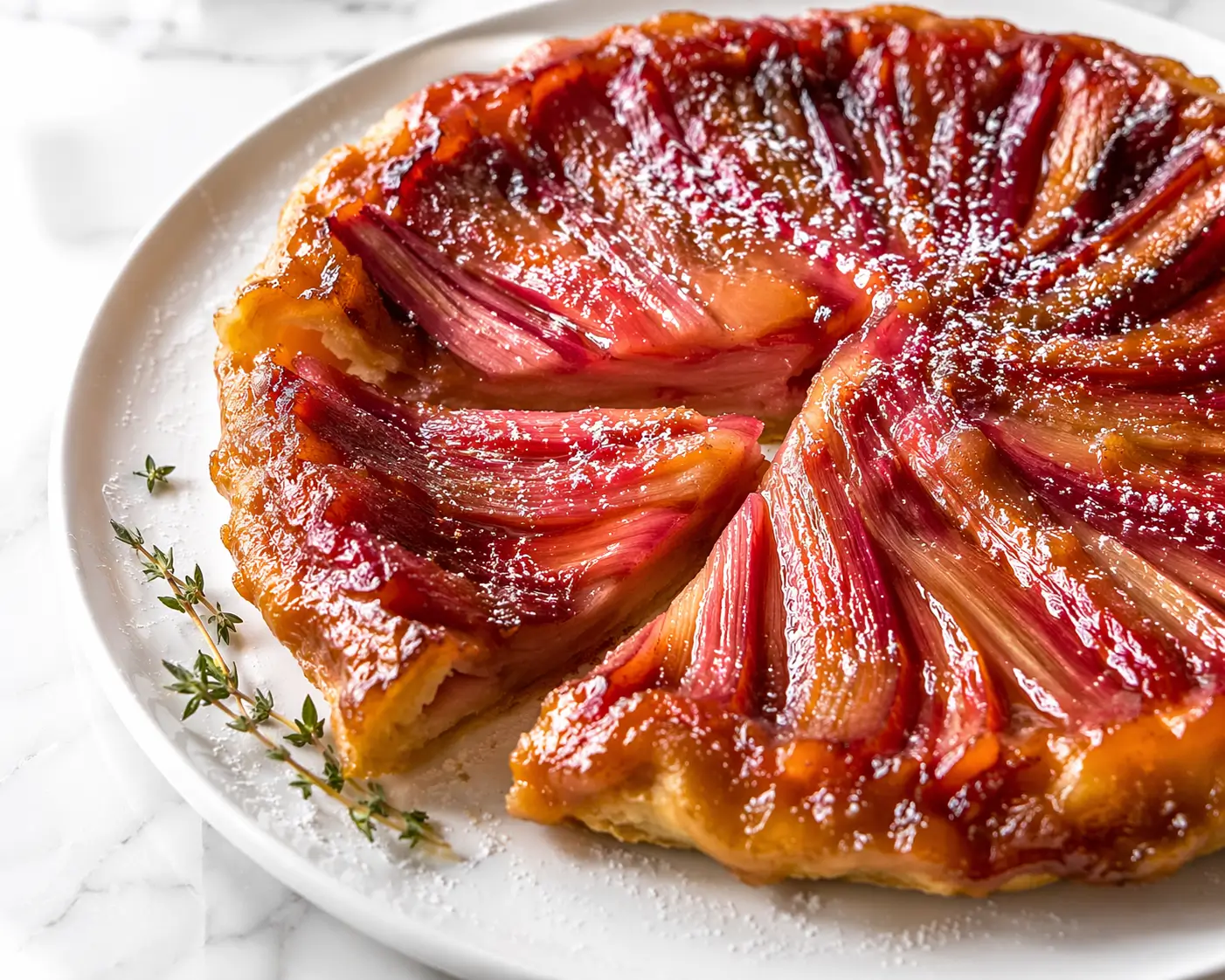
Rhubarb tarte tatin on a white ceramic plate with glistening amber caramelized rhubarb in a beautiful fanned pattern golden flaky pastry edges and fresh thyme garnish on white marble
Medium
Desserts & Sweet Treats French Spring Baking One Pan

Rhubarb Tarte Tatin

A stunning French upside-down tart with jammy amber caramelized rhubarb, buttery caramel infused with thyme and orange, and a golden flaky puff pastry crust. One pan, 45 minutes of active work — the elegant spring dessert that wows everyone at the table.

15 minPrep
40 minCook
65 minTotal
8Slices
~310Calories

Ingredients

Caramel and Rhubarb

  • 600g (about 1.3 lb) fresh rhubarb stalks, cut into 10–12cm lengths
  • 100g (7 tbsp) unsalted butter
  • 150g (¾ cup) granulated sugar
  • 2 tbsp brown sugar
  • 1 vanilla pod, seeds scraped (or 1 tsp vanilla extract)
  • 3 sprigs fresh thyme
  • Zest of 1 orange
  • Pinch of salt

Pastry

  • 1 sheet (about 320g) store-bought all-butter puff pastry, thawed

To Serve

  • Crème fraîche
  • Powdered sugar for dusting
  • Extra fresh thyme sprigs for garnish

Instructions

  1. 1
    Prepare the rhubarb. Wash and completely dry the rhubarb. Cut into even lengths to fit your skillet. Preheat oven to 200°C (400°F).
  2. 2
    Make the caramel. Add both sugars to a 24–26cm ovenproof skillet over medium heat. Cook without stirring — swirl gently — until deep amber. Remove from heat. Add butter in cubes and swirl to incorporate. Add salt, vanilla, orange zest, and thyme sprigs.
  3. 3
    Arrange the rhubarb. Working quickly while caramel is fluid, arrange rhubarb pieces tightly in a deliberate fanned or row pattern directly in the caramel. Press each piece firmly into the caramel.
  4. 4
    Add the pastry. Cut puff pastry into a circle 2–3cm larger than the skillet. Lay over the rhubarb and tuck the edges down between the fruit and the pan wall. Prick lightly a few times with a fork.
  5. 5
    Bake. Bake for 25–30 minutes until pastry is deeply golden, puffed, and cooked through. Caramel should be bubbling at the edges. Rest in the skillet for exactly 10 minutes.
  6. 6
    Flip. Place a large serving plate face-down on the skillet. Hold both firmly and invert in one confident movement. Hold inverted for 3–4 seconds then lift the skillet away. Nudge any shifted rhubarb back into place immediately.
  7. 7
    Finish and serve. Remove thyme sprigs. Rest 10 more minutes. Dust lightly with powdered sugar immediately before serving. Garnish with fresh thyme. Serve warm with crème fraîche alongside.
📝 Olivia’s Notes

The thyme in the caramel is not optional — it is the detail that elevates this from a good tarte tatin to an extraordinary one. Fresh thyme only — dried thyme has no place in a delicate caramel.

The flip requires confidence. One fast, committed inversion is always better than a slow, hesitant one. Trust the process and go for it.

Always use a serving plate larger than your skillet — by at least 2–3cm all around — to catch the caramel that flows off the edges during the flip.

About the author
Olivia

Leave a Comment