
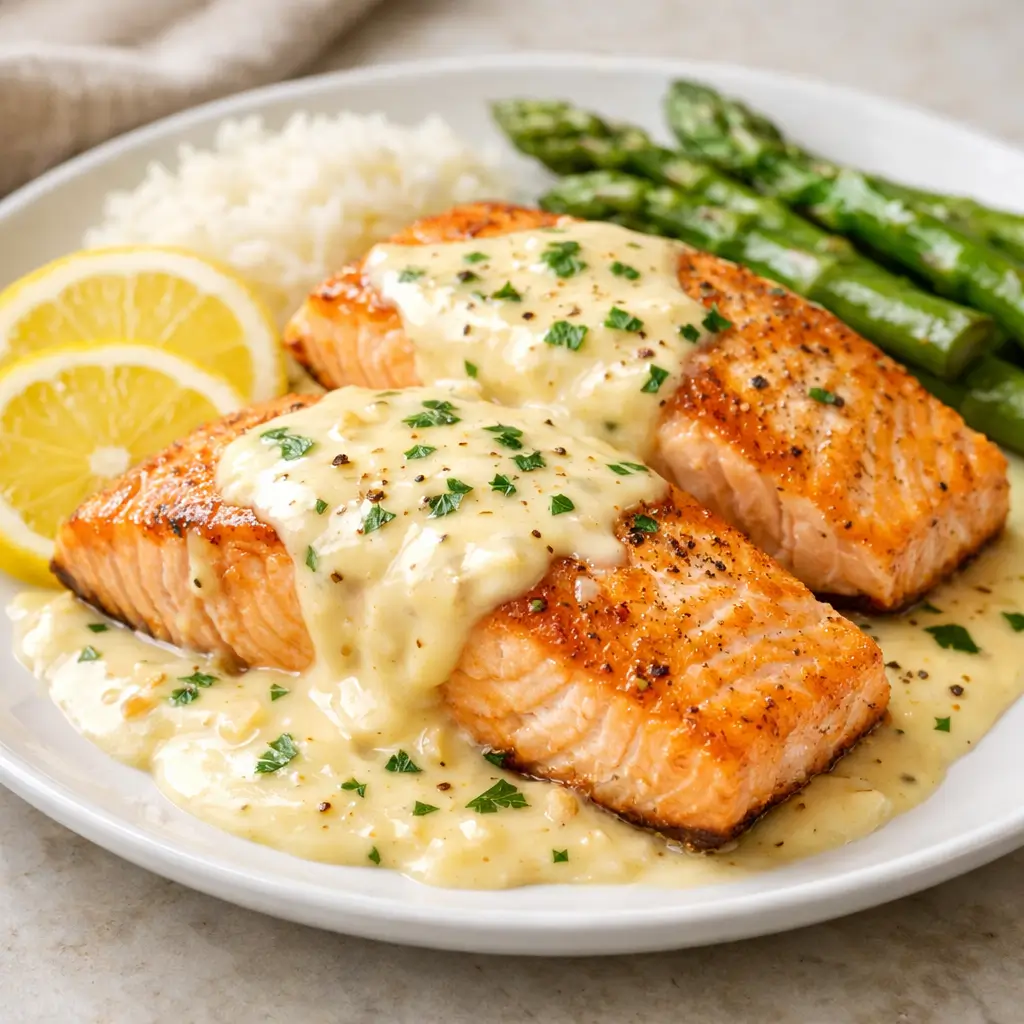
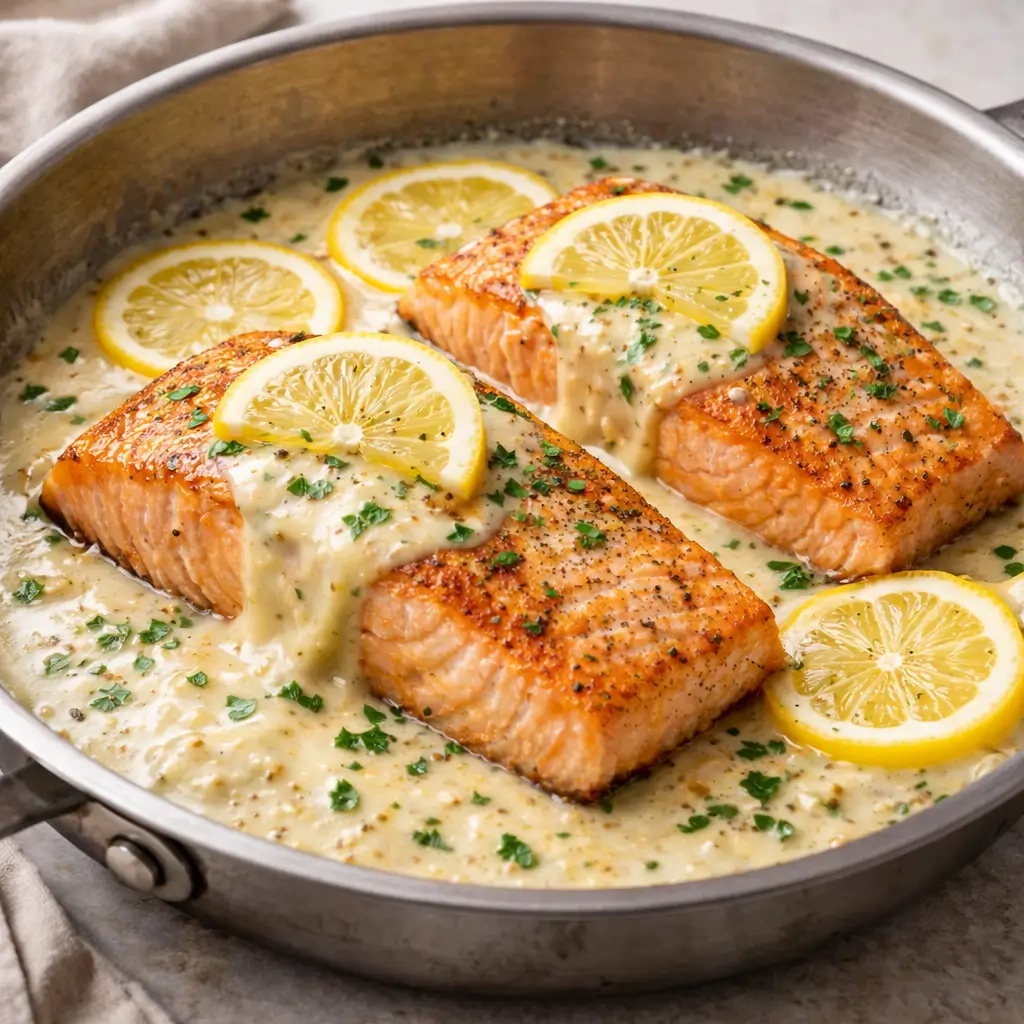
Creamy Lemon Butter Salmon is a rich, elegant, and surprisingly simple dinner that you can prepare in about 30 minutes. The recipe combines perfectly seared salmon fillets with a silky lemon butter cream sauce infused with garlic and fresh herbs. The result is a restaurant-quality meal that feels indulgent yet remains simple enough for a weeknight dinner.
This dish balances bright citrus flavors, buttery richness, and the natural tenderness of salmon. Moreover, the creamy sauce enhances the fish without overwhelming its delicate flavor. Because of that balance, this recipe remains one of the most beloved salmon preparations in modern home cooking.
In addition, the ingredients are simple and widely available. Therefore, the dish fits perfectly into everyday cooking routines. Whether you cook for family dinners, date nights, or guests, Creamy Lemon Butter Salmon always impresses.
Why You Will Love Creamy Lemon Butter Salmon
Many salmon recipes exist. However, this one stands out for several reasons.
First, the cooking process is quick and reliable. You can finish the entire meal in less than half an hour.
Second, the ingredients are simple. Most kitchens already contain butter, garlic, cream, and lemons.
Third, the flavors combine beautifully. The butter adds richness, the lemon adds brightness, and the cream creates a smooth texture.
Finally, the recipe pairs easily with many side dishes. For example:
- Rice
- Mashed potatoes
- Roasted vegetables
- Pasta
- Steamed asparagus
Because of this versatility, the recipe works for both casual dinners and special occasions.
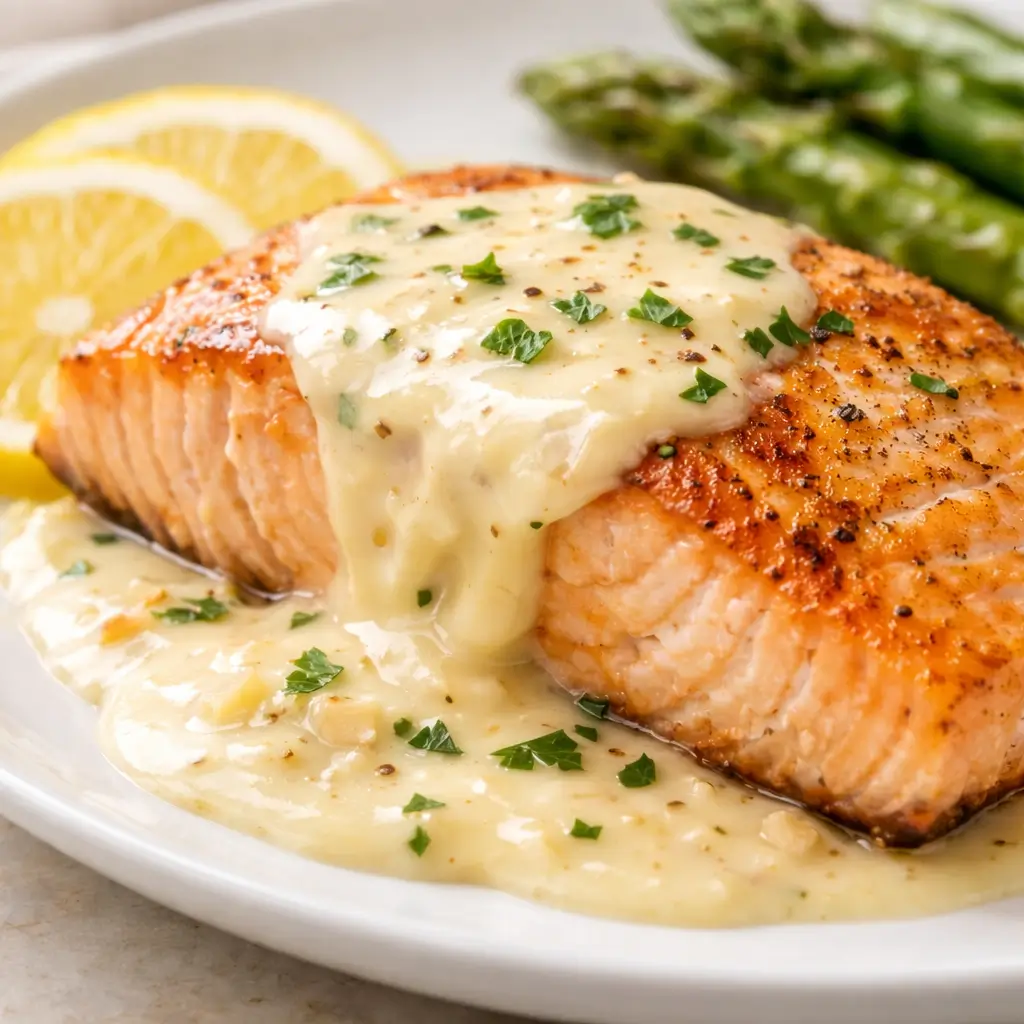
Ingredients for Creamy Lemon Butter Salmon
The ingredient list is short. Nevertheless, each component contributes to the final flavor.
Main Ingredients
| Ingredient | Quantity |
|---|---|
| Salmon fillets | 2 large fillets (about 6 oz each) |
| Olive oil | 1 tablespoon |
| Butter | 3 tablespoons |
| Garlic | 3 cloves, minced |
| Heavy cream | 1 cup |
| Fresh lemon juice | 2 tablespoons |
| Lemon slices | 4–5 slices |
| Fresh parsley | 2 tablespoons, chopped |
| Salt | ½ teaspoon |
| Black pepper | ½ teaspoon |
Optional Ingredients
These ingredients can enhance the flavor even more.
- Parmesan cheese (2 tablespoons)
- Dijon mustard (1 teaspoon)
- Red pepper flakes (¼ teaspoon)
- Fresh thyme
Optional additions allow you to customize the sauce according to personal taste.
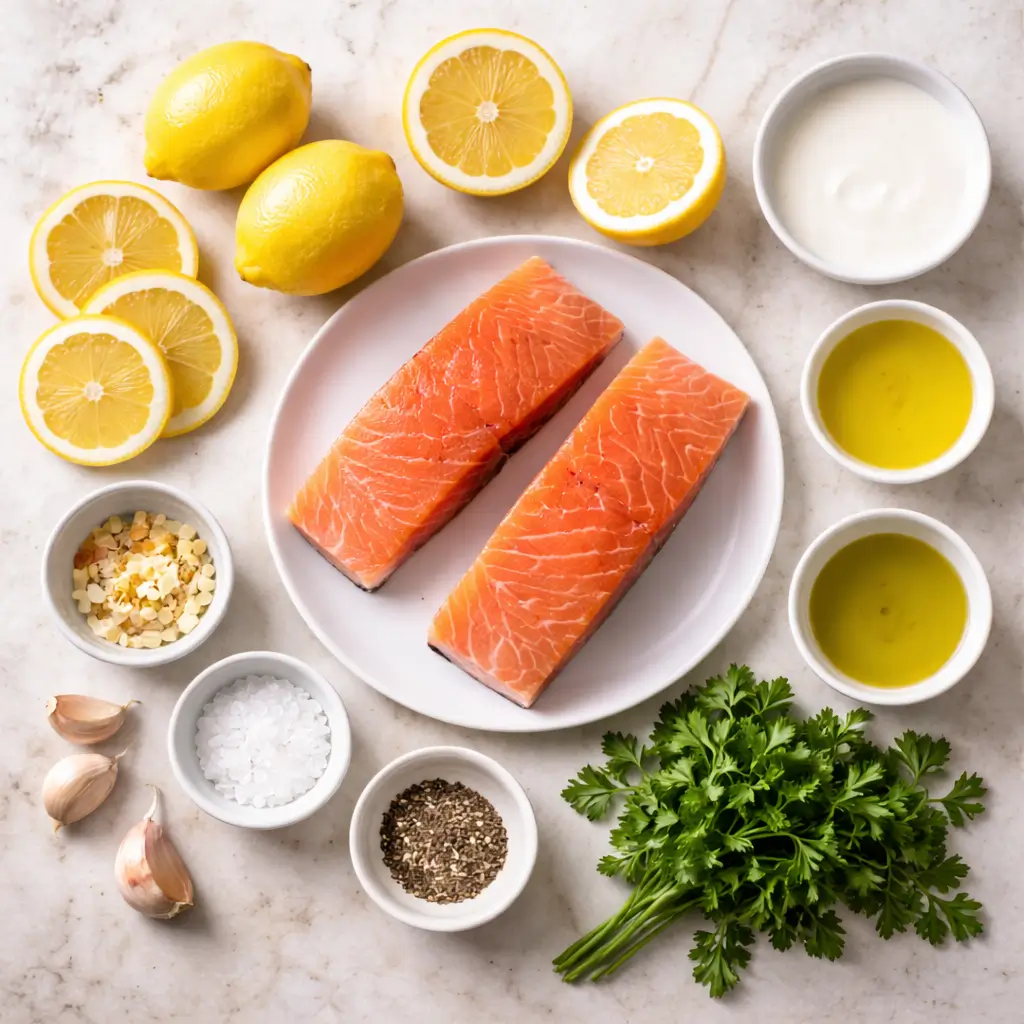
How to Choose the Best Salmon
Good ingredients produce good results. Therefore, selecting quality salmon is essential.
Types of Salmon
Several salmon varieties appear in grocery stores.
Atlantic Salmon
- Rich flavor
- High fat content
- Common in supermarkets
Sockeye Salmon
- Deep red color
- Strong flavor
- Leaner texture
Coho Salmon
- Balanced taste
- Moderate fat content
King Salmon
- Most luxurious
- Highest fat content
For creamy sauces, Atlantic or King salmon works best because the higher fat content keeps the fish moist.
Fresh vs Frozen Salmon
Both options work well.
Fresh salmon offers excellent flavor. However, frozen salmon can be equally good if properly thawed.
To thaw frozen salmon safely:
- Place the fish in the refrigerator overnight.
- Avoid room-temperature thawing.
- Pat the fish dry before cooking.
Proper thawing ensures good texture during cooking.
Skin-On vs Skinless Fillets
Both options are acceptable.
Skin-on fillets provide extra flavor and help protect the fish during cooking. However, skinless fillets work well if you prefer a smoother presentation.
If using skin-on salmon, cook skin-side down first.
Preparing the Salmon
Preparation requires only a few minutes. Nevertheless, proper steps ensure perfect results.
Step 1: Dry the Fish
Use paper towels to remove moisture from the salmon surface.
Dry fish sears better and develops a golden crust.
Step 2: Season Generously
Sprinkle salt and black pepper on both sides.
Simple seasoning allows the sauce to shine.
Step 3: Prepare the Ingredients
Before cooking, prepare everything.
- Mince garlic
- Slice lemons
- Chop parsley
- Measure cream and butter
This preparation ensures smooth cooking later.
Step-by-Step Instructions
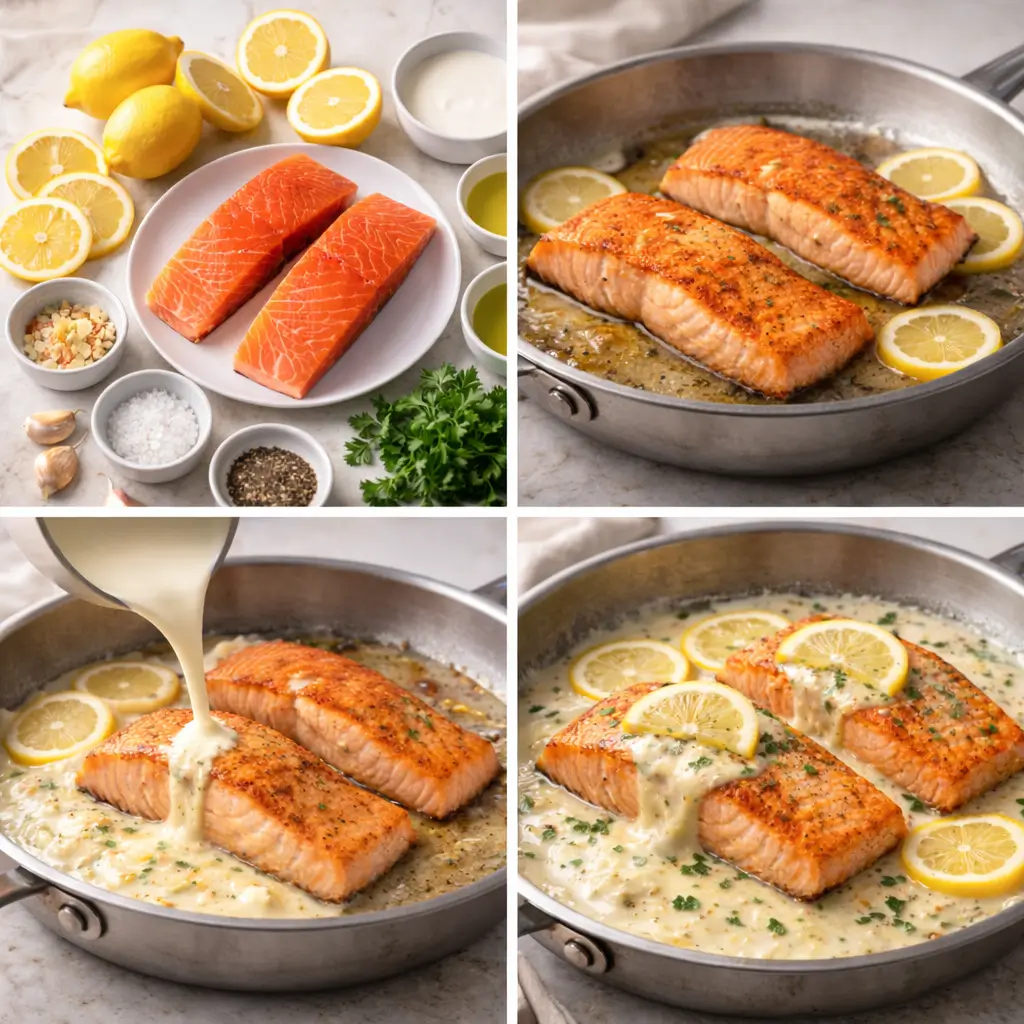
Follow these steps carefully to create perfectly cooked salmon with creamy lemon sauce.
Step 1: Heat the Pan
Place a large skillet over medium-high heat.
Add olive oil and allow it to heat until shimmering.
Hot oil helps create a proper sear.
Step 2: Sear the Salmon
Place the salmon fillets into the pan.
Cook for 4–5 minutes on the first side.
Do not move the fish during this time. The surface must develop a golden crust.
Then flip the fillets carefully.
Cook the second side for 3–4 minutes.
Remove the salmon from the skillet and set aside.
Step 3: Prepare the Lemon Butter Base
Reduce the heat to medium.
Add butter to the skillet.
When the butter melts, add the minced garlic.
Cook for about 30 seconds, stirring constantly.
Garlic should become fragrant but not browned.
Step 4: Add the Cream
Pour heavy cream into the skillet.
Stir gently to combine with the butter and garlic.
Allow the mixture to simmer for 2–3 minutes.
During this time the sauce thickens slightly.
Step 5: Add Lemon and Seasoning
Stir in:
- Fresh lemon juice
- Lemon slices
- Salt and pepper
The lemon brightens the rich cream sauce.
Let the sauce simmer for another 2 minutes.
Step 6: Return the Salmon
Place the salmon fillets back into the skillet.
Spoon the sauce over the fish.
Allow the salmon to cook in the sauce for 2–3 minutes.
This step allows the flavors to combine perfectly.
Step 7: Garnish and Serve
Sprinkle fresh parsley over the salmon.
Serve immediately while the sauce remains warm and creamy.
Tips for Perfect Creamy Lemon Butter Salmon
Small details greatly improve the final dish.
Use a Hot Pan
A properly heated pan creates a beautiful golden crust on the salmon.
Cold pans lead to uneven cooking.
Do Not Overcook Salmon
Salmon cooks quickly.
Overcooked salmon becomes dry.
The ideal internal temperature is 125–130°F (52–54°C) for medium.
Simmer the Sauce Gently
High heat may cause the cream to separate.
Therefore, keep the sauce at a gentle simmer.
Taste the Sauce
Before serving, taste the sauce.
Add extra lemon juice or salt if necessary.
Balancing flavors is essential.
Best Side Dishes for Creamy Lemon Butter Salmon
This dish pairs beautifully with many sides.
Rice
Plain white rice absorbs the sauce well.
Brown rice adds nutty flavor and additional fiber.
Mashed Potatoes
Creamy mashed potatoes complement the sauce perfectly.
They also create a comforting dinner.
Roasted Vegetables
Good options include:
- Broccoli
- Asparagus
- Brussels sprouts
- Carrots
Roasted vegetables add texture and color.
Pasta
Creamy salmon pairs wonderfully with pasta.
Linguine or fettuccine work especially well.
Variations of Creamy Lemon Butter Salmon
This recipe adapts easily to different flavors.
Garlic Parmesan Version
Add 2 tablespoons grated Parmesan cheese to the sauce.
The cheese thickens the sauce and adds savory flavor.
Spinach Cream Salmon
Add a handful of fresh spinach to the sauce.
The spinach wilts quickly and adds color and nutrients.
Dijon Lemon Salmon
Stir 1 teaspoon Dijon mustard into the cream sauce.
Mustard adds depth and subtle tanginess.
Herb Lemon Butter Salmon
Use fresh herbs such as:
- Dill
- Thyme
- Basil
Herbs create aromatic complexity.
Nutritional Benefits of Salmon
Besides great taste, salmon offers excellent nutritional value.
High-Quality Protein
Salmon provides complete protein.
Protein supports muscle growth and repair.
Omega-3 Fatty Acids
Salmon is rich in EPA and DHA omega-3 fats.
These fats support heart health and brain function.
Vitamins and Minerals
Salmon contains:
- Vitamin D
- Vitamin B12
- Selenium
- Potassium
These nutrients support overall health.
How to Store Leftovers
Proper storage preserves flavor and safety.
Refrigeration
Store leftover salmon in an airtight container.
Refrigerate for up to 3 days.
Reheating
Reheat gently in a skillet over low heat.
Add a splash of cream or broth to loosen the sauce.
Avoid microwaving at high power because salmon dries quickly.
Can You Freeze Creamy Lemon Butter Salmon?
Freezing cooked salmon with cream sauce is possible but not ideal.
Cream sauces sometimes separate after freezing.
If freezing:
- Allow the dish to cool completely.
- Store in airtight containers.
- Freeze up to 2 months.
Reheat slowly to restore texture.
Common Mistakes to Avoid
Avoid these mistakes to ensure perfect results.
Overcrowding the Pan
Crowded pans reduce searing quality.
Cook salmon in batches if necessary.
Cooking at Too High Heat
High heat may burn garlic and break the cream sauce.
Medium heat works best.
Adding Lemon Too Early
Acid can sometimes curdle dairy.
Therefore add lemon after the cream warms slightly.
Frequently Asked Questions
Can I Use Milk Instead of Cream?
Yes, but the sauce becomes thinner.
If using milk, add 1 teaspoon cornstarch to thicken the sauce.
Can I Use Frozen Salmon?
Yes.
However, thaw the fish completely and pat dry before cooking.
What Pan Works Best?
A cast-iron skillet or stainless steel pan produces the best sear.
Non-stick pans also work but create less browning.
Can I Bake the Salmon Instead?
Yes.
Bake the salmon at 400°F (200°C) for about 12–15 minutes.
Prepare the sauce separately in a pan.
Serving Ideas for Special Occasions
Creamy Lemon Butter Salmon easily transforms into an elegant meal.
Serve with:
- Garlic butter asparagus
- Lemon herb rice
- Crispy roasted potatoes
- Fresh garden salad
Add a glass of white wine, such as Sauvignon Blanc or Chardonnay.
The citrus notes complement the lemon sauce perfectly.
Why This Recipe Works
Several culinary principles explain the success of this dish.
First, the Maillard reaction during searing develops deep flavor.
Second, the fat in butter and cream carries aromatic compounds.
Third, lemon acidity balances richness.
Finally, garlic and herbs add aromatic complexity.
Because these elements interact harmoniously, the result feels luxurious despite simple ingredients.
Final Thoughts
Creamy Lemon Butter Salmon is one of the easiest ways to create a restaurant-quality seafood dinner at home. The dish combines perfectly seared salmon, a rich garlic lemon cream sauce, and simple fresh ingredients.
Furthermore, the recipe requires minimal time and effort. With just a few steps and common ingredients, you can produce a meal that feels elegant and satisfying.
Whether you cook for family dinners, guests, or a quiet evening at home, this recipe consistently delivers flavor, comfort, and sophistication.
Try it once, and it will likely become a regular favorite in your kitchen.
