
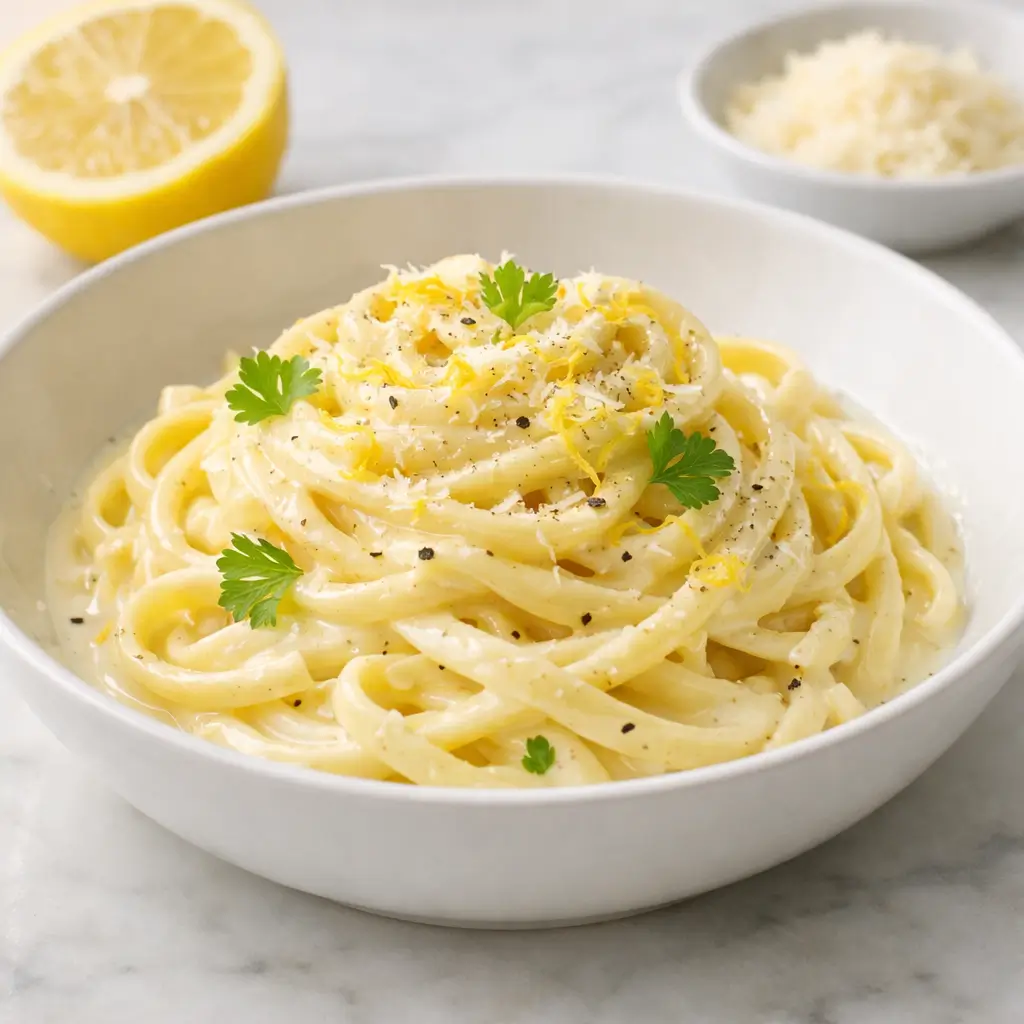
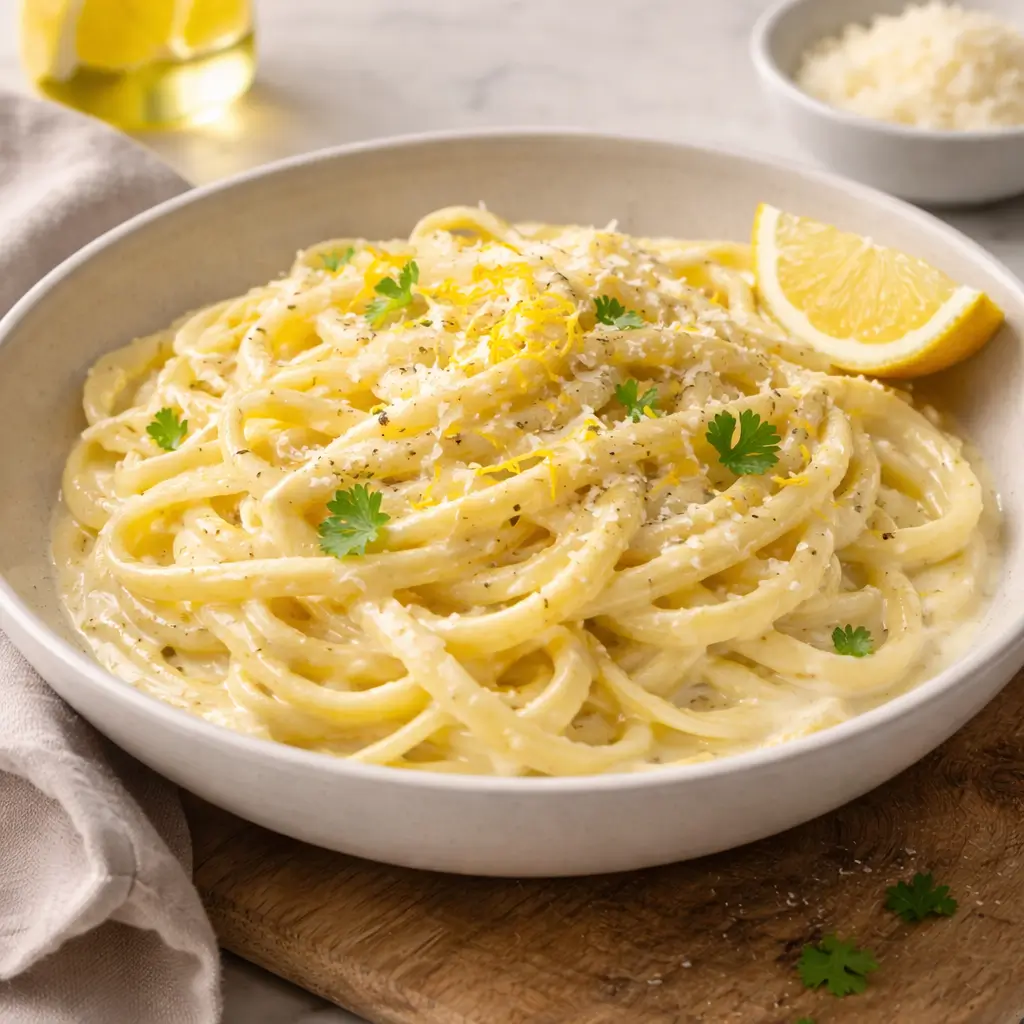
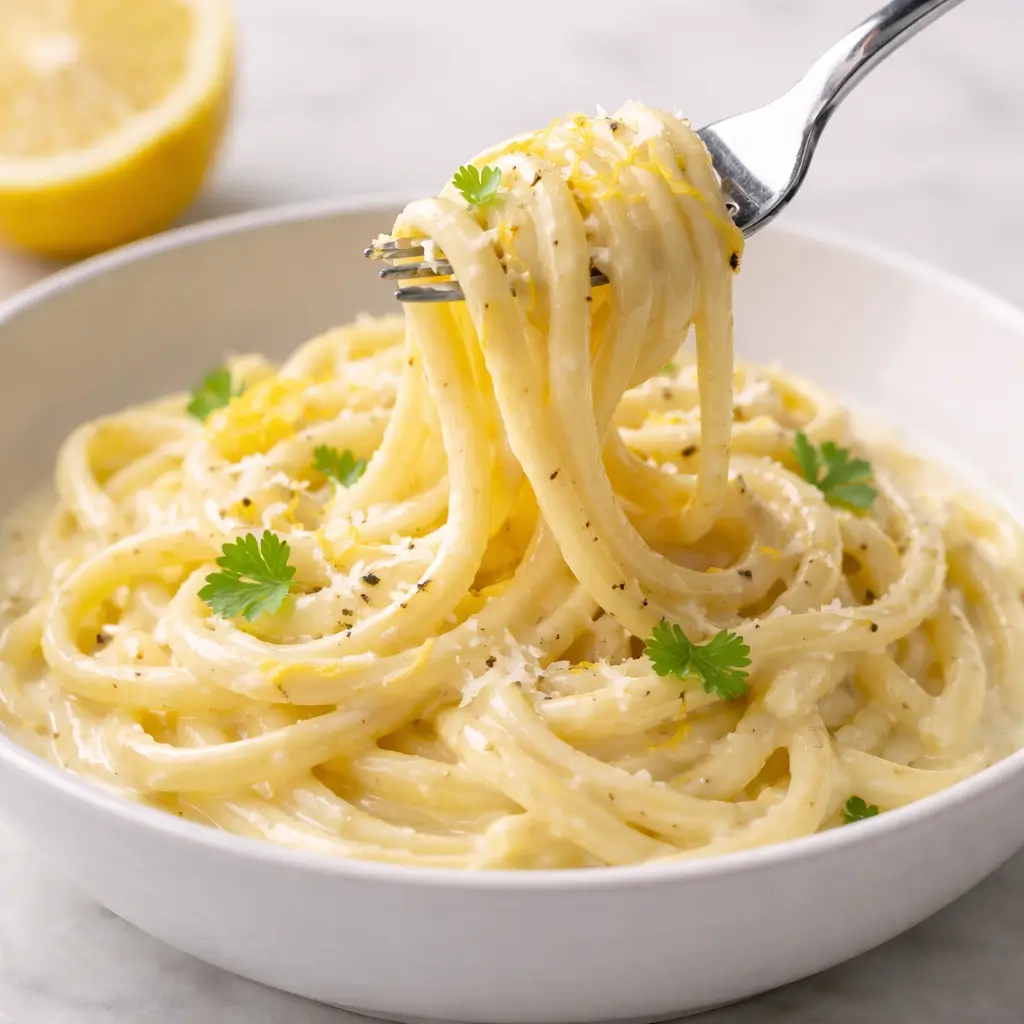
Creamy Lemon Pasta is the perfect balance between richness and freshness. It combines a velvety sauce with vibrant citrus flavor. As a result, you get a dish that feels indulgent yet light. This recipe comes together quickly. Therefore, it works beautifully for both busy weeknights and elegant dinners.
In this guide, you will learn everything about making the perfect Creamy Lemon Pasta. You will understand the technique, not just the ingredients. Consequently, you can recreate the dish flawlessly every time.
Why You Will Love This Creamy Lemon Pasta
First, the flavor is beautifully balanced. The lemon cuts through the cream. Thus, the sauce never feels heavy.
Second, the texture is luxuriously smooth. Proper emulsification creates a glossy finish that coats every strand.
Third, the recipe is simple. You need only a handful of fresh ingredients. Yet, the result tastes restaurant-quality.
Finally, this dish is versatile. You can adapt it with vegetables, proteins, or herbs.
Ingredients You Need
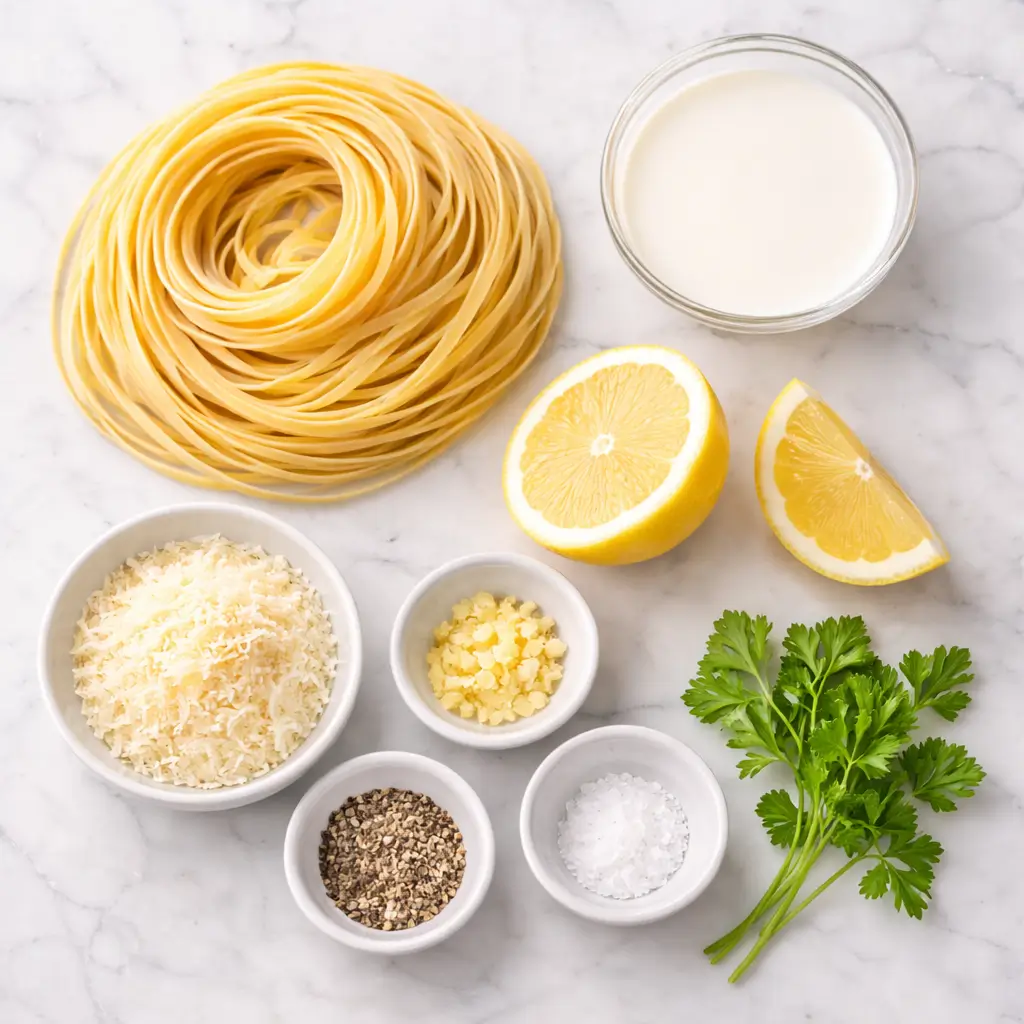
The magic of Creamy Lemon Pasta lies in using fresh, high-quality ingredients. Because the ingredient list is short, each component matters.
Main Ingredients
- 12 oz (340 g) linguine or fettuccine
- 2 tablespoons unsalted butter
- 3 cloves garlic, finely minced
- 1 cup heavy cream
- 1 large lemon (zest and juice)
- ¾ cup freshly grated Parmesan cheese
- ½ teaspoon salt (adjust to taste)
- ¼ teaspoon freshly cracked black pepper
- 2 tablespoons pasta water (as needed)
- Fresh parsley (optional garnish)
Choosing the Right Pasta Shape
Long pasta works best for this recipe. The strands hold the sauce evenly.
Best choices include:
- Linguine
- Fettuccine
- Spaghetti
- Tagliatelle
Short pasta does not create the same silky coating. Therefore, avoid shapes like penne or rigatoni.
The Importance of Fresh Lemon
Fresh lemon is essential. Bottled juice lacks brightness. Moreover, it introduces bitterness.
Use both the zest and the juice. The zest provides aromatic oils. Meanwhile, the juice adds acidity.
This combination creates depth rather than sharpness.
Step-by-Step Instructions
Step 1: Cook the Pasta Properly
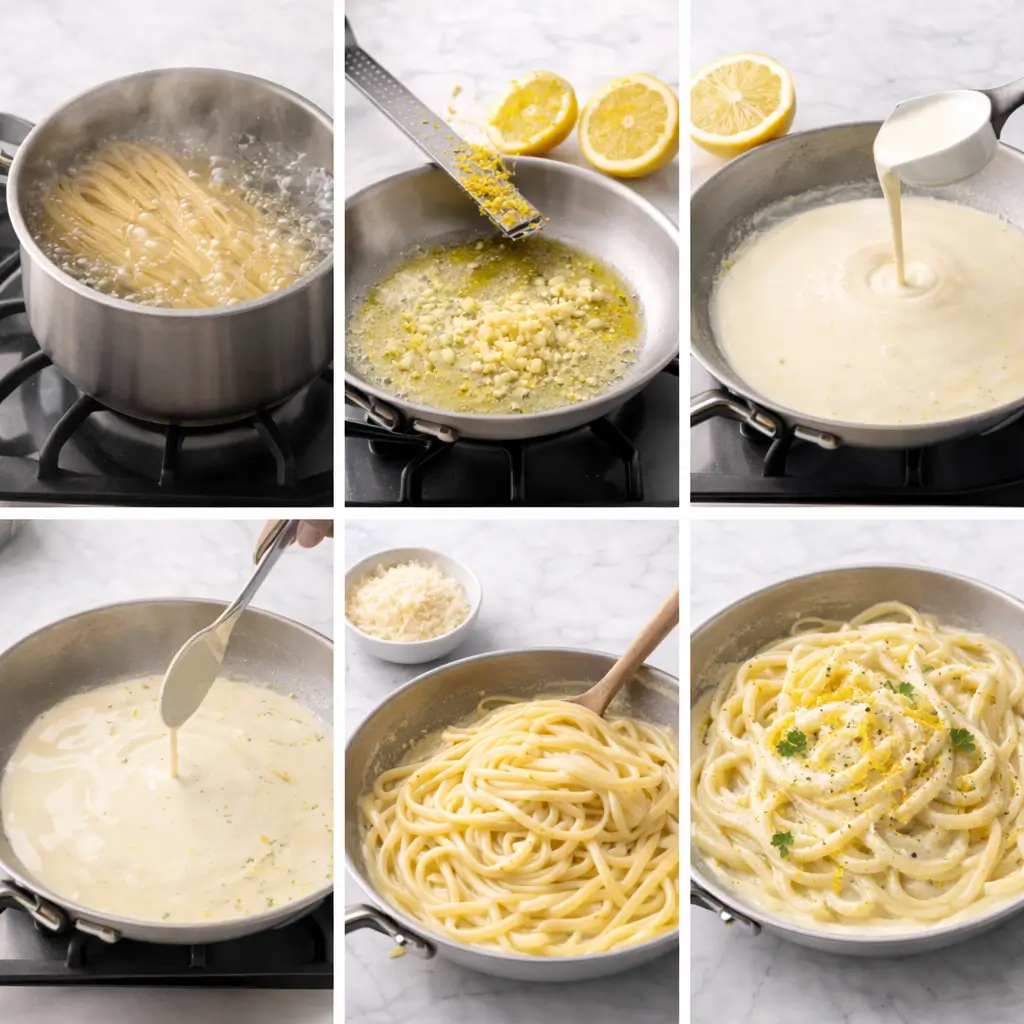
Bring a large pot of salted water to a boil. The water should taste like the sea. This ensures proper seasoning.
Cook the pasta until al dente. Reserve one cup of pasta water before draining.
Never rinse the pasta. The starch helps the sauce cling.
Step 2: Build the Flavor Base
Melt butter in a large skillet over medium-low heat.
Add minced garlic. Cook gently for about one minute. Do not brown it. Burned garlic ruins the sauce.
The goal is soft fragrance, not color.
Step 3: Create the Cream Foundation
Pour in the heavy cream. Stir slowly to combine with the butter.
Allow the cream to warm gently. Do not let it boil. High heat causes separation.
Simmer for 2–3 minutes until slightly thickened.
Step 4: Add Lemon Zest First
Stir in the lemon zest before adding juice.
Zest releases oils gradually into the cream. This creates a rounded citrus aroma.
Adding juice too early can cause curdling.
Step 5: Incorporate the Pasta
Add the drained pasta directly into the skillet.
Toss continuously using tongs. This step helps the sauce coat every strand.
If needed, add a splash of pasta water to loosen the mixture.
Step 6: Add Cheese for Emulsification
Lower the heat. Then add grated Parmesan slowly.
Stir constantly. The cheese melts into the cream and creates a silky emulsion.
Never dump cheese in all at once. Gradual addition prevents clumping.
Step 7: Finish with Lemon Juice
Now add fresh lemon juice.
Because the sauce is already stabilized, the acidity enhances flavor without splitting.
Taste and adjust seasoning.
Step 8: Achieve the Perfect Texture
If the sauce feels thick, add pasta water one tablespoon at a time.
The starch binds everything together. As a result, you achieve a glossy, restaurant-style finish.
The Science Behind the Creamy Texture
Creamy Lemon Pasta relies on emulsification.
An emulsion is a stable mixture of fat and water. In this recipe:
- Butter provides fat.
- Cream contains both fat and water.
- Pasta water adds starch.
- Cheese acts as a binder.
Together, they form a smooth sauce that does not separate.
Understanding this principle helps you control texture confidently.
Common Mistakes to Avoid
1. Using High Heat
High heat breaks dairy sauces. Always cook gently.
2. Adding Lemon Too Early
Acid added prematurely causes curdling.
3. Skipping Pasta Water
Without starch, the sauce becomes flat and heavy.
4. Using Pre-Grated Cheese
Pre-shredded cheese contains anti-caking agents. These prevent smooth melting.
Always grate cheese fresh.
How to Customize Creamy Lemon Pasta
This recipe serves as an excellent base. You can adapt it easily.
Add Protein
- Grilled chicken
- Seared shrimp
- Salmon flakes
- Crispy pancetta
Add Vegetables
- Spinach
- Asparagus
- Peas
- Zucchini ribbons
Add Herbs
- Basil
- Thyme
- Chives
- Dill
Each addition introduces a new personality while preserving the core flavor.
Making It Lighter
If you prefer a lighter version, you can adjust the dairy.
Use half-and-half instead of heavy cream. Add extra pasta water to maintain silkiness.
The result remains creamy but less rich.
Making It Extra Indulgent
For a luxurious variation:
- Add mascarpone cheese.
- Finish with a drizzle of olive oil.
- Include extra Parmesan.
This transforms the dish into a special-occasion pasta.
Perfect Pairings
Creamy Lemon Pasta pairs best with simple sides.
Salads
A crisp green salad balances richness.
Bread
Serve with warm crusty bread to absorb the sauce.
Wine
Choose bright white wines such as:
- Sauvignon Blanc
- Pinot Grigio
- Chardonnay (unoaked)
Their acidity complements the lemon beautifully.
Storage and Reheating Tips
Storing Leftovers
Place cooled pasta in an airtight container. Refrigerate for up to 3 days.
Reheating
Reheat gently in a skillet with a splash of milk or water.
Never microwave without adding moisture. Otherwise, the sauce separates.
Can You Freeze Creamy Lemon Pasta?
Freezing is not recommended.
Cream-based sauces lose their texture when thawed. Therefore, this dish is best enjoyed fresh.
Scaling the Recipe
This recipe scales easily. However, maintain the same ratios.
When doubling, cook pasta in batches if necessary. Overcrowding prevents proper coating.
Why This Recipe Works for Busy Schedules
Creamy Lemon Pasta takes about 25 minutes total.
Because the sauce cooks while pasta boils, the process overlaps efficiently.
Thus, it becomes an ideal meal for modern lifestyles.
Frequently Asked Questions
Is Creamy Lemon Pasta Too Rich?
No. The lemon balances the cream. The result feels fresh rather than heavy.
Can I Use Milk Instead of Cream?
Milk alone lacks fat. The sauce becomes thin. If substituting, add butter for stability.
What Is the Best Cheese?
Parmigiano-Reggiano is ideal. It melts smoothly and adds nutty depth.
Can I Make It Vegetarian?
Yes. The recipe is naturally vegetarian if using traditional Parmesan alternatives.
Tips for Restaurant-Quality Results
Use a wide skillet. Surface area helps sauce cling evenly.
Toss pasta continuously. Movement builds emulsification.
Serve immediately. Cream sauces lose texture if they sit too long.
A Dish Rooted in Simplicity
Italian cooking often relies on minimal ingredients treated with care.
Creamy Lemon Pasta follows this philosophy. Instead of complexity, it focuses on balance.
Every element has purpose. Nothing is decorative.
Final Thoughts
Creamy Lemon Pasta proves that comfort food can still feel elegant. It delivers richness without heaviness. It feels familiar yet refined.
Once you master the technique, you will return to this recipe often. It adapts to seasons, moods, and ingredients you already have.
Most importantly, it transforms a few simple components into something truly memorable.
