
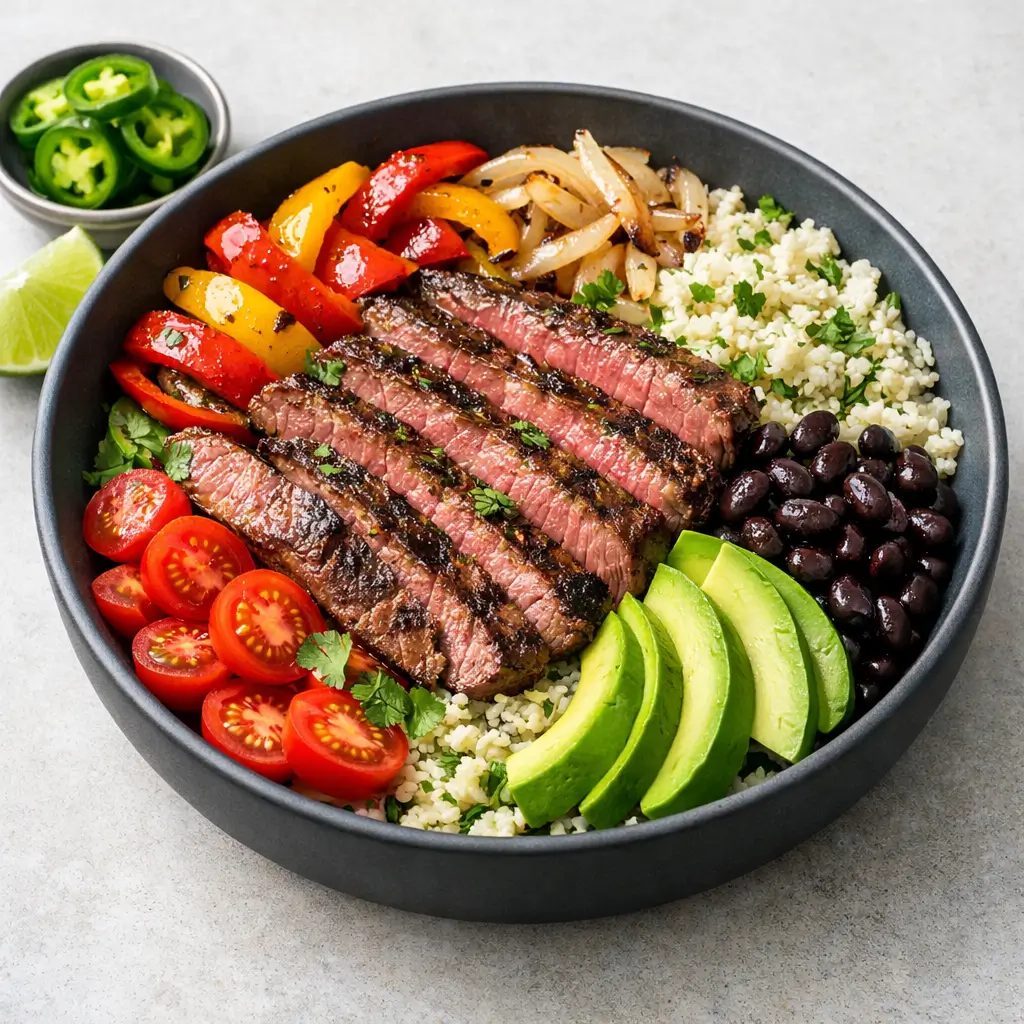
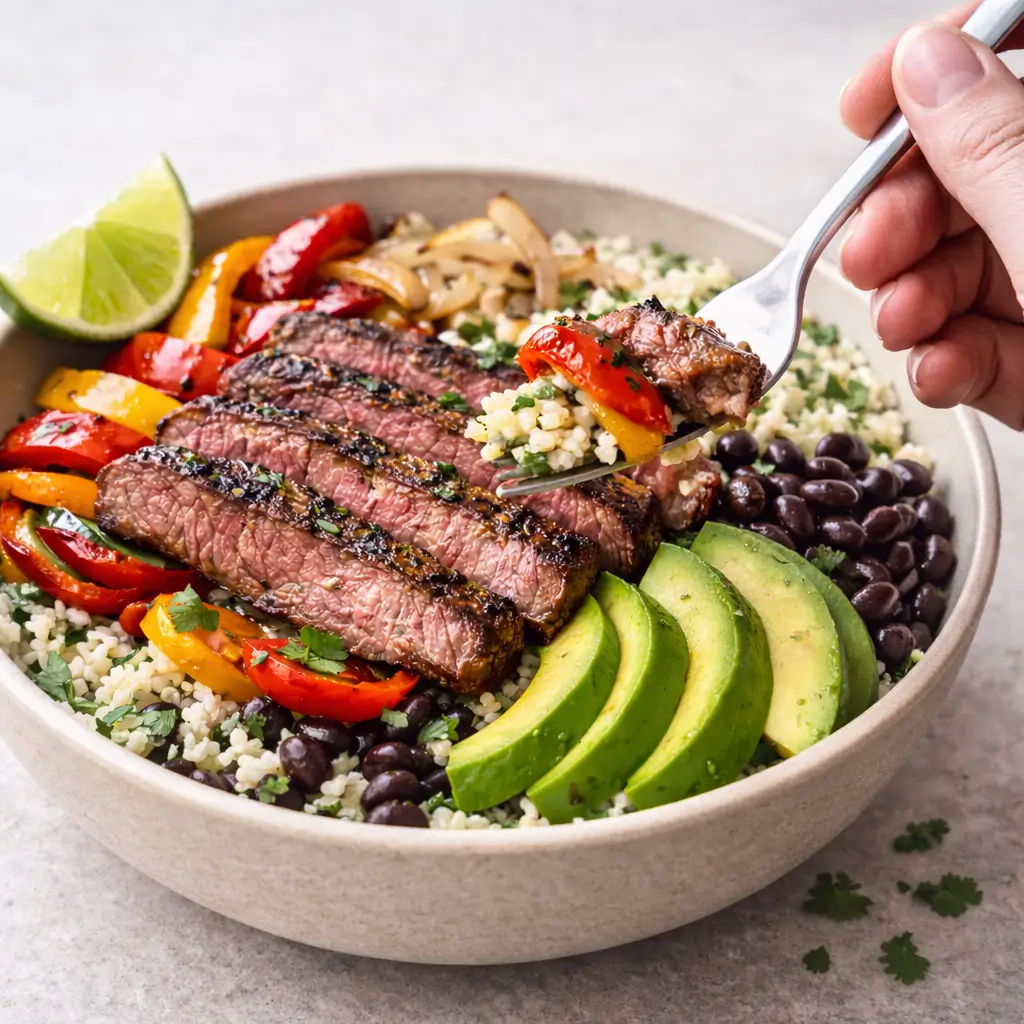
The High Protein Steak Fajita Bowl is a balanced, flavorful meal designed for strength, satiety, and clean nutrition. It combines lean grilled steak, sautéed vegetables, and a wholesome base to create a dish rich in protein, fiber, and essential micronutrients. This recipe delivers bold fajita flavors without unnecessary fats or heavy sauces. Therefore, it works perfectly for athletes, busy professionals, and anyone seeking a nourishing meal.
Unlike restaurant fajita bowls, this version focuses on nutrient density and ingredient control. As a result, you enjoy authentic taste while supporting muscle recovery, energy stability, and long-term health.
Why Choose a High Protein Steak Fajita Bowl?
Protein plays a central role in body repair and metabolic regulation. Moreover, balanced meals reduce cravings and stabilize blood sugar. This bowl provides:
- High-quality complete protein from steak
- Complex carbohydrates for sustained energy
- Fiber-rich vegetables for digestion
- Healthy fats for hormone balance
- Natural spices that enhance metabolism
Consequently, this dish supports both performance and everyday wellness.
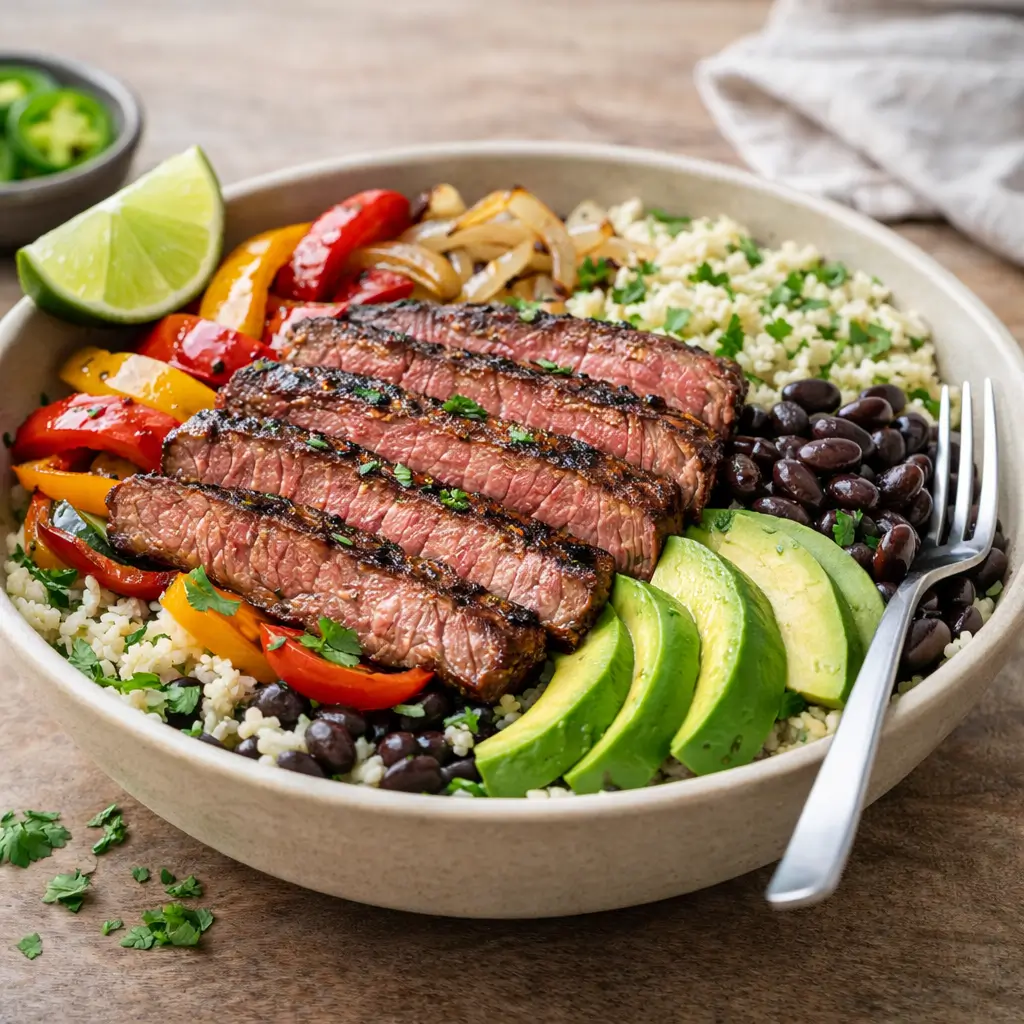
Nutritional Benefits at a Glance
| Component | Benefit | Why It Matters |
|---|---|---|
| Lean Steak | Muscle repair | Provides essential amino acids |
| Bell Peppers | Antioxidants | Reduce inflammation |
| Cauliflower Rice / Brown Rice | Energy | Supports sustained activity |
| Black Beans | Fiber + Protein | Improves satiety |
| Avocado | Healthy fats | Supports heart health |
| Lime & Cilantro | Micronutrients | Enhance absorption and freshness |
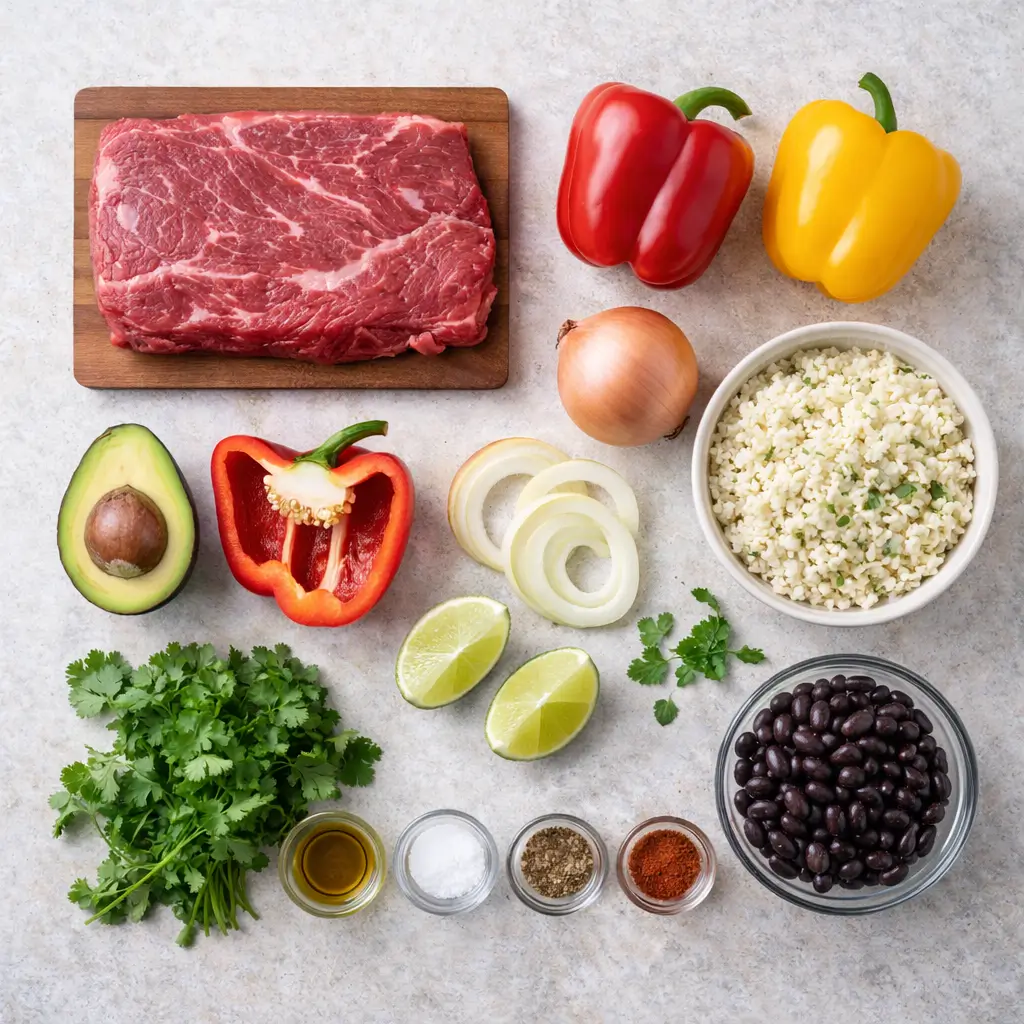
Ingredients (Serves 4)
Protein
- 600 g (1.3 lb) flank or skirt steak
- 1 tablespoon olive oil
Seasoning Blend
- 2 teaspoons chili powder
- 1 teaspoon smoked paprika
- 1 teaspoon cumin
- 1 teaspoon garlic powder
- ½ teaspoon onion powder
- ½ teaspoon salt
- ½ teaspoon black pepper
Vegetables
- 2 bell peppers (red and yellow), sliced
- 1 large onion, sliced
- 1 tablespoon olive oil
Base Options
Choose one:
- 4 cups cauliflower rice (low-carb option)
- 3 cups cooked brown rice (higher-energy option)
Additional Components
- 1 cup black beans, rinsed
- 1 large avocado, sliced
- Fresh cilantro
- 1 lime, cut into wedges
Step-by-Step Preparation
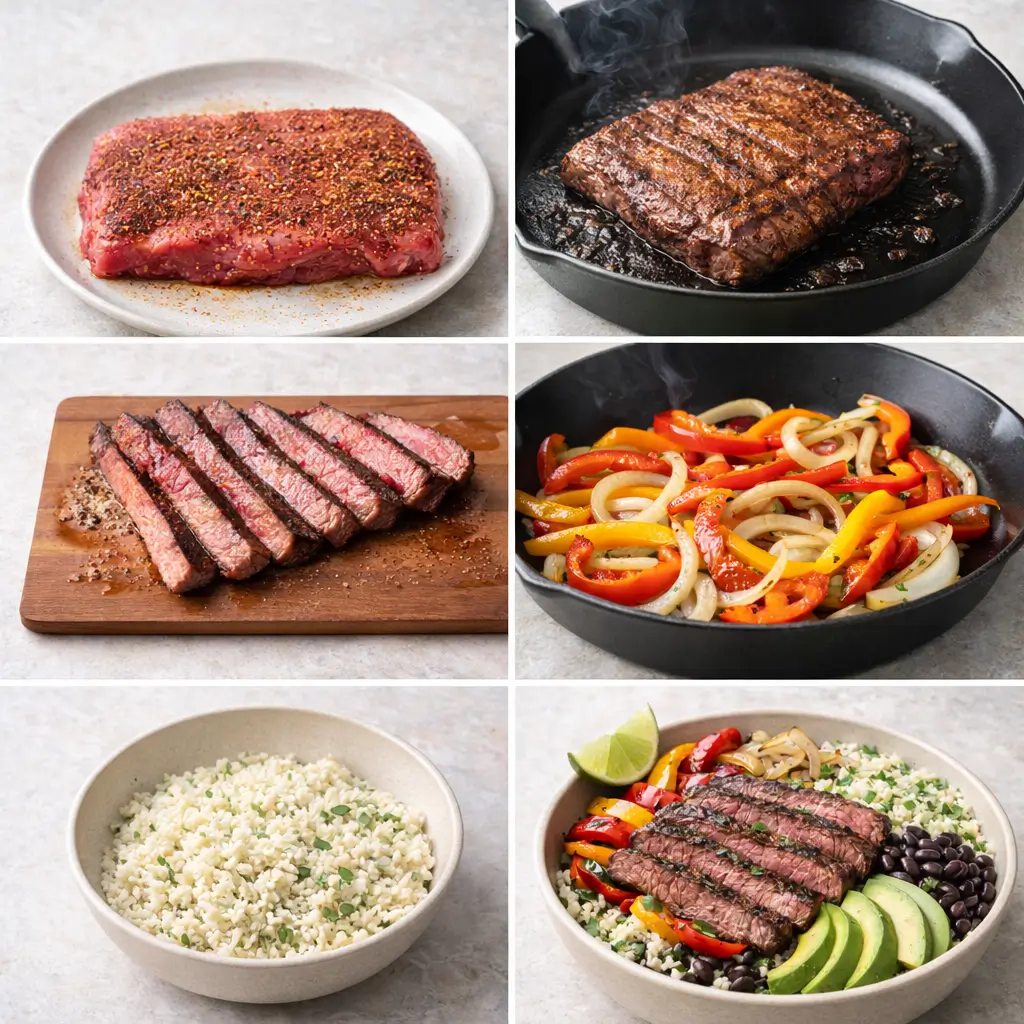
1. Prepare the Steak
First, pat the steak dry using paper towels. This step ensures proper searing. Then rub olive oil evenly across the surface.
Next, combine all seasoning ingredients in a small bowl. Sprinkle generously over both sides of the steak. Allow the meat to rest for 10–15 minutes. During this time, flavors penetrate and the meat cooks more evenly.
2. Sear the Steak
Heat a cast-iron skillet over medium-high heat until very hot. Place the steak into the pan without moving it.
Cook for:
- 4–5 minutes per side for medium
- Adjust based on thickness
A deep brown crust should form. That crust creates the signature fajita flavor.
Remove from heat and let the steak rest for 5–10 minutes. Resting preserves juices and tenderness.
3. Slice the Steak Correctly
Always slice against the grain. This shortens muscle fibers and improves texture.
Cut into thin strips to mimic classic fajita style.
4. Sauté the Vegetables
In the same skillet, add olive oil. Then add sliced onions and peppers.
Cook over medium heat for 5–7 minutes. Stir occasionally until vegetables soften and develop light char.
Do not overcook. Slight crispness keeps nutrients intact.
5. Prepare the Bowl Base
If using cauliflower rice:
- Sauté lightly for 3–4 minutes
- Avoid excess moisture
If using brown rice:
- Ensure it is warm and fluffy
- Do not compress it into the bowl
The base should remain airy to absorb flavors.
6. Assemble the Bowl
Divide the base among four bowls. Then layer:
- Steak slices
- Sautéed vegetables
- Black beans
- Avocado slices
Finish with cilantro and a squeeze of fresh lime.
Macronutrient Profile (Approximate Per Serving)
| Nutrient | Amount |
|---|---|
| Protein | 38–45 g |
| Carbohydrates | 25–40 g |
| Healthy Fats | 14 g |
| Fiber | 9 g |
| Calories | 420–520 |
Values vary depending on rice choice.
Why This Bowl Supports Fitness Goals
Muscle Development
Steak provides complete amino acids, especially leucine. This amino acid directly stimulates muscle protein synthesis.
Fat Loss Support
High protein increases satiety hormones. Therefore, you naturally reduce overeating.
Stable Energy
Complex carbohydrates prevent energy crashes. Additionally, fiber slows digestion for sustained fuel.
Recovery Optimization
Iron, zinc, and B vitamins from beef accelerate recovery and oxygen transport.
Choosing the Right Cut of Steak
Not all cuts behave equally. Select lean yet flavorful options.
| Cut | Protein Density | Best Use |
|---|---|---|
| Flank | Excellent | Classic fajita texture |
| Skirt | Very flavorful | Fast cooking |
| Sirloin | Lean | Meal prep friendly |
| Flat Iron | Tender | Balanced choice |
Avoid heavily marbled cuts if targeting lean nutrition.
Customization Options
Low-Carb Version
Replace grains entirely with cauliflower rice or shredded lettuce.
High-Calorie Performance Version
Add:
- Extra rice
- Roasted sweet potatoes
- Greek yogurt drizzle
Vegetarian Alternative
Substitute steak with:
- Grilled tofu
- Tempeh strips
- Portobello mushrooms
Season exactly the same way.
Meal Prep Strategy
This bowl stores extremely well. Therefore, it is ideal for weekly planning.
Storage Guidelines
- Refrigerate components separately
- Consume within 4 days
- Reheat steak gently to avoid toughness
Reheating Tip
Use a skillet instead of a microwave to maintain texture.
Common Mistakes to Avoid
Overcooking the Steak
Lean steak becomes tough quickly. Use high heat and short cooking time.
Skipping the Resting Step
Juices redistribute only during resting. Cutting early dries the meat.
Crowding the Pan
Vegetables must sauté, not steam. Use adequate space.
Overseasoning After Cooking
Flavor should be layered before cooking, not added afterward.
Flavor Variations to Try
Chipotle Lime Version
Add chipotle powder and extra lime zest.
Garlic Herb Version
Introduce oregano and fresh parsley.
Southwest Style
Add corn and smoked chili flakes.
Mediterranean Fusion
Use olive oil, lemon, and roasted tomatoes.
Each variation keeps the same nutritional structure.
Pairing Suggestions
To complete the meal, consider:
- Sparkling lime water
- Fresh tomato salsa
- Light cucumber salad
- Roasted zucchini
Avoid heavy sauces. They overshadow the clean fajita profile.
Scientific Perspective on High-Protein Meals
Research consistently demonstrates that protein-rich meals:
- Increase thermogenesis
- Preserve lean mass during caloric restriction
- Reduce hunger hormones such as ghrelin
- Improve glycemic control
Thus, meals like this bowl are metabolically efficient choices.
Time Breakdown
| Task | Time |
|---|---|
| Prep | 15 minutes |
| Cooking | 15 minutes |
| Assembly | 5 minutes |
| Total | ~35 minutes |
Fast enough for weeknights, yet sophisticated enough for entertaining.
Scaling the Recipe
For larger batches:
- Double seasoning proportionally
- Cook steak in batches to maintain sear
- Keep vegetables slightly undercooked if reheating later
Sustainability Considerations
Using whole ingredients reduces reliance on processed foods. Additionally, preparing meals at home minimizes packaging waste and improves dietary transparency.
Choose locally sourced vegetables when possible for maximum freshness and environmental benefit.
Frequently Asked Questions
Can I grill the steak instead of pan-searing?
Yes. Grilling enhances smokiness and works perfectly.
Is this recipe suitable for weight loss?
Yes. High protein improves satiety while maintaining muscle mass.
Can I freeze it?
Freeze only the cooked steak. Vegetables and avocado should remain fresh.
How do I make it spicier?
Add jalapeños or crushed red pepper during vegetable sautéing.
Final Thoughts
The High Protein Steak Fajita Bowl is more than a flavorful meal. It represents a practical model of balanced nutrition. Every ingredient serves a functional purpose, from muscle recovery to digestive support.
Because it is adaptable, efficient, and deeply satisfying, this bowl fits seamlessly into modern lifestyles. Whether prepared for training fuel, family dinners, or structured meal prep, it delivers consistency without sacrificing enjoyment.
Once mastered, it becomes a reliable cornerstone recipe—one that proves healthy eating can remain bold, vibrant, and deeply rewarding.
