
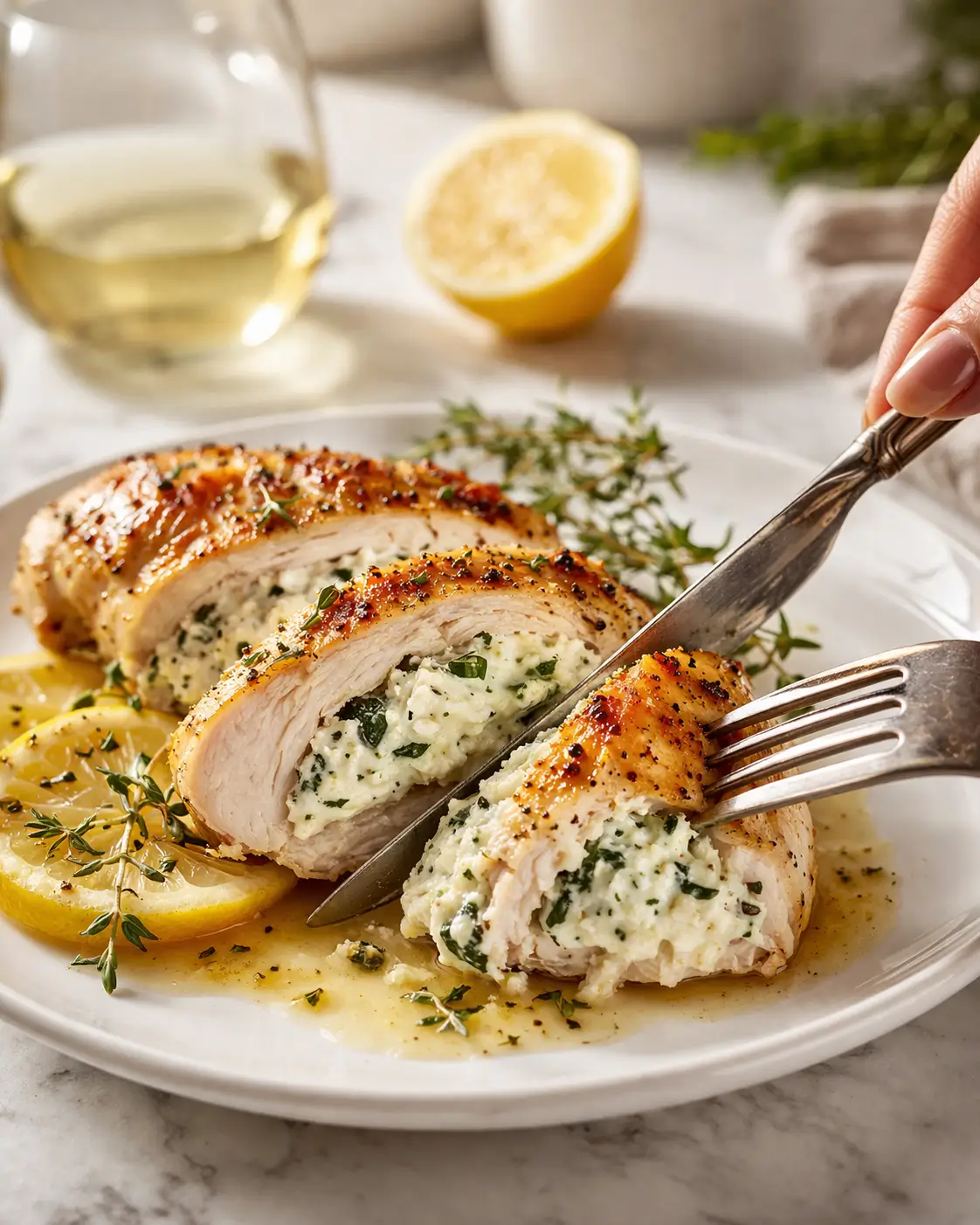
If you’ve ever wanted a dinner that looks like it came from a restaurant but comes together in your kitchen in under 40 minutes, this is the recipe. Lemon Ricotta Stuffed Chicken Breast is one of those dishes that genuinely impresses every single time.
Each chicken breast is butterflied open, filled with a creamy mixture of ricotta, parmesan, fresh herbs, and bright lemon zest, then seared until deeply golden and finished in the oven. The result is a juicy, flavor-packed chicken breast with a luscious filling that practically melts into the meat.
It looks fancy. It tastes incredible. And the technique is far simpler than you might think. Whether you’re cooking for a Tuesday night dinner or hosting guests for a special occasion, this recipe delivers every time.
Why You’ll Love This Recipe
Ingredients You’ll Need
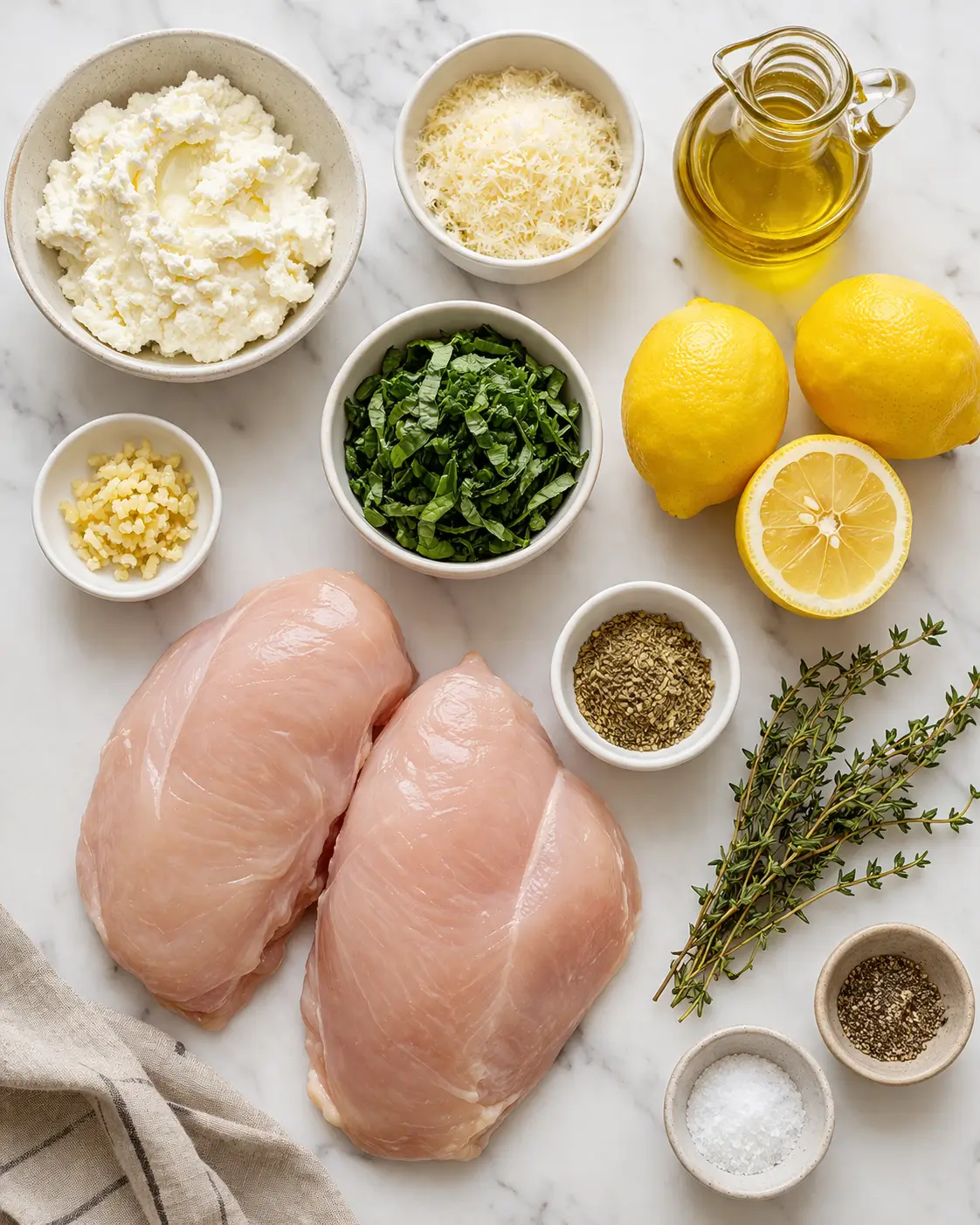
Every ingredient in this recipe plays a role. Here’s the full list with notes on what to look for and how to substitute if needed:
For the Chicken
- 2 large boneless skinless chicken breasts — look for thick, even breasts around 8–10 oz each. Thinner breasts are harder to butterfly and won’t hold as much filling.
- 2 tablespoons olive oil — for searing. Use a good quality extra virgin olive oil for the best flavor.
- ½ teaspoon garlic powder — for the exterior seasoning.
- ½ teaspoon smoked paprika — adds a subtle depth of color and warmth to the seared crust.
- Salt and black pepper to taste — season generously both inside and outside the chicken.
For the Ricotta Filling
- ¾ cup whole milk ricotta cheese — whole milk is essential for a creamy, rich filling. Part-skim ricotta is too watery and will make the filling runny.
- ¼ cup freshly grated parmesan cheese — adds saltiness and a savory depth that plain ricotta lacks. Pre-grated parmesan in a canister won’t melt as smoothly — use fresh.
- 2 tablespoons fresh basil, finely chopped — or substitute fresh spinach, finely chopped.
- 1 tablespoon fresh thyme leaves — adds a subtle earthiness that pairs beautifully with lemon.
- Zest of 1 large lemon — the single most important flavor in this recipe. Use a microplane for the finest zest and maximum oil release.
- 1 tablespoon fresh lemon juice — brightens the filling and balances the richness of the cheese.
- 2 cloves garlic, minced — stir directly into the filling raw; it mellows beautifully during cooking.
- Pinch of red pepper flakes — optional but highly recommended for a very gentle warmth.
For the Pan Sauce
- 2 tablespoons unsalted butter — forms the base of the quick pan sauce.
- Juice of 1 lemon — deglazes the pan and picks up all the golden fond from searing.
- 2 tablespoons chicken broth — loosens the sauce to a perfect drizzling consistency.
- Fresh thyme sprig for garnish
Notes & Substitutions
- No ricotta? Goat cheese or cream cheese both work well — goat cheese gives a tangier filling, cream cheese a richer one.
- No fresh herbs? Use 1 teaspoon dried basil and ½ teaspoon dried thyme. The flavor is less vibrant but still delicious.
- Add spinach: Stir ¼ cup finely chopped fresh spinach into the filling for extra nutrition and color.
- Sun-dried tomatoes: Add 2 tablespoons of finely chopped sun-dried tomatoes to the filling for a Mediterranean variation.
- Toothpick vs. twine: Either works to seal the chicken. Toothpicks are faster and easier to remove — just remember how many you put in and count them out before serving.
How to Choose the Best Chicken Breast
For stuffed chicken breast recipes, the quality and size of your chicken matters more than usual. Here’s what to look for.
Size is everything. You need thick, substantial chicken breasts — ideally 8 to 10 ounces each. Thin breasts simply don’t have enough meat to butterfly properly and won’t hold a generous filling without tearing. If your store only carries smaller breasts, buy them but be prepared to use a smaller amount of filling per piece.
Air-chilled beats water-chilled. Air-chilled chicken has less moisture content, which means it sears better and develops a more golden, caramelized crust. Look for “air-chilled” on the label — it’s worth the small price difference for a recipe where the seared exterior matters visually.
Organic or free-range if possible. The flavor difference in chicken is subtle but real. Chickens that have had more room to move and a natural diet tend to have firmer, more flavorful meat that holds up beautifully to butterflying and stuffing.
Even thickness matters. Look for breasts that are as uniform in thickness as possible. If one end is significantly thicker than the other, it will cook unevenly — the thin end will dry out before the thick end is done. A meat mallet can help even things out after butterflying if needed.
Fresh over frozen. Frozen chicken releases more moisture during cooking, which can make it harder to achieve a good sear and can cause the filling to become watery. If frozen is your only option, thaw completely in the refrigerator and pat thoroughly dry before using.
How to Make Lemon Ricotta Stuffed Chicken Breast
- Preheat your oven and prepare your pan. Heat the oven to 375°F (190°C). Place an oven-safe skillet — ideally cast iron — on the stovetop over medium-high heat. You’ll sear the chicken first, then transfer the entire pan to the oven to finish cooking.
- Make the ricotta filling. In a medium bowl, combine the ricotta, grated parmesan, chopped basil, thyme leaves, lemon zest, lemon juice, minced garlic, red pepper flakes, and a generous pinch of salt and pepper. Stir until fully combined and smooth. Taste and adjust seasoning — it should taste bright, herby, and slightly salty. Set aside.
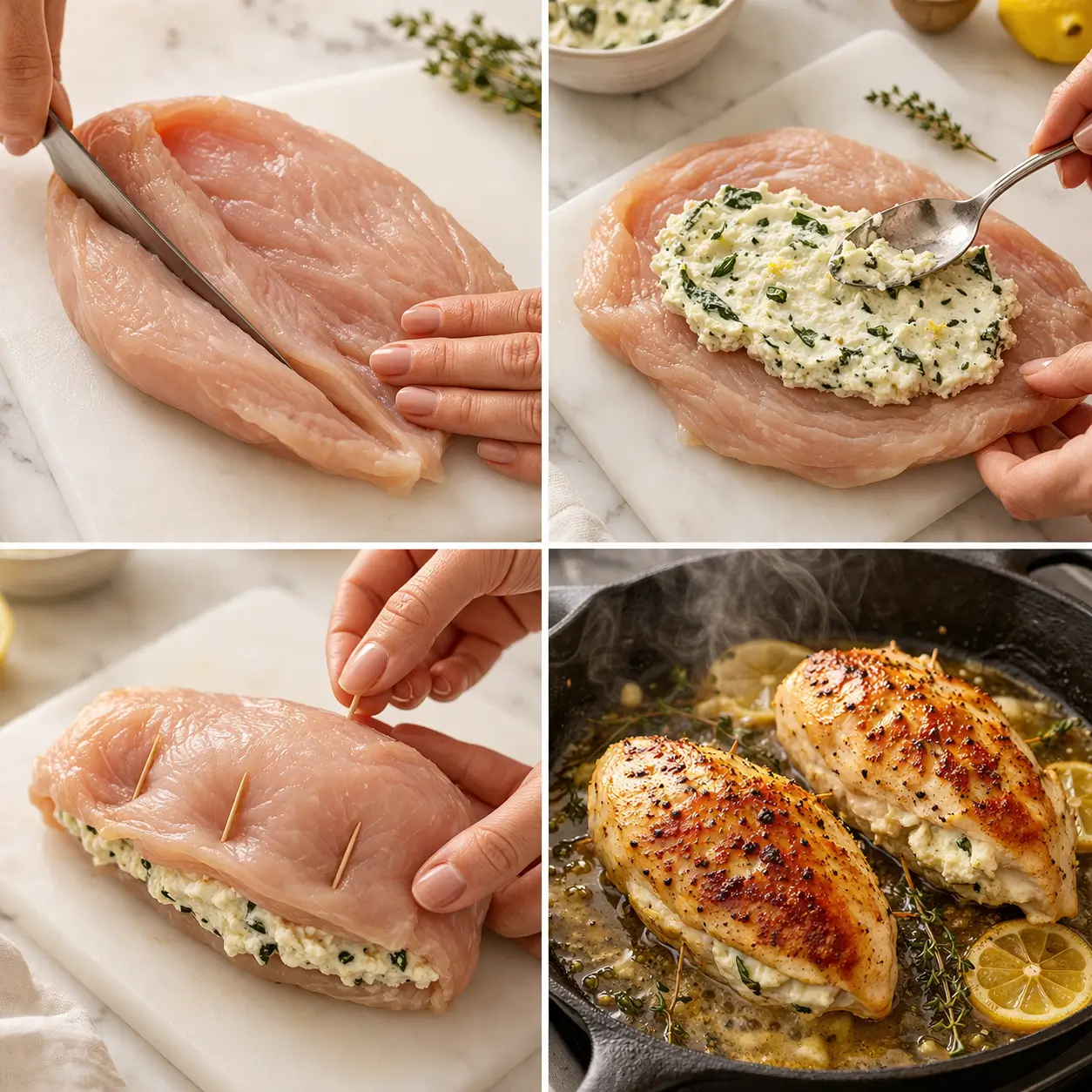
- Butterfly the chicken breasts. Place one chicken breast on a clean cutting board. Hold your hand flat on top of the breast to keep it stable. Using a sharp knife, cut horizontally into the thickest side of the breast, slicing almost all the way through but stopping about ½ inch from the opposite edge. Open it like a book. Repeat with the second breast. Season the inside and outside of both breasts generously with salt, pepper, garlic powder, and smoked paprika.
- Fill and seal the chicken. Spoon half the ricotta filling onto one side of each butterflied breast, spreading it evenly but leaving a ½-inch border around the edges. Fold the top half of each breast back over the filling to close. Secure the edges with 2–3 toothpicks or tie with kitchen twine to prevent the filling from escaping during cooking.
- Sear until deeply golden. Add olive oil to the hot skillet. Once shimmering, carefully place the stuffed chicken breasts in the pan. Sear undisturbed for 3–4 minutes per side until a deep golden-brown crust forms. Do not move the chicken while it’s searing — let the crust develop fully before flipping.
- Finish in the oven. Transfer the skillet directly to the preheated oven. Roast for 18–22 minutes, or until an instant-read thermometer inserted into the thickest part of the chicken (avoiding the filling) reads 165°F (74°C). The exact time will vary depending on the thickness of your breasts.
- Make the pan sauce and rest. Remove the skillet from the oven and transfer the chicken to a plate. Return the skillet to medium heat. Add butter and let it melt, then add lemon juice and chicken broth. Stir, scraping up any golden bits from the bottom of the pan. Simmer for 1–2 minutes until slightly thickened. Remove toothpicks from the chicken, let it rest for 5 minutes, then slice and serve with the pan sauce drizzled over the top.
Why This Recipe Works
A few key techniques make this stuffed chicken consistently juicy and flavorful rather than dry and bland.
The sear-then-roast method. Starting on the stovetop creates a golden, caramelized crust that locks in moisture and adds incredible flavor. Finishing in the oven allows the inside to cook through gently and evenly without burning the exterior. This two-step method is how restaurant chefs cook chicken breasts — and it works every time.
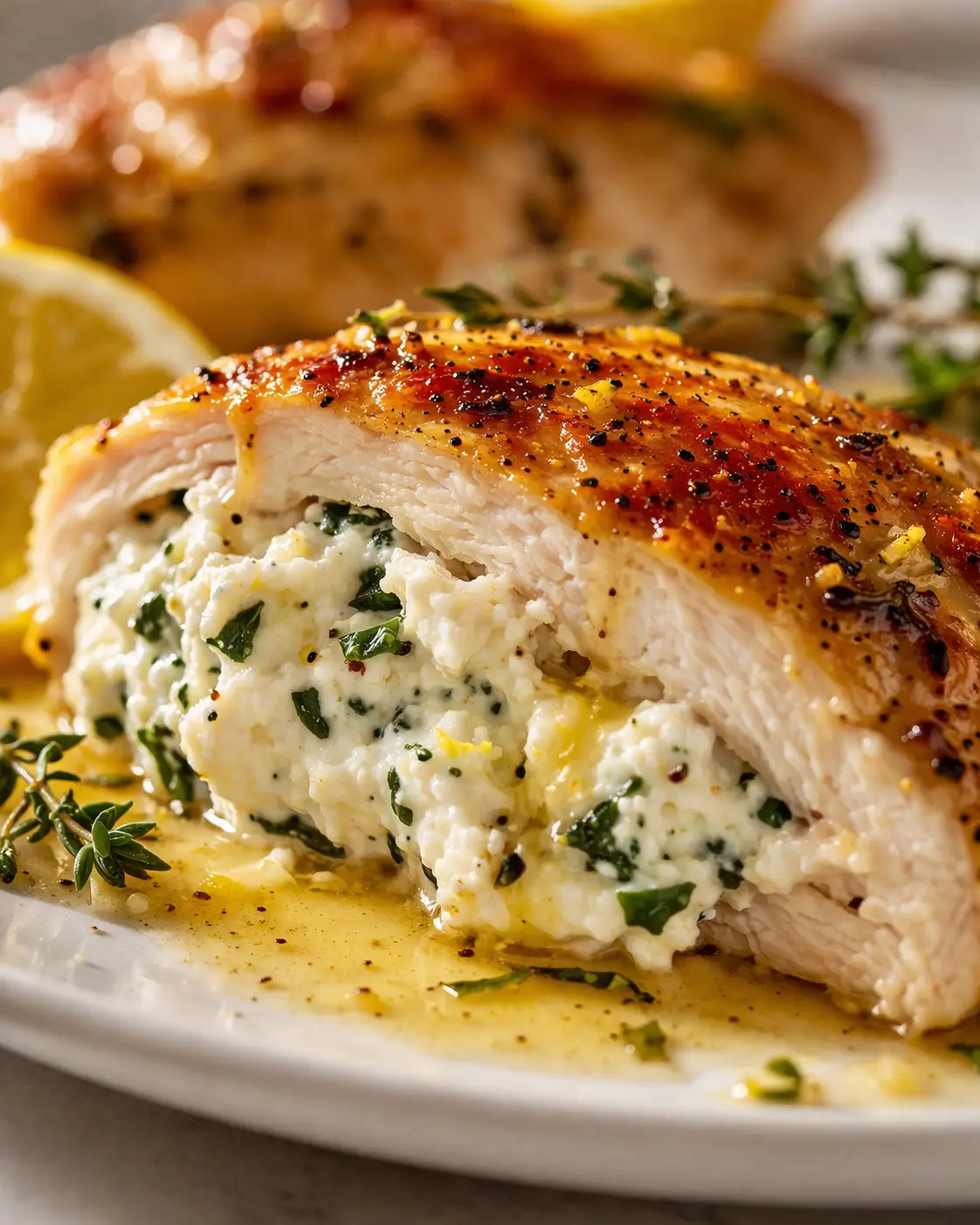
Whole milk ricotta holds its texture. Unlike cream cheese, ricotta stays light and slightly grainy when cooked — it doesn’t melt into a liquid puddle. This means the filling stays visible and creamy when you slice the chicken open, giving you that beautiful cross-section rather than a hollow pocket.
Lemon zest, not just juice. The zest carries far more lemon flavor than the juice alone. The essential oils in the zest are fat-soluble, meaning they bind beautifully to the ricotta and parmesan and distribute flavor evenly through every bite of the filling.
Resting before cutting. Five minutes of resting after cooking allows the juices to redistribute through the meat. Cut too early and those juices run straight onto your cutting board, leaving you with dry chicken. Patience here pays off significantly.
The pan sauce uses the fond. All those golden caramelized bits stuck to the bottom of the pan after searing are pure flavor. Deglazing with lemon juice and chicken broth dissolves them into the sauce, creating a deeply savory drizzle that ties the whole dish together.
What to Serve with Lemon Ricotta Stuffed Chicken Breast
This chicken pairs beautifully with sides that complement its light, Mediterranean flavor profile without overwhelming it.
Variations to Try
- Spinach & Ricotta: Add ½ cup of finely chopped fresh spinach (squeezed completely dry) to the filling for a classic Italian combination that adds color and nutrition.
- Sun-Dried Tomato & Basil: Stir 3 tablespoons of finely chopped oil-packed sun-dried tomatoes into the filling with extra basil for a more intense Mediterranean flavor profile.
- Prosciutto Wrapped: After filling and sealing, wrap each chicken breast in 2–3 thin slices of prosciutto before searing. The prosciutto crisps up beautifully and adds a salty, savory crust.
- Goat Cheese & Herb: Replace the ricotta with soft goat cheese for a tangier, creamier filling. Reduce the lemon slightly as goat cheese already has natural acidity.
- Dairy-Free Version: Use a good quality dairy-free ricotta (Kite Hill almond milk ricotta works very well) and omit the parmesan or replace with 2 tablespoons of nutritional yeast for a savory depth.
- Gluten-Free: This recipe is naturally gluten-free as written — no changes needed. Just ensure your chicken broth is certified GF if using store-bought.
Storage, Meal Prep & Reheating
Storing
Store leftover cooked chicken in an airtight container in the refrigerator for up to 3 days. Keep any remaining pan sauce in a separate small container. The chicken slices well cold and can be eaten as-is or reheated.
Freezing
You can freeze the assembled but uncooked stuffed chicken breasts for the best results. Wrap each one tightly in plastic wrap and then in foil, then freeze for up to 2 months. Thaw overnight in the refrigerator before cooking as directed. Cooked stuffed chicken can also be frozen but the ricotta filling texture changes slightly upon thawing.
Make Ahead
The ricotta filling can be made up to 2 days ahead and stored in an airtight container in the fridge. The chicken can be butterflied, filled, and sealed up to 24 hours ahead — cover tightly with plastic wrap and refrigerate. Pull from the fridge 15 minutes before cooking to take the chill off for more even cooking.
Reheating
For the best texture, reheat leftover chicken in a 325°F oven for 12–15 minutes, covered loosely with foil to retain moisture. Add a splash of chicken broth to the pan to keep it from drying out. Avoid the microwave if possible — it tends to toughen the chicken and make the filling grainy.
Common Mistakes to Avoid
- Cutting all the way through when butterflying. If you cut through the entire breast instead of stopping ½ inch from the edge, the chicken falls into two pieces and won’t hold the filling. Use a sharp knife and go slowly.
- Overfilling the chicken. More filling sounds better but too much causes the breast to burst open during cooking and the filling spills into the pan. Stick to the recommended amount — about 3–4 tablespoons per breast.
- Skipping the sear. Going straight to the oven without searing first results in pale, flavorless chicken skin. The sear is what gives you that golden restaurant-quality crust — don’t skip it.
- Moving the chicken while searing. If you try to flip the chicken before the crust has formed, it will stick and tear. Let it release naturally — when it’s ready to flip, it will come away cleanly from the pan.
- Not resting the chicken before cutting. Slicing immediately causes all the juices to run out. A 5-minute rest makes a dramatic difference in how juicy the final result is.
- Forgetting to remove the toothpicks. Always count how many you put in and make sure to remove them all before serving. This is especially important if children are eating.
Nutritional Information
Per serving (1 stuffed chicken breast with pan sauce, based on 2 servings):
Serving & Presentation Tips
This dish is naturally beautiful — a few simple touches take it from weeknight dinner to dinner party showstopper.
Always slice before serving. The magic of stuffed chicken is the cross-section. Cut each breast on a slight diagonal — about 3 slices per breast — so the creamy filling is fully visible on every piece. Fan the slices slightly on the plate for a restaurant-style presentation.
Drizzle, don’t pour. The lemon butter pan sauce is a finishing element, not a gravy. Use a spoon to drizzle it artfully over the sliced chicken rather than pooling it underneath. This keeps the golden seared crust visible and the plating clean.
Add a fresh herb garnish. A single sprig of fresh thyme or a few whole basil leaves placed next to the chicken on the plate adds color and signals the flavors inside. It takes five seconds and makes a big difference.
Serve on warmed plates. Run your serving plates under hot water for 30 seconds and dry them quickly before plating. Warm plates keep the chicken hotter for longer and make the presentation feel polished.
A lemon wheel on the side. A thin lemon wheel or half-lemon placed at the edge of the plate is both decorative and functional — guests can squeeze a little extra fresh juice over their chicken if they like.
Frequently Asked Questions
Can I make lemon ricotta stuffed chicken breast ahead of time?
Yes. You can butterfly, fill, and seal the chicken up to 24 hours before cooking. Cover tightly with plastic wrap and refrigerate. The filling can also be made 2 days ahead and stored separately. When ready to cook, let the assembled chicken sit at room temperature for 15 minutes before searing for more even cooking.
How do I keep the filling from falling out during cooking?
Two things help here. First, don’t overfill — 3 to 4 tablespoons per breast is the right amount. Second, secure the opening firmly with 2–3 toothpicks or kitchen twine before searing. The sear itself also helps seal the edges as the exterior cooks. A slightly less full chicken that stays intact is far better than a generously filled one that falls apart in the pan.
What if I don’t have an oven-safe skillet?
Sear the chicken in any skillet on the stovetop, then carefully transfer the seared breasts to a lightly greased baking dish and finish in the oven. You won’t be able to make the pan sauce in the same vessel, but you can deglaze the original skillet on the stovetop with the butter, lemon juice, and broth after transferring the chicken.
Can I grill lemon ricotta stuffed chicken breast instead of pan-searing?
Yes, with a few adjustments. Use kitchen twine rather than toothpicks for a more secure seal on the grill. Grill over medium heat (not high) with the lid closed for about 8–10 minutes per side, or until the internal temperature reaches 165°F. The filling may bubble slightly — this is normal. Skip the pan sauce and serve with a simple drizzle of olive oil and fresh lemon juice instead.
My ricotta filling seems watery. What went wrong?
This almost always comes from using part-skim or low-fat ricotta instead of whole milk ricotta. Part-skim ricotta has a higher water content that releases during cooking. Always use whole milk ricotta for stuffed chicken. If your whole milk ricotta still seems very wet straight from the container, drain it in a fine mesh strainer lined with cheesecloth for 30 minutes before using.
How do I know when the chicken is cooked through?
The only reliable method is a meat thermometer. Insert it into the thickest part of the chicken meat, avoiding the filling pocket, and look for 165°F (74°C). The cooking time in the recipe is a guide, but actual time will vary based on the thickness of your specific chicken breasts. Always trust the thermometer over the timer.
Can I use chicken thighs instead of chicken breasts?
Boneless skinless chicken thighs work well as an alternative — they’re more forgiving and stay juicier during cooking. The butterflying technique is the same, though thighs are thinner and less uniform in shape. You may need to use a toothpick on each side rather than just along one edge. Reduce the oven time slightly as thighs cook faster than thick breasts.
More Chicken Recipes You’ll Love
Final Thoughts
This Lemon Ricotta Stuffed Chicken Breast is proof that elegant and easy are not mutually exclusive. With a handful of simple ingredients and one skillet, you get a dinner that looks and tastes like genuine effort went into it — even when it comes together in under 40 minutes.
The bright lemon zest, creamy ricotta filling, and deeply golden seared crust hit every note — fresh, rich, savory, and satisfying all at once. It works equally well for a quiet Tuesday dinner or a table full of impressed guests.
Try it once and it’ll become one of your most-reached-for recipes. I’d love to hear how it turns out for you — leave a comment below and let me know which variation you tried!
— Charlotte
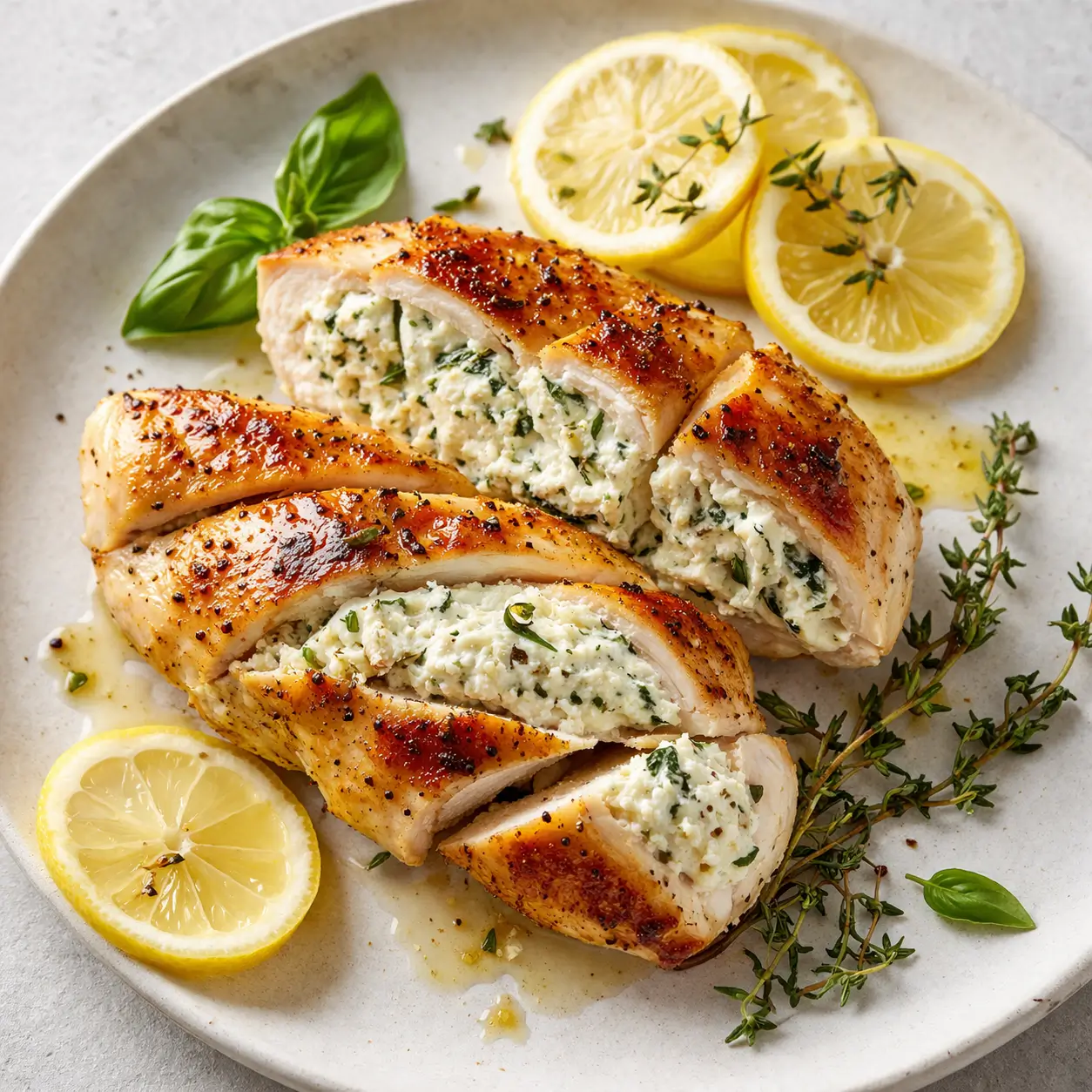
Lemon Ricotta Stuffed Chicken Breast
Juicy golden-seared chicken breasts filled with a creamy lemon ricotta and herb filling, finished in the oven and served with a bright lemon butter pan sauce. Restaurant quality in 35 minutes.
Ingredients
For the Chicken
- 2 large boneless skinless chicken breasts (8–10 oz each)
- 2 tablespoons olive oil
- ½ teaspoon garlic powder
- ½ teaspoon smoked paprika
- Salt and black pepper to taste
For the Ricotta Filling
- ¾ cup whole milk ricotta cheese
- ¼ cup freshly grated parmesan cheese
- 2 tablespoons fresh basil, finely chopped
- 1 tablespoon fresh thyme leaves
- Zest of 1 large lemon
- 1 tablespoon fresh lemon juice
- 2 cloves garlic, minced
- Pinch of red pepper flakes (optional)
For the Pan Sauce
- 2 tablespoons unsalted butter
- Juice of 1 lemon
- 2 tablespoons chicken broth
- Fresh thyme sprig for garnish
Instructions
- 1 Preheat oven to 375°F (190°C). Heat an oven-safe skillet over medium-high heat on the stovetop.
- 2 Mix ricotta, parmesan, basil, thyme, lemon zest, lemon juice, minced garlic, red pepper flakes, salt and pepper in a bowl until smooth. Set aside.
- 3 Butterfly each chicken breast by slicing horizontally almost all the way through. Open like a book. Season inside and outside with salt, pepper, garlic powder, and smoked paprika.
- 4 Spoon filling onto one side of each breast, leaving a ½-inch border. Fold closed and secure with 2–3 toothpicks or kitchen twine.
- 5 Add olive oil to the hot skillet. Sear chicken undisturbed for 3–4 minutes per side until deeply golden brown.
- 6 Transfer skillet to preheated oven. Roast 18–22 minutes until internal temperature reaches 165°F (74°C).
- 7 Remove chicken to a plate. Return skillet to medium heat, add butter, lemon juice and broth. Scrape up fond and simmer 1–2 minutes. Remove toothpicks, rest chicken 5 minutes, slice and drizzle with pan sauce.
- Always use whole milk ricotta — part-skim is too watery for stuffed chicken.
- Do not overfill: 3–4 tablespoons of filling per breast maximum.
- Use a meat thermometer — 165°F is the only reliable doneness test.
- Rest 5 minutes before slicing for the juiciest result.
- Store leftovers in the fridge for up to 3 days. Reheat covered in a 325°F oven.
