
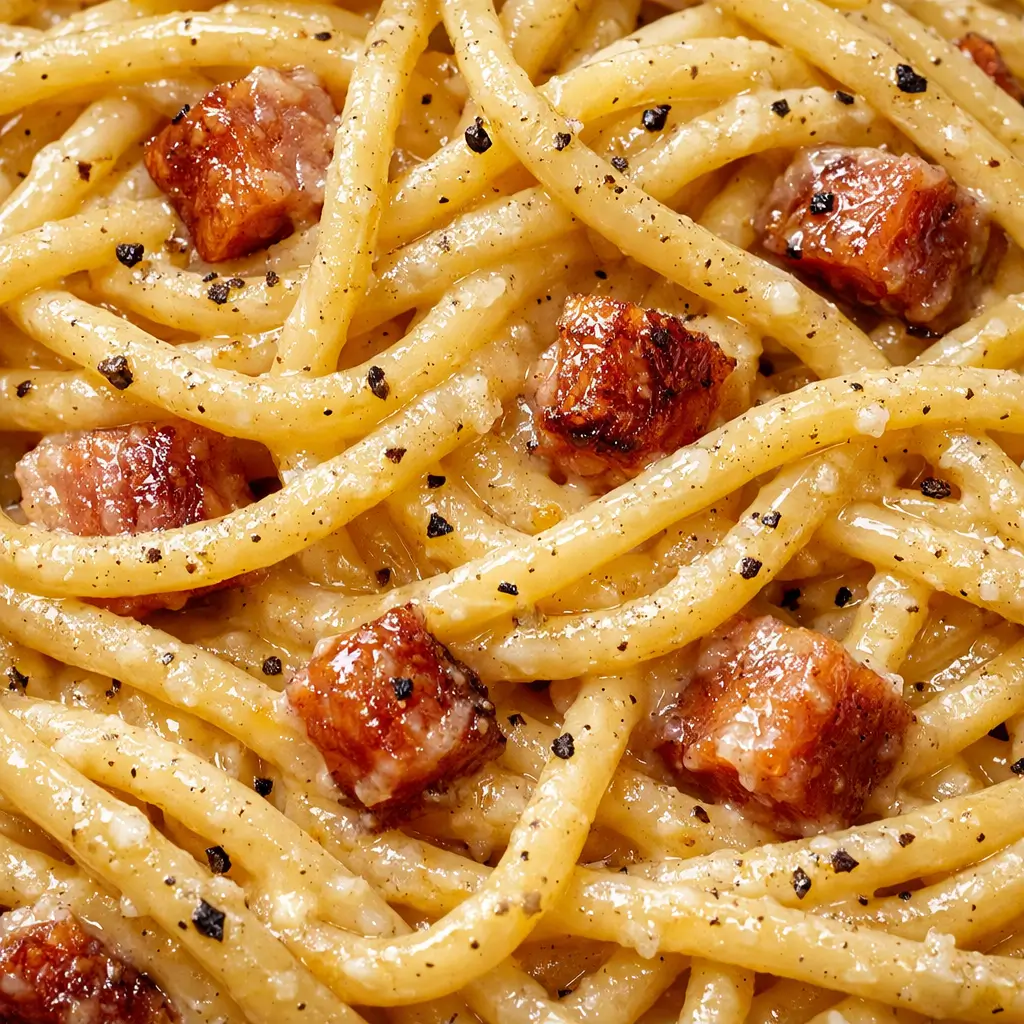
Pasta Carbonara is one of the most iconic Italian pasta dishes, celebrated for its simplicity, richness, and depth of flavor. This Pasta Carbonara recipe shows you exactly how to make a creamy, authentic carbonara without cream, using traditional techniques that guarantee success every time.
Unlike many modern variations, true carbonara relies on eggs, cheese, pork fat, and pasta water to create its signature silky sauce. When prepared correctly, the sauce is smooth, glossy, and perfectly coats each strand of pasta without scrambling the eggs.
This guide walks you through every step, from selecting the right ingredients to mastering the timing that makes carbonara unforgettable. In addition to the classic version, this Pasta Carbonara guide also covers several popular variations, including mushroom carbonara, chicken carbonara, and shrimp carbonara. Each variation follows the same foundational carbonara technique based on eggs, cheese, and pasta water, with specific ingredient adjustments explained later in the article. This approach keeps the recipe authentic while offering practical options for different preferences and dietary needs.
What Is Pasta Carbonara?
Pasta Carbonara is a classic Roman pasta dish traditionally made with spaghetti, eggs, Pecorino Romano cheese, guanciale, black pepper, and salt. The sauce forms naturally when egg yolks and cheese emulsify with hot pasta and rendered pork fat.
There is no cream in authentic carbonara. The creaminess comes entirely from technique.
Carbonara is quick to prepare, but it requires attention. Heat control, timing, and ingredient order matter. Once you understand the process, it becomes one of the easiest and most satisfying pasta dishes to cook.
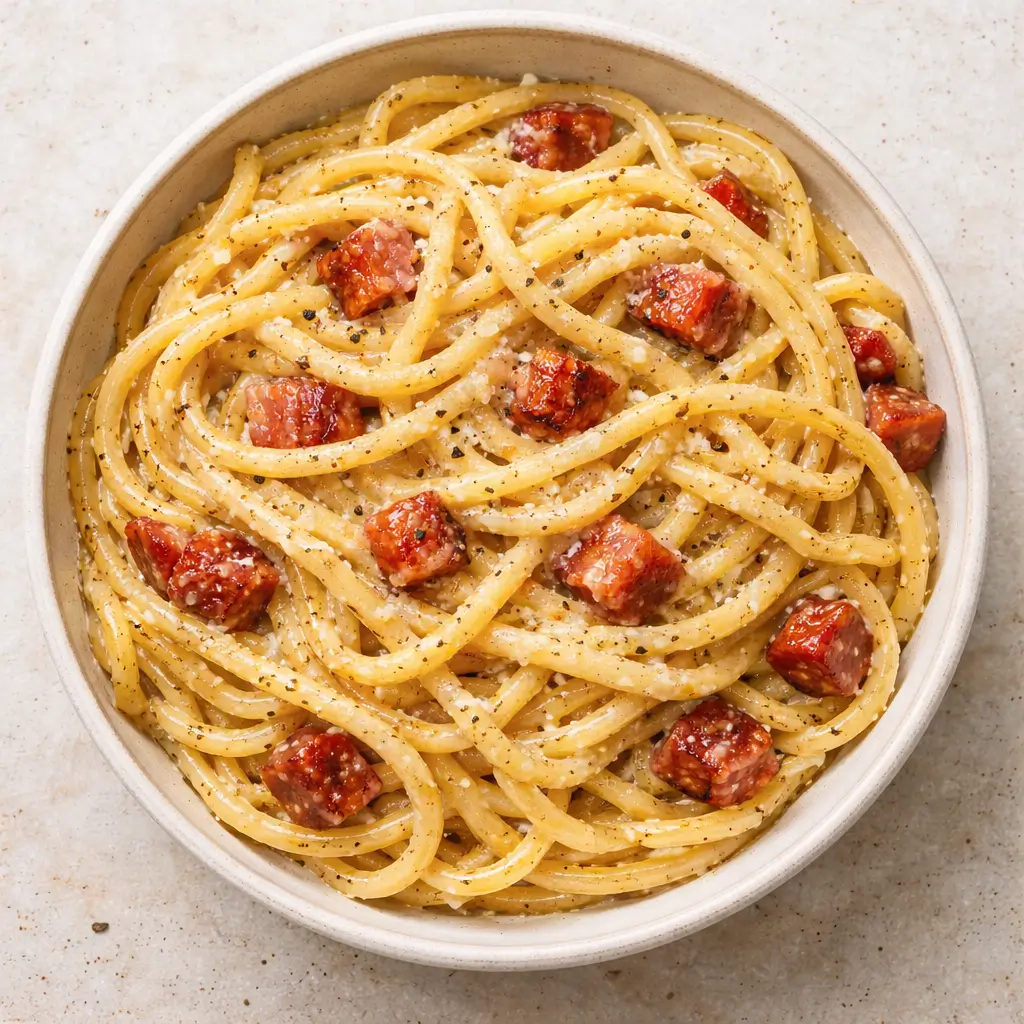
Why This Pasta Carbonara Recipe Works
This Pasta Carbonara recipe focuses on technique rather than shortcuts.
- The pasta is cooked in heavily salted water for flavor.
- The pork fat is rendered slowly to create depth.
- The egg and cheese mixture is prepared separately.
- The sauce is created off heat to avoid scrambling.
- Pasta water is used strategically to emulsify the sauce.
Every step is intentional. Nothing is rushed. Nothing is wasted.
Ingredients for Pasta Carbonara
Core Ingredients (Authentic)
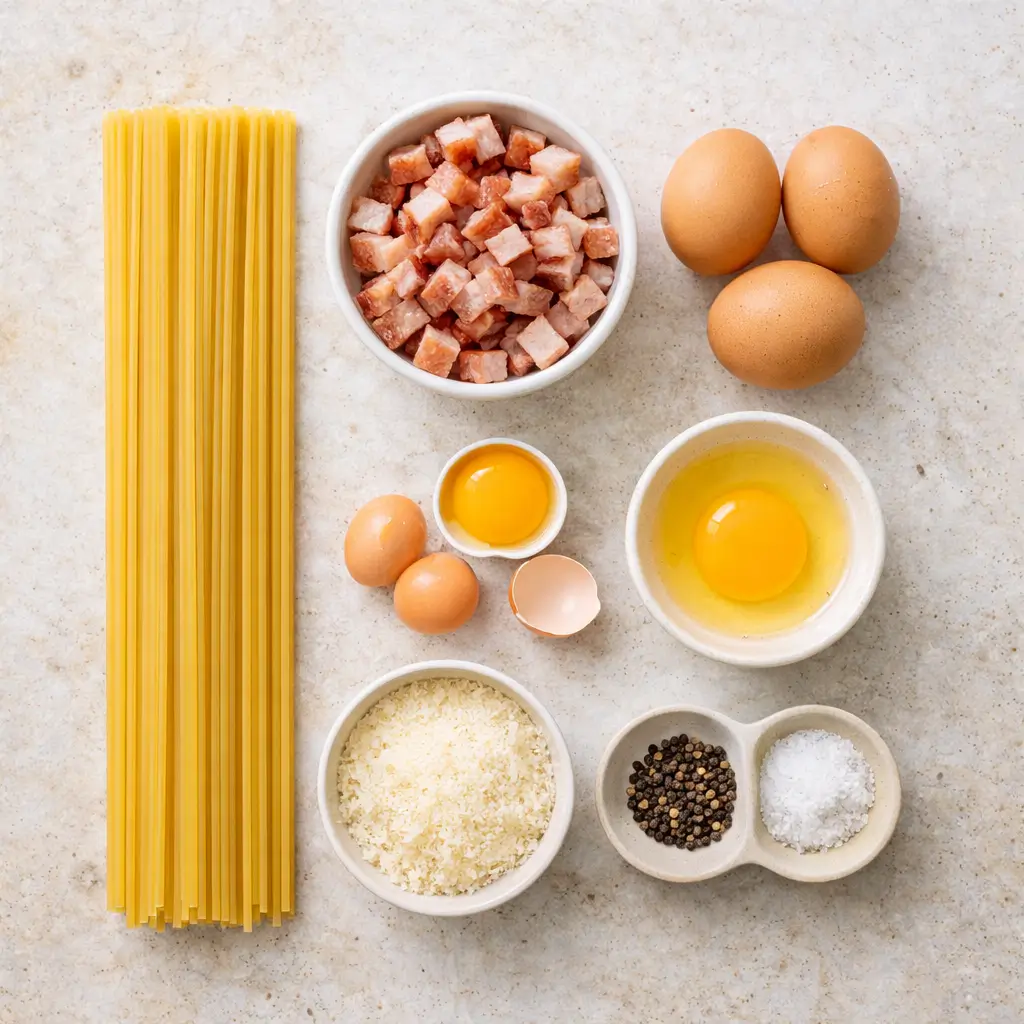
- Spaghetti – 12 oz (340 g)
- Guanciale (preferred) or pancetta – 5 oz (140 g)
- Large egg yolks – 4
- Large whole egg – 1
- Pecorino Romano, finely grated – 1 cup (90 g)
- Freshly ground black pepper – 1 to 1½ tsp
- Coarse salt – for pasta water
Optional Substitutions (If Needed)
- Pancetta can replace guanciale if unavailable.
- Parmigiano-Reggiano may replace up to 25% of Pecorino, but Pecorino should dominate.
Ingredient Notes and Tips
Pasta Choice
Spaghetti is traditional. However, rigatoni or bucatini also work well because they hold sauce effectively.
Avoid thin pasta like angel hair.
Pork Selection
Guanciale is cured pork cheek and delivers unmatched flavor. Pancetta is acceptable but milder. Bacon is not recommended due to smoke flavor.
Cheese Matters
Use finely grated Pecorino Romano. Pre-shredded cheese does not melt properly.
Eggs
Use fresh, high-quality eggs. Yolks are essential for richness and emulsification.
Pasta Carbonara Scaling Table (2, 4, and 6 Servings)
| Ingredient | 2 Servings | 4 Servings | 6 Servings |
|---|---|---|---|
| Spaghetti | 6 oz (170 g) | 12 oz (340 g) | 18 oz (510 g) |
| Guanciale / Pancetta | 2.5 oz (70 g) | 5 oz (140 g) | 7.5 oz (210 g) |
| Egg Yolks | 3 yolks | 4 yolks | 6 yolks |
| Whole Eggs | 1 egg | 1 egg | 2 eggs |
| Pecorino Romano (finely grated) | ½ cup (45 g) | 1 cup (90 g) | 1½ cups (135 g) |
| Freshly Ground Black Pepper | ½–¾ tsp | 1–1½ tsp | 1½–2 tsp |
| Salt (for pasta water) | ¾ tbsp (13 g) | 1½ tbsp (27 g) | 2¼ tbsp (40 g) |
| Reserved Pasta Water | ½–¾ cup (120–180 ml) | 1–1½ cups (240–360 ml) | 1½–2 cups (360–480 ml) |
Why the Egg Ratios Change Slightly
Carbonara does not scale linearly with whole eggs.
Using more yolks instead of whole eggs preserves:
- Creaminess
- Emulsion stability
- Authentic Roman texture
That’s why:
- 2 servings still use 1 whole egg
- 6 servings increase whole eggs only to 2
This prevents a watery or scrambled sauce.
Pro Scaling Tips (Important)
- Always add pasta water gradually, not all at once
- Sauce should be silky, not thick
- If sauce tightens, add 1–2 tablespoons warm pasta water
- Larger batches need slightly more resting time before adding eggs
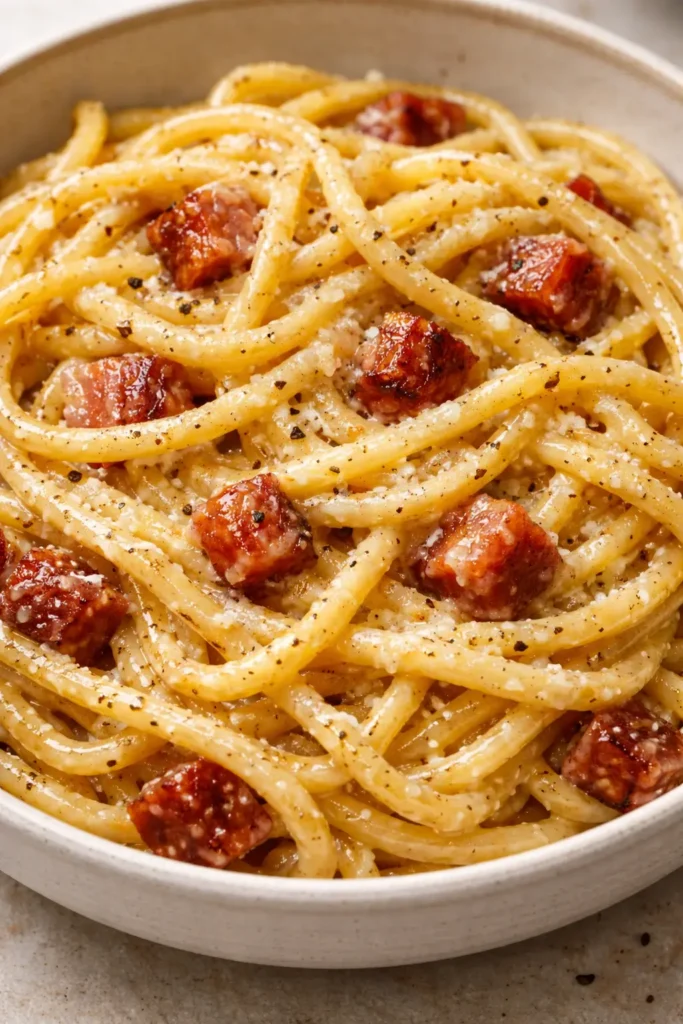
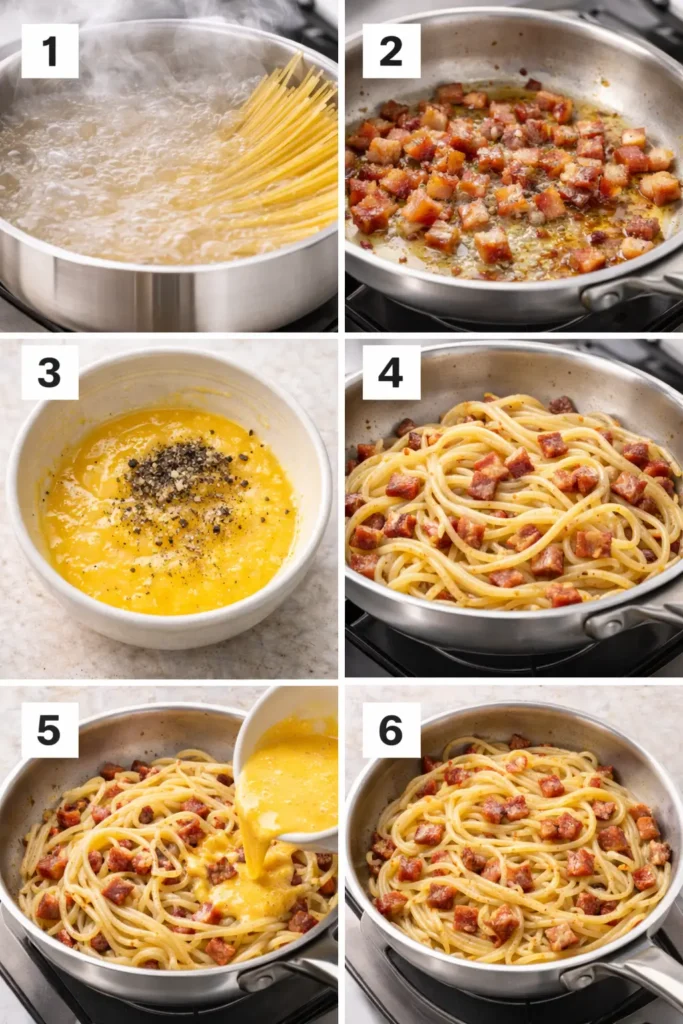
Step-by-Step: How to Cook Pasta Carbonara
Step 1: Cook the Pasta
Bring a large pot of water to a rolling boil. Add salt generously. The water should taste like the sea.
Add spaghetti and cook until al dente, following package instructions. Reserve 1½ cups (360 ml) of pasta water before draining.
Do not rinse the pasta.
Step 2: Render the Guanciale
Place diced guanciale in a cold skillet. Set heat to medium-low.
Cook slowly until the fat renders and the pork becomes golden and crisp. This takes about 6–8 minutes.
Turn off the heat and keep the fat in the pan.
Step 3: Prepare the Egg and Cheese Mixture
In a bowl, whisk together:
- Egg yolks
- Whole egg
- Grated Pecorino Romano
- Black pepper
Mix until thick and glossy. The mixture should resemble custard.
Do not add heat.
Step 4: Combine Pasta and Pork
Add the drained pasta directly into the skillet with guanciale. Toss gently to coat the pasta in rendered fat.
Let the pasta cool slightly for 30–45 seconds. This step is critical to prevent scrambled eggs.
Step 5: Create the Sauce
Remove the skillet from heat.
Slowly pour the egg mixture over the pasta while tossing continuously.
Add reserved pasta water a little at a time until the sauce becomes smooth, creamy, and glossy.
The sauce should cling to the pasta without pooling.
Step 6: Serve Immediately
Transfer to warm bowls.
Finish with extra Pecorino Romano and freshly cracked black pepper.
Serve immediately.
Common Carbonara Mistakes (And How to Avoid Them)
Using Cream
Cream dulls flavor and masks technique. Authentic carbonara needs none.
Overheating the Eggs
Heat scrambles eggs. Always remove the pan from heat before adding the egg mixture.
Skipping Pasta Water
Pasta water is essential for emulsification. Never discard it all.
Underseasoning the Water
Salted water seasons the pasta from within.
How to Fix Carbonara If It Breaks
If the sauce thickens too much, add warm pasta water and toss gently.
If eggs scramble slightly, immediately remove from heat and add more water while tossing vigorously.
Texture can often be saved.
Pasta Carbonara Texture Guide
Perfect carbonara sauce should be:
- Silky
- Glossy
- Smooth
- Lightly thick
- Not watery
- Not clumpy
The pasta should appear coated, not drowned.
Serving Suggestions
Pasta Carbonara is best served alone.
If needed, pair with:
- Simple green salad
- Light Italian wine
- Sparkling water
Avoid heavy sides.
Storage and Reheating
Carbonara is best fresh.
If necessary:
- Store in an airtight container for up to remembering 24 hours.
- Reheat gently in a pan with a splash of water.
- Avoid microwaving if possible.
Variations of Pasta Carbonara (Non-Traditional)
Mushroom Carbonara Variation
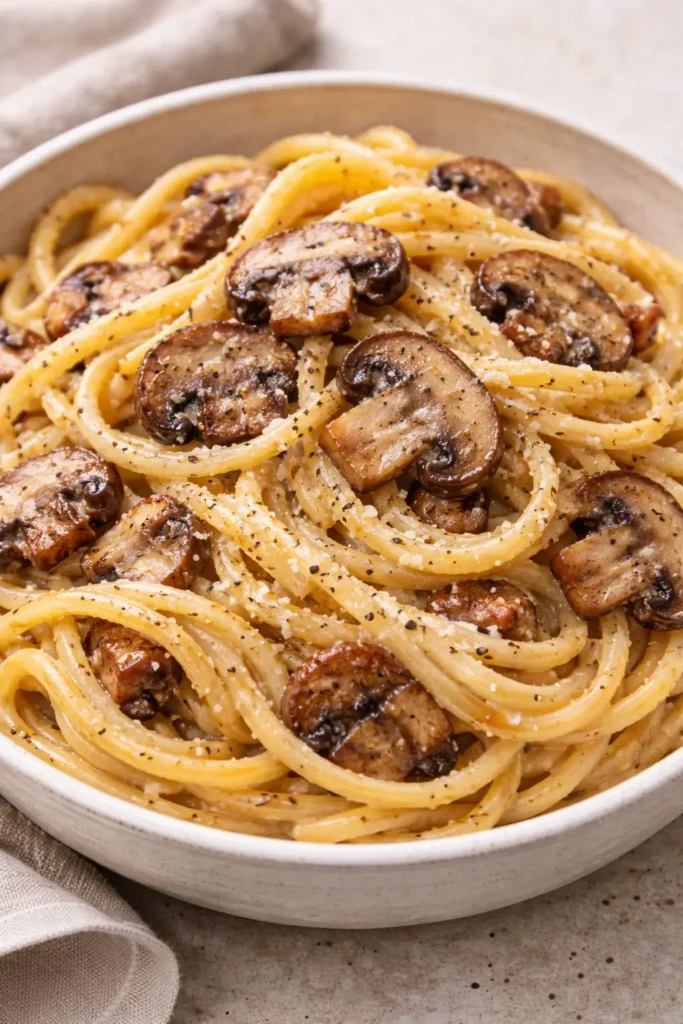
Mushroom carbonara is a popular variation that adds an earthy depth to the classic Pasta Carbonara recipe. This version follows the same egg-and-cheese emulsification method, but sautéed mushrooms replace part or all of the pork.
To make this variation, cook sliced mushrooms separately until golden and moisture-free. Then add them to the pasta before incorporating the egg and Pecorino mixture. The mushrooms absorb the sauce well and create a rich, umami-forward flavor without overpowering the traditional carbonara texture.
This variation works especially well for vegetarians when the guanciale is omitted entirely.
Chicken Carbonara Variation
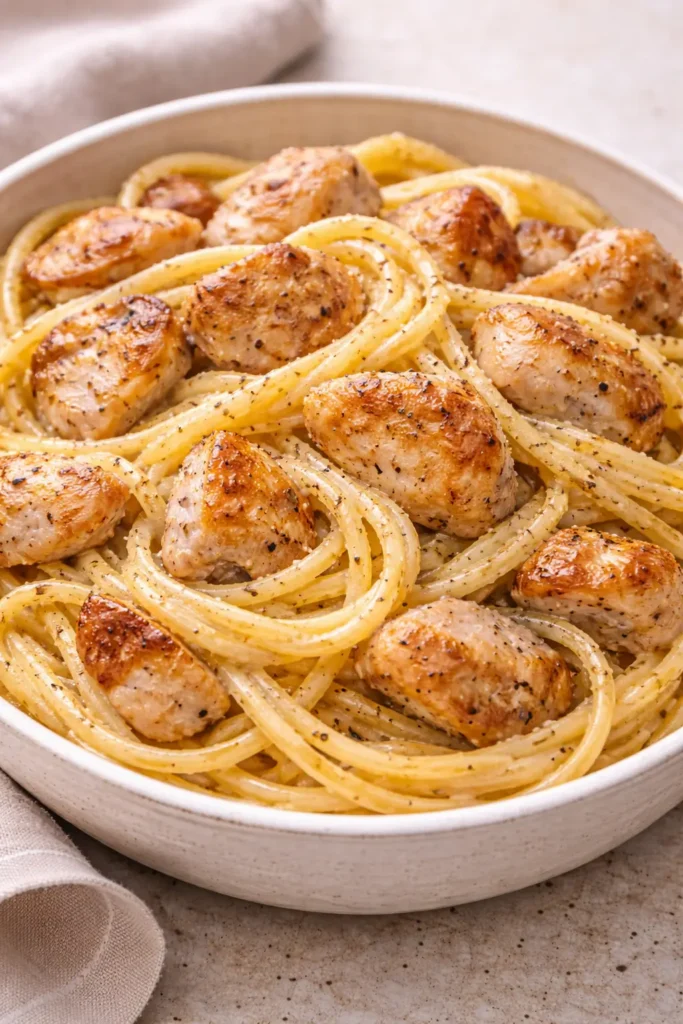
Chicken carbonara adapts the traditional Pasta Carbonara recipe by adding lean protein while keeping the original sauce technique intact. The base remains egg yolks, Pecorino Romano, pasta water, and black pepper.
For this variation, diced chicken breast or thigh is cooked separately until lightly golden and fully done. The chicken is then added to the pasta before the egg mixture is incorporated off heat. This ensures the sauce remains silky and does not scramble.
Chicken carbonara is milder than the classic version and is often preferred for family-style meals.
Shrimp Carbonara Variation
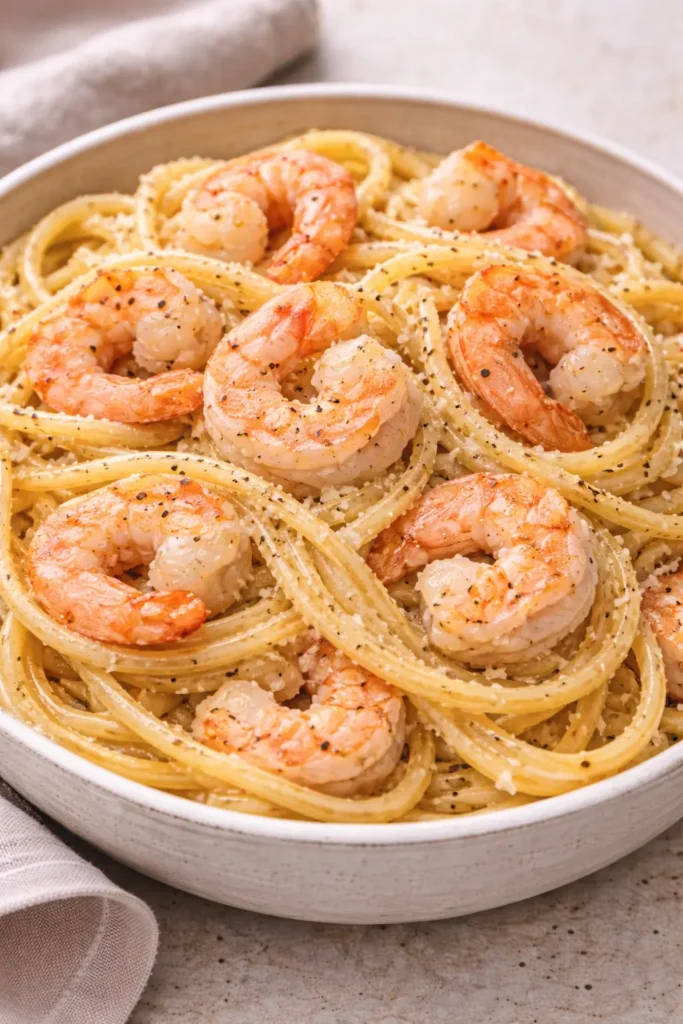
Shrimp carbonara is a seafood-based variation that uses the carbonara method rather than a butter or cream sauce. It is important to note that shrimp carbonara is not the same as shrimp scampi pasta, which relies on garlic, butter, and lemon instead of eggs.
In this variation, shrimp are quickly sautéed and removed from the pan to prevent overcooking. They are added back at the final stage, just before serving, once the egg-based sauce has emulsified with the pasta. This preserves both the shrimp’s texture and the sauce’s creaminess.
Shrimp carbonara offers a lighter, more delicate alternative while maintaining the defining characteristics of Pasta Carbonara.
Nutrition Overview (Approximate)
Per serving:
- Calories: 520–580
- Protein: 22 g
- Fat: 26 g
- Carbohydrates: 48 g
Values vary by portion size.
Frequently Asked Questions
Is carbonara safe with raw eggs?
The eggs are gently cooked by residual heat and hot pasta water.
Can I make carbonara ahead?
No. Carbonara is a last-minute dish.
Can I use bacon?
You can, but flavor will differ.
Final Thoughts
This Pasta Carbonara recipe respects tradition while remaining accessible. It teaches technique, timing, and balance rather than shortcuts. Once mastered, carbonara becomes a fast, elegant, and deeply satisfying meal.
If you follow the steps carefully, you will achieve a creamy carbonara without cream, every single time.
