
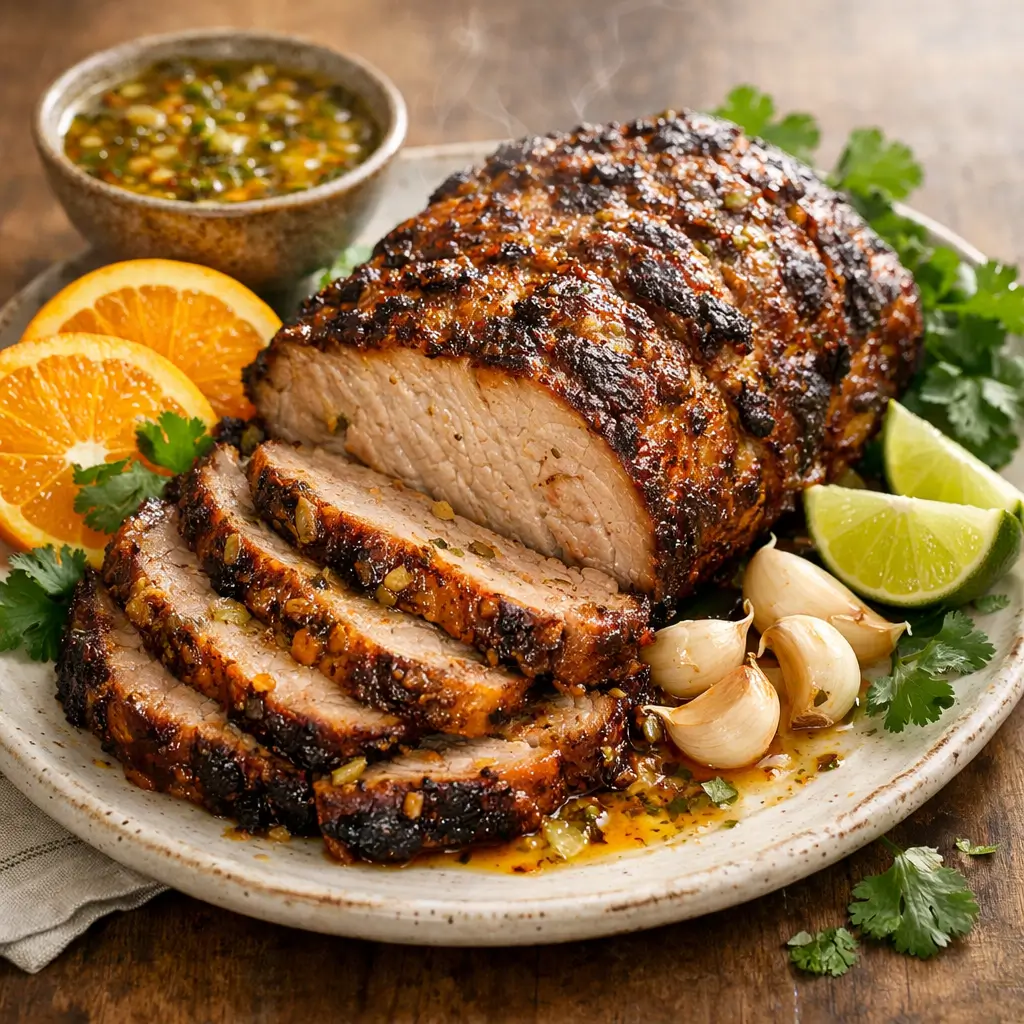
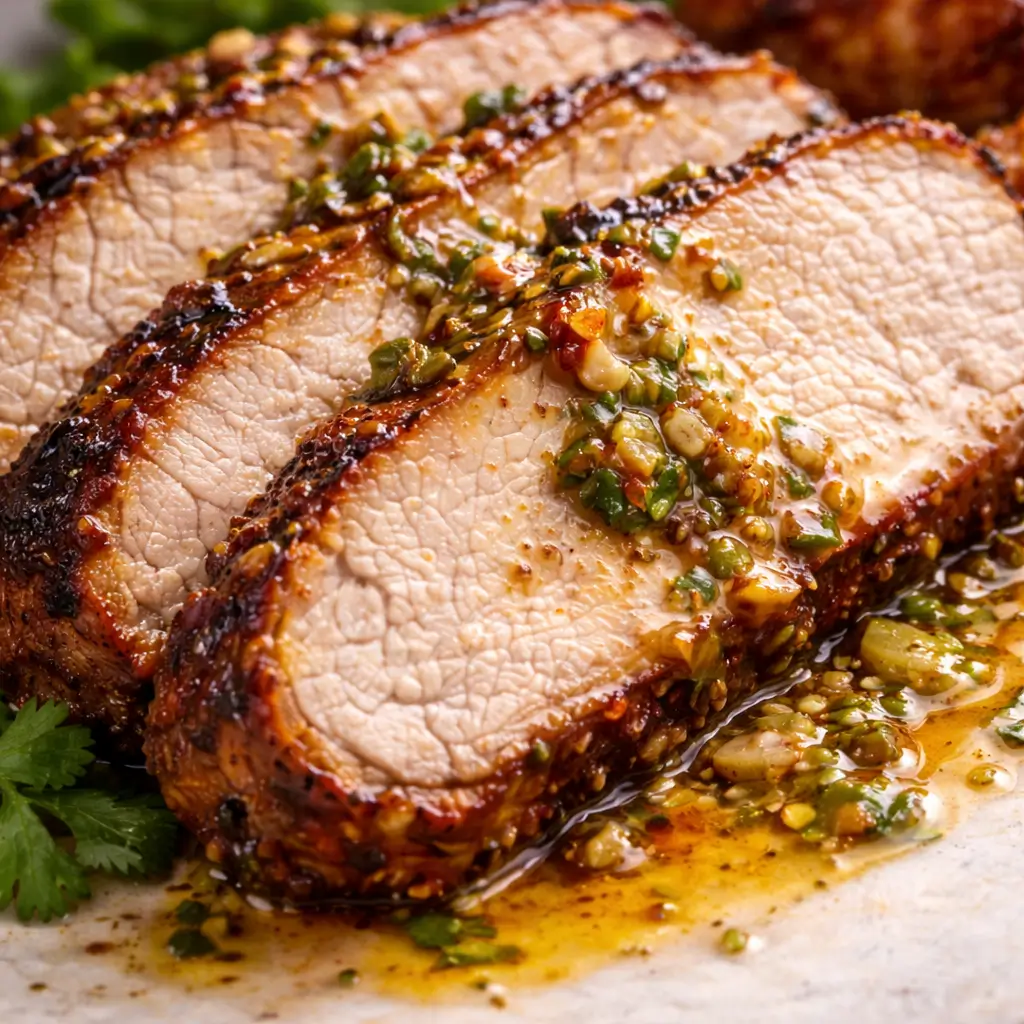
Roasted Cuban Mojo Pork is a classic Cuban dish known for its bold citrus flavor, tender texture, and deeply aromatic garlic marinade. This recipe delivers juicy, slow-roasted pork with crispy edges and an irresistible mojo sauce that soaks into every bite. It is perfect for family dinners, celebrations, or meal prep.
This guide walks you through everything you need to know, from ingredients and preparation to serving ideas, storage tips, and common mistakes to avoid.
Why You’ll Love This Roasted Cuban Mojo Pork
This recipe stands out for several reasons.
First, it uses simple ingredients with powerful flavor.
Second, it produces incredibly tender pork every time.
Third, it works for many occasions and serving styles.
You will love this recipe because:
- The pork stays juicy and never dries out
- The citrus-garlic mojo marinade is bold but balanced
- The recipe is mostly hands-off after marinating
- Leftovers taste even better the next day
- It pairs well with many side dishes
This dish brings authentic Cuban flavors to your table without complicated techniques.
What Is Cuban Mojo Pork?
Cuban mojo pork is traditionally made by marinating pork in a citrus-based sauce called mojo criollo. The marinade typically includes:
- Sour orange juice or a mix of orange and lime juice
- Lots of garlic
- Olive oil
- Oregano and cumin
The pork is marinated for several hours, then roasted slowly until tender. The result is meat that is fragrant, tangy, savory, and deeply flavorful.
In Cuba, this dish is often served during holidays and celebrations. However, it is also enjoyed as an everyday comfort food.
Choosing the Best Cut of Pork
The cut of pork matters greatly for this recipe.
Best Choice: Pork Shoulder
Pork shoulder, also called pork butt, is ideal because:
- It has enough fat to stay moist
- It becomes tender during slow roasting
- It absorbs marinades very well
Choose a boneless pork shoulder weighing 3.5 to 4.5 pounds.
Avoid Lean Cuts
Do not use pork loin or pork tenderloin. These cuts are too lean and will dry out during roasting.
Ingredients for Roasted Cuban Mojo Pork
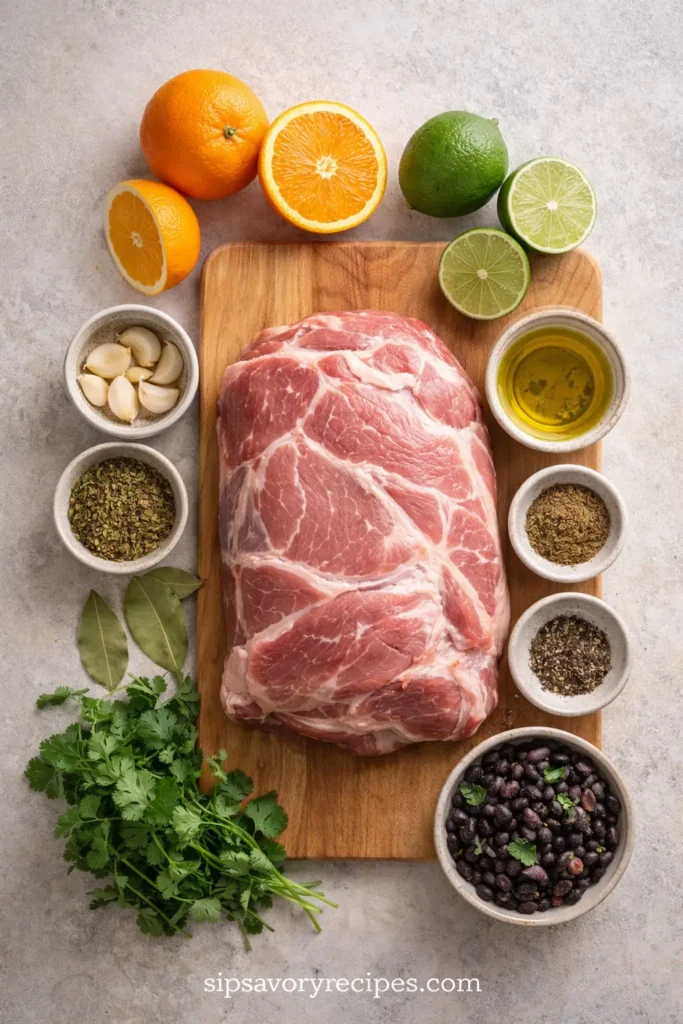
Below are the exact ingredients for 6–8 servings.
For the Pork
- 4 lb (1.8 kg) pork shoulder, boneless
- 1 ½ teaspoons salt
- 1 teaspoon black pepper
For the Mojo Marinade
- ¾ cup fresh orange juice
- ¼ cup fresh lime juice
- ½ cup olive oil
- 10 cloves garlic, minced
- 2 teaspoons dried oregano
- 1 teaspoon ground cumin
- ½ teaspoon crushed red pepper flakes (optional)
- 1 tablespoon fresh cilantro, finely chopped
How to Make Roasted Cuban Mojo Pork
This recipe is simple, but patience is key.
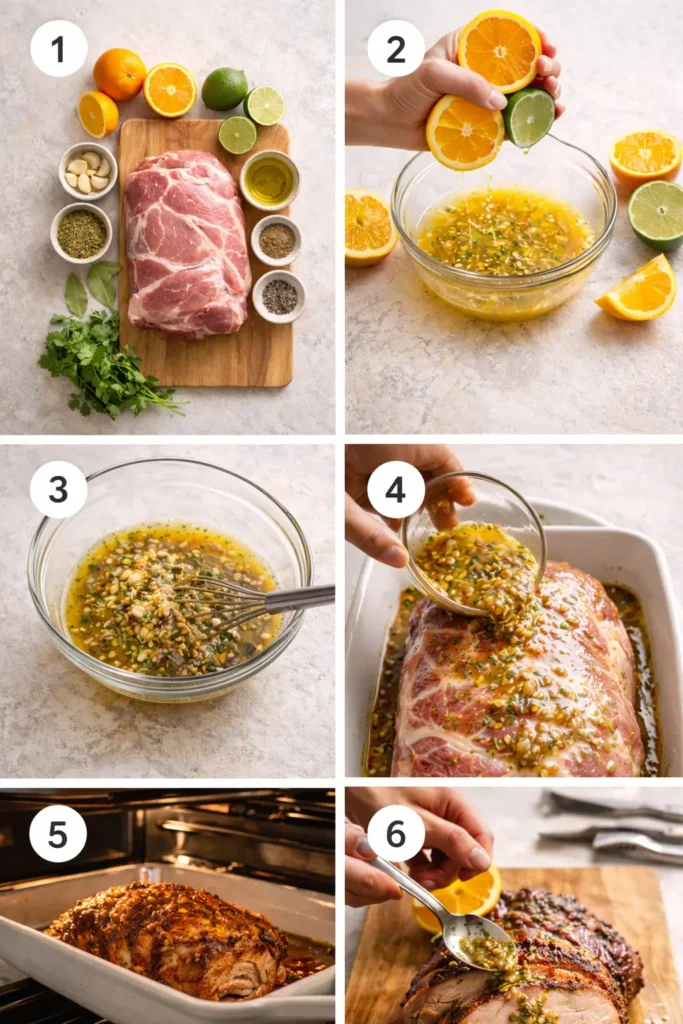
Step 1: Prepare the Pork
Pat the pork shoulder dry with paper towels.
Trim excess surface fat, but leave some fat intact.
Season the pork evenly with salt and black pepper.
Step 2: Make the Mojo Marinade
In a medium bowl, whisk together:
- Orange juice
- Lime juice
- Olive oil
- Garlic
- Oregano
- Cumin
- Red pepper flakes
- Cilantro
The marinade should smell bright and garlicky.
Step 3: Marinate the Pork
Place the pork in a large roasting dish or deep container.
Pour the mojo marinade over the pork.
Turn the pork several times to coat evenly.
Cover tightly and refrigerate for at least 8 hours, preferably overnight.
Turn the pork once or twice during marinating.
Step 4: Bring Pork to Room Temperature
Remove the pork from the refrigerator 45 minutes before cooking.
This step ensures even roasting.
Step 5: Roast the Pork
Preheat the oven to 325°F (165°C).
Place the pork in a roasting pan with all the marinade.
Cover tightly with foil.
Roast for 3 hours, basting once halfway.
Step 6: Crisp the Exterior
Remove the foil.
Increase oven temperature to 425°F (220°C).
Roast uncovered for 25–35 minutes, until the surface is golden and slightly crisp.
Step 7: Rest and Slice
Remove the pork from the oven.
Let it rest for 15–20 minutes.
Slice or shred the pork.
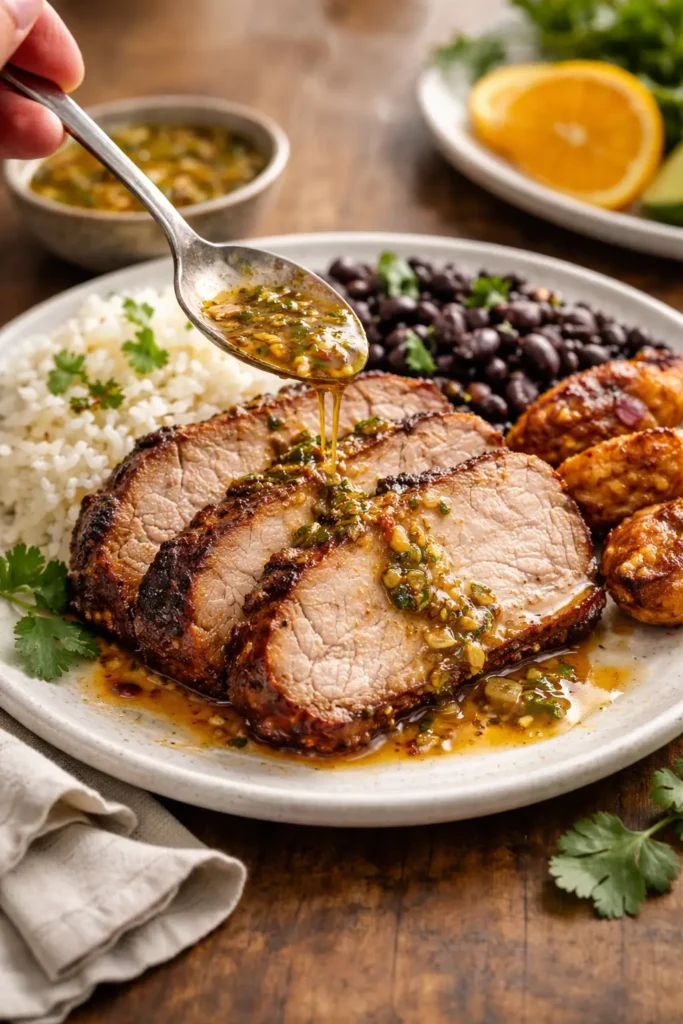
Spoon extra mojo sauce from the pan over the meat.
Internal Temperature Guide
For perfect results, use a meat thermometer.
- Ideal internal temperature: 195–203°F (90–95°C)
- This range ensures tender, pull-apart pork
Do not stop at 145°F. The pork will not be tender enough.
Serving Suggestions
Roasted Cuban Mojo Pork is extremely versatile.
Classic Cuban Sides
- White rice
- Black beans
- Fried plantains
- Yuca with garlic sauce
Modern Serving Ideas
- Pork tacos with citrus slaw
- Mojo pork sandwiches
- Pork bowls with rice and vegetables
- Stuffed Cuban-style wraps
This dish adapts beautifully to many cuisines.
How to Make It Ahead
This recipe is ideal for meal prep.
- Marinate the pork up to 24 hours in advance
- Roast the pork the day before serving
- Reheat gently with reserved mojo sauce
Flavor improves after resting overnight.
Storage and Reheating
Refrigeration
Store leftovers in an airtight container for up to 4 days.
Freezing
Freeze shredded pork with some sauce for up to 3 months.
Reheating
Reheat slowly in a covered skillet or oven at 300°F (150°C).
Add a splash of orange juice or broth if needed.
Avoid microwaving uncovered.
Common Mistakes to Avoid
Avoid these errors for best results.
- Using pork loin instead of shoulder
- Skipping the marinating time
- Cooking at too high a temperature initially
- Not letting the pork rest before slicing
- Discarding the pan juices
Each step matters for flavor and texture.
Variations and Customizations
Spicy Mojo Pork
Add extra red pepper flakes or sliced jalapeños.
Slow Cooker Version
Cook on LOW for 8 hours.
Finish under the broiler for crisp edges.
Citrus Swap
If sour oranges are available, replace orange and lime juice entirely.
Nutritional Overview (Approximate per Serving)
- Calories: 420
- Protein: 38g
- Fat: 30g
- Carbohydrates: 4g
Values vary depending on portion size.
Frequently Asked Questions
Can I use bottled citrus juice?
Fresh juice is strongly recommended.
Bottled juice lacks brightness.
Is this dish authentic?
Yes. This recipe follows traditional Cuban flavor principles.
Can I grill this pork?
Yes, but indirect heat is required to prevent burning.
Final Thoughts
Roasted Cuban Mojo Pork is a timeless dish that delivers bold flavor with minimal effort. The citrus-garlic marinade penetrates deeply, while slow roasting ensures tender, juicy meat every time.
Whether served traditionally or creatively, this recipe belongs in your regular rotation. It is reliable, impressive, and deeply satisfying.
