
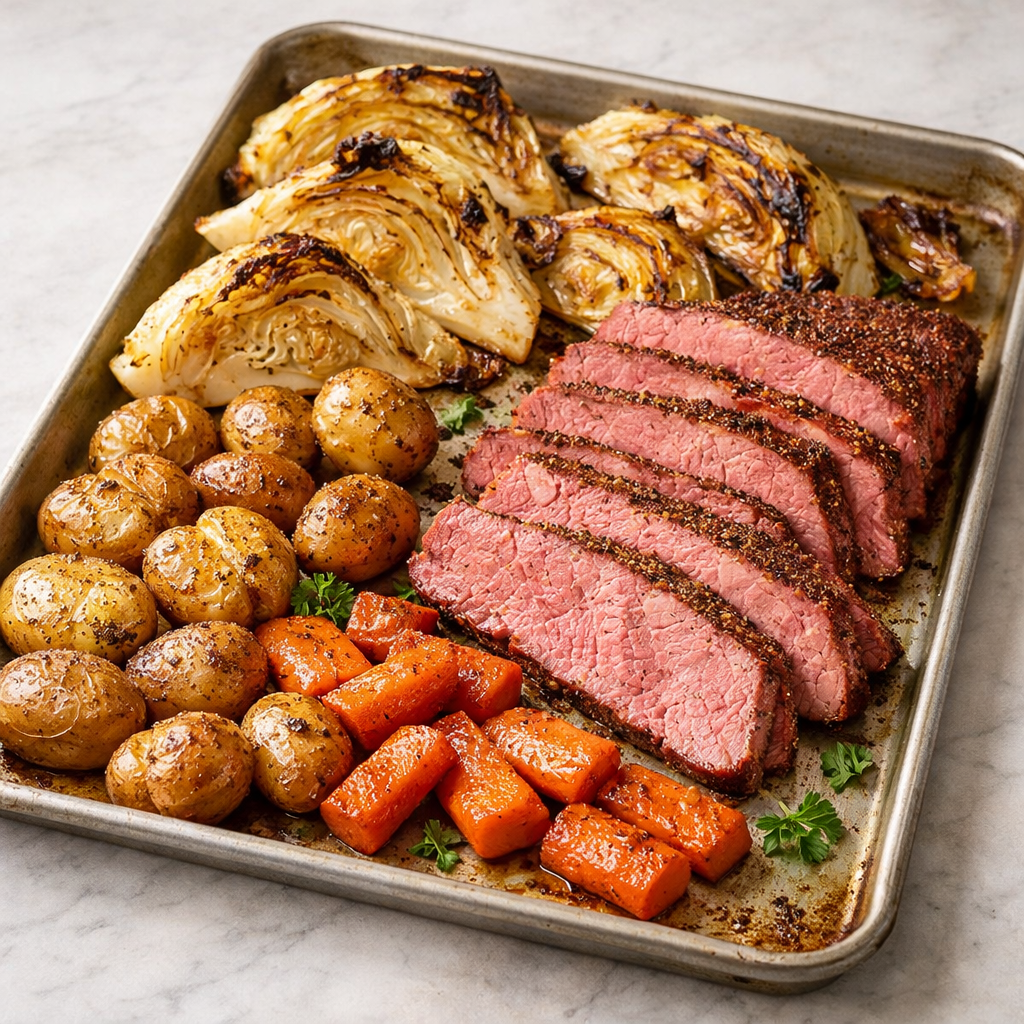
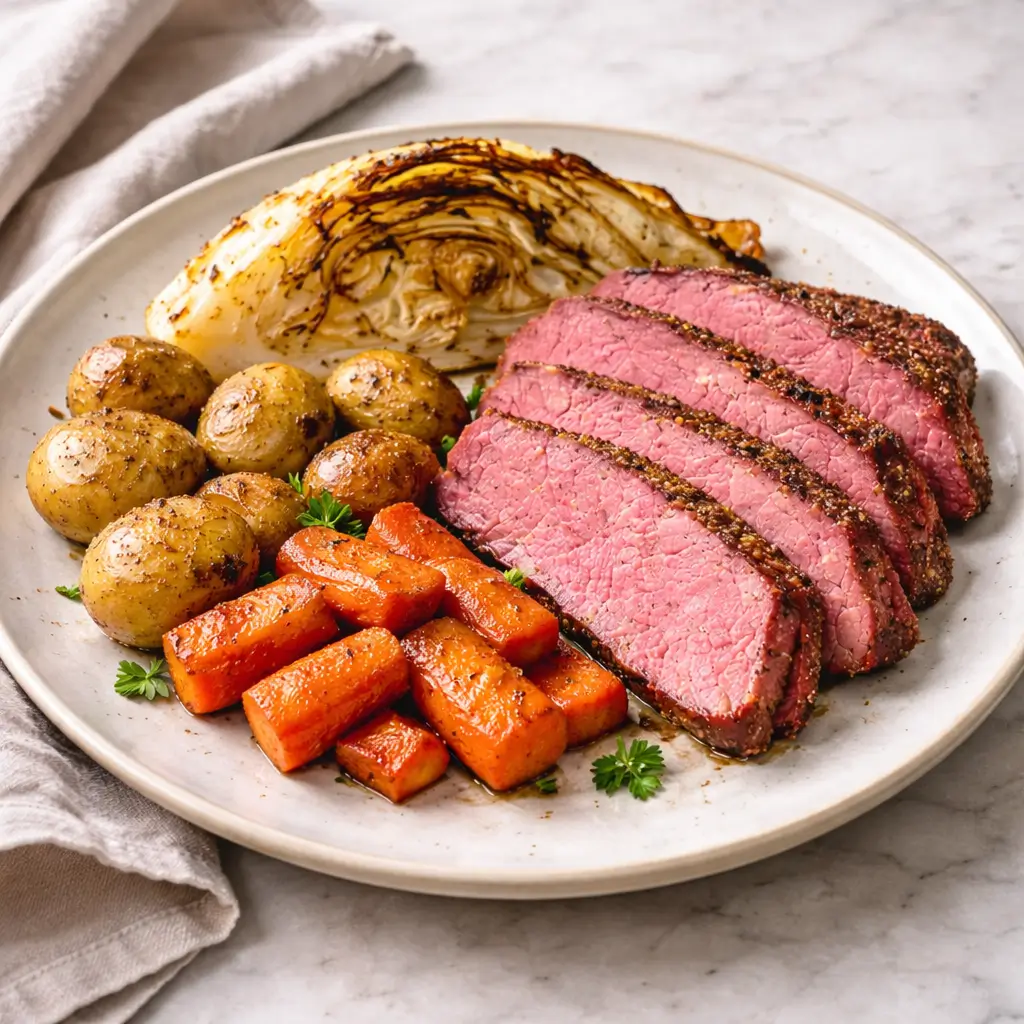
Sheet Pan Corned Beef and Cabbage transforms a traditional slow-simmered dish into an easy, oven-roasted meal with deep flavor and minimal effort. Instead of boiling everything in one pot, roasting allows the ingredients to caramelize, concentrate, and develop a rich texture. The result is a balanced dinner with tender slices of corned beef, golden potatoes, sweet roasted carrots, and slightly crisp cabbage wedges—all cooked together on one pan.
This method is ideal for busy weeknights, relaxed Sunday dinners, or festive occasions like St. Patrick’s Day. It requires very little hands-on time, produces fewer dishes, and creates bold flavor through simple roasting.
Why You’ll Love This Sheet Pan Version
There are several reasons this recipe works beautifully:
- One-pan convenience means easy cleanup.
- Roasting enhances flavor through caramelization.
- Vegetables stay distinct instead of becoming mushy.
- The beef remains tender while developing a flavorful crust.
- Minimal preparation makes it beginner-friendly.
- Balanced textures create a more modern version of a classic meal.
Unlike boiling, which dilutes seasoning, roasting intensifies everything.
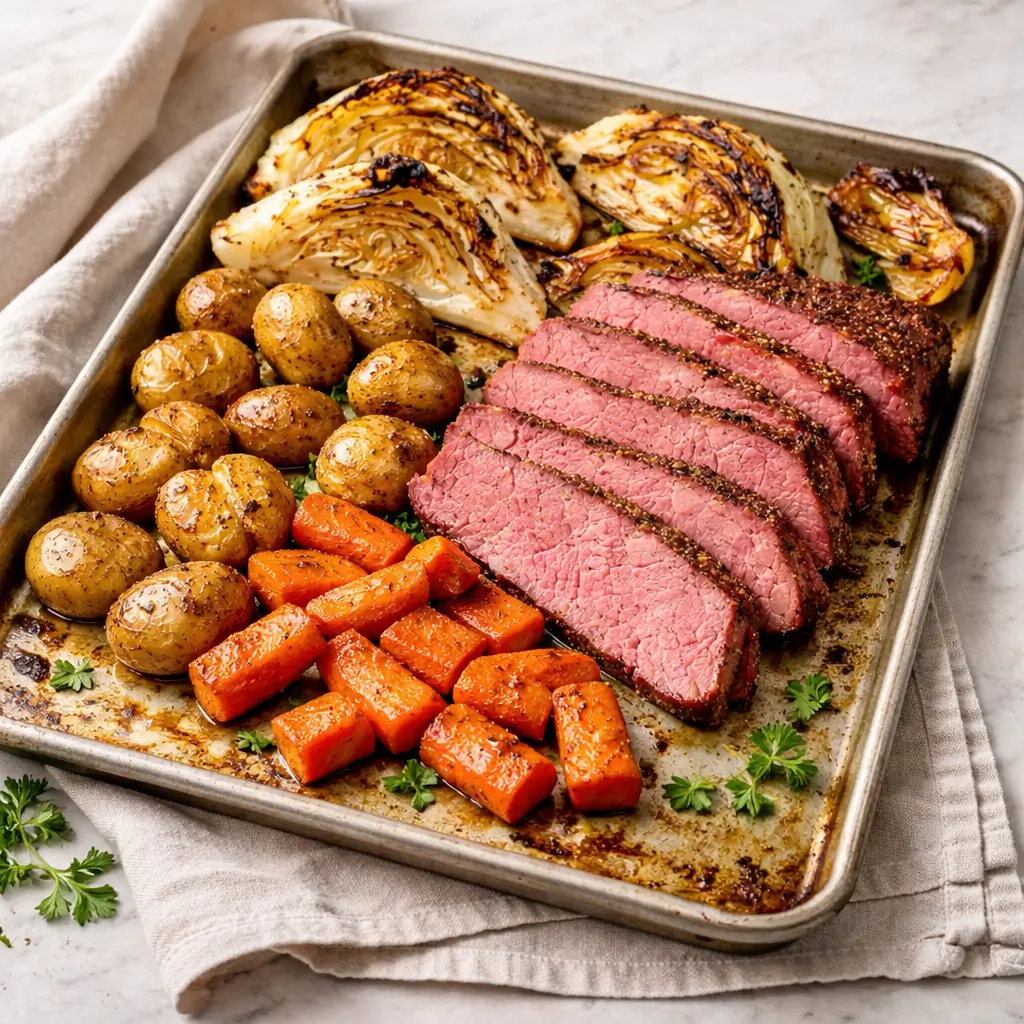
Understanding Corned Beef
Corned beef is a salt-cured brisket traditionally preserved with large grains of salt called “corns.” It is usually sold pre-brined and includes a seasoning packet containing:
- Mustard seeds
- Peppercorns
- Coriander
- Bay leaf
- Dill seed
Because it is already cured, corned beef needs slow, gentle cooking to break down connective tissue. The oven provides that environment while also creating surface browning.
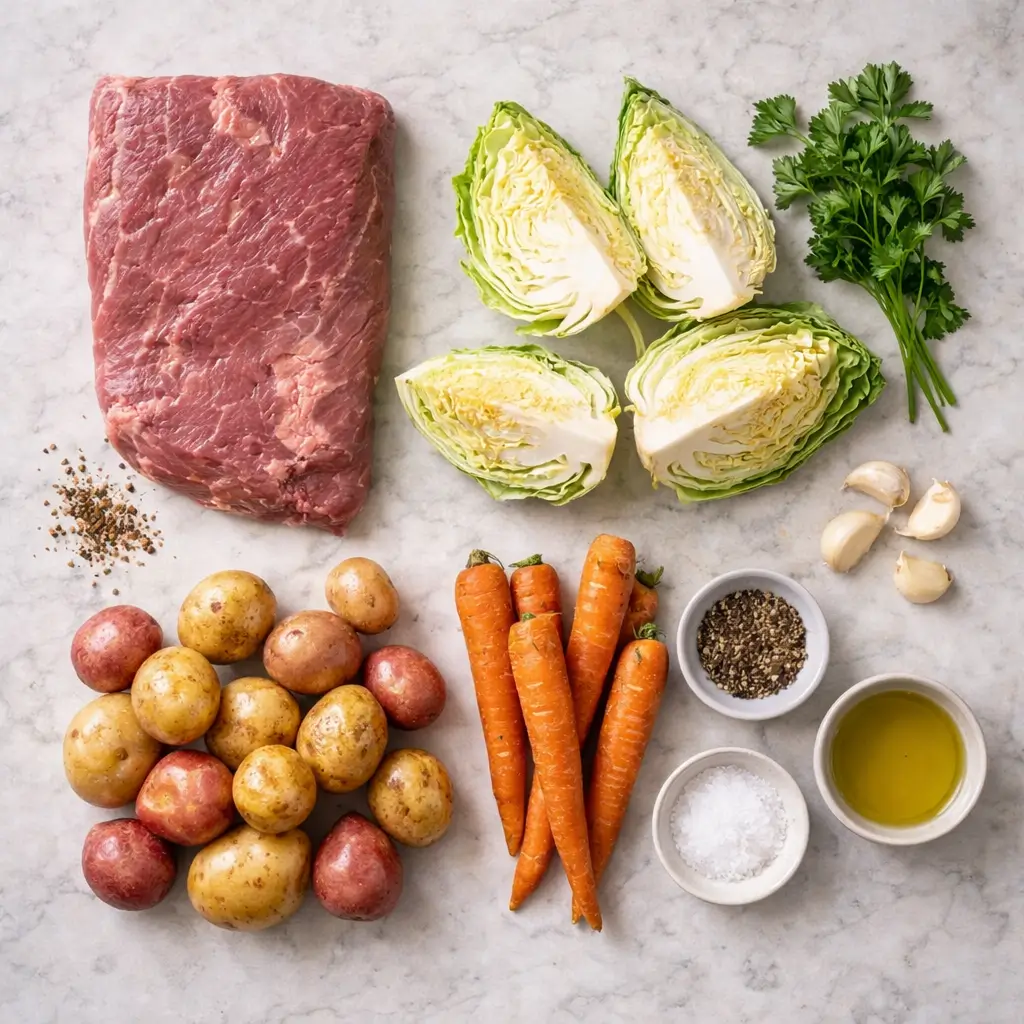
Ingredients Overview
Main Ingredients
- Corned beef brisket (3–4 pounds)
- Green cabbage
- Baby potatoes
- Carrots
- Garlic
- Olive oil
Seasonings
- Spice packet (included with brisket)
- Black pepper
- Optional parsley for finishing
These ingredients create a complete meal without additional sides.
Exact Ingredients Quantities
Sheet Pan Corned Beef and Cabbage (Serves 4–6)
Main Ingredients
- 1 corned beef brisket (flat cut) — 3 to 4 pounds (1.4 to 1.8 kg), with included spice packet
- 1 medium green cabbage — cut into 6–8 wedges
- 1½ pounds (680 g) baby potatoes — red or yellow, halved if large
- 4 medium carrots — cut into 2-inch (5 cm) pieces
- 4 garlic cloves — peeled, left whole
Oil & Seasoning
- 3 tablespoons olive oil
- 1 teaspoon freshly ground black pepper
- Spice packet — included with corned beef (use all of it)
Do not add salt. The corned beef is already cured and salty.
Optional for Finishing (Recommended)
- 2 tablespoons fresh parsley — chopped
- 1 tablespoon whole-grain mustard (for serving, optional)
Ingredient Notes for Best Results
- Choose a flat-cut brisket for clean slices.
- Keep vegetables large so they roast instead of burn.
- Whole garlic cloves become sweet and mild while roasting.
- Baby potatoes provide the best creamy texture.
If You Need to Scale the Recipe
| Servings | Corned Beef | Potatoes | Carrots | Cabbage | Olive Oil |
|---|---|---|---|---|---|
| 4–6 | 3–4 lb | 1½ lb | 4 | 1 medium | 3 tbsp |
| 6–8 | 4–5 lb | 2 lb | 6 | 1 large | 4 tbsp |
| 8–10 | 5–6 lb | 3 lb | 8 | 2 medium | 5 tbsp |
Always keep vegetables in a single layer. Use two sheet pans if scaling up.
Choosing the Best Cut of Corned Beef
There are two common brisket cuts:
Flat Cut
- Leaner
- Slices cleanly
- Best for sheet pan roasting
Point Cut
- More marbled
- Shreds easily
- Better for braising
For this recipe, choose the flat cut because it holds shape during roasting.
Preparing the Vegetables
The vegetables must cook at the same rate as the beef.
Potatoes
Use baby potatoes. Leave them whole or halve larger ones. They develop a creamy interior and crisp exterior.
Carrots
Cut into thick pieces. Thin slices would overcook.
Cabbage
Cut into wedges, leaving the core intact. This keeps layers together while roasting.
Garlic
Whole cloves mellow and sweeten in the oven.
Why Roasting Works Better Than Boiling
Traditional boiling produces uniform softness. Roasting introduces contrast:
| Cooking Method | Flavor | Texture | Visual Appeal |
|---|---|---|---|
| Boiling | Mild | Soft | Pale |
| Roasting | Deep | Caramelized | Golden |
The Maillard reaction during roasting creates savory complexity impossible to achieve in water.
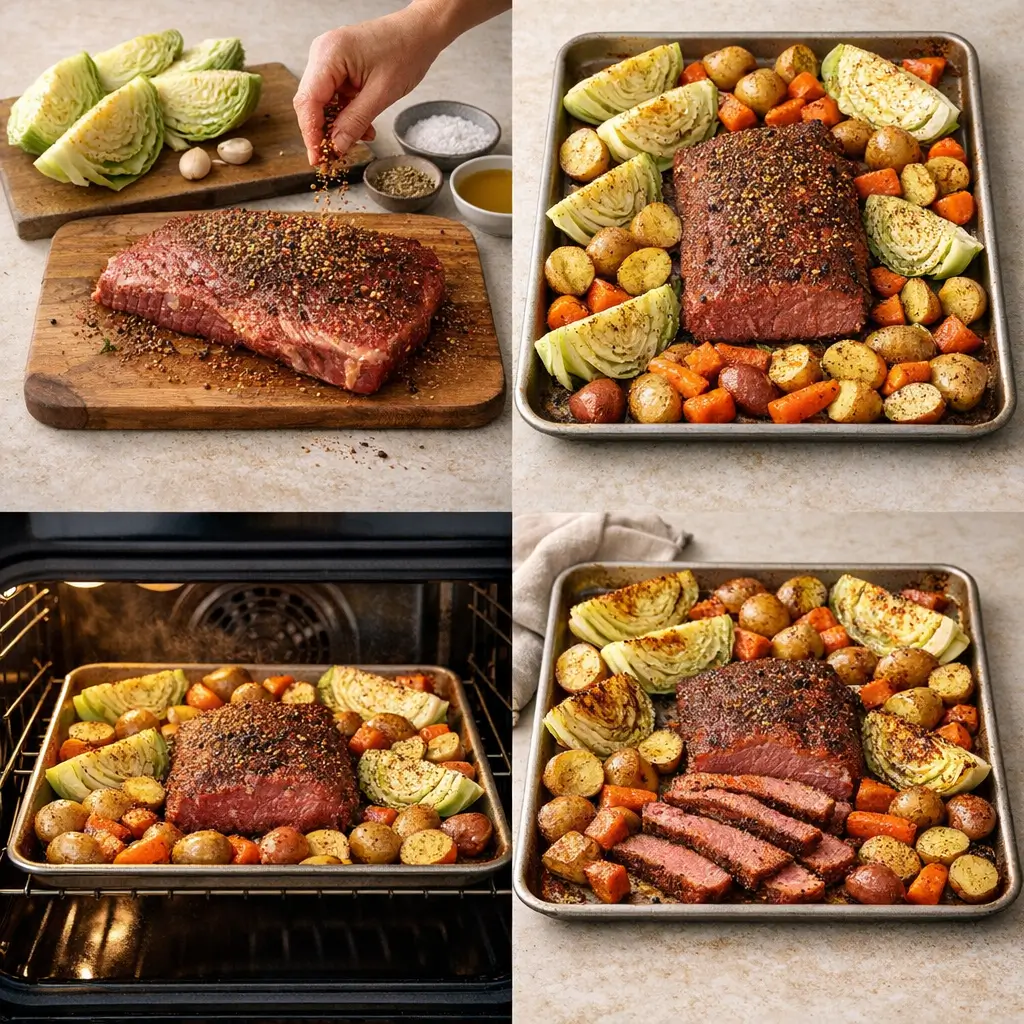
Step-by-Step Cooking Method
Step 1 — Preheat the Oven
Preheat to 325°F (165°C).
This moderate temperature slowly tenderizes the brisket.
Step 2 — Prepare the Beef
Rinse the brisket lightly to remove excess surface brine.
Pat completely dry.
Place it in the center of a large sheet pan, fat side up.
Sprinkle the seasoning packet evenly over the surface.
Step 3 — Arrange the Vegetables
Surround the beef with:
- Potatoes
- Carrots
- Garlic
Drizzle everything lightly with olive oil.
Season vegetables with pepper.
Do not salt—the brisket already provides enough seasoning.
Step 4 — First Roast (Covered)
Cover the pan tightly with foil.
Roast for 2 hours.
This stage gently tenderizes the meat.
Step 5 — Add the Cabbage
Remove foil. Add cabbage wedges.
Return to oven uncovered.
Roast another 45–60 minutes.
Now caramelization begins.
Step 6 — Final Browning
Increase temperature to 400°F (200°C) for 15 minutes.
This creates:
- Crispy vegetable edges
- A flavorful crust on the beef
Step 7 — Rest Before Slicing
Let the beef rest 10 minutes.
This redistributes juices and prevents dryness.
Step 8 — Slice Against the Grain
Cut thin slices across the grain.
This shortens muscle fibers and ensures tenderness.
Timing Guide
| Weight | Total Cook Time |
|---|---|
| 3 lb | 2 hr 45 min |
| 4 lb | 3 hr |
| 5 lb | 3 hr 20 min |
Always cook until fork-tender.
Flavor Development During Roasting
As the dish cooks, several transformations occur:
- Brine seasoning penetrates deeper.
- Fat renders slowly into vegetables.
- Sugars in carrots and cabbage caramelize.
- Potatoes absorb savory drippings.
Each ingredient enhances the others.
Tips for Perfect Results
Do Not Skip Covering Early
This prevents drying before tenderization.
Use a Heavy Sheet Pan
Thin pans burn vegetables.
Give Vegetables Space
Crowding causes steaming instead of roasting.
Always Slice Against the Grain
This is essential for tenderness.
Common Mistakes to Avoid
Cooking at Too High a Temperature
This toughens brisket.
Adding Salt Too Early
The beef is already cured.
Cutting Vegetables Too Small
They will burn before the beef finishes.
Skipping the Resting Period
Juices will run out when slicing.
Texture Expectations
When done correctly:
- Beef should be fork-tender, not shredding.
- Cabbage should have crisp edges and soft centers.
- Potatoes should be creamy inside.
- Carrots should taste slightly sweet.
This balance defines the success of the dish.
How to Store Leftovers
Refrigerate in an airtight container up to 4 days.
To reheat:
Place in a covered dish with a splash of broth.
Warm at 300°F (150°C) until heated through.
Avoid microwaving large portions. It can toughen the meat.
Freezing Instructions
Corned beef freezes well.
Slice before freezing for convenience.
Store with vegetables in freezer-safe containers up to 3 months.
Thaw overnight before reheating.
Creative Ways to Use Leftovers
Corned Beef Hash
Chop leftovers and sauté with potatoes.
Sandwiches
Layer slices with mustard on rye bread.
Grain Bowls
Serve over rice with roasted vegetables.
Breakfast Skillet
Add eggs for a hearty brunch.
Nutritional Balance
This meal offers:
- Protein from brisket
- Fiber from cabbage
- Complex carbohydrates from potatoes
- Vitamins from carrots
It is satisfying without needing additional sides.
Serving Suggestions
Serve directly from the sheet pan for rustic presentation.
Optional accompaniments:
- Whole-grain mustard
- Horseradish sauce
- Fresh parsley
- Crusty bread
Keep sides simple to highlight the roasted flavors.
Why This Recipe Is Ideal for Entertaining
Sheet pan meals scale easily.
They allow you to:
- Prepare everything ahead
- Use oven space efficiently
- Serve family-style
- Spend less time cooking during gatherings
It is impressive without being complicated.
Frequently Asked Questions
Is rinsing corned beef necessary?
A quick rinse removes excess surface salt while preserving flavor.
Can I cook it faster at higher heat?
No. Brisket requires slow cooking to break down collagen.
Why is my corned beef tough?
It likely needs more time. Undercooked brisket is firm.
Can I add other vegetables?
Yes. Parsnips or onions work well.
Should I baste during cooking?
Not necessary. Covered roasting retains moisture.
Making It Ahead
You can fully cook the dish earlier in the day.
Reheat covered at 300°F for 20–25 minutes.
This makes it excellent for holidays.
Equipment You’ll Need
- Large rimmed sheet pan
- Aluminum foil
- Sharp slicing knife
- Cutting board
Simple tools are all that’s required.
Flavor Variations
Garlic-Herb Version
Add thyme and rosemary before roasting.
Mustard-Crusted
Spread whole-grain mustard before cooking uncovered.
Maple Glaze Finish
Brush lightly with maple syrup during final browning.
Each variation complements the cured beef.
The Science Behind Tender Brisket
Brisket contains large amounts of connective tissue.
At temperatures between 160°F and 200°F, collagen dissolves into gelatin.
This transformation:
- Softens the meat
- Creates juiciness
- Enhances mouthfeel
Slow roasting allows this change without drying.
Why Cabbage Is Added Later
Cabbage cooks quickly.
Adding it too early would produce limp texture.
Late addition ensures:
- Light caramelization
- Structural integrity
- Balanced flavor
Scaling the Recipe
To serve more people:
Use two sheet pans rather than crowding one.
Airflow is essential for roasting.
Final Thoughts
Sheet Pan Corned Beef and Cabbage modernizes a beloved classic by using oven roasting to develop deeper flavor, better texture, and greater convenience. It maintains tradition while embracing efficiency, making it perfect for both weeknight meals and special gatherings.
With minimal preparation and a single pan, you achieve a complete dinner that feels hearty, comforting, and thoughtfully cooked. Once you try this roasted version, it may become your preferred way to prepare corned beef forever.
