

Sourdough discard breakfast pockets are the perfect answer to busy mornings, zero-waste baking, and comforting homemade breakfasts. They combine a lightly tangy sourdough flavor with fluffy eggs, melty cheese, and savory fillings, all wrapped in a golden, crisp pocket you can hold in your hand. Whether you are trying to reduce food waste, prep breakfasts ahead of time, or simply enjoy something warm and satisfying, this recipe checks every box.
These breakfast pockets are easy to make, endlessly customizable, and freezer-friendly. They work beautifully for weekday mornings, lazy weekends, brunch spreads, and even quick lunches. Once you try them, they quickly become a staple in your kitchen.
In this complete guide, you will learn exactly how to make sourdough discard breakfast pockets from scratch, how to customize them to your taste, how to store and reheat them, and how to avoid common mistakes so they turn out perfect every time.
Why Sourdough Discard Breakfast Pockets Are So Popular
Sourdough discard recipes have exploded in popularity, and for good reason. Many sourdough bakers find themselves with extra discard and want creative ways to use it. Breakfast pockets are one of the most satisfying solutions.
First, they reduce waste. Instead of throwing away discard, you turn it into a nourishing meal. Second, they are incredibly practical. These pockets are portable, filling, and easy to reheat. Third, they taste amazing. The slight tang from the sourdough adds depth and balance to rich fillings like cheese and eggs.
Unlike sweet sourdough discard recipes, these savory pockets work for any time of day. They also appeal to families, meal preppers, and anyone who loves cozy comfort food.

What Exactly Are Sourdough Discard Breakfast Pockets?
Sourdough discard breakfast pockets are soft dough parcels made with unfed sourdough starter, filled with classic breakfast ingredients, then folded and cooked until golden. They are similar in concept to hand pies or stuffed flatbreads, but lighter and more tender thanks to the discard.
The dough is quick to make and does not require long fermentation. This makes the recipe approachable even if you are new to sourdough. The filling is typically savory, but you can adapt it easily.
They can be baked or pan-cooked, depending on the texture you prefer. Both methods deliver delicious results.
Key Ingredients and Their Role
Understanding each ingredient helps you achieve consistent results.
Sourdough Discard
This is the star of the recipe. It adds flavor, moisture, and structure. Discard can be used straight from the fridge. It does not need to be active.
Eggs
Eggs provide richness and protein. They also help bind the filling and create a fluffy interior.
Cheese
Cheese adds creaminess and helps hold the filling together. Cheddar, mozzarella, Monterey Jack, or a blend all work well.
Flour
Flour gives structure to the dough. All-purpose flour is ideal for a soft but sturdy pocket.
Milk or Yogurt
This adds moisture and tenderness. Yogurt gives a slight tang and extra softness.
Fat
Butter or oil keeps the dough tender and prevents dryness.
Baking Powder
This provides lightness and lift without fermentation.
Salt
Salt balances flavors and enhances the sourdough taste.
Fillings
Cooked meats, vegetables, or herbs add texture and flavor. These are optional but highly recommended.
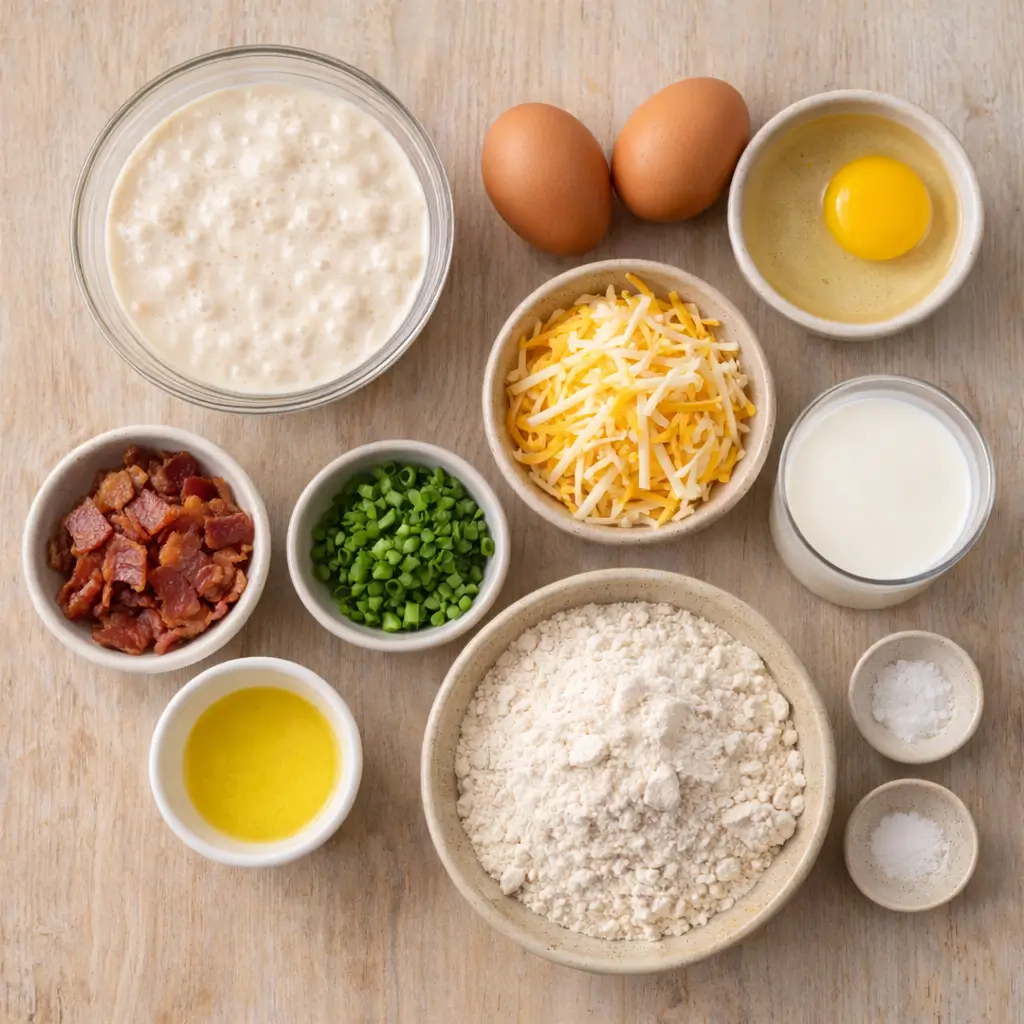
Ingredients
Sourdough Discard Breakfast Pockets
Yield: 8 breakfast pockets
Dough
- 1 cup (240 g) sourdough discard (unfed)
- 1 large egg
- 2 tablespoons (30 ml) milk or plain yogurt
- 2 tablespoons (28 g) melted butter or neutral oil
- 1 ¾ cups (220 g) all-purpose flour
- 1 teaspoon baking powder
- ½ teaspoon fine salt
Filling (Classic Version)
- 3 large eggs, scrambled
- 1 cup (110 g) shredded cheese (cheddar, mozzarella, or blend)
- ½ cup (75 g) cooked breakfast meat
(bacon, sausage, or ham — finely chopped) - 2 tablespoons chopped green onions or chives
- ¼ teaspoon black pepper
Optional Toppings (After Cooking)
- Melted butter, for brushing
- Fresh herbs, for garnish
Notes on Quantities & Substitutions
- If your sourdough discard is very thick, add 1 extra tablespoon milk.
- If your discard is very thin, add 1–2 tablespoons flour during mixing.
- For vegetarian pockets, replace meat with ½ cup sautéed vegetables.
- For extra cheese pull, increase cheese to 1¼ cups (140 g).
Why This Recipe Is Perfect for Meal Prep
One of the biggest advantages of sourdough discard breakfast pockets is how well they store.
You can make a large batch in one session. You can refrigerate them for several days. You can freeze them for weeks. When reheated properly, they taste just as good as fresh.
This makes them ideal for busy families, students, and anyone trying to simplify mornings without sacrificing quality food.
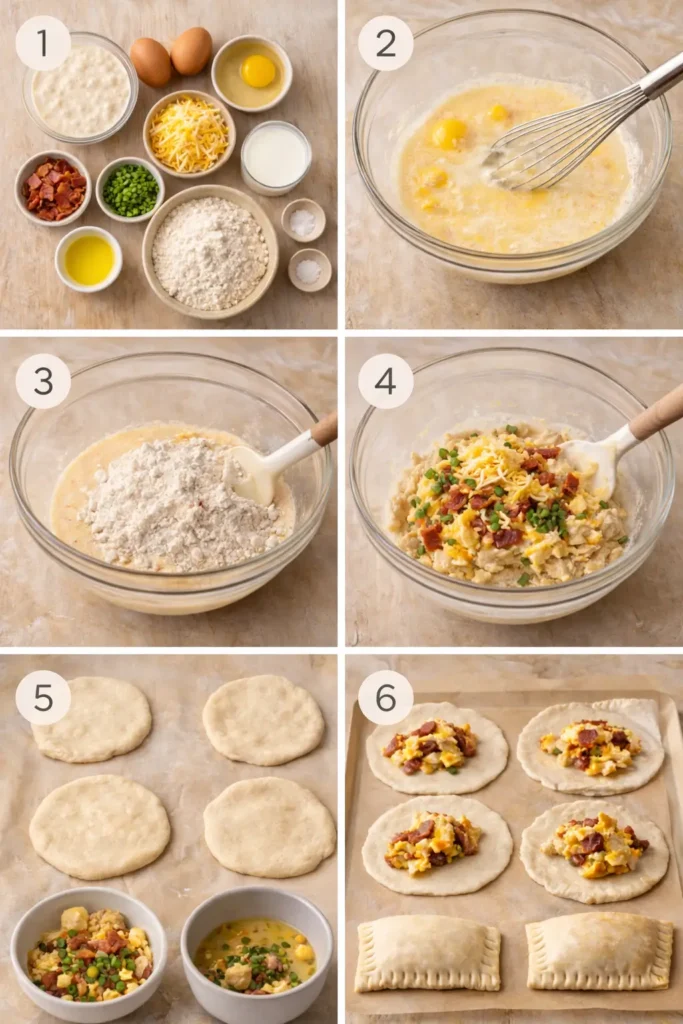
Step-by-Step Overview of the Process
Before diving into tips and variations, it helps to understand the overall flow.
- Mix the wet ingredients with the sourdough discard.
- Add dry ingredients to form a soft dough.
- Fold in cheese and fillings.
- Portion and shape the dough.
- Fill and seal each pocket.
- Cook until golden and cooked through.
The process is simple, forgiving, and beginner-friendly.
Tips for Perfect Dough Every Time
A good pocket starts with good dough.
The dough should be soft but not sticky. If it feels wet, add flour gradually. If it feels dry, add a splash of milk.
Do not overwork the dough. Overmixing can make it tough. Mix just until combined.
Let the dough rest for a few minutes before shaping. This relaxes the gluten and makes it easier to work with.
Choosing the Best Fillings
The filling is where you can get creative.
Classic Breakfast Fillings
- Scrambled eggs
- Cheddar cheese
- Cooked bacon or sausage
Vegetarian Options
- Spinach and feta
- Mushrooms and onions
- Bell peppers and cheese
Health-Focused Fillings
- Egg whites
- Low-fat cheese
- Roasted vegetables
Always cook raw fillings first. This prevents excess moisture and ensures even cooking.
How to Fold and Seal the Pockets Properly
Proper sealing prevents leaks and ensures even cooking.
Place filling in the center, not too close to the edges. Fold the dough gently but firmly. Press edges together using your fingers or a fork.
If the dough resists sealing, lightly moisten the edges with water.
Do not overfill. Overfilled pockets are more likely to burst.
Cooking Methods: Baking vs Pan-Cooking
Both methods work well.
Baking
Baking produces a more even texture and allows you to cook multiple pockets at once. It is ideal for large batches.
Pan-Cooking
Pan-cooking gives a crispier exterior and a more rustic look. It works well for small batches.
Choose the method that suits your schedule and texture preference.
How to Store and Reheat Breakfast Pockets
Refrigeration
Store cooled pockets in an airtight container for up to four days.
Freezing
Freeze fully cooled pockets individually or in layers. They keep well for up to two months.
Reheating
Reheat in the oven or air fryer for best texture. Microwaving works but softens the crust.
Common Mistakes to Avoid
Avoid these issues for the best results.
Using too much filling causes leaks.
Skipping salt makes the dough bland.
Overcooking dries out the pockets.
Using wet fillings creates soggy dough.
A little attention prevents all of these problems.
Why These Breakfast Pockets Work for Families
Kids love handheld foods. Parents love make-ahead meals. These pockets satisfy both.
They can be customized for picky eaters. They reheat quickly. They are filling and balanced.
They also encourage home cooking and reduce reliance on processed breakfast foods.
Making Them Ahead for Brunch or Guests
These pockets are excellent for entertaining.
You can prepare them in advance. You can bake them just before serving. You can keep them warm without drying them out.
Serve them with fresh fruit, yogurt, or a simple salad for a complete meal.
Flavor Variations to Try
Once you master the base recipe, variations are endless.
Add herbs like chives or parsley.
Use different cheeses for new flavors.
Try international fillings like spiced potatoes or Mediterranean vegetables.
Each variation gives the recipe new life.
Why Sourdough Discard Makes a Difference
Sourdough discard adds more than flavor.
It improves texture.
It enhances browning.
It adds subtle complexity.
It also connects you to traditional baking methods, even in a quick recipe.
Serving Ideas
Serve these pockets fresh and warm.
Pair them with coffee or tea for breakfast.
Serve them with soup for lunch.
Add a dipping sauce for extra indulgence.
They adapt easily to any occasion.
Frequently Asked Questions
Can I use active starter instead of discard?
Yes, but reduce other liquids slightly.
Can I make them gluten-free?
You can try a gluten-free flour blend, but texture may vary.
Can I make them dairy-free?
Yes, use plant-based milk and cheese alternatives.
Final Thoughts
Sourdough discard breakfast pockets are more than just a recipe. They are a solution to food waste, a time-saving breakfast, and a comforting homemade treat.
They are easy to make. They store well. They taste incredible.
Once you add them to your rotation, you will find yourself making them again and again.
