
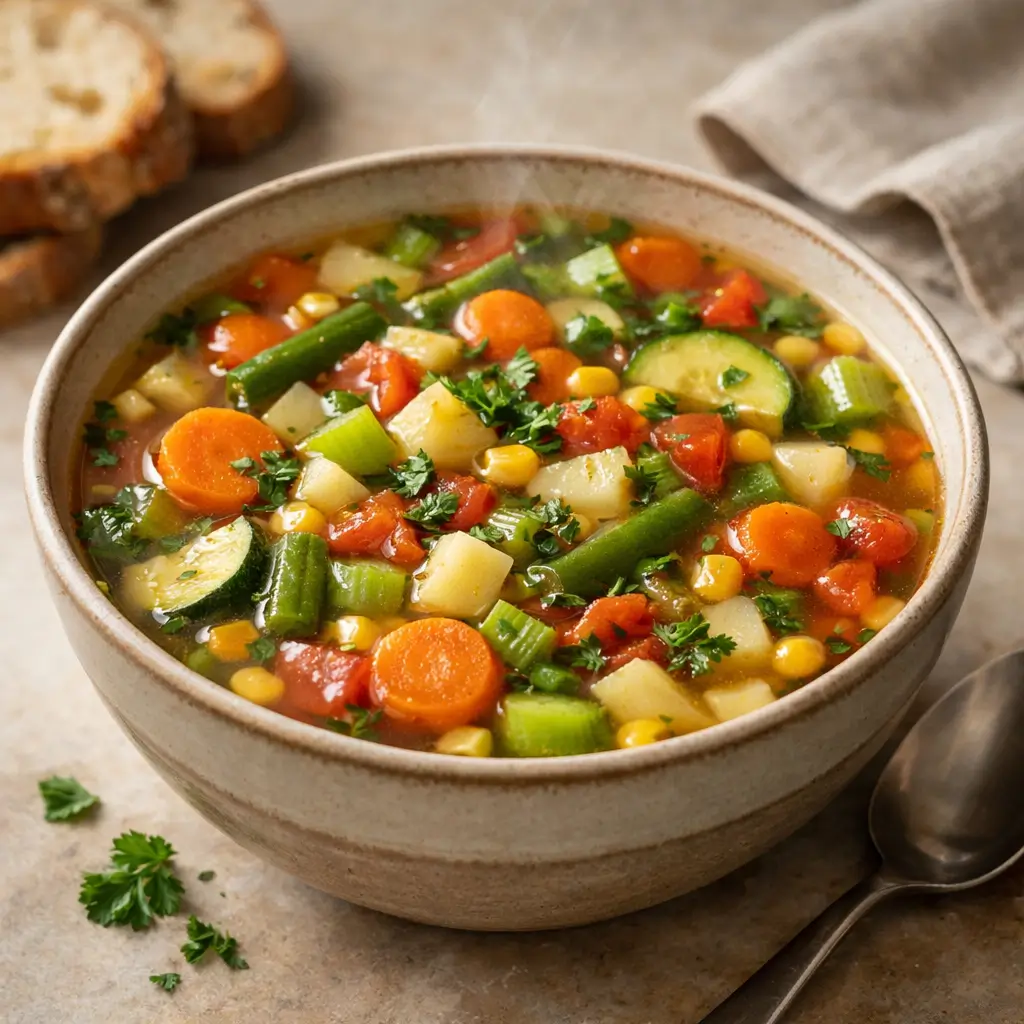
Vegetable soup is one of those timeless recipes that never goes out of style. It is simple, nourishing, flexible, and deeply comforting. Whether you are cooking for a quiet weeknight dinner, preparing meals ahead of time, or looking for a healthy option that still feels satisfying, homemade vegetable soup always delivers. It brings together fresh vegetables, a flavorful broth, and gentle seasoning to create a dish that feels both light and hearty.
This vegetable soup recipe is designed to be approachable for beginners while still offering depth of flavor that experienced home cooks will appreciate. It uses everyday vegetables, simple cooking techniques, and a method that allows the ingredients to shine without unnecessary complexity. The result is a warm, balanced soup that tastes like it has been simmering all day, even though it comes together easily.
What makes vegetable soup so appealing is its adaptability. You can adjust the vegetables based on the season, clean out your fridge, or tailor the soup to your personal preferences. Despite its flexibility, a well-made vegetable soup always follows a few key principles: gentle sautéing for flavor, proper layering of ingredients, and enough simmering time to bring everything together harmoniously.
This recipe follows those principles closely, giving you a reliable foundation that you can return to again and again.
Why Homemade Vegetable Soup Is Always a Good Idea
Homemade vegetable soup offers benefits that go far beyond convenience. First, it gives you complete control over the ingredients. You decide the quality of the vegetables, the amount of salt, and the richness of the broth. This makes it easier to create a soup that fits your dietary needs without sacrificing flavor.
Vegetable soup is also incredibly economical. A single pot can be made from affordable produce and can stretch into several meals. It reheats beautifully, freezes well, and often tastes even better the next day as the flavors continue to develop.
From a nutritional perspective, vegetable soup is an excellent way to consume a wide variety of vegetables in one meal. The broth carries flavor while allowing the vegetables to remain the star. When cooked gently, vegetables retain much of their texture and color, making the soup both visually appealing and satisfying to eat.
Most importantly, vegetable soup offers comfort. The warmth, the aroma, and the familiar flavors make it a dish people return to during colder months, busy weeks, or moments when simple food feels best.
Key Ingredients for a Flavorful Vegetable Soup
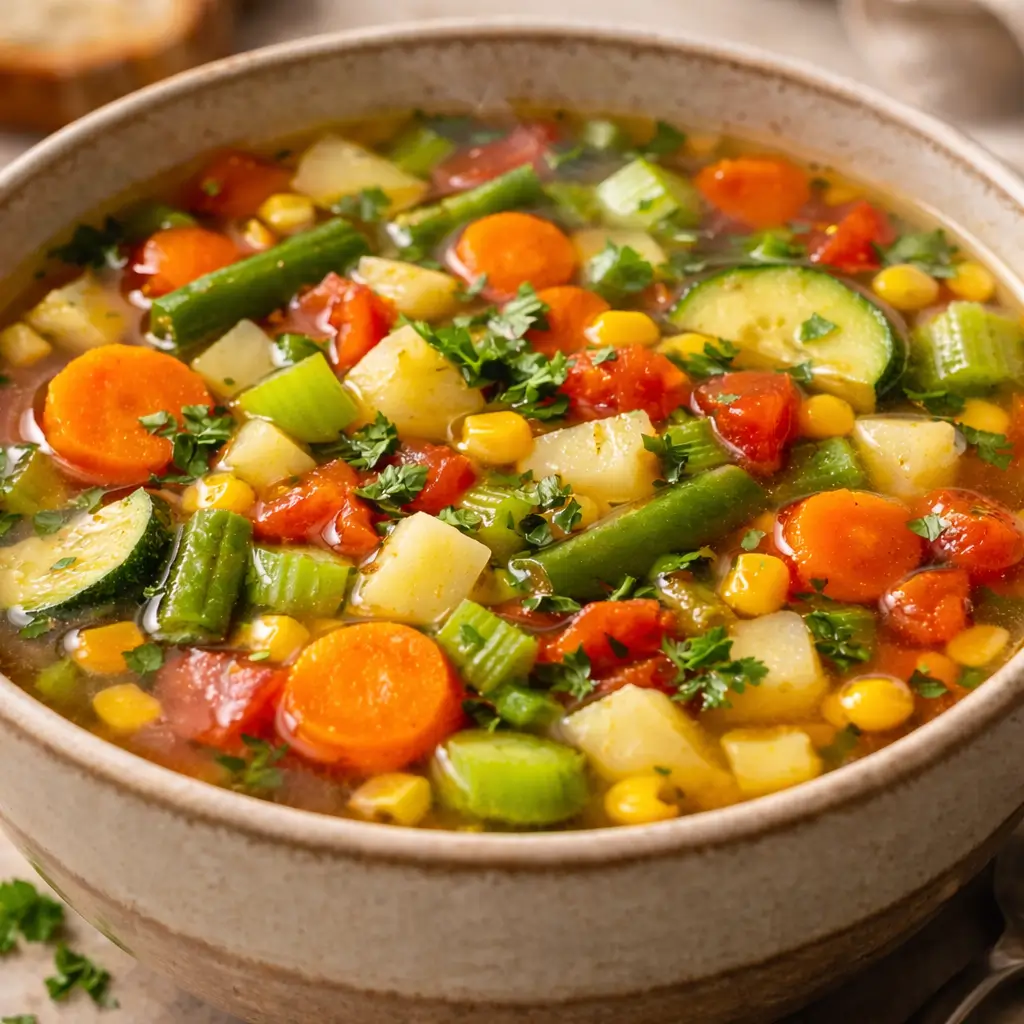
A great vegetable soup starts with a thoughtful selection of ingredients. While the exact vegetables can vary, balance is essential. You want a mix of sweet, savory, and mild flavors, as well as different textures.
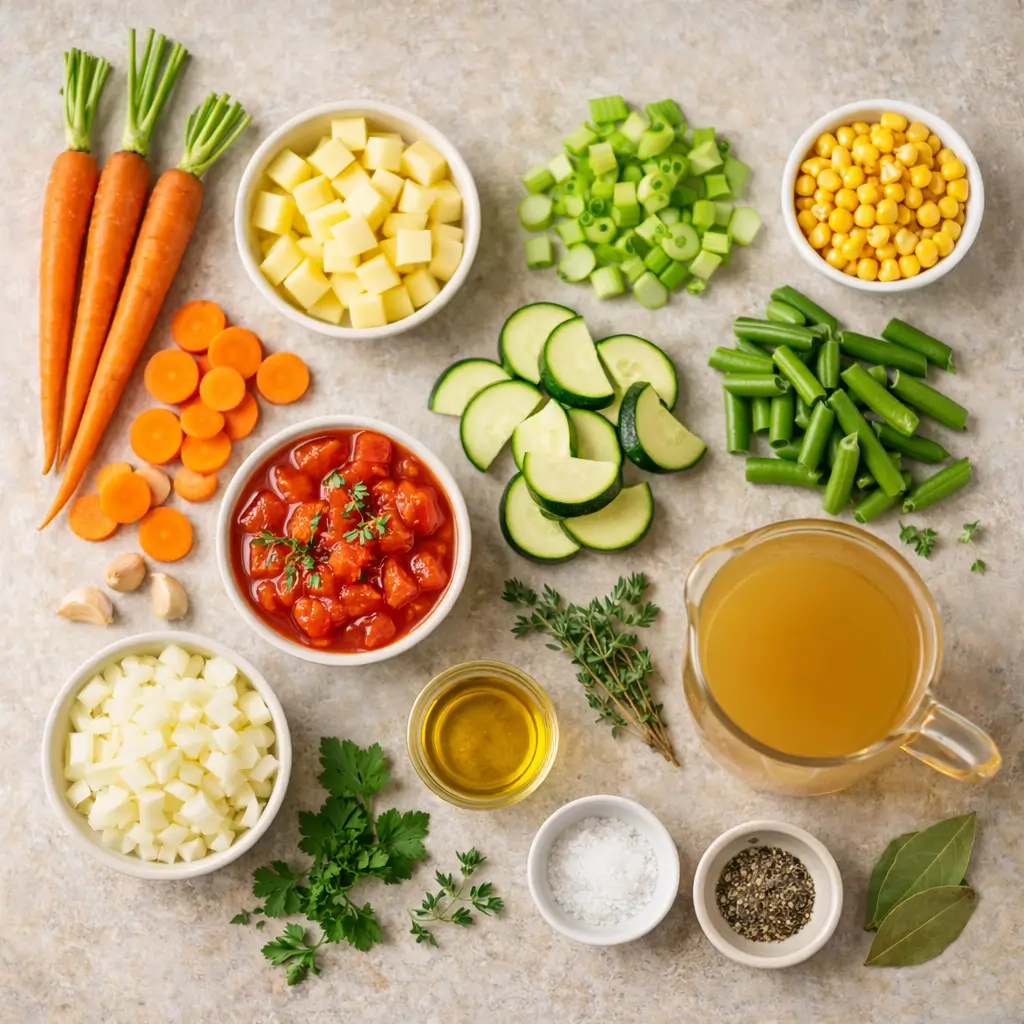
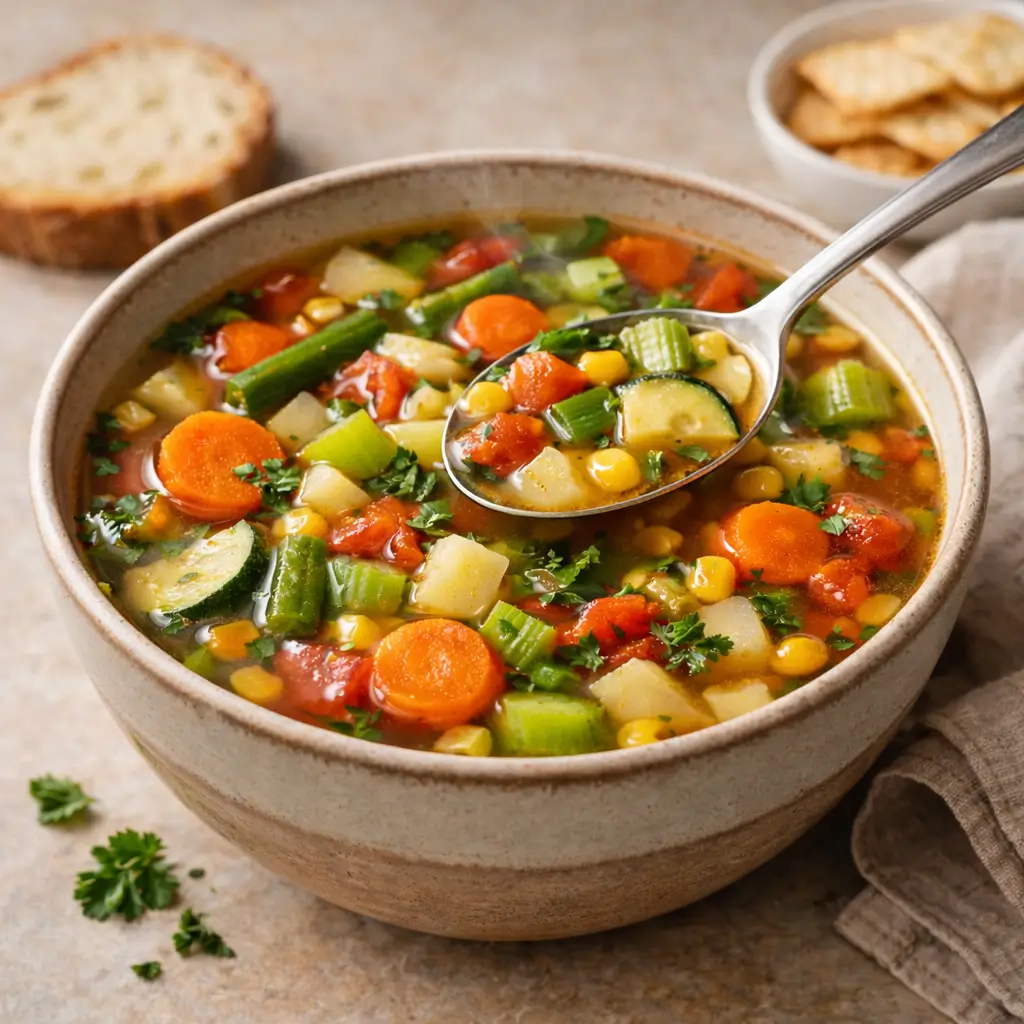
Carrots bring natural sweetness and color. Potatoes add body and make the soup more filling. Celery contributes subtle bitterness and aroma. Zucchini softens quickly and absorbs flavor. Green beans add structure and freshness. Tomatoes bring acidity and depth. Onion and garlic form the aromatic base that ties everything together.
The broth plays a crucial role. A good-quality vegetable broth adds richness without overpowering the vegetables. Olive oil helps carry flavor during the sautéing process. Herbs such as parsley, thyme, or bay leaf provide gentle background notes that enhance the soup without dominating it.
Salt and black pepper should be used thoughtfully. Seasoning in stages ensures the soup tastes balanced rather than flat or overly salty.
Exact Ingredient Quantities with Scaling Table
This recipe can easily be adjusted depending on how many people you are serving.
Base Quantities (4 Servings)
- Olive oil: 2 tablespoons
- Onion: 1 medium
- Garlic: 3 cloves
- Carrots: 3 medium
- Potatoes: 2 medium
- Celery: 2 stalks
- Zucchini: 1 medium
- Green beans: 1 cup
- Diced tomatoes: 1 can (400 g)
- Vegetable broth: 6 cups
- Salt and black pepper: to taste
- Fresh herbs: optional
Scaling Table
| Servings | Olive Oil | Onion | Carrots | Potatoes | Broth |
|---|---|---|---|---|---|
| 2 | 1 tbsp | ½ | 2 | 1 | 3 cups |
| 4 | 2 tbsp | 1 | 3 | 2 | 6 cups |
| 6 | 3 tbsp | 1½ | 5 | 3 | 9 cups |
Choosing the Best Vegetables
Fresh vegetables are ideal for this soup, but frozen vegetables can also work well when fresh options are limited. If using frozen vegetables, add them later in the cooking process to prevent overcooking.
Try to cut vegetables into similar sizes. This helps them cook evenly and improves the overall texture of the soup. Carrots and potatoes should be diced or sliced thin enough to become tender without falling apart. Softer vegetables like zucchini should be added after sturdier ones to preserve their shape.
Seasonality matters. In colder months, root vegetables like parsnips or turnips can be added for extra depth. In warmer months, lighter vegetables such as spinach or peas can be stirred in near the end for freshness.
The Importance of Building Flavor
One common mistake with vegetable soup is adding everything to the pot at once. While this may seem efficient, it often results in a bland soup. Building flavor step by step makes a noticeable difference.
Sautéing onion and garlic in olive oil creates a flavorful base. Adding harder vegetables next allows them to develop slight caramelization before the broth is introduced. Tomatoes should be added early enough to cook down slightly, reducing raw acidity.
Simmering gently rather than boiling aggressively allows flavors to meld without breaking down the vegetables too much. Patience at this stage pays off with a more cohesive and satisfying soup.
Step-by-Step Cooking Instructions
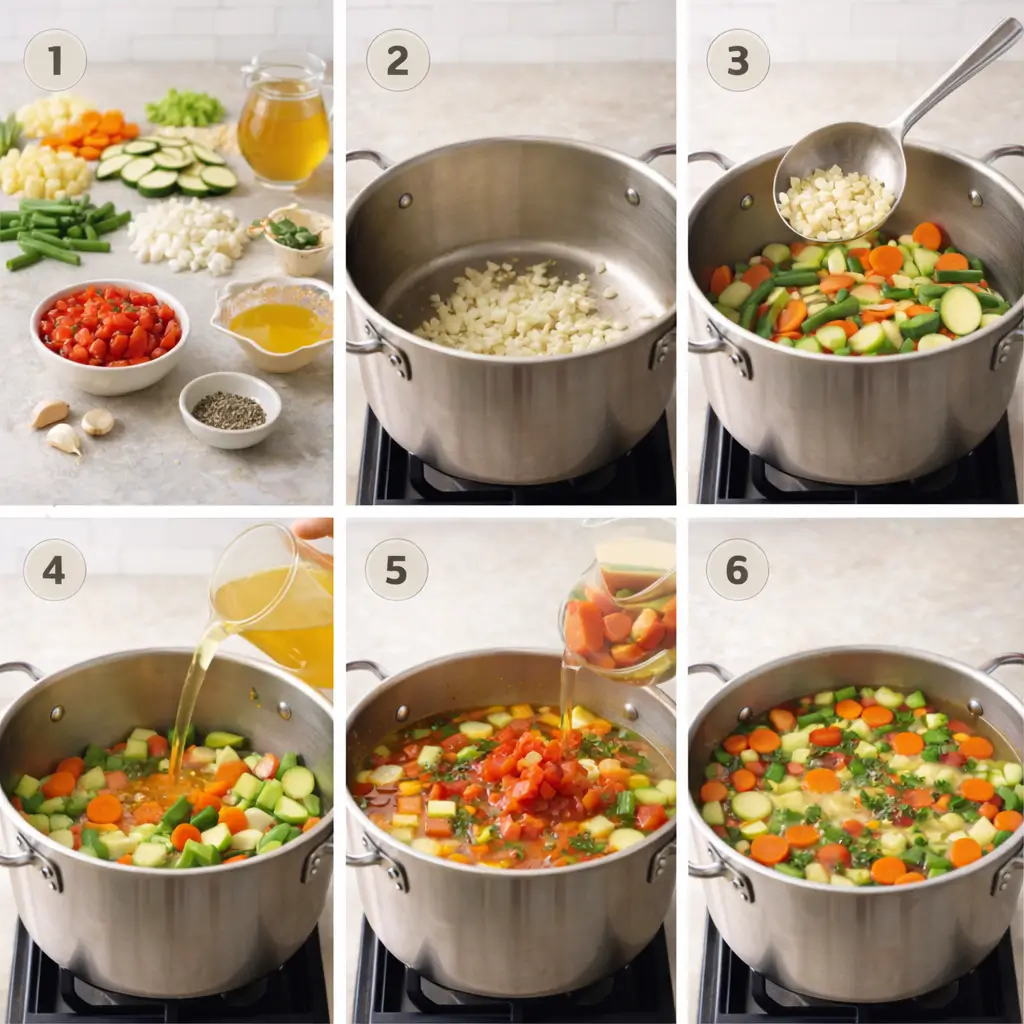
Step 1: Prepare the Vegetables
Begin by washing and preparing all the vegetables. Peel and slice the carrots, dice the potatoes, chop the celery, slice the zucchini, trim and cut the green beans, and finely chop the onion and garlic. Having everything ready before cooking ensures a smooth process.
Step 2: Sauté the Aromatics
Heat olive oil in a large soup pot over medium heat. Add the chopped onion and cook until soft and translucent. Stir in the garlic and cook briefly until fragrant. This step creates the aromatic base that flavors the entire soup.
Step 3: Add the Hearty Vegetables
Add the carrots, celery, and potatoes to the pot. Stir well to coat them in the oil and aromatics. Allow them to cook for a few minutes so they begin to soften and release flavor.
Step 4: Add Tomatoes and Broth
Stir in the diced tomatoes, followed by the vegetable broth. Bring the mixture to a gentle simmer. The liquid should fully cover the vegetables. Add a bay leaf or fresh herbs at this stage if using.
Step 5: Simmer Until Tender
Reduce the heat and let the soup simmer gently. After about ten minutes, add the zucchini and green beans. Continue simmering until all vegetables are tender but still hold their shape.
Step 6: Season and Serve
Remove the bay leaf. Season the soup with salt and black pepper to taste. Stir in fresh herbs if desired. The soup is now ready to serve.
Serving Suggestions
Vegetable soup is delicious on its own, but it pairs well with simple sides. Crusty bread, toasted sourdough, or a warm roll complements the broth beautifully. A light salad with a tangy dressing adds contrast and freshness.
For a heartier meal, serve the soup alongside a grilled cheese sandwich or a slice of savory quick bread. Garnishing with fresh herbs or a drizzle of olive oil adds a final touch of flavor.
Storage and Reheating Tips
Vegetable soup stores exceptionally well. Allow it to cool completely before transferring it to an airtight container. It can be refrigerated for up to four days.
To freeze, portion the soup into freezer-safe containers, leaving space for expansion. Freeze for up to three months. Thaw overnight in the refrigerator before reheating.
Reheat gently on the stovetop over medium-low heat, stirring occasionally. Add a splash of broth or water if the soup has thickened too much.
Variations and Customizations
This vegetable soup recipe serves as a flexible base. You can add cooked beans or lentils for extra protein. Pasta or rice can be added during the last few minutes of cooking for a more filling soup.
Spices such as paprika, cumin, or dried herbs can be introduced for a different flavor profile. Leafy greens like spinach or kale can be stirred in just before serving.
Common Mistakes to Avoid
Overcooking vegetables can make the soup mushy. Adding soft vegetables too early often causes this issue. Seasoning only at the end can result in flat flavor. Seasoning gradually creates a more balanced result.
Using overly strong broth may overpower the vegetables. Choose a mild, well-balanced broth to let the ingredients shine.
Frequently Asked Questions
Can I make vegetable soup in advance?
Yes. It often tastes better the next day.
Can I use frozen vegetables?
Yes. Add them later to avoid overcooking.
Is vegetable soup healthy?
Yes. It is low in calories and rich in nutrients.
Can I make it oil-free?
Yes. Use a small amount of broth to sauté instead.
Final Thoughts
Vegetable soup is more than just a recipe. It is a reliable, comforting dish that adapts to your kitchen and your lifestyle. This version balances simplicity with flavor, making it suitable for everyday cooking while still feeling special.
Once you master this base recipe, it becomes second nature. You will find yourself adjusting vegetables, seasoning intuitively, and making it your own. That is the beauty of a good vegetable soup. It grows with you.
