
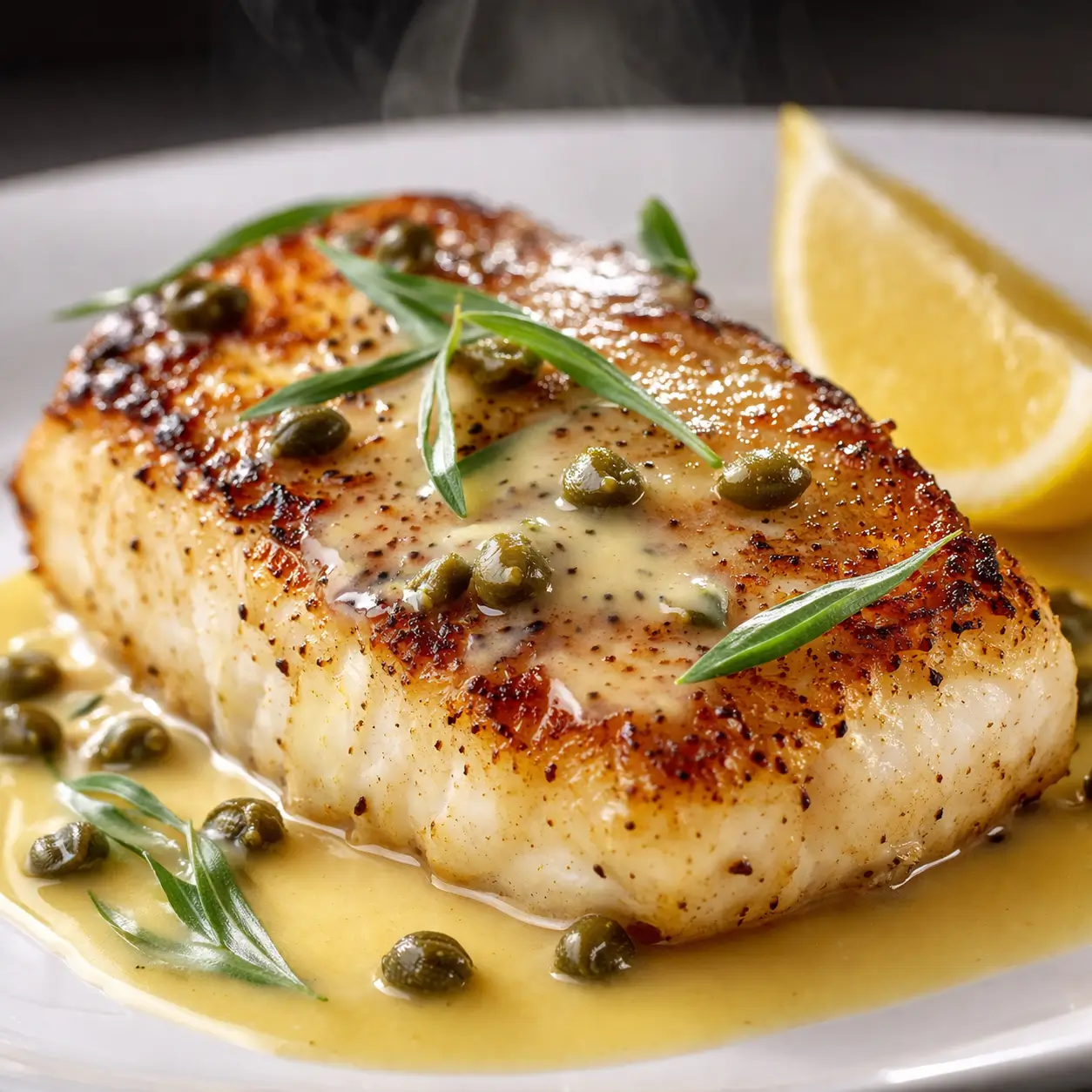
This pan seared halibut recipe is the weeknight dinner you didn’t know you needed. A golden, perfectly crispy crust on the outside. Tender, flaky white fish on the inside. And a silky, buttery beurre blanc sauce that takes the whole dish completely over the top.
The best part? It’s ready in just 30 minutes — start to finish.
You don’t need culinary school training. You don’t need a fancy restaurant kitchen. You just need a hot skillet, a few simple ingredients, and this step-by-step guide.
Whether you’re cooking for a date night, a family dinner, or just treating yourself to something special on a Tuesday, this pan seared halibut with beurre blanc will deliver every single time.
Why You’ll Love This Pan Seared Halibut
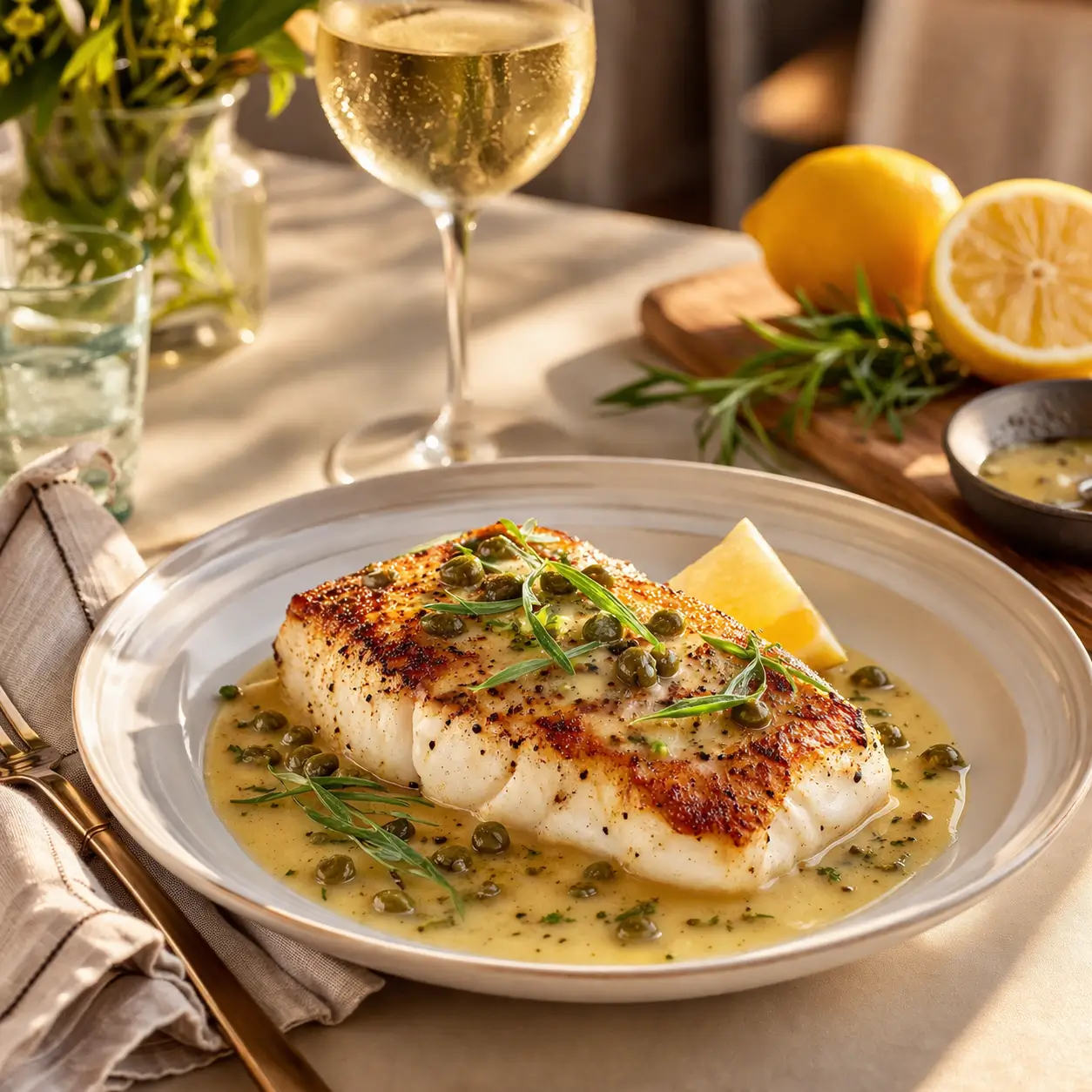
Pan seared halibut with beurre blanc — restaurant quality, right from your home kitchen.
Ingredients for Pan Seared Halibut with Beurre Blanc
For the Halibut
- 2 halibut fillets (6–8 oz each, about 1 inch thick) — skin on or off, your choice
- 2 tablespoons clarified butter or ghee — gives you a higher smoke point for a perfect sear
- 1 teaspoon flaky sea salt
- ½ teaspoon cracked black pepper
- ½ teaspoon garlic powder — optional but adds depth
For the Beurre Blanc Sauce
- ½ cup dry white wine — Sauvignon Blanc or Pinot Grigio work perfectly
- 2 tablespoons white wine vinegar
- 2 shallots, finely minced
- 2 tablespoons heavy cream — this stabilizes the sauce
- 6 tablespoons cold unsalted butter, cut into small cubes — keep it cold until needed
- Salt and white pepper to taste
- Fresh tarragon or parsley, chopped, for finishing
For Serving
- Lemon wedges
- Extra fresh herbs
- Capers (optional)
Halibut: Can’t find halibut? Cod, sea bass, or mahi-mahi are excellent swaps. They all sear beautifully.
Clarified butter: Regular butter works but burns faster. If using regular butter, keep the heat slightly lower.
Heavy cream: This small amount is the emulsifier. For a dairy-free version, use full-fat coconut cream (see Variations below).
White wine: Use a wine you’d actually drink. Avoid “cooking wine” — it’s too salty and will throw off the sauce.
Shallots: No shallots? Use the white part of a green onion or a small amount of very finely minced sweet onion.
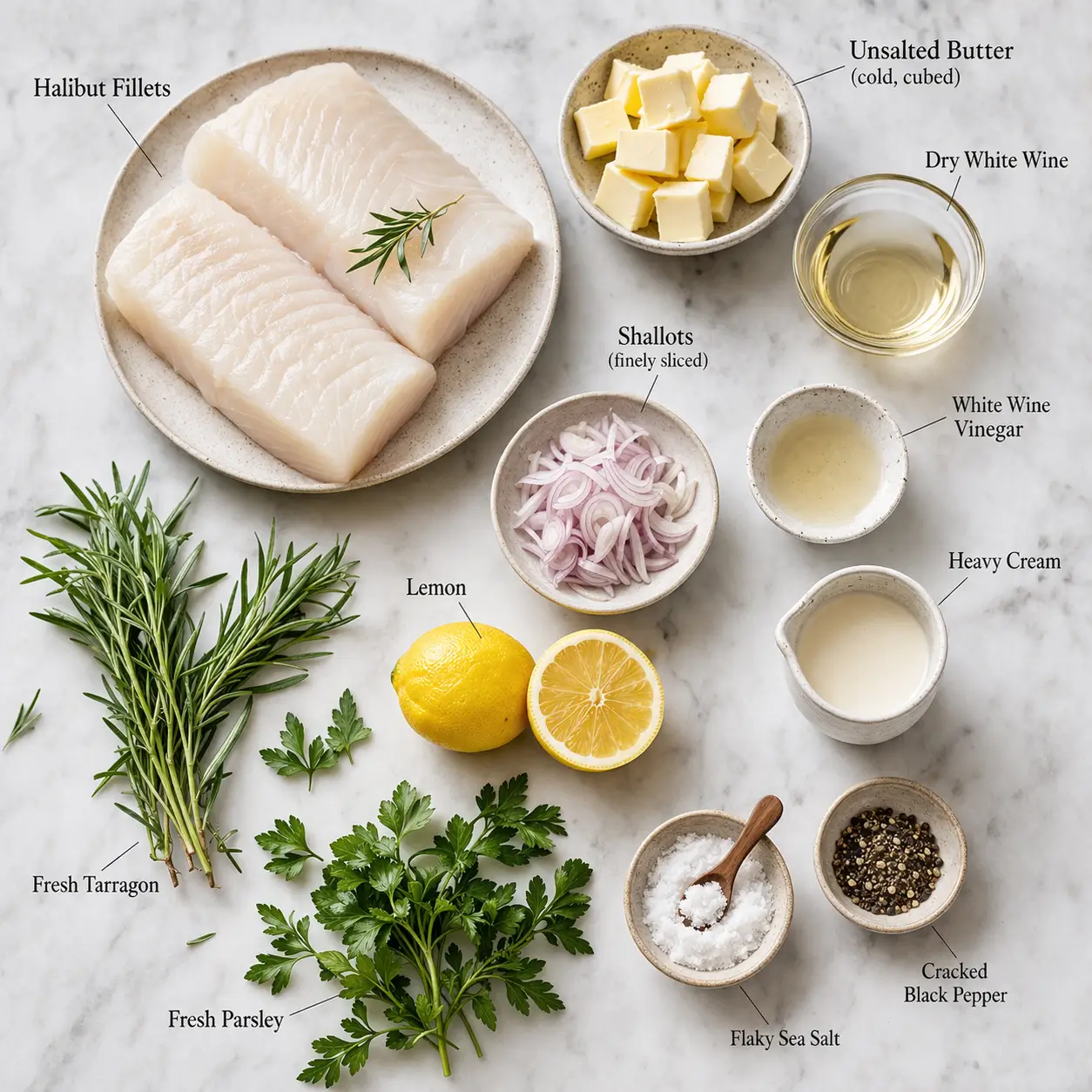
Everything you need for pan seared halibut with beurre blanc — simple ingredients, spectacular results.
How to Choose the Best Halibut
The quality of your fish makes or breaks this dish. Here’s exactly what to look for at the market.
Fresh vs. Frozen
Fresh is ideal, but high-quality frozen halibut is often a better choice than “fresh” fish that has been sitting for days. Look for IQF (individually quick frozen) fillets — they’re frozen at peak freshness right on the boat.
What to Look For
- Color: Pure white to slightly translucent. Avoid any yellowing or browning around the edges.
- Smell: Fresh halibut smells clean, like the ocean. If it smells strongly “fishy,” pass on it.
- Texture: Firm and moist. It should spring back slightly when pressed.
- Thickness: Aim for fillets that are at least 1 inch thick. Thinner fillets cook too fast and easily overcook.
Wild-Caught vs. Farmed
For halibut, wild-caught Pacific halibut is the gold standard. It has a cleaner flavor and firmer texture than farmed options. Atlantic halibut is also excellent but harder to find.
How to Make Pan Seared Halibut with Beurre Blanc — Step by Step
Step 1: Prep the Fish
Remove your halibut from the fridge 20 minutes before cooking. Pat each fillet completely dry with paper towels — this is non-negotiable for a good sear. Season generously on both sides with salt, pepper, and garlic powder.
Step 2: Make the Beurre Blanc Reduction
In a small saucepan over medium heat, combine the white wine, white wine vinegar, and minced shallots. Bring to a simmer and reduce until only about 2 tablespoons of liquid remain. This takes about 6–8 minutes. Don’t rush it.
Step 3: Add the Cream
Stir in the heavy cream and let it reduce for another 1–2 minutes until slightly thickened. Keep the heat on medium-low — you want a gentle simmer, not a boil.
Step 4: Sear the Halibut
Heat your skillet (cast iron is best) over high heat until very hot. Add the clarified butter. When it shimmers, carefully lay the halibut fillets into the pan. Do not move them. Sear for 3–4 minutes until a deep golden crust forms.
Step 5: Flip and Finish
Gently flip each fillet using a fish spatula. Reduce heat to medium and cook for another 2–3 minutes, depending on thickness. The fish is done when it flakes easily with a fork and the internal temperature reaches 130–135°F (55–57°C).
Step 6: Mount the Beurre Blanc
Return to your sauce. Over very low heat, whisk the cold butter cubes into the reduction one at a time, adding each piece only after the previous one has melted. This is called “mounting” — it creates the silky, emulsified texture. Season with salt, white pepper, and fresh tarragon. Strain through a fine mesh sieve if you prefer a smooth sauce.
Step 7: Plate and Serve
Rest the halibut for 1–2 minutes. Spoon the beurre blanc generously over each fillet. Add fresh herbs, a squeeze of lemon, and optional capers. Serve immediately.
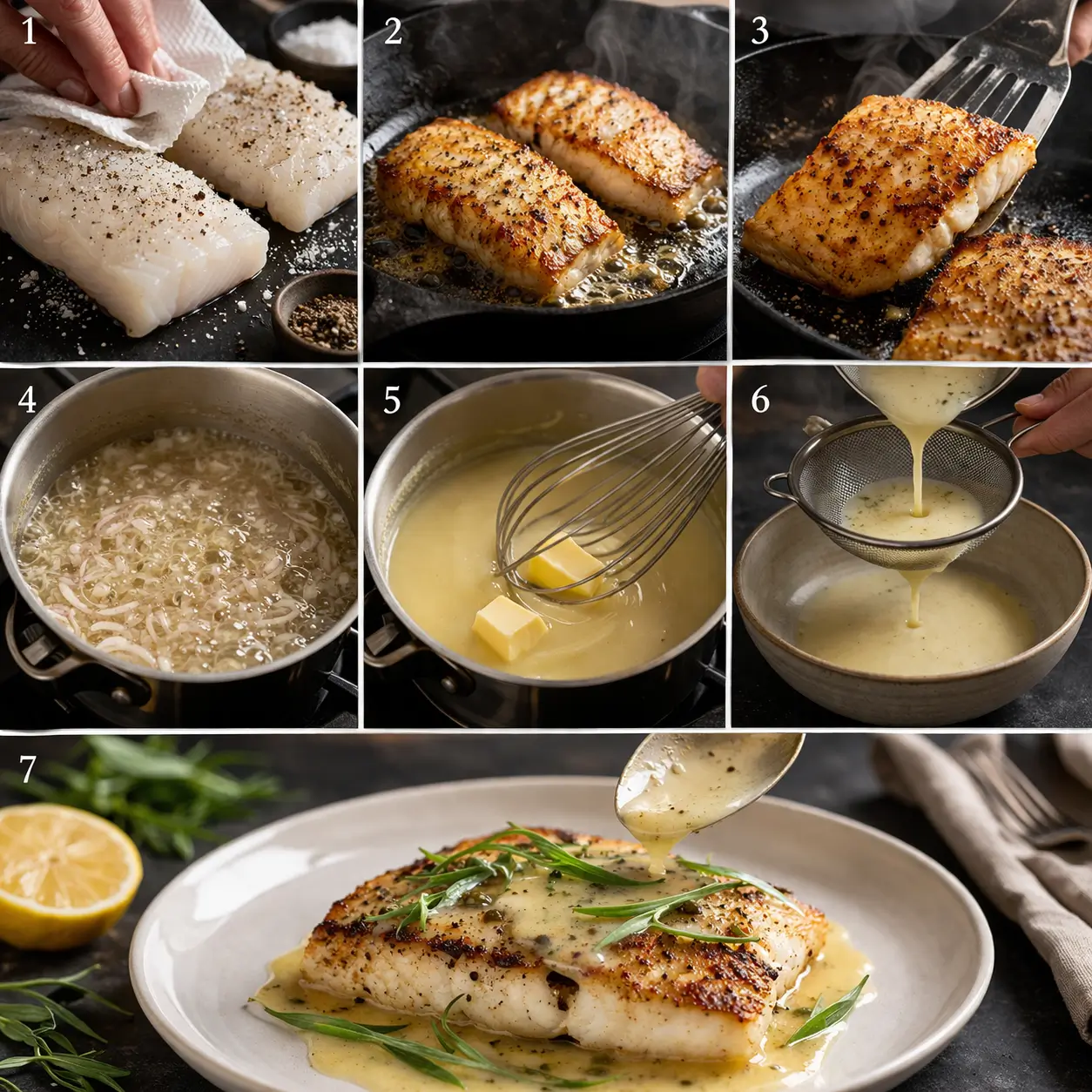
Seven simple steps to the perfect pan seared halibut — follow along and you can’t go wrong.
Why This Pan Seared Halibut Recipe Works
There’s real food science behind why every step matters here.
Drying the fish first removes surface moisture that would otherwise steam the fish instead of searing it. Steam = grey, soggy crust. Dry = golden, crispy crust. That’s the whole game.
Bringing the fish to room temperature ensures even cooking from edge to center. A cold fillet straight from the fridge will overcook on the outside before the inside is done.
The cream in the beurre blanc isn’t just for flavor — it lowers the sauce’s temperature during reduction and creates an emulsion point. Without it, your sauce is much more likely to break (separate).
Cold butter added in stages is what creates the signature silky texture of beurre blanc. Each cube of cold butter lowers the sauce temp slightly and adds fat gradually — this keeps the emulsion stable and smooth.
Cast iron holds heat evenly, which means your sear stays consistent across the whole surface of the fillet — no hot spots, no uneven cooking.
Best Side Dishes for Pan Seared Halibut
Halibut with beurre blanc is elegant but not heavy — you want sides that complement rather than compete.
Variations
- Dairy-Free Beurre Blanc: Replace the butter with high-quality vegan butter (Miyoko’s works well) and the heavy cream with full-fat coconut cream. The sauce won’t be quite as silky, but it’s still delicious.
- Gluten-Free: This recipe is naturally gluten-free as written. Just double-check your wine and any seasoning blends for hidden gluten.
- Lemon Caper Beurre Blanc: Add 2 tablespoons of capers and the zest of one lemon to the finished sauce. Bright, briny, and incredible with halibut.
- Herb-Crusted Halibut: Press a mixture of panko breadcrumbs, parsley, and parmesan onto the top of each fillet before searing. Gives you an extra-crunchy crust.
- Miso Beurre Blanc: Whisk 1 teaspoon of white miso paste into your finished sauce for an umami-forward Japanese-French fusion version.
- Spicy Version: Add a pinch of cayenne or a small sliced red chili to the shallot reduction for a subtle heat that plays off the rich butter sauce.
Storage, Meal Prep & Reheating
Storing Leftovers
Store cooked halibut in an airtight container in the fridge for up to 2 days. Store the beurre blanc sauce separately — it will keep for 1–2 days refrigerated.
Can You Freeze Pan Seared Halibut?
You can freeze the cooked fish for up to 1 month, but texture does suffer. The beurre blanc sauce does not freeze well — it will break when thawed. Make it fresh when you’re ready to eat.
Reheating
The best way to reheat halibut is in a 275°F oven for 10–12 minutes until just warmed through. Avoid the microwave — it makes the fish rubbery. To revive the beurre blanc, gently warm it in a small saucepan over very low heat, whisking constantly and adding a small pat of cold butter if needed to re-emulsify.
Meal Prep Tips
You can prep the beurre blanc reduction (steps 2–3) up to 2 days ahead. Store it covered in the fridge, then simply mount with cold butter when ready to serve. The fish is best cooked fresh.
Common Mistakes to Avoid
- Not drying the fish: Wet fish will steam, not sear. Pat it completely dry — this step is non-negotiable for a crispy crust.
- Moving the fish too soon: Don’t touch it. Leave it alone for the full 3–4 minutes until the crust releases naturally from the pan.
- Cooking straight from the fridge: Cold fish cooks unevenly. Always rest it at room temperature for 20 minutes first.
- Overheating the beurre blanc: Too much heat will break the sauce. Once you start adding butter, keep the heat at its lowest setting.
- Adding warm butter: The butter must be cold. Cold butter is what creates the emulsion. Warm or room-temperature butter will make the sauce greasy instead of silky.
- Overcooking the halibut: Halibut goes from perfect to dry very quickly. Pull it off the heat at 130°F — carry-over cooking will take it the rest of the way.
Nutritional Information
Per serving (1 fillet with beurre blanc sauce), approximate values:
Serving & Presentation Tips
You’ve made a restaurant-quality dish — now plate it like one.
- Warm your plates first. A warm plate keeps the fish and sauce at the perfect temperature longer. Just run them under hot water or pop them in a low oven for a few minutes.
- Sauce first, fish on top. Spoon a pool of beurre blanc onto the plate, then set the fish on top. This looks cleaner than pouring sauce over the fillet.
- Use height. If serving with roasted potatoes or rice, stack them slightly off-center so the fish leans against them. Small height differences make a big visual difference.
- Garnish with intention. A few sprigs of fresh tarragon, a thin lemon wheel, and a small cluster of capers — simple but elegant.
- Finish with flaky salt. A pinch of Maldon sea salt right before serving adds a visible texture element and enhances every flavor on the plate.
- Serve immediately. Pan seared halibut and beurre blanc are both best the moment they’re made. Don’t let them sit.
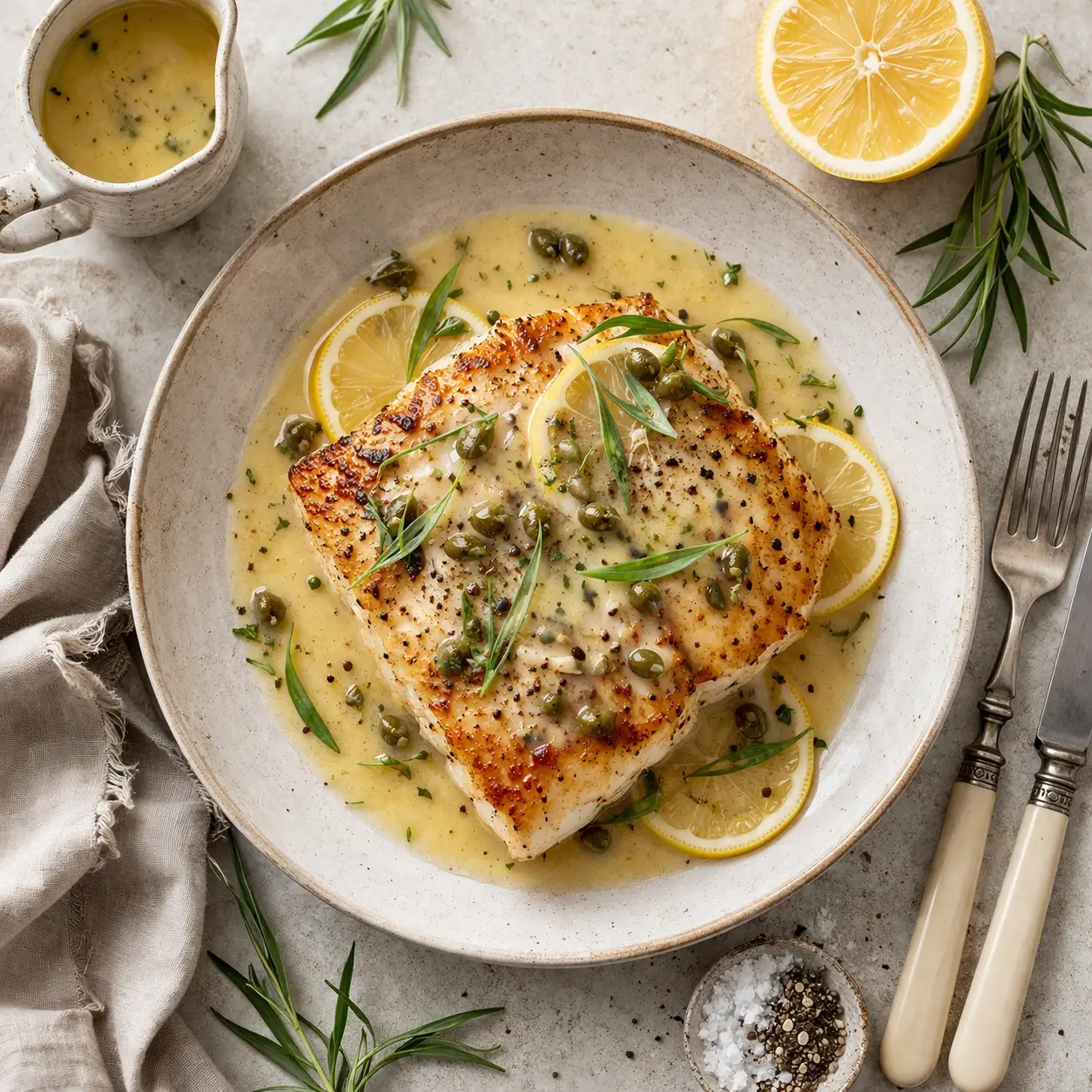
Plated like a restaurant, made in your home kitchen — the perfect pan seared halibut with beurre blanc.
Frequently Asked Questions
What temperature should pan seared halibut be cooked to?
The USDA recommends cooking fish to an internal temperature of 145°F, but most chefs pull halibut off the heat at 130–135°F. Carry-over cooking will bring it to around 140°F while it rests, keeping it moist and tender rather than dry. Use an instant-read thermometer for the most accurate results.
Can I make beurre blanc sauce ahead of time?
Yes — partially. You can prepare the reduction (wine, vinegar, shallots, and cream) up to 2 days in advance and store it covered in the fridge. When ready to serve, gently rewarm it over very low heat and mount with cold butter. The fully finished sauce does not hold well and is best made fresh.
What’s the best pan for searing halibut?
A cast iron skillet is the top choice — it holds heat evenly and creates an exceptional crust. A heavy-bottomed stainless steel pan is also excellent. Avoid non-stick pans if you want a proper golden sear; non-stick surfaces don’t get hot enough to develop real crust.
How do I know when halibut is done without a thermometer?
Gently press the thickest part of the fillet with your finger or a fork. It should flake easily and feel firm — not soft and translucent. Another test: insert a thin knife or skewer into the center for 3 seconds, then touch it to your wrist. If it feels warm, the fish is done. If it feels hot, it may be overcooked.
Can I use frozen halibut for this recipe?
Absolutely. Thaw it overnight in the fridge — never at room temperature. The critical step with frozen fish is to pat it extra thoroughly dry before seasoning. Frozen fish releases more moisture as it thaws, and any residual water will prevent a good sear.
Why did my beurre blanc break?
A broken (separated) beurre blanc is usually caused by too much heat. The sauce must stay warm but never boil after you start adding butter. If it does break, remove from heat immediately and whisk in 1 tablespoon of cold water to help re-emulsify. Prevention is better: keep the heat on its lowest setting once you start mounting with butter.
Is this recipe gluten-free?
Yes — this pan seared halibut with beurre blanc is naturally gluten-free. Just make sure to check the label on your white wine (most are GF, but some winemaking processes use wheat-based fining agents) and any seasoning blends you use.
Related Recipes You’ll Love
Conclusion
Pan seared halibut with beurre blanc is proof that restaurant-quality cooking doesn’t require years of training or hours in the kitchen.
You now have everything you need — the right fish, the right technique, and a foolproof butter sauce that elevates the whole dish. Whether you follow the classic recipe or put your own spin on it with one of the variations, the result is always going to be impressive.
Give it a try this week. Once you taste that golden crust with that silky beurre blanc, it’s going to become a permanent part of your dinner rotation.
Did you make this recipe? Leave a comment below and let me know how it turned out. I’d love to hear which side dish you paired it with!
— Charlotte
Pan Seared Halibut with Beurre Blanc
A golden, perfectly crispy halibut fillet topped with a silky French butter sauce — restaurant quality on your table in just 30 minutes.
Ingredients
For the Halibut
- 2 halibut fillets (6–8 oz each, ~1 inch thick)
- 2 tablespoons clarified butter or ghee
- 1 teaspoon flaky sea salt
- ½ teaspoon cracked black pepper
- ½ teaspoon garlic powder (optional)
For the Beurre Blanc Sauce
- ½ cup dry white wine
- 2 tablespoons white wine vinegar
- 2 shallots, finely minced
- 2 tablespoons heavy cream
- 6 tablespoons cold unsalted butter, cut into small cubes
- Salt and white pepper to taste
- Fresh tarragon or parsley, chopped
For Serving
- Lemon wedges
- Extra fresh herbs
- Capers (optional)
Instructions
- 1Prep the fish. Remove halibut from fridge 20 minutes before cooking. Pat completely dry with paper towels. Season generously on both sides with salt, pepper, and garlic powder.
- 2Make the reduction. In a small saucepan over medium heat, combine white wine, white wine vinegar, and shallots. Simmer until reduced to about 2 tablespoons, 6–8 minutes.
- 3Add cream. Stir in heavy cream and reduce 1–2 minutes until slightly thickened. Keep heat at medium-low.
- 4Sear the halibut. Heat a cast iron skillet over high heat. Add clarified butter. When shimmering, lay fillets in the pan. Do not move. Sear 3–4 minutes until a deep golden crust forms.
- 5Flip and finish. Gently flip with a fish spatula. Reduce to medium and cook 2–3 more minutes until fish flakes and internal temp reaches 130–135°F.
- 6Mount the beurre blanc. Over very low heat, whisk cold butter cubes into the reduction one at a time. Season with salt, white pepper, and fresh herbs. Strain if desired.
- 7Plate and serve. Rest fish 1–2 minutes. Spoon beurre blanc over each fillet. Garnish with herbs, lemon, and capers. Serve immediately.
Fish substitute: Cod, sea bass, or mahi-mahi all work beautifully in this recipe.
Sauce tip: Keep heat very low when adding butter — never let the sauce boil or it will break.
Dairy-free: Use vegan butter and full-fat coconut cream for a dairy-free version.
Storage: Store cooked fish up to 2 days in the fridge. Make beurre blanc fresh for best results.
