
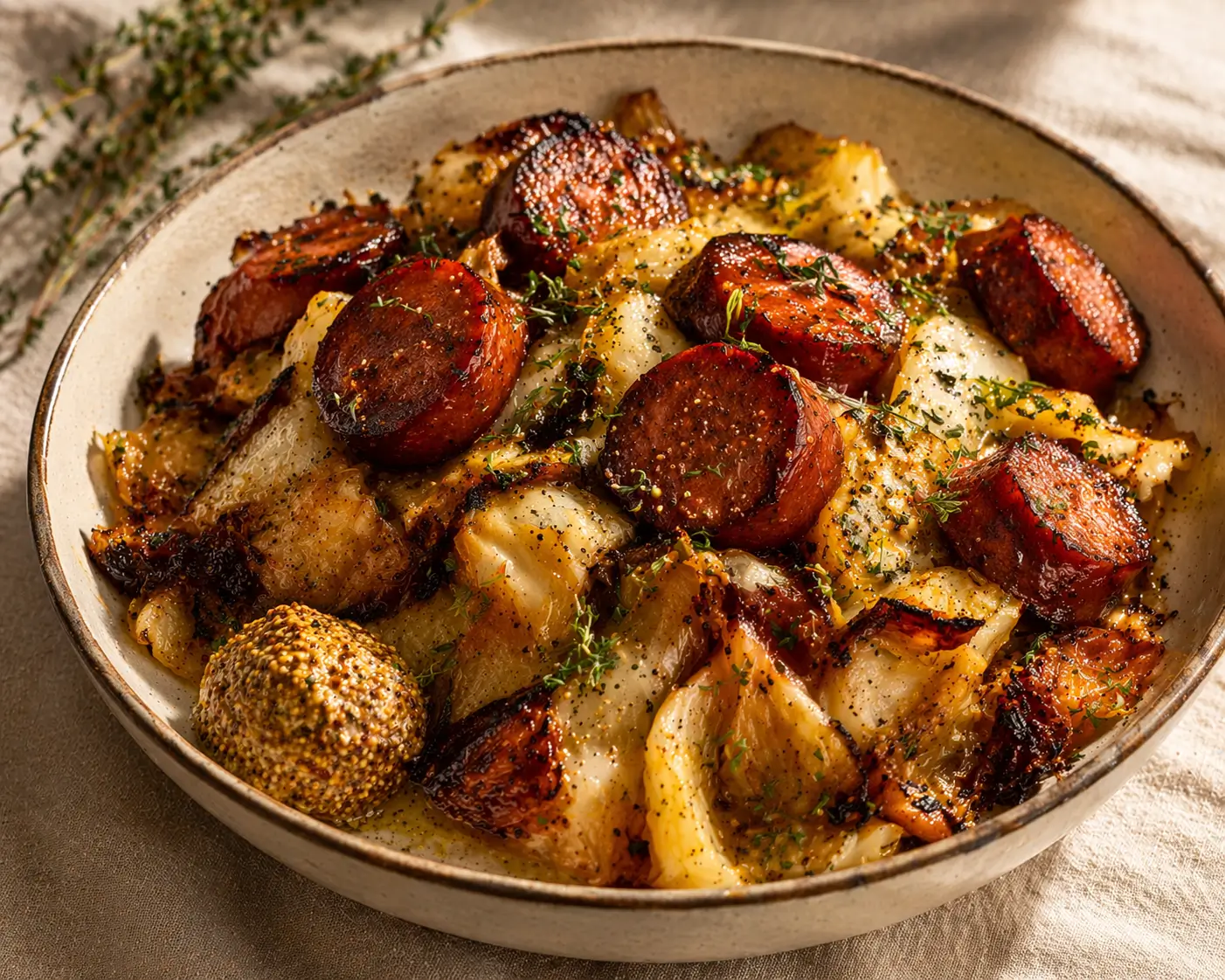
There is a moment — somewhere around the 15-minute mark — when something unexpected happens in the pan. The cabbage, which started out pale and a little uninspiring, transforms. It collapses into something silky, deeply golden, and impossibly fragrant. The kitchen smells like a Parisian bistro. And you realize that caramelized cabbage and sausage skillet might just be the most underrated dinner in existence.
This is not your grandmother’s boiled cabbage. This is cabbage that has been coaxed — slowly, patiently — into a state of deep amber sweetness, layered with smoky sausage, caraway seeds, whole grain mustard, and a splash of apple cider vinegar that cuts right through the richness.
One pan. Thirty minutes. Ingredients that cost almost nothing. A result that tastes like you actually know what you’re doing in the kitchen.
Why You’ll Love This Recipe
If sausage dinners are your thing — and they absolutely should be — you’ll also want to bookmark this Creamy Chicken Sausage Orzo. Different vibe entirely, equally satisfying on a weeknight.
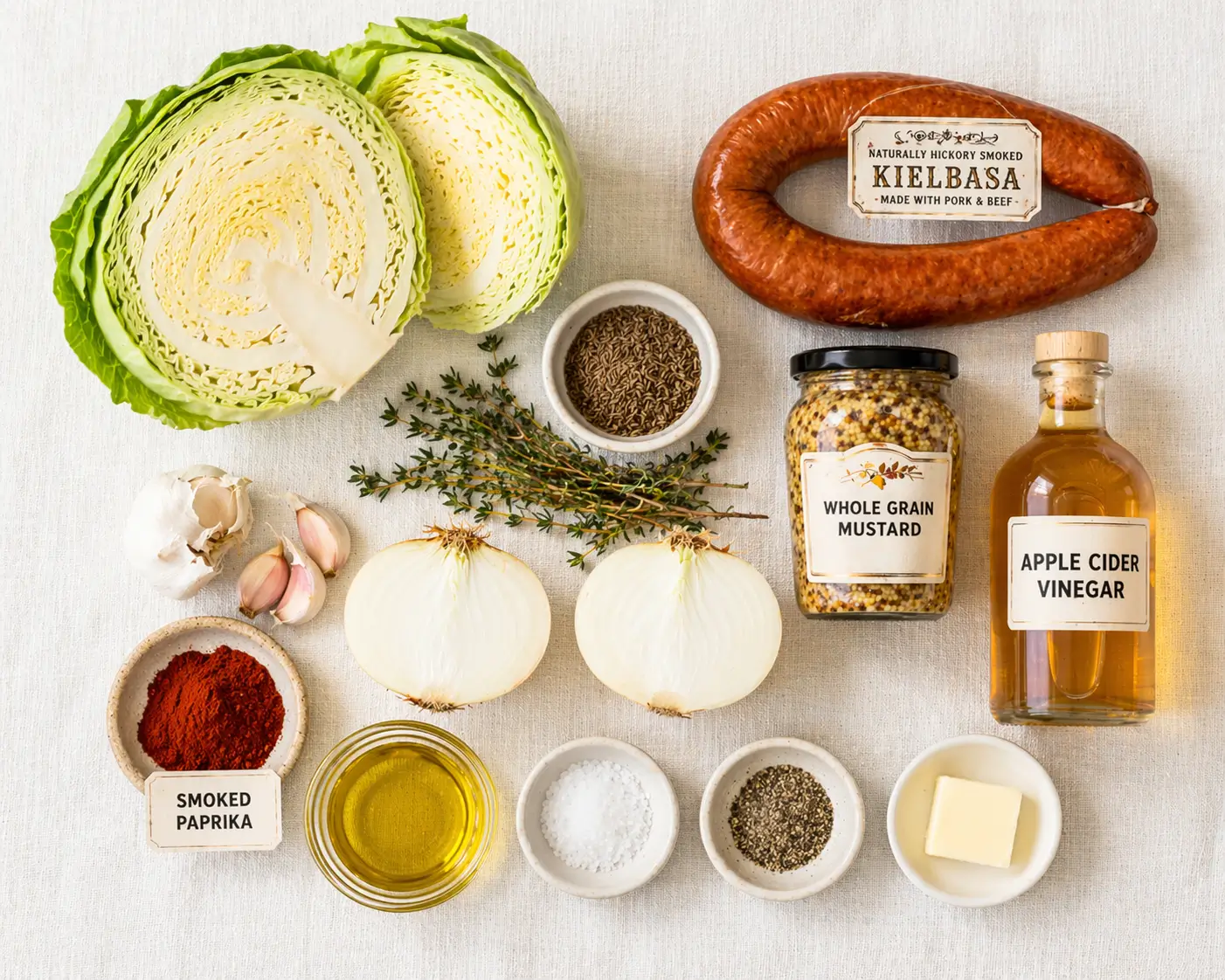
Ingredients You’ll Need
Nothing fancy. Everything purposeful. This is pantry cooking at its most satisfying.
The Main Players
- 1 medium green cabbage (about 900g / 2 lb), roughly chopped — green cabbage is the classic choice here. Its natural sugars caramelize beautifully and it holds up to high heat without falling apart completely. Don’t chop it too fine — you want some texture in the final dish.
- 450g (1 lb) smoked kielbasa or andouille sausage, sliced into ½-inch rounds — the smoky, fatty sausage is everything here. Kielbasa gives you a mild, garlicky smokiness. Andouille pushes it spicier and deeper. Either is magnificent.
- 1 large white onion, thinly sliced — it melts into the cabbage and adds another layer of sweetness to the whole dish.
- 4 garlic cloves, thinly sliced — sliced rather than minced so it caramelizes gently in the fat rather than burning.
- 2 tbsp olive oil — for searing the sausage and starting the caramelization.
- 1 tbsp unsalted butter — added with the cabbage for richness and to encourage that golden color.
The Flavor Builders
- 1 tsp caraway seeds — the secret ingredient that makes this dish taste Eastern European and deeply aromatic. Don’t skip this. Caraway has an almost anise-like warmth that is completely unique and pairs perfectly with cabbage and sausage.
- 1 tsp smoked paprika — amplifies the smokiness of the sausage and adds a beautiful rust color to the dish.
- 2 tbsp apple cider vinegar — added at the end to cut through the richness and brighten everything up. It’s the difference between a dish that tastes flat and one that tastes alive.
- 1 tbsp whole grain mustard — stirred through at the end. Adds tang, texture, and that classic pairing with sausage that never gets old.
- 1 tsp brown sugar — just a touch to encourage deeper caramelization and balance the vinegar.
- Salt and black pepper to taste
To Finish
- Fresh flat-leaf parsley, roughly chopped — brings color and a fresh note to what is otherwise a deeply rich dish.
- Fresh thyme sprigs — scattered over just before serving.
- Extra whole grain mustard — for serving alongside. Non-negotiable.
- Crusty bread — for scooping. Strongly encouraged.
No caraway seeds? Use fennel seeds instead for a different but equally interesting aromatic note. Or simply leave them out — the dish is still delicious, just less distinctly Eastern European in character.
Sausage swap: Italian sausage (casings removed and crumbled) works beautifully and makes the dish feel more rustic. Bratwurst sliced into rounds is another excellent option. Even chorizo — though it will dramatically change the flavor profile toward smoky and spicy in a different direction.
Red cabbage variation: Red cabbage can absolutely be used here. It takes slightly longer to caramelize and turns a deep purple-magenta color that is visually stunning. Add an extra tablespoon of apple cider vinegar to help it keep its color.
Dairy-free: Simply swap the butter for an extra tablespoon of olive oil. The caramelization and flavor are virtually identical.
How to Choose the Best Cabbage for This Recipe
Cabbage deserves more credit than it gets. Here’s how to pick and prep it properly.
- Look for a tight, heavy head. A cabbage that feels dense and heavy for its size has more moisture and will caramelize more evenly. Loose, light heads tend to be older and less flavorful.
- Green cabbage is the gold standard here. It has the right balance of natural sugar, moisture, and structural integrity. It caramelizes without turning to mush and holds up to 30 minutes in a hot pan.
- Chop it roughly — not finely. You want pieces roughly 3–4cm across. Finely shredded cabbage will cook too fast and turn soft and pale rather than developing those gorgeous caramelized edges.
- Don’t wash it just before cooking. Excess moisture on the cabbage when it hits the hot pan will cause steaming instead of caramelization. Wash it, dry it thoroughly, and then chop.
- Remove the outer leaves but keep the inner ones. The outer leaves can be bitter and tough. The inner leaves are sweeter, more tender, and caramelize more beautifully.
- Use it fresh. Pre-shredded bagged cabbage works in a pinch but it’s been cut and sitting long enough to lose moisture — which actually isn’t terrible for caramelizing, but the texture won’t be quite as satisfying as fresh.
How to Make Caramelized Cabbage and Sausage Skillet
Step 1 — Sear the Sausage Until Deeply Golden
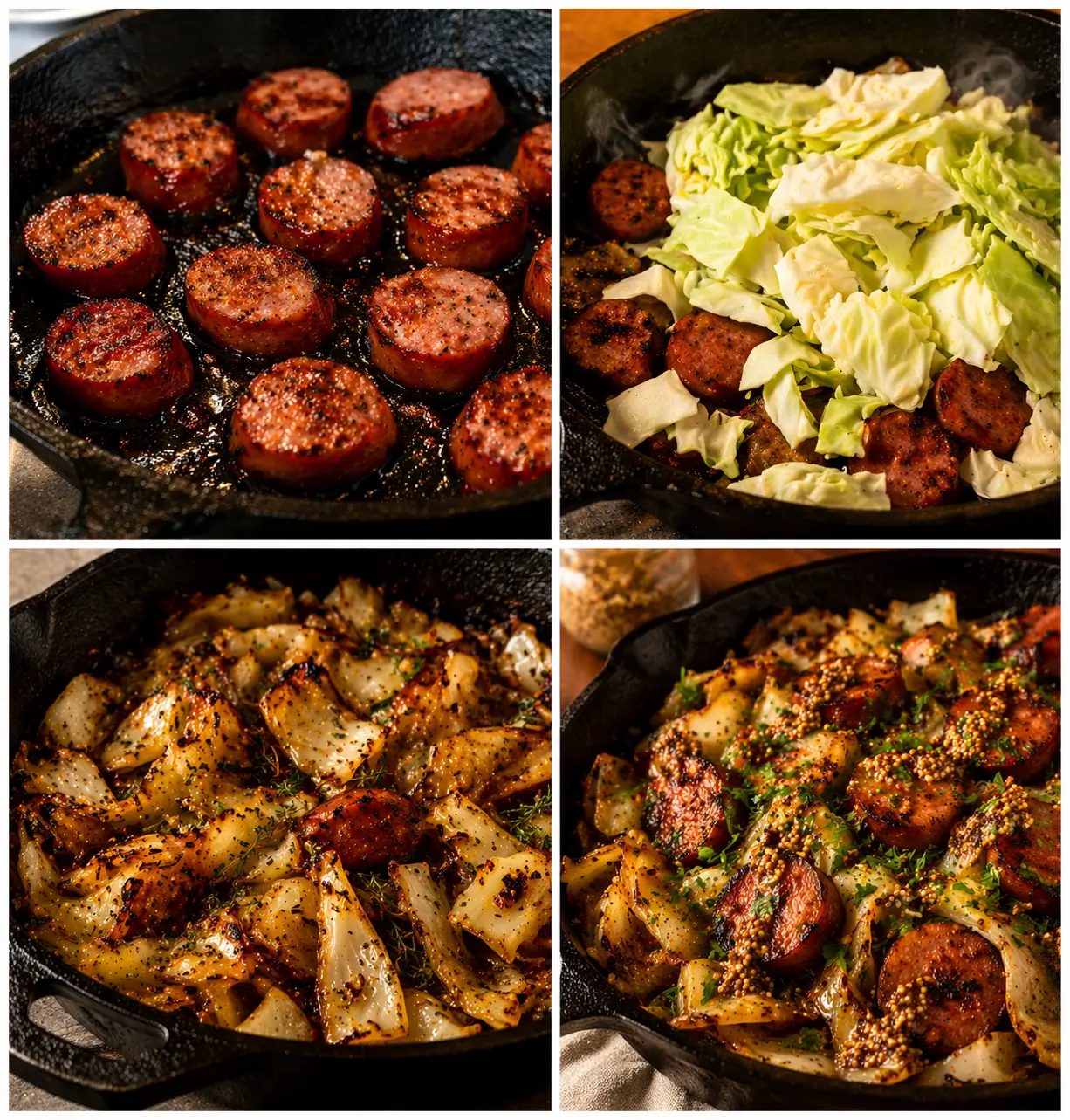
Heat the olive oil in a large cast iron skillet over medium-high heat. Once the oil is shimmering, add the sausage slices in a single layer — don’t crowd them. Let them sear, completely undisturbed, for 2–3 minutes until the cut faces are deeply golden and caramelized. Flip and repeat on the other side. That caramelized crust is pure concentrated flavor and it will transfer into the cabbage later. Remove the sausage to a plate and set aside. Don’t wipe the pan — those browned bits are gold.
Step 2 — Soften the Onion and Bloom the Caraway
Reduce the heat to medium. Add the butter to the same pan — it will sizzle immediately in the sausage fat. Add the sliced onion and caraway seeds. Cook, stirring occasionally, for 4–5 minutes until the onion softens and turns translucent and the caraway seeds start to smell deeply aromatic. Add the sliced garlic and smoked paprika and cook for another 60 seconds, stirring constantly so the garlic doesn’t burn. This step is where the flavor foundation of the whole dish is built — don’t rush it.
Step 3 — Add the Cabbage and Let It Caramelize
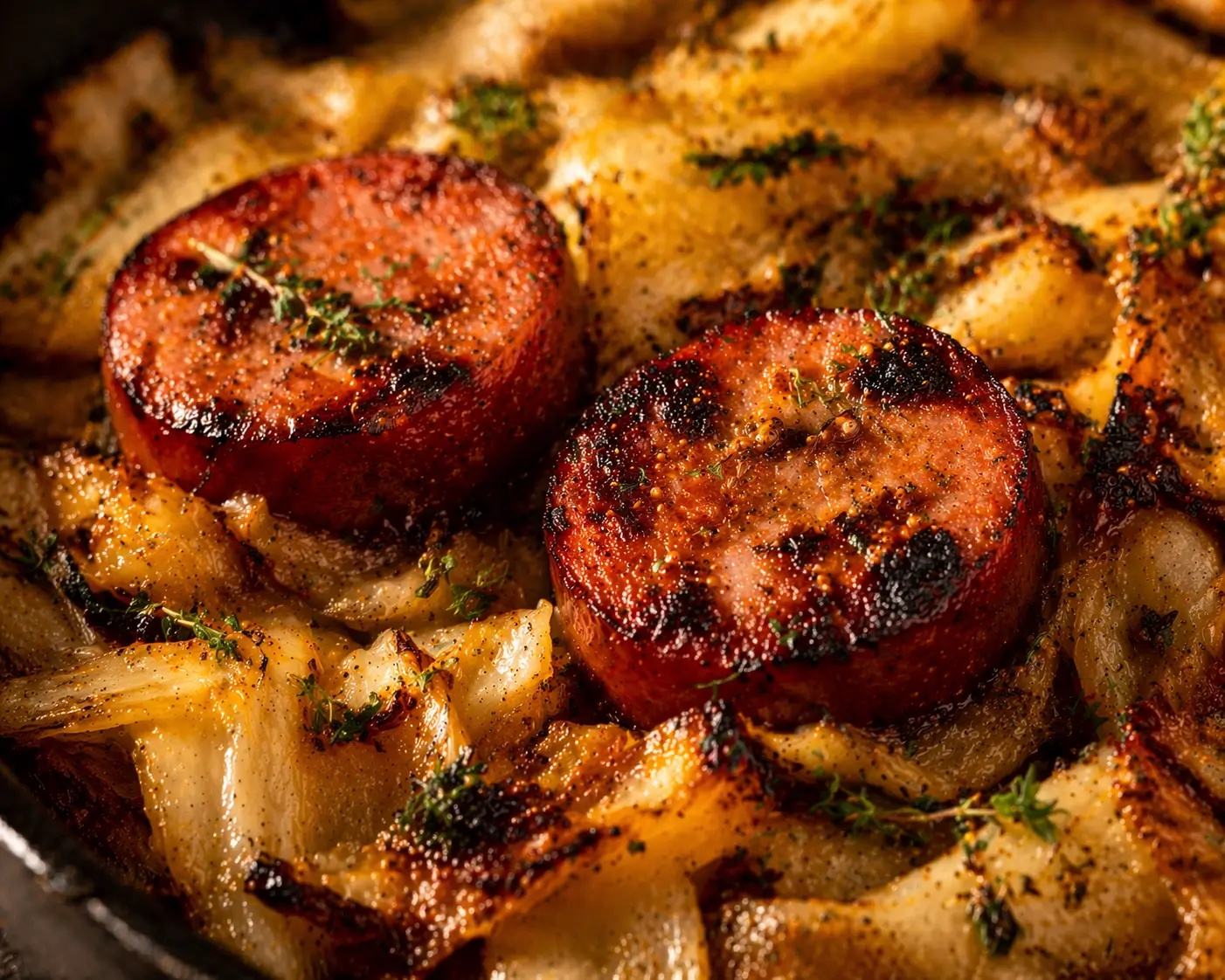
Add all the chopped cabbage to the pan. It will look like an enormous, impossible amount. That’s normal. Toss it in the fat and aromatics as best you can, season generously with salt and black pepper, and add the brown sugar. Now here is the key instruction: leave it mostly alone. Press it down with a spatula, let it sit in contact with the hot pan for 3–4 minutes until the bottom layer starts to char slightly at the edges, then toss and repeat. This is caramelization — not stirring. Stir too often and you steam the cabbage into a pale, soggy mess. Let it sit and it transforms into something golden, silky, and deeply sweet. Total caramelization time: 12–15 minutes over medium to medium-high heat.
Step 4 — Deglaze with Apple Cider Vinegar
Once the cabbage is deeply golden — genuinely amber in color with charred edges on some pieces — pour in the apple cider vinegar. It will hit the hot pan and sizzle dramatically, lifting all the caramelized bits from the bottom. Stir everything together and let the vinegar cook off for about 60 seconds. This is the moment the dish wakes up. The brightness of the vinegar cuts right through the richness and makes every other flavor more vivid.
Step 5 — Return the Sausage and Stir in the Mustard
Nestle the seared sausage slices back into the caramelized cabbage. Stir everything together gently so the sausage reheats and the flavors come together. Add the whole grain mustard and stir it through — it will coat everything in a light, tangy glaze. Cook for another 2–3 minutes over medium heat until the sausage is heated through and the whole dish looks glossy and unified. Taste and adjust seasoning with salt, pepper, and an extra splash of vinegar if it needs more brightness.
Step 6 — Rest, Garnish, and Serve
Remove from heat. Let the skillet rest for 2 minutes — the flavors settle and deepen beautifully in this time. Scatter fresh chopped parsley and thyme sprigs generously over the top. Serve directly from the cast iron skillet at the table with extra whole grain mustard on the side and a big piece of crusty bread within reach. This dish belongs on a table, not hidden in a serving bowl.
Step 7 — The Optional But Highly Recommended Finishing Move
Just before serving, crack one or two eggs directly onto the top of the skillet, cover with a lid, and cook for 3–4 minutes until the whites are just set but the yolks are still runny. The egg yolk breaks into the caramelized cabbage and becomes the richest, most indulgent sauce you never planned for. This is the move that turns a great weeknight dinner into something genuinely memorable.
Why This Recipe Works
Every decision in this recipe is deliberate. Here’s the science and the logic behind it.
- Searing the sausage first builds the flavor base. The fat that renders out of the sausage stays in the pan and becomes the cooking medium for everything that follows. Every spoonful of this dish carries traces of that sausage flavor from the very first step.
- Caraway seeds bloom in fat. Adding the caraway seeds to the butter and onion before the cabbage goes in allows their essential oils to release into the fat. By the time the cabbage arrives, the whole pan is already perfumed with that distinctive aromatic warmth.
- Brown sugar accelerates the Maillard reaction. The cabbage has natural sugars but adding a small amount of brown sugar pushes the caramelization faster and deeper, giving you that gorgeous amber color without needing to cook it for an hour.
- Apple cider vinegar at the end is transformative. This is the technique used in German-style braised cabbage — the acidity added after cooking rather than during it. During cooking, the vinegar would slow the caramelization. Added at the end, it deglazes, brightens, and balances without undermining the sweetness.
- Whole grain mustard ties everything together. The mustard seeds in whole grain mustard add texture, the tang adds acid, and the sharp mustard flavor is the classic partner to smoked pork in cuisines from Alsace to Poland. It doesn’t overpower — it anchors.
Best Things to Serve Alongside This Skillet
This dish is a complete meal on its own — but a few well-chosen additions take it somewhere special.
Variations to Try
- Dairy-Free: Replace the butter with an extra tablespoon of olive oil. The caramelization is virtually identical and the dish loses nothing in the process. Every other element of the recipe is already naturally dairy-free.
- Gluten-Free: This recipe is naturally gluten-free as written — just double-check the labels on your sausage and mustard to make sure no wheat has been added as a filler or thickener.
- Spicy Chorizo Version: Replace the kielbasa with Spanish chorizo sliced into rounds. The chorizo will release its red paprika-infused fat into the pan, turning the entire dish a gorgeous rust color. Add a pinch of cayenne to the cabbage for extra heat.
- Apple and Sausage Skillet: Add one thinly sliced tart apple (Granny Smith works beautifully) to the pan along with the onion. The apple caramelizes into jammy, slightly tart pieces that play off the sweetness of the cabbage and the smoke of the sausage in a way that is quietly extraordinary.
- Creamy Version: Stir in 3–4 tablespoons of crème fraîche or sour cream right at the end instead of the mustard. The cream melts into the caramelized cabbage and creates a sauce that is rich, tangy, and deeply comforting. Similar in spirit to our Creamy Chicken Sausage Orzo.
- Baked Skillet Finish: After returning the sausage to the pan and stirring in the mustard, top the whole skillet with a generous layer of grated Gruyère or sharp cheddar. Slide it under the broiler for 3–4 minutes until the cheese is bubbling and golden. The result is a gratinéed skillet that feels genuinely restaurant-worthy.
Storage, Meal Prep & Reheating
Storing Leftovers
Transfer leftovers to an airtight container and refrigerate for up to 4 days. The flavor actually deepens overnight as the caraway and mustard continue to infuse the cabbage. Day-two leftovers from this dish are genuinely better than day one.
Freezing
This dish freezes surprisingly well. Portion into airtight containers and freeze for up to 2 months. Thaw overnight in the fridge. The cabbage will be softer after freezing but the flavor is completely intact — which makes this an excellent candidate for batch cooking.
Reheating
The stovetop is best. Add a splash of water or chicken broth to a skillet, add the leftovers, and warm over medium heat for 5–6 minutes, stirring occasionally. The added liquid loosens the dish back up and prevents anything from scorching. A fresh squeeze of lemon juice or extra splash of apple cider vinegar revives the brightness beautifully.
Meal Prep Tips
This dish is an ideal meal prep recipe. Make a full batch on Sunday and portion it into containers — it reheats perfectly for lunches and quick weeknight dinners through the week. The caraway and mustard flavors actually become more pronounced after a day in the fridge, making this one of those rare dishes that is genuinely worth making ahead.
Common Mistakes to Avoid
- Stirring the cabbage constantly. This is the cardinal sin of this recipe. Constant stirring prevents caramelization and gives you steamed, soggy, pale cabbage instead of golden, jammy, deeply flavorful cabbage. Press it down and leave it alone.
- Using too low a heat. Caramelization requires actual heat. Medium to medium-high is correct. Too low and the cabbage just sweats and steams in its own moisture rather than developing color.
- Crowding the sausage in the pan. Sausage slices need space to sear rather than steam. If your pan is small, sear the sausage in two batches. A grey, steamed sausage slice contributes nothing compared to a deeply golden, caramelized one.
- Adding the vinegar too early. Apple cider vinegar added while the cabbage is still caramelizing will stop the browning process dead. It goes in after the cabbage has already reached that gorgeous amber color.
- Under-seasoning. Cabbage is a mild vegetable and it needs confident seasoning. Taste at every stage and be generous with the salt. The caraway and mustard also need enough salt around them to really sing.
- Skipping the caraway seeds. We understand — they’re an unusual ingredient and you might be tempted to leave them out. Don’t. They are the single element that elevates this from a basic sausage and cabbage pan to something that genuinely tastes like it has a culinary tradition behind it.
Nutritional Information
Per serving (based on 4 servings, skillet only, no bread or sides):
Serving & Presentation Tips
This is cast iron skillet food. It should look exactly like what it is — honest, rustic, deeply satisfying.
- Serve directly in the cast iron skillet. Place it in the center of the table on a wooden board or trivet. The skillet holds heat beautifully and makes the whole dinner feel communal and generous.
- The parsley goes on at the very last second. Fresh herbs wilt fast against the heat of the skillet. Scatter them right before it goes to the table so they stay bright and vivid.
- Put the mustard in a small jar or ramekin on the table with a small spoon alongside it. It’s both a functional condiment and part of the visual story of the dish.
- A few whole caraway seeds scattered over the top signal to the eye what the nose already knows — that this dish has something interesting happening in it.
- Tear the crusty bread rather than slicing it and pile it in a basket beside the skillet. Torn bread beside a cast iron skillet is an invitation to dig in that nobody can resist.
Frequently Asked Questions
Why does my cabbage turn out pale and soggy instead of golden?
Almost certainly because the heat was too low or the cabbage was stirred too frequently. Caramelization needs two things — high enough heat to trigger the Maillard reaction, and sustained contact time between the cabbage and the hot pan surface. Use medium to medium-high heat, press the cabbage down firmly, and resist the urge to stir for at least 3–4 minutes at a time. Patience is the whole technique here.
Can I use pre-shredded bagged cabbage?
You can, and it will save you prep time. The results are slightly less satisfying texturally because pre-shredded cabbage is cut more finely and tends to have lost some of its moisture — which paradoxically can help it caramelize faster but also makes it easier to overcook into mush. If using bagged cabbage, reduce the caramelization time slightly and watch it carefully.
What sausage works best in this recipe?
Smoked kielbasa is the classic choice — it has a mild garlic and smoke flavor that pairs perfectly with the sweetness of the caramelized cabbage. Andouille pushes the heat and smokiness much higher. Bratwurst gives a more delicate, herbal result. Spanish chorizo turns the whole dish rust-colored and intensely paprika-forward. All of them work — the dish changes personality with each one.
Is this recipe similar to German braised cabbage?
It shares DNA with German and Eastern European braised cabbage dishes — particularly in the use of caraway seeds, apple cider vinegar, and the pairing with pork sausage. The key difference is that this recipe prioritizes caramelization over braising. Traditional German red cabbage is slow-braised in liquid. This recipe uses high heat and minimal liquid to develop deep color and concentrated flavor much faster.
Can I make this vegetarian?
Absolutely. Replace the sausage with thick-sliced halloumi seared until golden, or with large portobello mushroom caps cut into thick slices. The caramelization technique stays exactly the same. Use olive oil instead of the sausage fat for cooking the vegetables. The result is surprisingly satisfying and the caraway-mustard-vinegar flavor profile works just as beautifully without the meat.
What else can I make with sausage for a quick dinner?
If you love a quick sausage dinner, our Sausage Bites are a fantastic appetizer or party snack that comes together in minutes. And if you want something a little more indulgent, this Cheesy Sausage Dip is the kind of recipe that disappears before you can even set it on the table.
You Might Also Love
Final Thoughts
Here is what this caramelized cabbage and sausage skillet is really about: the transformation of something ordinary into something that genuinely surprises you.
Cabbage is not a glamorous ingredient. It doesn’t photograph like a rack of lamb or a tower of pasta. It sits quietly in grocery stores, priced at almost nothing, largely ignored. And then you put it in a screaming hot cast iron pan with sausage fat and caraway seeds and a knob of butter, and you let it sit — really sit — and something changes. It turns golden. It sweetens. It becomes something that fills your kitchen with an aroma that makes people wander in from other rooms asking what’s cooking.
That is the magic of this recipe. And it takes thirty minutes.
Make it once and you’ll understand why this kind of simple, honest, technique-driven cooking is worth knowing. Leave a comment below and tell us which variation you tried — we especially want to hear from anyone who went for the cracked egg on top. 🥬🍳
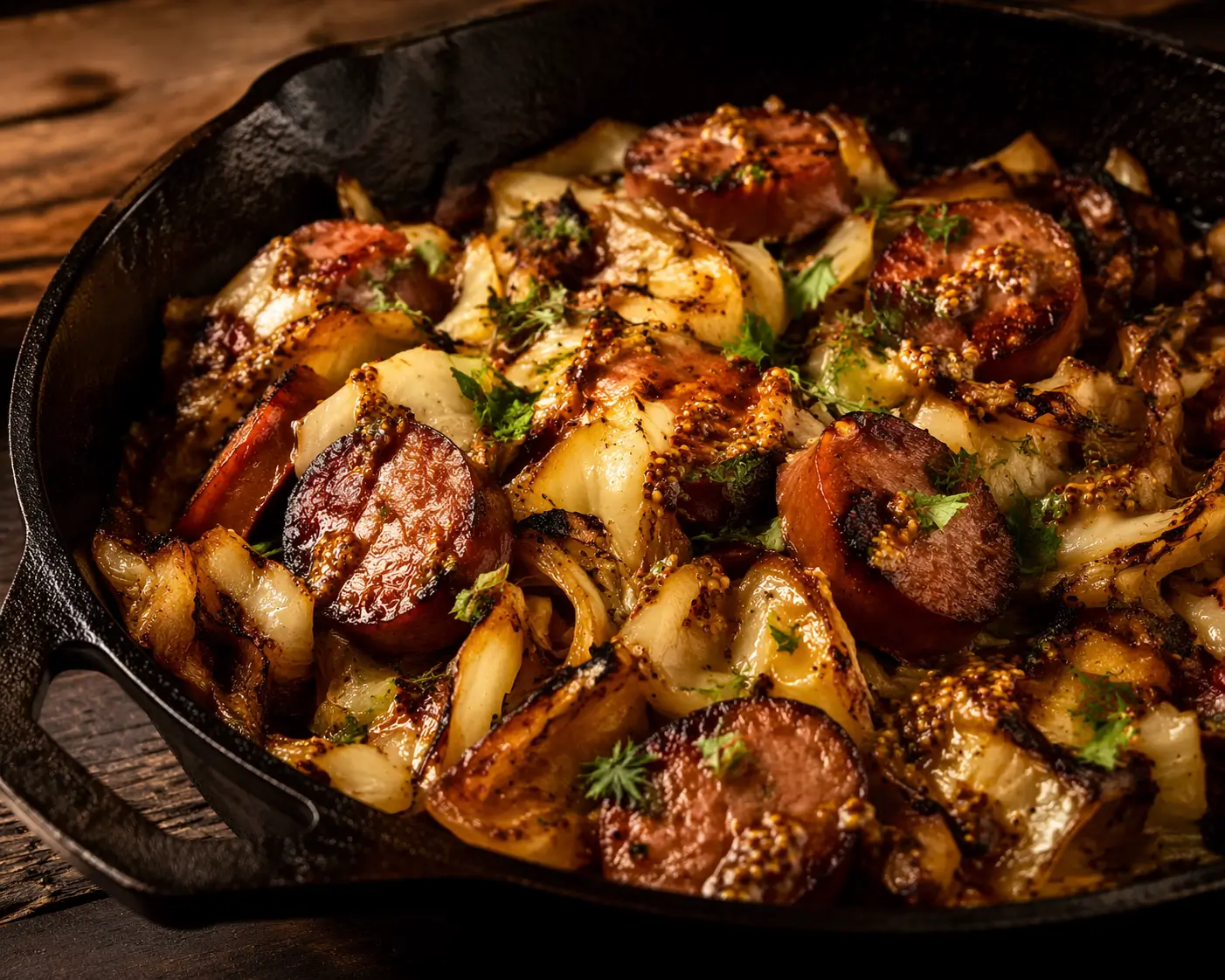
Caramelized Cabbage and Sausage Skillet
Deeply golden caramelized cabbage with smoky sausage, caraway seeds, whole grain mustard, and apple cider vinegar — all made in one cast iron skillet in 30 minutes. The weeknight dinner that surprises everyone.
Ingredients
Main Ingredients
- 1 medium green cabbage (about 900g / 2 lb), roughly chopped
- 450g (1 lb) smoked kielbasa sausage, sliced into ½-inch rounds
- 1 large white onion, thinly sliced
- 4 garlic cloves, thinly sliced
- 2 tbsp olive oil
- 1 tbsp unsalted butter
Flavor Builders
- 1 tsp caraway seeds
- 1 tsp smoked paprika
- 1 tsp brown sugar
- 2 tbsp apple cider vinegar
- 1 tbsp whole grain mustard
- Salt and black pepper to taste
To Finish
- Fresh flat-leaf parsley, roughly chopped
- Fresh thyme sprigs
- Extra whole grain mustard for serving
- Crusty bread for scooping
Instructions
-
1
Sear the sausage. Heat olive oil in a large cast iron skillet over medium-high heat. Sear sausage slices undisturbed for 2–3 minutes per side until deeply golden. Remove to a plate. Do not wipe the pan.
-
2
Bloom the aromatics. Reduce heat to medium. Add butter, sliced onion, and caraway seeds. Cook 4–5 minutes until softened. Add garlic and smoked paprika and cook 60 seconds.
-
3
Caramelize the cabbage. Add all the cabbage, season generously with salt, pepper, and brown sugar. Press down and leave undisturbed for 3–4 minutes. Toss, press again, and repeat for 12–15 minutes total until deeply golden and amber.
-
4
Deglaze with vinegar. Pour in the apple cider vinegar. Stir and let cook for 60 seconds, lifting all the caramelized bits from the bottom of the pan.
-
5
Return sausage and add mustard. Nestle sausage back into the cabbage. Stir in whole grain mustard. Cook 2–3 minutes until heated through and glossy. Taste and adjust seasoning.
-
6
Optional egg finish. For an incredible finishing touch — crack 1–2 eggs onto the skillet, cover with a lid, and cook 3–4 minutes until whites are just set and yolks are still runny.
-
7
Garnish and serve. Scatter fresh parsley and thyme over the top. Serve directly from the skillet with extra mustard and crusty bread alongside.
The caraway seeds are not optional — they are the soul of this dish. Find them in the spice aisle of any grocery store and keep them in your pantry. You’ll use them again.
Don’t rush the caramelization. The 12–15 minutes the cabbage spends in the pan is where all the flavor is built. Every minute of patience shows up in the final dish.
Leftovers from this dish are genuinely better the next day. The caraway and mustard deepen overnight in the fridge. Make extra on purpose.
